
How Many Grams of Strawberries in a Cup?
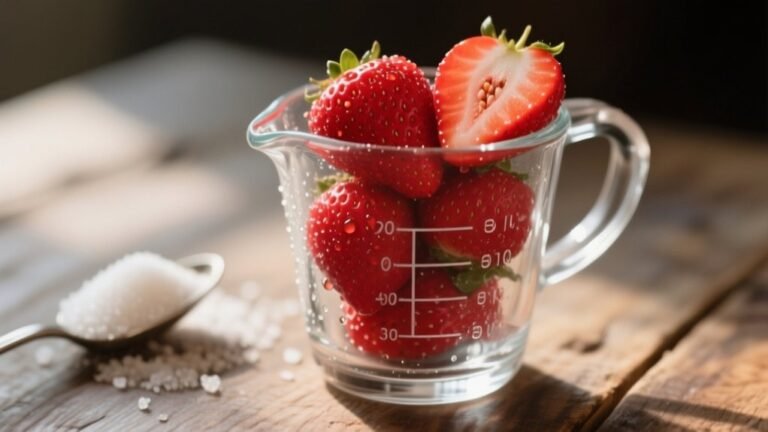
You’ll find that one cup of strawberries typically weighs between 144 and 200 grams, depending on whether they’re whole, sliced, or pureed. Whole strawberries usually weigh around 144 to 200 grams per cup, while sliced may be closer to 166 grams.
Size and preparation play a big role in the weight you get, so using grams helps you measure more precisely. Keep going to discover how different factors affect these numbers and why accuracy matters.
How Many Grams Are in a Cup of Strawberries?
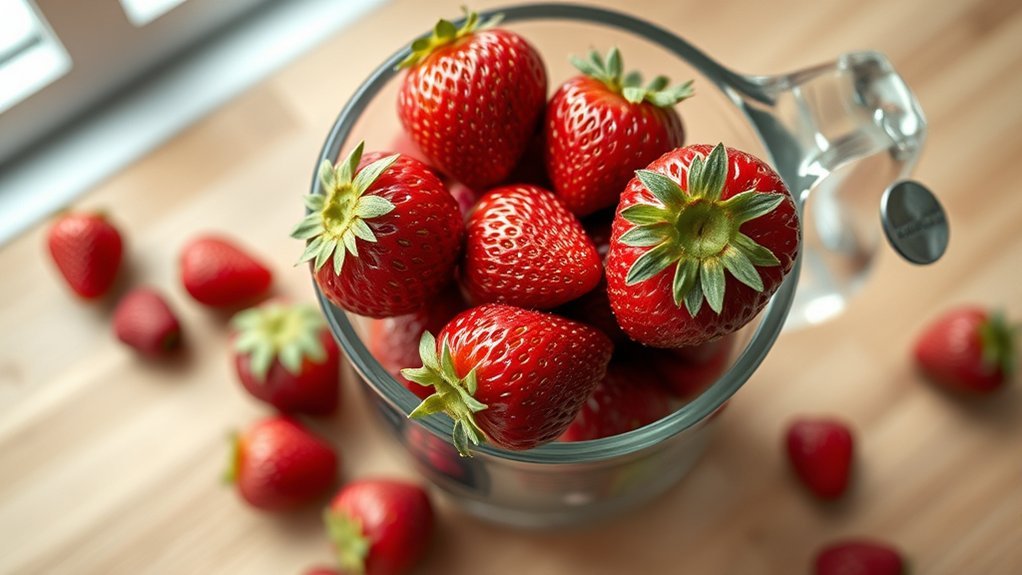
Wondering how many grams are in a cup of strawberries? If you’re measuring whole strawberries, one cup typically weighs about 144 grams (5.1 ounces).
This amount usually includes around 5 extra-large or 8 large fresh strawberries, depending on their size. When you’re working with whole strawberries, the weight can vary slightly due to size differences, but 144 grams is a solid estimate.
Using fresh strawberries guarantees you get accurate weight and nutritional information, especially if you’re tracking your intake or following a recipe.
How Does Strawberry Preparation Affect Gram Weight?
Knowing that a cup of whole strawberries weighs about 144 grams helps you get a baseline, but how you prepare the strawberries can change their weight considerably.
A cup of whole strawberries weighs about 144 grams, but preparation can significantly affect this weight.
When you use fresh, whole strawberries, they contain air pockets and stems that affect volume and weight. If you slice the strawberries, these air pockets reduce, and stems are often removed, so a cup of sliced strawberries weighs around 166 grams.
This means slicing increases the weight per cup because the fruit packs more densely.
Keep in mind, the size and ripeness of your fresh strawberries also influence weight. Understanding these differences is essential when measuring for recipes or tracking nutrition, ensuring you get accurate gram counts based on how you prepare your strawberries.
Comparing Whole, Sliced, and Pureed Strawberry Weights
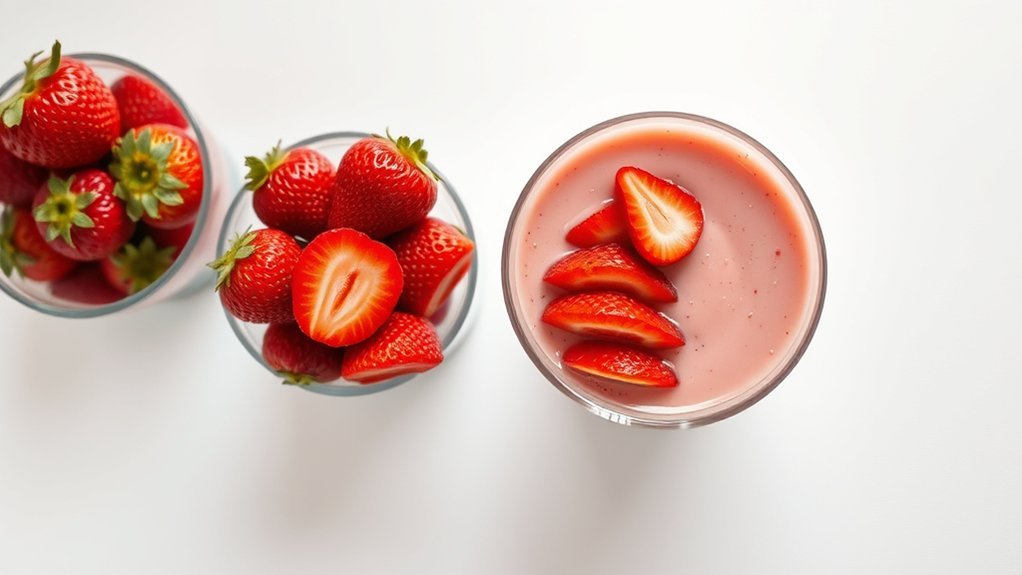
Three common ways to prepare strawberries—whole, sliced, and pureed—each have distinct weights per cup that can affect your recipe or nutrition tracking.
For instance, a cup of whole strawberries weighs about 144 grams, but once sliced, that same cup weighs around 166 grams.
When pureed, the weight jumps to approximately 232 grams per cup.
So, if you want to know how many strawberries to use or track calories accurately, it’s essential to take into account their form.
Fresh produce varies in density and volume, which changes the weight you get per cup.
Understanding these differences helps you measure ingredients correctly and maintain nutritional accuracy, whether you’re cooking or planning your meals.
Always adjust your quantities based on the strawberry preparation for best results.
How Strawberry Size Influences Gram Count per Cup
Because strawberry size varies widely, the gram count per cup can change considerably depending on whether you use large or small berries.
Strawberry size greatly affects the gram count per cup, varying between large and small berries.
If you pick large strawberry varieties, you’ll get fewer berries per cup, typically 5 to 8. This results in a higher gram count per berry but fewer berries overall.
Small strawberries pack more densely, with around 20 fitting into a cup, which affects the total weight.
When choosing organic strawberries or seasonal strawberries, size differences still apply, so it’s smart to weigh your fruit for accurate recipes.
Whether you’re using freshly picked seasonal strawberries or organic strawberries from the store, remember that size impacts the gram count.
This makes weight measurements more reliable than simply counting berries for your cup measurement.
How Many Strawberries Make Up One Cup by Weight?
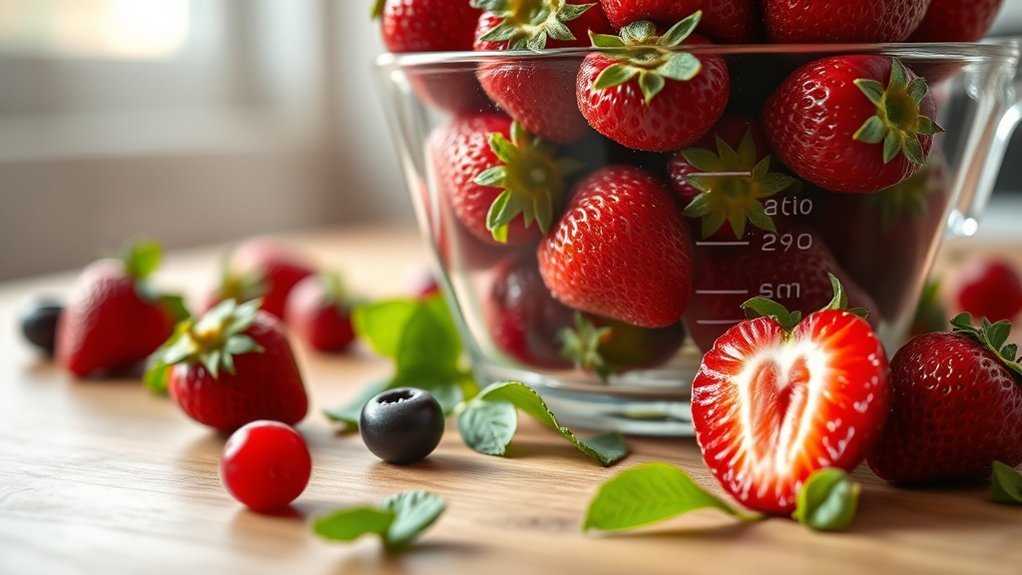
You’ll find that about 8 large strawberries or 12 medium ones make up one cup by weight.
Of course, the total weight can vary depending on their size, so counting strawberries helps guarantee accuracy.
Knowing this can really improve your recipe results and nutritional tracking.
Strawberry Count Per Cup
A single cup of whole strawberries usually weighs about 144 grams. This means you’ll need roughly 5 extra large, 8 large, or 12 medium strawberries to fill it.
Knowing the strawberry count per cup helps you manage serving sizes and maximize the health benefits of these sweet fruits.
Different strawberry varieties can vary in size, but this count gives a reliable guideline.
Here’s a quick breakdown:
- 5 extra large strawberries fill one cup.
- 8 large strawberries fill one cup.
- 12 medium strawberries fill one cup.
Weight Variations By Size
Understanding how many strawberries make up a cup by count sets a good foundation, but weight offers a more precise measure, especially when recipes call for specific amounts.
Depending on strawberry varieties and size, the weight of one cup varies: whole strawberries weigh about 200 grams, sliced ones 166 grams, and pureed strawberries 232 grams per cup.
Typically, 8 large or 12 medium strawberries fill a cup, but serving sizes can differ due to these weight variations.
This matters because nutritional differences, like sugar and fiber content, depend on the exact amount you use.
Converting Cups of Strawberries Into Grams for Baking
Converting cups of strawberries into grams for baking helps you achieve precise measurements and consistent results.
Different strawberry varieties and fruit ripeness affect density, so using accurate measuring techniques is key. Here’s how to convert:
Strawberry variety and ripeness impact density, making precise measurement essential for perfect baking conversions.
- Whole strawberries: One cup weighs about 200 grams, roughly 8 large or 12 medium berries.
- Sliced strawberries: One cup equals around 166 grams.
- Puréed strawberries: One cup is about 232 grams, denser due to blending.
Measuring Fresh vs. Frozen Strawberries in Grams
When you measure strawberries for your recipes, knowing the difference between fresh and frozen in grams can make a big difference. Use fresh weight comparison to adjust your amounts accurately.
Frozen conversion methods often account for water loss during freezing, so frozen strawberries weigh slightly more per cup than fresh. Here are some measuring techniques tips to help you:
| Strawberry Type | Form | Weight per Cup (grams) |
|---|---|---|
| Fresh | Whole | 200 |
| Fresh | Sliced | 166 |
| Frozen | Whole | 227 |
Keep these figures in mind to guarantee your recipes turn out perfectly and your nutritional tracking stays on point. Adjust quantities based on whether your strawberries are fresh or frozen for best results.
How to Estimate Strawberry Grams Without a Kitchen Scale
Wondering how to estimate strawberry grams without a kitchen scale? You can rely on simple visual measuring techniques and kitchen scale alternatives to get close measurements.
Here’s how to estimate fruit weights effectively:
- Count the strawberries: About 8 large or 12 medium strawberries equal one cup, roughly 200 grams.
- Use volume as a guide: One cup of whole strawberries weighs around 200 grams, while sliced strawberries weigh about 166 grams.
- Visualize the weight: A cup of strawberries is close to 5 ounces of fresh fruit, so picture that portion size.
Using Gram Measurements for Accurate Strawberry Nutrition Tracking
Accurately tracking strawberry nutrition starts with measuring grams rather than relying on volume alone. Different strawberry varieties and preparation methods can affect their weight; for example, one cup of whole strawberries weighs about 200 grams, while sliced strawberries weigh roughly 166 grams.
By using gram measurements, you gain precise control over portion sizes, which is essential for maintaining your dietary goals. This accuracy helps you monitor nutritional benefits like fiber content, around 3 grams per cup, and calorie intake, approximately 32 calories.
Measuring strawberries in grams ensures accurate portion control and helps track fiber and calorie intake effectively.
Using a kitchen scale guarantees you don’t underestimate or overestimate servings, supporting effective portion control.
Whether you’re tracking calories or fiber, gram measurements provide the clarity you need for better nutrition planning with strawberries.
Common Mistakes When Converting Cups to Grams
Measuring strawberries by grams rather than cups gives you better control, but it’s easy to make mistakes when converting between these units. Different strawberry varieties, taste differences, and seasonal availability all affect berry size and moisture, impacting weight.
Avoid these common errors:
- Assuming all strawberries weigh the same: whole, sliced, and puréed strawberries differ considerably in grams per cup.
- Ignoring size variations: large berries weigh more per cup than small ones, so relying on volume alone can mislead you.
- Overlooking seasonal changes: strawberries picked in peak season may be juicier and heavier than off-season ones.
Using a kitchen scale helps you navigate these variations and guarantees your recipes turn out just right.
Tips for Storing Strawberries to Keep Them Fresh
To keep your strawberries fresh longer, start by storing them properly in the refrigerator. Use efficient refrigeration practices by placing strawberries in breathable containers made of plastic or paper, which allow air circulation and reduce moisture buildup.
Avoid washing strawberries until just before eating to prevent mold growth. This is a key mold prevention method. Keep them dry and discard any damaged or moldy berries immediately to stop spoilage from spreading.
Follow these strawberry storage techniques to enjoy your berries at their best. Remember, strawberries spoil quickly, so consume them within a few days for peak flavor and texture.
Why Accurate Gram Measurements Matter in Recipes
You want your recipes to turn out just right, so measuring strawberries by grams is key for exact portions.
When you use precise amounts, it helps keep the flavor and texture balanced every time you cook or bake.
Plus, if you’re watching your nutrition, it makes tracking calories a whole lot easier.
Precision in Ingredient Portions
Because ingredient ratios can make or break your recipe, weighing strawberries in grams rather than relying on volume measurements guarantees you get consistent results every time.
This precision is vital, especially when dealing with different strawberry varieties, seasonal availability, or organic benefits that may affect size and moisture content.
Here’s why you should measure carefully:
- Prevents over- or under-measuring since berry size varies.
- Confirms recipe success by maintaining accurate ingredient ratios.
- Helps you adjust recipes precisely based on weight equivalences, like 200 grams per cup whole or 166 grams per cup sliced.
Using a kitchen scale helps you avoid guessing and keeps your dishes delicious and consistent, no matter the strawberry type or season.
Impact on Nutritional Tracking
Measuring strawberries by grams not only improves recipe accuracy but also sharpens your nutritional tracking. Knowing that one cup of whole strawberries weighs about 200 grams helps you precisely calculate calories.
Since 100 grams contain only 32 calories, you can control your intake better. This precision supports portion control, making it easier to stick to your dietary goals.
When you use accurate gram measurements in your recipe ideas, you guarantee consistent nutritional benefits each time. Plus, it enhances serving suggestions by giving you confidence in the amount you’re consuming or recommending.
Avoid guessing with cups; grams provide reliable data that keeps your meal planning on track and maximizes the health advantages of strawberries in your diet.
Frequently Asked Questions
Can Strawberries Be Substituted With Other Berries by Weight in Recipes?
Yes, you can use berry substitutes by weight in recipes. For a berry substitutes comparison, measure other berries like blueberries or raspberries to match the strawberry weight.
Weight conversion tips guarantee you get the right amount for consistent texture and flavor. Keep recipe adjustment guidelines in mind. Some berries may be sweeter or more tart, so tweak sugar levels accordingly.
Weighing the berries helps maintain flavor balance and recipe success.
Do Strawberries Lose Weight When Dried or Dehydrated?
Strawberries lose weight when dried or dehydrated, like a sponge squeezing out water. You’ll notice the dried strawberry weight drops drastically, about 90% less than fresh.
This moisture loss not only shrinks the fruit but also concentrates its nutrients.
Dehydrated fruit benefits include a longer shelf life and intensified sweetness, but you’ll miss the juiciness fresh strawberries offer.
How Does Strawberry Ripeness Affect Cooking Times?
Strawberry ripeness directly impacts your cooking times. When you use ripe strawberries with high strawberry sweetness, they’ll cook faster because their sugars caramelize quickly.
Look for ripeness indicators like deep red color and a fragrant smell to choose the right fruit.
If your strawberries are underripe, you’ll need to cook them longer to soften.
Adjust your cooking techniques accordingly to get the best texture and flavor in jams, sauces, or desserts.
What Is the Best Way to Wash Strawberries Without Damaging Them?
The best washing techniques for strawberries involve placing them in a colander and rinsing gently under cold running water without soaking. This preserves freshness and prevents damage.
Avoid soaps or vinegar since they leave residues.
After rinsing, use effective drying methods like gently patting with a clean paper towel to remove moisture.
Wash your strawberries just before eating to keep them fresh longer, and always check for any damaged berries before washing.
Are Organic Strawberries Heavier Than Non-Organic Ones?
No, organic strawberries aren’t necessarily heavier than non-organic ones.
Organic farming methods often result in slightly smaller berries, which can affect weight, but the difference is usually minimal.
You won’t see significant nutrient differences or weight changes between the two.
Instead, focus on flavor profiles and freshness, as organic strawberries might taste richer due to farming practices.
Their weight per cup stays pretty similar to conventional strawberries.
Conclusion
Now that you know how many grams are in a cup of strawberries, you can measure with confidence, cook with precision, and track nutrition accurately. Whether you’re using whole, sliced, or pureed strawberries, you’ll avoid common mistakes and guarantee your recipes turn out just right.
Remember, paying attention to preparation, size, and storage helps you get the most from your strawberries. Measure smart, cook well, and enjoy every delicious bite!