
How Many Calories Are in a Strawberry Banana Smoothie?
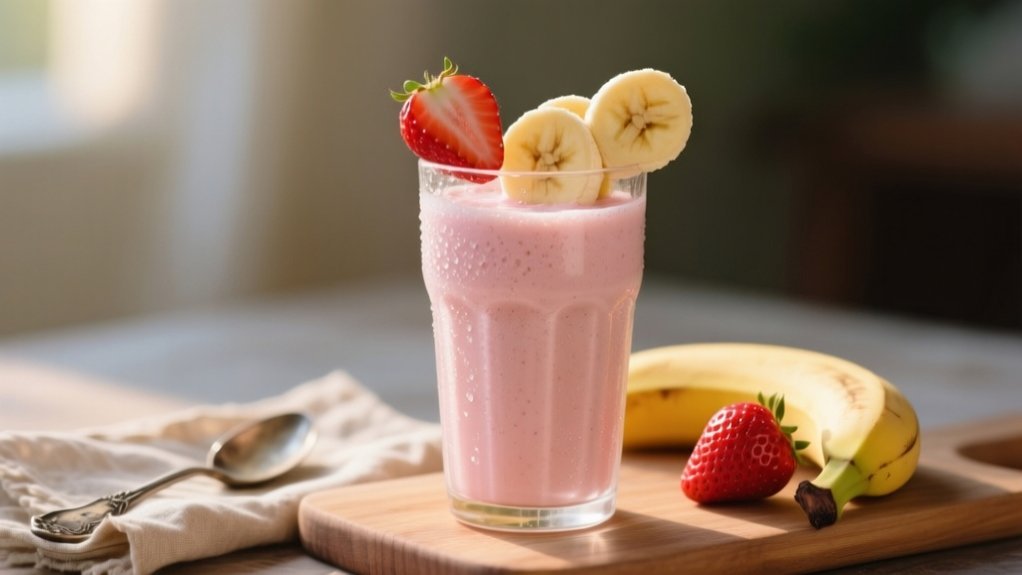
A typical 12-ounce strawberry banana smoothie has about 190 to 210 calories, mainly from the fruit and added liquids like milk or yogurt. Bananas add natural sweetness and creaminess, contributing about 105 calories each, while yogurt and milk can raise the count depending on fat content.
Choosing non-dairy milk or adjusting portions can lower calories without losing flavor. If you want to learn how ingredient choices and portions affect nutrition, keep exploring these details.
What Is the Typical Calorie Range in a Strawberry Banana Smoothie?
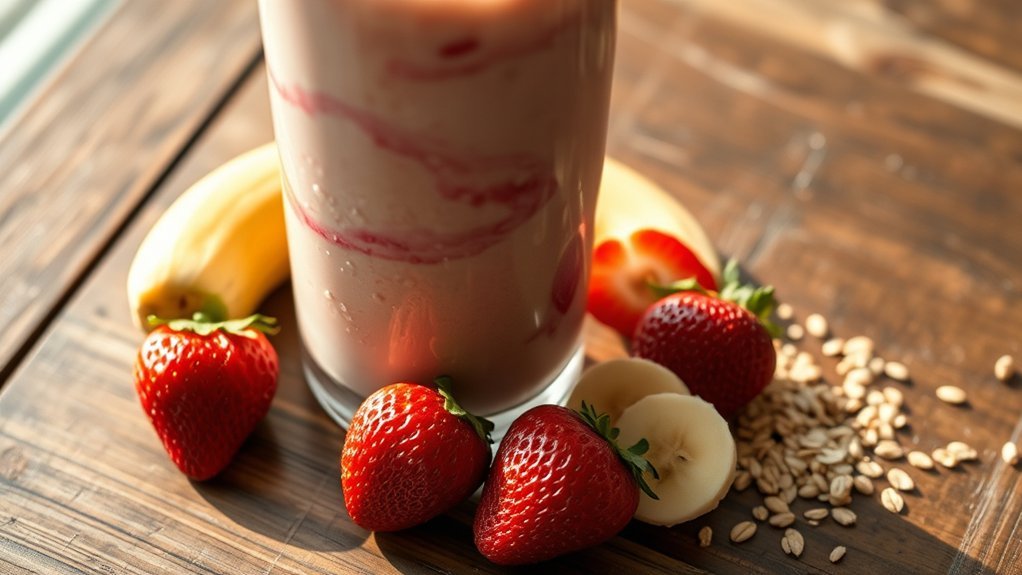
Although the calorie count can vary depending on the ingredients you use, a typical 12-ounce strawberry banana smoothie usually contains between 188 and 210 calories.
When you make this smoothie, the calorie content mainly comes from the frozen fruit, strawberries and bananas, along with any added liquids like milk or yogurt.
Since frozen fruit is often used, it keeps the smoothie invigorating and nutritious without adding excessive calories.
You’ll find these smoothies are generally low in fat, with about 1 gram per serving, but the carbohydrate and sugar content can fluctuate based on how much fruit and sweeteners you add.
Keeping an eye on your ingredient portions helps you control the calorie content while still enjoying a tasty, healthy strawberry banana smoothie.
How Do Ripe Bananas Affect Smoothie Calories and Sweetness?
When you add ripe bananas to your strawberry banana smoothie, you naturally boost its sweetness without needing extra sugar. Ripe bananas bring a rich flavor and creamy texture that enhances your smoothie’s appeal while affecting the calories and sweetness balance.
Here’s how ripe bananas impact your smoothie:
- Add about 105 calories per banana to your total calorie count
- Provide natural sugars that increase sweetness without artificial additives
- Contribute a creamy, smooth texture that improves mouthfeel
- Help reduce the need for ice or other thickeners
- Increase sugar content, potentially up to 44 grams in a 12-ounce serving if combined with other sweet ingredients
Using ripe bananas lets you enjoy a sweeter smoothie with fewer added sugars.
But watch your calorie intake.
How Do Key Ingredients Influence Strawberry Banana Smoothie Calories?
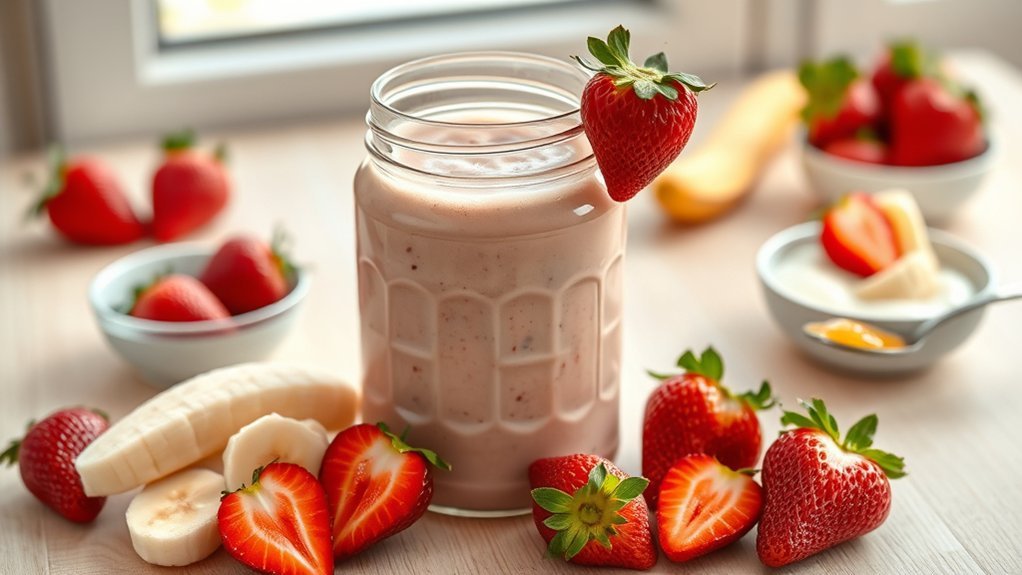
Ripe bananas certainly add calories and sweetness to your strawberry banana smoothie, but the other ingredients play a big role in the final calorie count as well.
For example, low-fat yogurt contributes around 150 calories per cup, boosting the smoothie’s creaminess and protein content without adding too much fat.
Using frozen strawberries with no added sugars helps keep calories low while delivering natural flavor and texture.
Furthermore, the liquid base, often fat-free milk, adds minimal calories, but swapping it for juice can increase sugar and calories.
Each ingredient’s calorie impact adds up, so balancing ripe bananas with calorie-conscious choices like low-fat yogurt and frozen strawberries helps you control the overall calorie content while enjoying a tasty, nutritious smoothie.
How Do Dairy and Non-Dairy Options Impact Smoothie Calories?
Choosing between dairy and non-dairy options greatly affects the calorie content of your strawberry banana smoothie. You can manage the calorie count by selecting the right base.
Here’s how dairy and non-dairy choices impact your smoothie:
Low-fat dairy like fat-free milk keeps calories around 160 per serving. Non-dairy options such as almond or oat milk often have fewer calories but vary by brand.
Low-fat dairy like fat-free milk has about 160 calories per serving, while almond or oat milk usually contains fewer calories.
Non-dairy yogurts, especially coconut-based, may add more calories due to fat content. Sweetened or flavored non-dairy options can increase calories by 50 or more.
Sticking to unsweetened non-dairy or low-fat dairy generally keeps your smoothie’s calorie count lower.
Does Adding Yogurt Increase Calories and Nutrients?
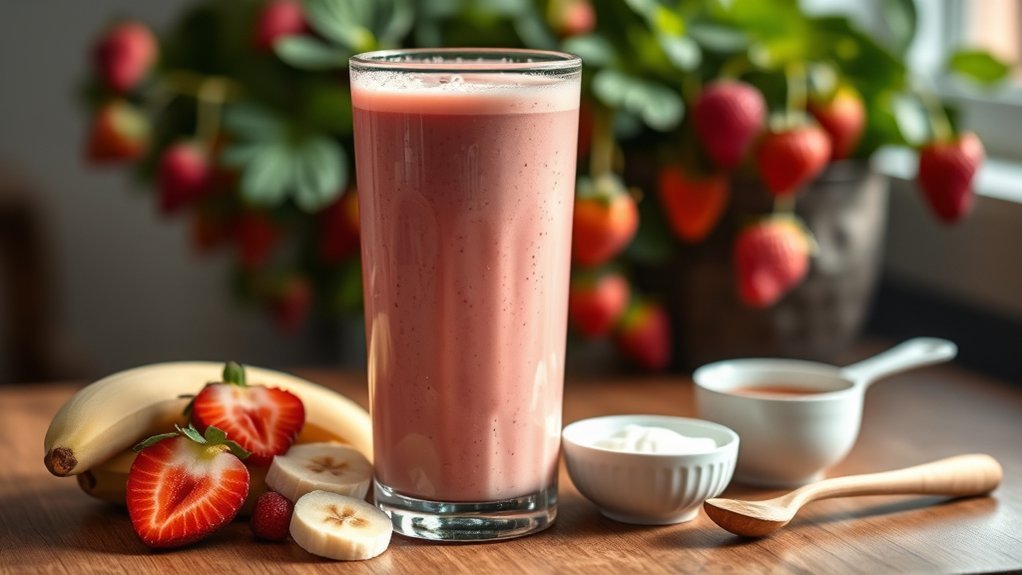
If you add yogurt to your strawberry banana smoothie, you can expect the calorie count to go up by about 100 to 150 calories per cup.
But it’s not just about the extra calories—yogurt also gives your smoothie a nice boost of protein and calcium, making it more nutritious overall.
On top of that, yogurt adds probiotics, which are great for digestion.
And let’s not forget, it makes your smoothie creamier and smoother too!
Yogurt’s Calorie Contribution
When you add yogurt to your strawberry banana smoothie, you increase both its calories and nutrients. Yogurt greatly influences the smoothie’s calorie count, typically adding around 100 calories per cup in low-fat vanilla varieties. This addition not only raises the calorie content but also enhances the nutritional value, making your smoothie more satisfying.
Here’s how yogurt contributes:
- Adds approximately 100 calories per cup (low-fat)
- Provides protein that supports muscle repair
- Supplies calcium for bone health
- Contains probiotics that aid digestion
- Full-fat yogurt raises calories more than fat-free options
Nutritional Benefits of Yogurt
Adding yogurt does more than just increase calories; it also enriches your strawberry banana smoothie with valuable nutrients.
When you add low-fat yogurt, you boost the protein content by 5 to 10 grams per serving, helping you feel fuller longer and supporting muscle repair.
Yogurt also raises your calcium intake, providing about 10% of the daily value per serving, which is essential for strong bones and overall bone health.
Plus, the probiotics in yogurt support gut health and improve digestion, making nutrient absorption more efficient.
Just be mindful if you use flavored yogurt because it can add extra sugars, increasing your smoothie’s sugar content.
How Much Sugar Is in a Strawberry Banana Smoothie?
You might be surprised at how much sugar is in your strawberry banana smoothie.
Natural sugars from the fruits add up quickly. And if you use sweetened yogurt or syrups, that sugar count climbs even higher.
Natural Sugar Content
Although a strawberry banana smoothie tastes naturally sweet, it can contain up to 44 grams of sugar in a 12-ounce serving, mostly from the fruit itself.
When you’re checking the sugar content, keep in mind that natural sugars in strawberries and bananas provide that sweetness without needing added ingredients.
However, some recipes include yogurt or juice, which can add more sugars.
Here’s what to reflect on regarding natural sugar content:
- Strawberries and bananas contribute most natural sugars
- Natural sugars offer sweetness without artificial additives
- Added ingredients like yogurt can increase total sugar
- A 12-ounce smoothie can approach daily recommended sugar limits
- Both natural sugars and added ingredients affect overall sugar content
Understanding these factors helps you manage your sugar intake better.
Added Sugar Considerations
When you choose flavored yogurts or sweeteners for your strawberry banana smoothie, the sugar content can quickly surpass what fruits alone provide.
While strawberries and bananas are a good source of natural sugars and nutrients, added sugar from these extras can greatly increase the total sugar in your drink.
A typical 12-ounce smoothie might contain up to 44 grams of sugar, much of which can come from added sugar rather than just fruit.
If you want to keep your smoothie a healthy part of your meal plan, consider using unsweetened yogurt or skipping sweeteners altogether.
This way, you get the benefits of natural fruit sugars without exceeding recommended limits, helping you maintain balanced sugar intake throughout the day.
Sugar Intake Recommendations
How much sugar does your strawberry banana smoothie really contain? A 12-ounce serving can pack up to 44 grams of sugar, mainly from natural fruit sugars. This often exceeds the American Heart Association’s Daily Value recommendations, which are 25.2 grams for women and 37.8 grams for men.
While natural sugars are healthier than added ones, keeping an eye on total intake is essential for your bones and teeth health.
Keep these tips in mind:
- Check smoothie recipes for added sweeteners.
- Balance sugar intake with foods rich in vitamin D.
- Remember natural fruit sugars still count toward your Daily Value.
- Limit overall daily sugar to avoid health risks.
- Prioritize nutrients that support bones and teeth alongside your smoothie habit.
What Vitamins and Minerals Do Strawberries and Bananas Provide?
Because strawberries and bananas offer a variety of essential vitamins and minerals, including vitamin C, potassium, and dietary fiber, they make your smoothie both nutritious and beneficial for your overall health.
Strawberries provide excellent vitamin benefits, especially vitamin C, which acts as a powerful antioxidant supporting cell repair.
Bananas serve as key mineral sources, rich in potassium that aids heart health and helps reduce kidney stone risks.
Both fruits contribute dietary fiber, promoting digestion and bowel health.
Furthermore, strawberries supply folate, vital for pregnancy, while together with bananas, they offer vitamin K, important for bone strength and blood clotting.
These antioxidant properties and nutrient-rich profiles make your strawberry banana smoothie a smart, healthful choice.
How to Make a Lower-Calorie Strawberry Banana Smoothie
If you want to make a lower-calorie strawberry banana smoothie, a great place to start is by swapping out the high-calorie ingredients.
For example, use unsweetened almond milk instead of regular milk, and go for low-fat yogurt rather than full-fat versions.
You can also keep an eye on your portions.
Maybe use a smaller banana or swap it out entirely for smaller fruits like berries.
These small tweaks really help cut down calories without losing any of the delicious flavor.
Give it a try!
Ingredient Swaps
Several simple ingredient swaps can help you enjoy a strawberry banana smoothie with fewer calories. By making smart choices, you can keep your smoothie tasty and satisfying while cutting calories.
Try these easy swaps to create healthy toppings, flavor boosters, and smoothie variations:
Use unsweetened almond or coconut milk instead of fat-free milk to save 30-40 calories.
Choose low-fat or non-fat yogurt over full-fat for about 50 fewer calories per cup.
Replace half the banana with frozen cauliflower or spinach to add volume and nutrients without many calories.
Opt for fresh strawberries rather than frozen ones to avoid added sugars and extra calories.
Skip added sugars or use zero-calorie sweeteners like stevia or monk fruit.
These swaps make your smoothie lighter without sacrificing flavor or texture.
Portion Control
When you control portions in your strawberry banana smoothie, you can enjoy a delicious treat without overloading on calories. Adjusting portion sizes and focusing on calorie density helps you cut calories while keeping flavor intact.
For example, use half a banana or low-fat yogurt and swap some milk for fruit juice. Adding leafy greens boosts nutrition with minimal calories. Here are serving suggestions to manage calorie intake effectively:
| Ingredient | Portion Size | Calorie Density (approx.) |
|---|---|---|
| Banana | ½ medium | Moderate |
| Low-fat Yogurt | ½ cup | Low |
| Frozen Strawberries | 1 cup | Low |
| Orange Juice | ¼ cup | Moderate |
| Spinach | ½ cup | Very Low |
Control portions to enjoy a lighter, tasty smoothie.
Ice vs. Frozen Fruit: Effects on Calories and Texture
Choosing between ice and frozen fruit can greatly affect both the calorie content and texture of your strawberry banana smoothie. When deciding, consider these key points:
Ice texture impact: Ice thins the smoothie, diluting flavor and making it less creamy.
Frozen fruit benefits: Frozen fruit creates a naturally creamy texture without needing ice.
Calorie comparisons: Smoothies with frozen fruit usually have fewer calories than those with ice plus added sweeteners.
Using ice often means adding more fruit or sugar to thicken and sweeten, increasing calories.
Frozen bananas add natural sweetness, reducing the need for extra sugars and keeping calories lower.
Choosing frozen fruit over ice enhances flavor and texture while helping control calorie intake in your strawberry banana smoothie.
How Smoothie Portion Size Influences Calorie Intake
Understanding how portion size affects your strawberry banana smoothie’s calorie count helps you make smarter choices after deciding between ice and frozen fruit. A typical 12-ounce smoothie ranges from 188 to 210 calories, but adjusting smoothie serving sizes can greatly impact your calorie intake.
By practicing portion control strategies, like choosing an 8-ounce serving instead, you can reduce calories to about 125 to 140. This smaller size still satisfies your craving without adding extra calories.
Furthermore, calorie awareness tips suggest balancing higher-calorie ingredients with larger amounts of low-calorie fruits to maintain flavor and texture.
Keeping portion sizes in check guarantees you enjoy your smoothie as a nourishing snack without unintentionally overeating.
Healthy Ingredient Swaps to Reduce Calories Without Losing Flavor
Although it’s tempting to stick with traditional ingredients, swapping out a few can substantially cut calories without sacrificing taste. By making simple changes, you can enhance nutrient density and introduce ingredient variety while keeping your smoothie flavor vibrant.
Simple ingredient swaps can boost nutrients and cut calories without dulling your smoothie’s vibrant flavor.
Try these swaps:
Use non-fat Greek yogurt instead of low-fat vanilla yogurt for creaminess and more protein. Choose unsweetened almond or coconut milk over fat-free milk to lower calories and add a subtle nutty flavor. Replace half the banana with unsweetened applesauce to reduce calories without losing sweetness.
Add a handful of spinach or kale for a nutrient boost that won’t overpower flavor. Opt for fresh strawberries instead of frozen to avoid added sugars.
These swaps keep your smoothie delicious and healthier, making every sip count.
Can Strawberry Banana Smoothies Fit Into Your Daily Calorie Goals?
By making smart ingredient swaps, you’ve already taken steps to create a lower-calorie strawberry banana smoothie that still tastes great.
With typical calorie counts between 188 to 210 per 12-ounce serving, these smoothies fit well within snack calorie goals.
You can incorporate them into your daily calorie tracking by selecting ingredient substitutions like almond milk instead of whole milk or skipping added sweeteners.
These changes keep your smoothie variations tasty but lower in calories, helping you manage hunger without overshooting your target.
Because strawberry banana smoothies offer a balanced mix of carbohydrates and fats, they’re flexible enough to complement various dietary plans.
Frequently Asked Questions
Can I Freeze a Strawberry Banana Smoothie for Later Consumption?
Yes, you can freeze a strawberry banana smoothie for later enjoyment.
Use proper freezing techniques by pouring it into an airtight container or ice cube trays, leaving room for expansion.
When thawing, blend the frozen smoothie again with a bit of liquid to restore its smooth texture.
Keep in mind, freezing might slightly change the smoothie texture, but the flavor stays great.
Enjoy your smoothie anytime with these simple steps!
What Are the Best Times to Drink a Strawberry Banana Smoothie?
You’ll find the best times to drink a strawberry banana smoothie are when you need a morning boost, as it jumpstarts your day with energy.
After your workout, it’s perfect for muscle recovery and refueling.
It also works great as a snack alternative to keep hunger at bay without loading up on calories.
Plus, enjoying one in the afternoon can help you stay hydrated and alert through the slump.
How Long Does a Strawberry Banana Smoothie Stay Fresh in the Fridge?
You can keep your strawberry banana smoothie fresh in the fridge for about 1 to 2 days with proper refrigerator storage.
For the best taste, try to drink it within 24 hours.
To maintain smoothie freshness, store it in an airtight container and give it a good shake or stir before drinking, as separation happens.
Are There Any Allergens Commonly Found in Strawberry Banana Smoothies?
Allergens in strawberry banana smoothies can sneak up like shadows at sunset. You’ll often find dairy from yogurt or milk, which might trip up those with lactose intolerance.
Strawberries and bananas bring their own risks. Strawberries can affect those with birch pollen allergies, and bananas might cause issues for latex-sensitive folks.
To keep enjoying the nutritional benefits, try smoothie variations using allergen substitutes like coconut yogurt or oat milk.
Always check labels to dodge hidden allergens and keep your blend safe.
Can I Use Protein Powder in My Strawberry Banana Smoothie?
Yes, you can definitely use protein powder in your strawberry banana smoothie. Choosing the right protein powder type, like vanilla or plant-based, enhances the smoothie texture and complements the fruity flavors.
Adding protein powder boosts the nutritional benefits by increasing protein content, making your smoothie more filling and nutritious.
Just be mindful of the extra calories and opt for low-sugar options if you want to keep it healthy while enjoying a tasty, satisfying drink.
Conclusion
Now that you know how ingredients and portion sizes shape your strawberry banana smoothie’s calories, you’re ready to blend wisely. Whether you choose creamy yogurt or a light dairy-free option, every choice counts like puzzle pieces fitting perfectly together.
With simple swaps and mindful portions, you can enjoy a delicious, nutritious smoothie that fuels your day without tipping the calorie scale. So go ahead, sip smart and savor every invigorating drop!