


How Many Calories Are in Strawberries?
You’ll find about 32 calories in every 100 grams of strawberries, making them a delicious, low-calorie snack. An average strawberry has roughly 2 calories, with natural sugars and fiber that keep your blood sugar steady.
They’re low in fat and protein but rich in vitamin C and antioxidants that support heart health. If you want to discover how strawberries compare to other fruits and their benefits, keep exploring the details.
Calorie Content of Strawberries

Strawberries pack about 32 calories per 100 grams, making them a smart low-calorie choice for your diet.
When you consider that a typical serving of strawberries is about 8 berries or roughly 49 calories, you’ll see how easy it’s to include them without blowing your calories a day budget.
Each strawberry weighs about 5.3 grams and contains around 2 calories, so you can enjoy a decent portion without feeling guilty.
Since strawberries have a low glycemic index of 40, they’re also great if you’re watching blood sugar.
Factors Affecting Strawberry Calories
You might notice that the size of strawberries affects their calorie count — larger berries pack in more calories.
Plus, the ripeness plays a role too. Riper strawberries have higher sugar content, which means they’ve slightly more calories.
Strawberry Size Variations
Although the calorie count in each strawberry is generally low, you should consider their size when tracking your intake. Size variations directly influence the caloric content since each strawberry weighs about 5.3 grams and has roughly 2 calories.
Larger strawberries pack more calories because they weigh more, while smaller ones contain fewer calories due to their reduced weight. For example, 100 grams, or about 19 average-sized strawberries, contain around 32 calories.
When you’re counting calories, knowing the size of the strawberries helps you estimate your consumption more accurately.
Keep in mind that size variations impact caloric content independently of other factors like ripeness, so focusing on size is a practical way to control your calorie intake when enjoying strawberries.
Ripeness And Sugar Content
Beyond size, the ripeness of strawberries plays a significant role in their calorie content. As strawberries ripen, their sugar levels increase, which boosts their caloric content.
Unripe strawberries contain fewer sugars and consequently fewer calories, while fully ripe berries pack more energy per serving.
Here’s what you should know about ripeness and calories:
Ripe strawberries have about 4.9 grams of sugar per 100 grams, adding to the overall calories. A 100-gram serving usually contains around 32 calories but varies with ripeness.
The sweetness and calories rise as starches convert into sugars during ripening.
Carbohydrates, Sugars, and Fiber in Strawberries
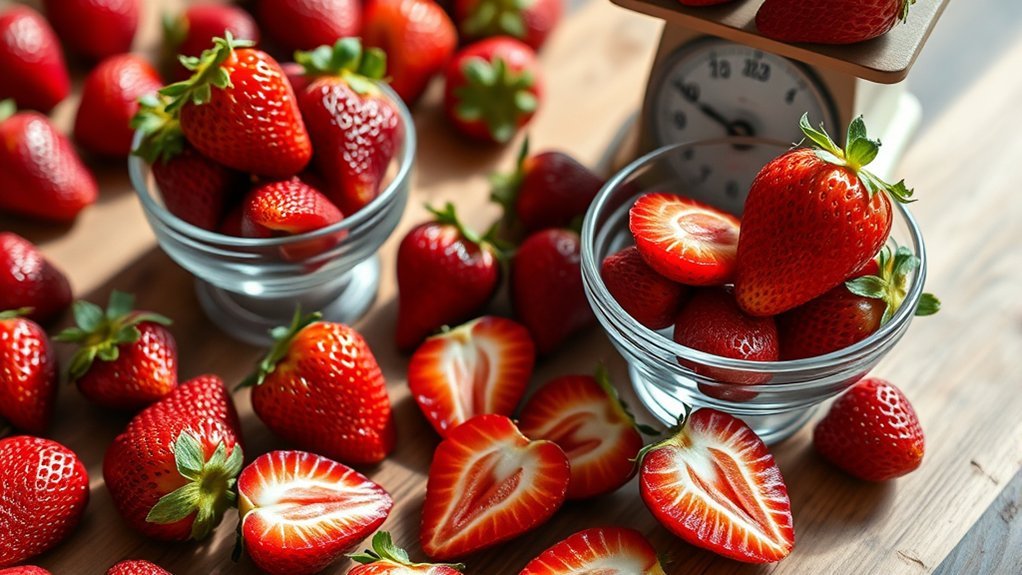
You’ll find that strawberries have about 7.7 grams of carbohydrates per 100 grams. This includes roughly 4.9 grams of natural sugars.
Plus, they pack around 2 grams of dietary fiber.
That fiber isn’t just good for digestion; it also helps bring the net carbs down to under 6 grams.
Carbohydrate Content Overview
Carbohydrates play a key role in the nutritional profile of strawberries, offering a balance of natural sugars and fiber. When you check the carbohydrate content, you’ll find strawberries are a low-carb fruit option with approximately 7.7 grams per 100 grams.
Thanks to their low glycemic index of 40, they cause minimal spikes in blood sugar levels, making them a smart choice for maintaining stable energy.
Here’s what you get in a 100-gram serving of strawberries:
- About 4.9 grams of natural sugars, giving them their sweet taste
- Around 2 grams of dietary fiber, which supports digestion
- Less than 6 grams of net digestible carbohydrates due to fiber content
This balance makes strawberries both tasty and healthy for your diet.
Natural Sugars Explained
Strawberries contain nearly 5 grams of natural sugars per 100-gram serving, which gives them their pleasant sweetness without overwhelming your diet. These natural sugars are part of the 7.7 grams of total carbohydrates found in that same serving.
Because the sugars come from the fruit itself, they provide energy alongside essential nutrients, all while keeping the calorie count low, just 32 calories per 100 grams. This makes strawberries a smart choice if you want a sweet snack that won’t spike your blood sugar.
Plus, with fewer than 6 grams of net digestible carbs, you can enjoy strawberries even on low-carb diets. Their natural sugars deliver flavor and energy without adding excessive calories, fitting well into a balanced eating plan.
Dietary Fiber Benefits
While natural sugars provide energy, the dietary fiber in strawberries plays an essential role in supporting your digestive health and keeping you feeling full longer.
With 2 grams of dietary fiber per 100 grams, strawberries help regulate digestion and manage appetite effectively. Plus, their low net digestible carbs (under 6 grams) make them a smart choice for low-carb diets.
Here’s why dietary fiber in strawberries benefits you:
- Supports a healthy digestive system by promoting regularity.
- Helps lower cholesterol levels, contributing to a healthy heart.
- Controls blood sugar levels due to a low glycemic index of 40.
Including strawberries in your diet not only satisfies your sweet tooth but also supports your heart and overall well-being.
Fat and Protein in Strawberries

You’ll find that strawberries contain a modest amount of protein, about 0.7 grams per 100 grams, which adds some nutritional value without making them a major protein source.
While this protein content is relatively low compared to other foods, strawberries do provide small amounts of essential amino acids like tryptophan, threonine, and leucine.
When it comes to fat, strawberries are an excellent low-fat choice, containing only about 0.3 grams of total fat per 100 grams.
Of this fat, just 0.02 grams is saturated fat, which is minimal and helps keep strawberries heart-healthy.
Glycemic Index and Blood Sugar Impact
Beyond their low fat and modest protein content, strawberries also stand out for their minimal effect on blood sugar levels. With a low glycemic index of 40, they cause only a gentle rise in blood sugar, making them a smart choice if you’re watching your glucose. Their glycemic load is equally low at 3, which further supports stable blood sugar management.
Strawberries, low in fat and protein, gently raise blood sugar with a glycemic index of just 40.
Here’s why strawberries are great for blood sugar control:
- Contain fewer than 6 grams of net digestible carbs per 100 grams
- May reduce insulin spikes, aiding those managing diabetes
- Packed with antioxidants that help regulate blood sugar and reduce metabolic syndrome risk
Including strawberries in your diet can support steady blood sugar levels without sacrificing taste.
How Fiber in Strawberries Supports Weight Management
Fiber plays an essential role in weight management, and strawberries provide a valuable source with about 2 grams of dietary fiber per 100 grams. When you eat strawberries, the fiber helps promote feelings of fullness, which can reduce your overall calorie intake. This makes strawberries a smart snack choice if you’re trying to manage your weight.
Furthermore, the fiber in strawberries supports healthy digestion, which is vital for effective weight management.
Because strawberries have a low glycemic index and high water content, they help keep your energy stable and curb cravings. By incorporating strawberries into your diet, you boost your fiber intake, supporting your weight management goals while enjoying a delicious, low-calorie treat.
Vitamins and Minerals in Strawberries
Strawberries not only help with weight management but also pack a powerful nutritional punch. When you check the Nutrition Facts, you’ll see they’re an excellent source of vitamin C, providing about 59 mg per 100 grams. That covers roughly 65% of your daily needs.
Strawberries aid weight management and deliver about 65% of your daily vitamin C per 100 grams.
Besides vitamin C, strawberries offer essential minerals that support your body’s functions.
Here are three key nutrients you get from strawberries:
- Manganese: 0.39 mg per 100 grams, about 17% of the daily value, important for metabolism and bone health.
- Potassium: 153 mg per 100 grams, around 4.5% of your daily requirement, essential for blood pressure regulation.
- Calcium and Iron: Small but valuable amounts to support bone strength and oxygen transport.
Including strawberries in your diet boosts your intake of significant vitamins and minerals effortlessly.
Health Benefits of Strawberries
You’ll find that strawberries do more than just satisfy your sweet tooth—they actually support your heart by improving cholesterol levels and lowering blood pressure.
Plus, their antioxidants fight inflammation and protect your cells from damage.
Cardiovascular Health Benefits
Although you mightn’t immediately associate them with heart health, eating strawberries regularly can boost your cardiovascular system. Just one serving of strawberries provides nutrients that support your heart in several ways.
Including strawberries in your diet can raise HDL (good) cholesterol levels and help reduce blood pressure, both essential for heart health. They also provide fiber that aids in managing cholesterol and maintaining healthy blood vessels.
Plus, strawberries help regulate blood sugar levels thanks to their low glycemic index, reducing strain on your cardiovascular system.
Antioxidant and Anti-Inflammatory Effects
Because they’re packed with antioxidants like anthocyanins, eating strawberries can help reduce inflammation and protect your body from oxidative stress.
These antioxidants fight free radicals, which are linked to chronic diseases such as heart disease and cancer.
By including strawberries in your diet, you tap into their anti-inflammatory properties that help lower inflammation markers throughout your body.
This not only supports overall health but also contributes to better blood sugar regulation and metabolic function.
The phenolic compounds in strawberries even show potential in inhibiting tumor formation.
Comparing Strawberry Calories to Other Fruits
When comparing fruits for a low-calorie snack, strawberries stand out with just about 32 calories per 100 grams. If you’re watching your calorie intake, strawberries offer a lighter option compared to many popular fruits.
Here’s how they stack up:
- Apples: Around 52 calories per 100 grams, making them nearly twice as calorie-dense as strawberries.
- Bananas: About 89 calories per 100 grams, considerably higher due to their natural sugars.
- Blueberries: Approximately 57 calories per 100 grams, still more than strawberries.
Besides calories, strawberries have fewer digestible carbs, under 6 grams per 100 grams, compared to grapes, which have about 17 grams.
How to Include Strawberries in a Low-Calorie Diet
If you want to enjoy a flavorful snack without piling on calories, adding strawberries to your diet is a smart choice. Strawberries offer excellent strawberry nutrition with only 32 calories per 100 grams. Including about eight strawberries daily can boost your nutrient intake and keep calorie consumption low.
Their low glycemic index helps maintain stable blood sugar levels, making them perfect for a low-calorie daily diet. You can add strawberries to salads, smoothies, or use them as a natural sweetener in yogurt or oatmeal to increase fiber and satiety without adding many calories.
| Serving Idea | Benefit |
|---|---|
| Fresh Strawberries | Low calorie, high fiber |
| Smoothies | Nutrient-rich, filling |
| Salads | Adds flavor, boosts fiber |
| Yogurt topping | Natural sweetener, low cal |
| Oatmeal addition | Enhances taste, low glycemic |
Frequently Asked Questions
Can Strawberry Seeds Cause Allergies?
Strawberry seeds themselves don’t usually cause strawberry allergies or seed reactions. The allergic response mostly comes from proteins in the fruit, like anthocyanins, not the seeds.
If you have strawberry allergies, it’s the fruit’s proteins you need to watch out for, not the seeds.
However, everyone’s different, so if you’re worried about reactions, it’s a smart idea to talk with your healthcare provider before eating strawberries.
Are Frozen Strawberries as Nutritious as Fresh Ones?
Yes, frozen strawberries are as nutritious as fresh ones. You get similar benefits like preserved vitamin C and antioxidants, thanks to quick freezing that locks in nutrients.
When you make fresh comparisons, the main difference is texture and flavor, but nutrition stays intact. Choosing frozen strawberries without added sugars guarantees you enjoy these benefits while keeping calories low.
How Should Strawberries Be Stored for Maximum Freshness?
You know what they say: “A stitch in time saves nine.”
For maximum freshness, store your strawberries using proper refrigeration methods, ideally at an ideal temperature around 32°F to 36°F.
Keep them in a breathable container lined with paper towels to absorb moisture, and don’t wash them until just before eating.
Also, avoid storing them near ethylene-producing fruits like bananas to prevent premature spoilage.
This way, you’ll enjoy fresh, delicious strawberries longer.
Do Strawberries Have Any Medicinal Uses?
Yes, you’ll find plenty of strawberry benefits thanks to their medicinal properties.
Strawberries are packed with antioxidants and vitamin C, which support your immune system and reduce inflammation.
They can help improve heart health by boosting HDL cholesterol and lowering blood pressure.
Plus, strawberries may aid in blood sugar regulation, making them useful for managing diabetes risk.
Including them in your diet is a tasty way to promote overall wellness.
Can Eating Strawberries Affect Skin Health?
Yes, eating strawberries can positively affect your skin health.
The strawberry benefits include high vitamin C content, which supports collagen production and skin repair. Their antioxidants help fight oxidative stress, reducing signs of aging.
Plus, strawberries have a high water content that promotes skin hydration and elasticity.
Conclusion
Strawberries are your sweet little calorie allies, bursting with flavor without weighing you down. With their natural sugars, fiber, and vitamins dancing together, they’re perfect for fueling your day while keeping your energy steady.
Whether you’re snacking, blending, or topping your favorite dishes, these ruby gems fit effortlessly into any low-calorie plan. So go ahead, let strawberries add a splash of health and happiness to your plate, one juicy bite at a time.