
How Long Do Strawberries Take to Grow
You can expect strawberries to take about four to six months from seed to harvest. Start seeds indoors 10 to 12 weeks before the last frost, and they’ll germinate in 1 to 6 weeks with proper care.
Transplant seedlings when they’re 2 to 3 inches tall. Then wait another 4 to 6 weeks for them to establish and flower. Seasonal changes and variety affect timing.
Keep going to discover how to boost growth and get sweeter berries faster.
When Should You Start Strawberry Seeds Indoors?
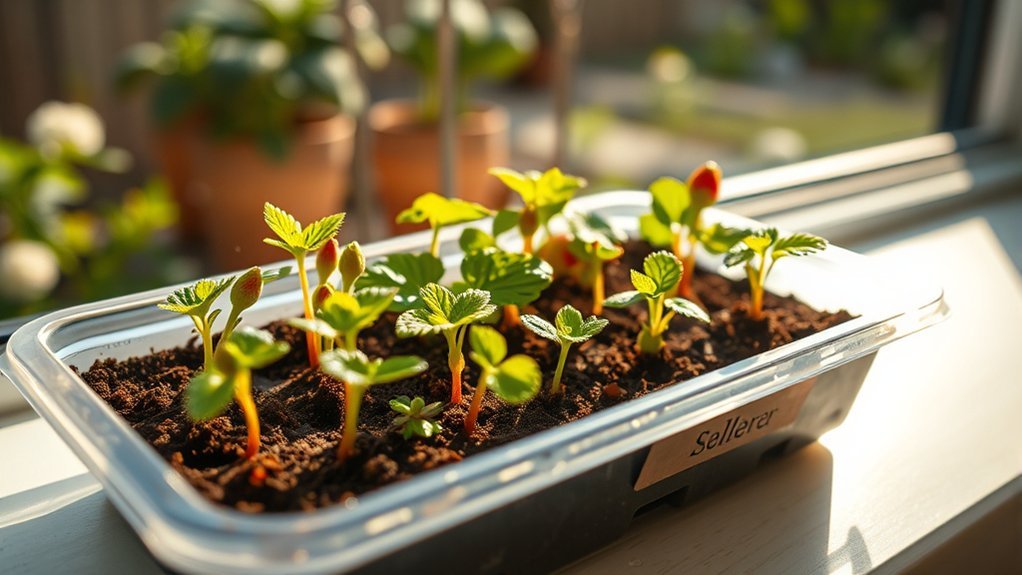
To get your strawberry plants off to the best start, you should begin strawberry seeds indoors about 10 to 12 weeks before the last expected spring frost. This timing guarantees your seedlings have enough warmth and light to grow strong before moving outside.
Start strawberry seeds indoors 10 to 12 weeks before the last spring frost for strong, healthy plants.
Before planting, most strawberry seeds benefit from cold stratification, meaning you’ll need to refrigerate them for 3 to 4 weeks to mimic winter conditions.
After stratification, plant the seeds in a pre-moistened seed starting mix, pressing them lightly without covering them with soil.
Keep the soil barely moist and provide adequate light and warmth. These steps improve your strawberry seeds’ chances of germinating well and developing into healthy plants ready for transplant once the outdoor temperatures are favorable.
How Long Do Strawberry Seeds Take to Germinate?
Strawberry seeds usually take between one and six weeks to germinate, depending on the variety and growing conditions.
To get the best results, you’ll need to cold stratify the seeds for 3-4 weeks, mimicking winter’s chill.
Sow the strawberry seeds in a pre-moistened seed starting mix, pressing them down gently but not covering them with soil, so they receive enough light and moisture.
Keep the environment warm and consistently moist to encourage germination.
Remember, patience is key. Some seeds sprout quicker than others.
Once your seeds begin to sprout and develop true leaves, they’ll be ready for the next stage of care.
Proper attention during this phase sets the foundation for healthy strawberry plants down the line.
How Long Before Strawberry Seedlings Are Ready to Transplant?
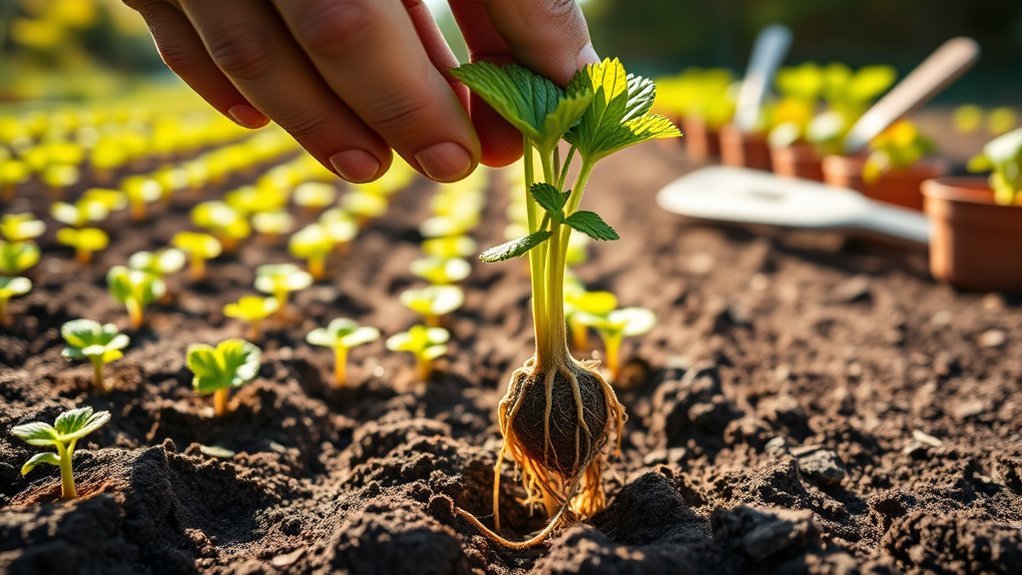
You’ll want to wait about 6 to 8 weeks after germination before transplanting your strawberry seedlings.
That’s usually the sweet spot when they’re strong enough to handle the move. Keep an eye out for seedlings that are around 2-3 inches tall and have several true leaves—that’s a good sign they’re ready to go.
And here’s a tip: don’t forget to harden them off for about a week before planting them outside.
This helps them adjust gradually to outdoor conditions, so they’ll have a better chance of thriving once you transplant them.
Seedling Growth Timeline
Although strawberry seeds can take anywhere from one to six weeks to germinate after cold stratification, you’ll typically wait about 10 to 12 weeks from sowing before seedlings are ready to transplant.
This seedling growth timeline means you should monitor their progress carefully. Your seedlings should reach 2 to 3 inches tall and develop several true leaves before transplanting.
During this period, regular fertilization supports healthy growth.
Keep in mind that waiting until after the last frost is vital for successful transplantation.
To prepare your seedlings, harden them off for 7 to 10 days by gradually exposing them to outdoor conditions.
Following this seedling growth timeline guarantees your strawberries establish well and thrive once moved to the garden.
Transplanting Readiness Signs
When seedlings reach about 2 to 3 inches tall and develop several true leaves, they’re usually ready to move outdoors. This typically happens 4 to 6 weeks after germination. For strawberry seedlings, this marks the ideal transplanting time.
However, you should wait until after the last frost to avoid damaging your young plants. Before planting them in your garden, harden off your strawberry seedlings by gradually exposing them to outdoor conditions over a week. This helps them adjust to temperature and sunlight changes.
When transplanting, space regular strawberries 8 to 12 inches apart, while alpine varieties need 6 to 8 inches.
Keep in mind, local climate and growing conditions affect timing, so monitor your seedlings closely to confirm they’re healthy and ready for the shift.
How Long Do Strawberry Plants Take to Establish After Transplanting?
Since successful transplanting sets the stage for healthy growth, strawberry plants typically take about 4 to 6 weeks to establish after you move them.
Strawberry plants usually need 4 to 6 weeks to establish healthy growth after transplanting.
During this time, you’ll want to pay close attention to their needs to promote strong root development and overall vigor.
To help your strawberry plants settle in, focus on these key factors:
- Keep the soil consistently moist but not waterlogged to support root growth.
- Protect the plants from harsh weather by providing shade or windbreaks if needed.
- Harden off seedlings gradually before transplanting to minimize shock and encourage steady establishment.
When Do Strawberry Plants Start to Flower?
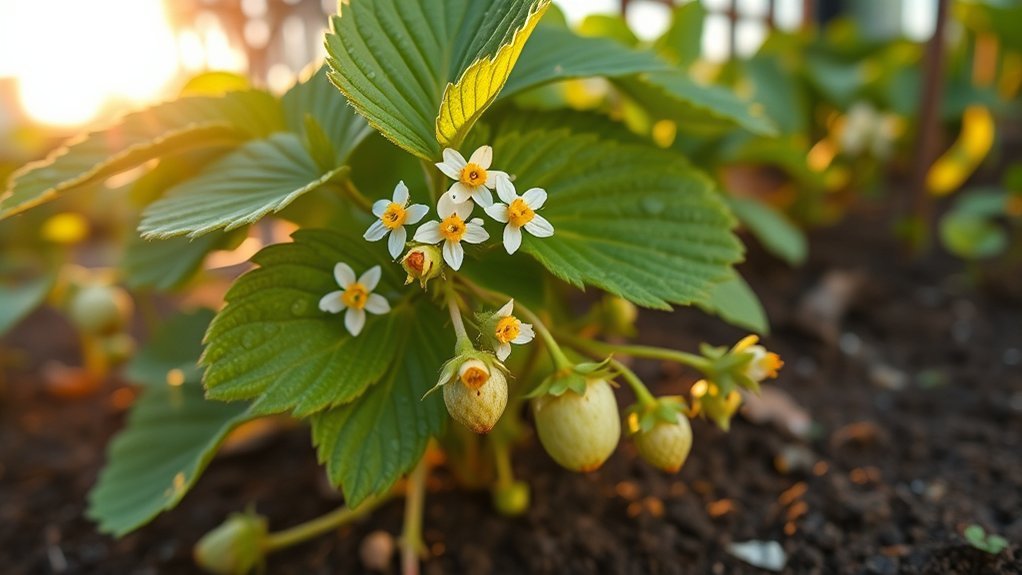
You’ll usually see strawberry plants start to flower about 4 to 6 weeks after transplanting.
But, of course, this depends on the variety and growing conditions.
Things like sunlight, care, and the type of strawberry you’re growing play a big role in when and how abundantly they bloom.
Knowing these factors can help you time your harvest better and get the most fruit from your plants.
Flowering Timeframe
Although strawberry plants vary by type and environment, they typically start to flower 4 to 6 weeks after planting. Understanding the flowering timeframe helps you anticipate when your plants will begin their fruiting cycle.
Keep in mind these key points:
June-bearing varieties usually flower in late spring, offering a concentrated harvest.
Day-neutral and everbearing types produce flowers and fruit throughout the growing season.
Warmer temperatures often trigger earlier blooms, accelerating the flowering timeframe.
During the first year, flowers may appear in late spring or early summer, but fruit production is often minimal.
Influencing Growth Factors
When strawberry plants reach about 10 to 12 inches tall and develop several sets of leaves, they usually start to flower within 4 to 6 weeks after transplanting. The exact timing depends on the variety and growing conditions.
If you’re growing strawberries in a long season, your plants might flower and fruit as early as fall, but in shorter seasons, expect flowering in spring. Temperature, sunlight, and the specific cultivar you choose play key roles in when flowers appear.
To encourage healthy blooms, make sure you water regularly and fertilize appropriately. Paying attention to these factors will help you optimize flowering and fruit production, making your experience with growing strawberries more successful and rewarding.
How Long From Flowering to Ripe Strawberries?
Since strawberries usually take about 30 to 40 days to ripen after flowering, you’ll want to keep a close eye on their color and size.
The timeline from flowering to ripe strawberries depends on factors like sunlight, temperature, and moisture, which can speed up or slow down ripening.
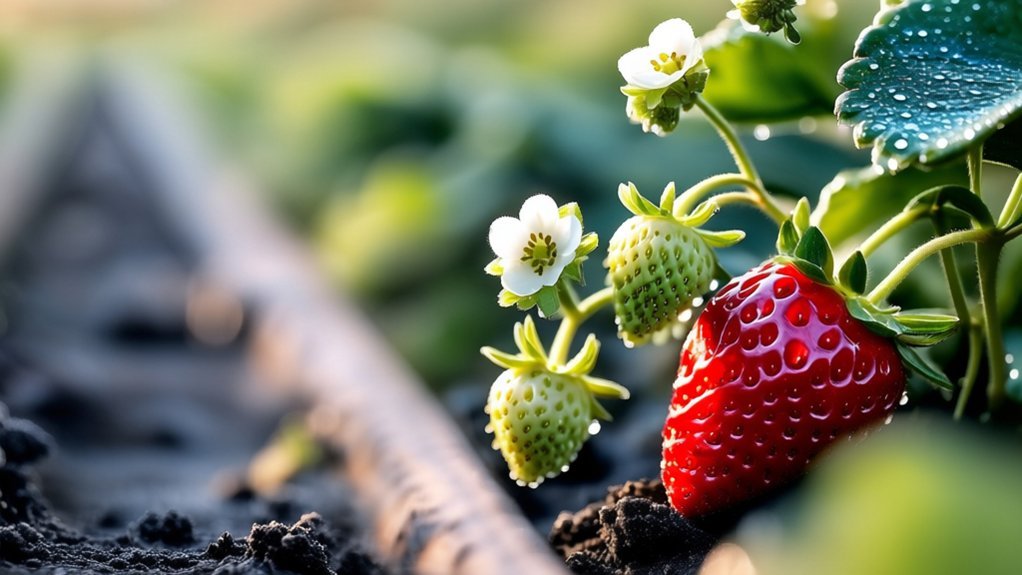
You’ll notice the fruit changing from green to a deep red as it nears harvest time, typically 1-2 weeks after flowering.
Watch for these signs to know when your strawberries are ready:
- Color shifts from pale green to vibrant red
- Fruit swells to full size and feels firm
- Days since flowering reach around 30 to 40
How Long Do Different Strawberry Varieties Take to Mature?
Different strawberry varieties have unique timelines for reaching maturity, affecting when you can expect to harvest their fruit.
Strawberry varieties mature on different schedules, influencing your harvest timing and garden planning.
If you’re wondering how long do different strawberry varieties take to mature, June-bearing strawberries typically fruit 4 to 6 weeks after flowering, with harvests in late spring or early summer.
Everbearing varieties start producing fruit 6 to 8 weeks after planting and can yield throughout the season.
Day-neutral strawberries are quick, often fruiting as soon as 5 weeks after planting and continuing until frost.
Alpine strawberries mature slower, taking 6 to 8 weeks post-flowering but also produce continuously.
Knowing these differences helps you plan your garden and enjoy fresh strawberries at various times throughout the growing season.
Each variety’s maturity timeline suits different gardening goals and harvest schedules.
What Factors Affect How Fast Strawberries Grow?
You’ll notice that how fast your strawberries grow depends a lot on the variety you choose. Some types produce fruit quicker than others, so picking the right one matters.
Then, the environment you provide makes a big difference too. Things like temperature, sunlight, and soil quality can either speed up or slow down their growth.
Let’s dive into how all these factors come together and what that means for your strawberry harvest timeline.
Environmental Growth Conditions
When you provide strawberries with the right environment, they grow faster and healthier. Environmental growth conditions play a crucial role in how quickly your strawberries develop.
To optimize growth, focus on these key factors:
Soil quality: Use well-draining, nutrient-rich soil to support strong roots and overall plant health.
Sunlight: Guarantee your strawberries get 6-8 hours of direct sunlight daily to boost fruit development.
Temperature: Maintain temperatures between 60-80°F (15-27°C) for ideal flowering and fruiting.
Additionally, consistent watering without overwatering and good air circulation prevent diseases and promote steady growth.
Strawberry Variety Differences
Three main strawberry varieties—June-bearing, everbearing, and day-neutral—each follow unique growth and fruiting schedules. June-bearing strawberry plants produce a large, concentrated crop in late spring to early summer, while everbearing and day-neutral varieties yield fruit continuously throughout the growing season.
How fast your strawberry plant grows also depends on factors like climate, soil, and seedling maturity. Strawberries thrive in well-draining, nutrient-rich soil with a slightly acidic pH between 5.5 and 6.5.
Ideal temperatures range from 60°F to 80°F, so keep that in mind. Transplant seedlings when they’re 2-3 inches tall with several true leaves for quicker establishment.
Don’t forget regular watering, fertilization, and pest control. These will speed up growth and help your strawberry plant fruit faster, especially for long-season varieties.
How Do Seasonal Changes Affect Strawberry Growth?
Although strawberry plants can grow throughout much of the year, seasonal changes play an essential role in their development and fruit production. These shifts in temperature and daylight signal your plants when to grow, rest, or prepare for fruiting.
Understanding how seasonal changes affect strawberry growth helps you manage your garden better.
Knowing how seasons influence strawberries improves your gardening success.
In autumn, cooler temperatures cause plants to enter dormancy, reducing leaf growth as they conserve energy.
Winter prompts the formation of larger crowns, which are key for next season’s fruit, while leaves become smaller.
Spring’s warmer days trigger new growth and flowering, but cold snaps may delay fruiting.
How Can You Speed Up Strawberry Growth for an Earlier Harvest?
If you want to enjoy strawberries sooner, starting seeds indoors well before the last frost can give your plants a head start.
Begin 10-12 weeks ahead, providing warmth and light to speed up strawberry growth during germination.
Cold stratify seeds for 3-4 weeks to boost germination rates and quicken seedling establishment.
Once seedlings reach 2-3 inches tall and the frost has passed, transplant them outside, gradually acclimating them to outdoor conditions.
Regularly apply a balanced fertilizer since strawberries are heavy feeders.
This promotes faster growth and earlier fruiting.
Moreover, use mulch around your plants to retain moisture, suppress weeds, and regulate soil temperature.
These steps help you speed up strawberry growth, leading to an earlier, more bountiful harvest.
How to Care for Young Strawberry Plants to Support Growth
To support healthy growth, you’ll need to keep young strawberry plants consistently moist without overwatering. This encourages strong root development.
Growing strawberries also means providing plenty of sunlight. Aim for 6-8 hours daily to fuel photosynthesis and liveliness.
Once your plants have several leaves, fertilize them with a balanced formula to boost growth and future fruit yield.
Mulching around the base helps maintain moisture, controls weeds, and stabilizes soil temperature. This further supports growing plants.
Here’s a quick care checklist for young strawberries:
- Water regularly but avoid soggy soil to prevent root rot
- Guarantee full sun exposure for at least 6 hours daily
- Apply balanced fertilizer after multiple leaf sets and mulch to retain moisture
Following these tips will set your plants up for vigorous, healthy growth.
When Is the Best Time to Harvest Strawberries for Peak Flavor?
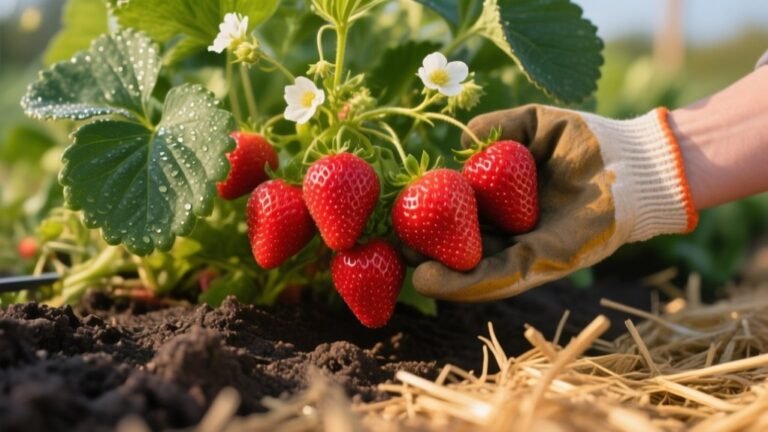
When should you pick strawberries to enjoy their fullest flavor? You want to harvest strawberries for peak flavor when they’re fully red, firm, and glossy. This means they’re ripe and ready to be picked.
Taste testing helps. Ripe strawberries taste sweet, while underripe ones will be sour. Keep in mind, strawberries usually take 4-6 weeks to ripen after flowering, depending on variety and conditions.
Warm weather and plenty of sunlight speed up ripening, while cooler temps slow it down. To preserve the best flavor and texture, pick your strawberries in the morning when it’s cooler.
Frequently Asked Questions
Can Strawberries Be Grown Successfully in Containers or Small Spaces?
Yes, you can successfully grow strawberries in containers or small spaces using container gardening.
Just pick compact varieties like alpine or day-neutral strawberries. Use containers at least 12 inches deep with good drainage.
Make sure to water regularly and fertilize since container plants dry out faster.
Place your containers where they’ll get 6-8 hours of sunlight daily.
You’ll enjoy fresh, homegrown strawberries even with limited space.
What Pests and Diseases Commonly Affect Strawberry Plants?
You’ll often face pests like aphids, spider mites, and slugs on your strawberry plants.
Diseases such as powdery mildew and botrytis blight can also cause trouble, especially in warm or humid conditions.
Root rot can develop if you overwater or have poor drainage.
To keep your plants healthy, you’ll want to practice good pest management by regularly inspecting your plants and using integrated pest control methods to protect your crop.
How Do You Propagate Strawberries From Runners?
To propagate strawberries from runners, start by selecting healthy runners growing from the parent plant.
Place the runner’s tip in a small pot filled with soil, keeping it slightly elevated to avoid rot while still attached to the mother plant for nutrients.
You’ll need to wait about 4-6 weeks as roots and leaves develop.
Once the new plant is strong, sever the runner and transplant it.
Keep soil moist and provide ample sunlight for successful runners propagation.
What Are the Nutritional Benefits of Eating Strawberries?
Eating strawberries is like giving your body a revitalizing vitamin boost. You’ll enjoy health benefits like a high dose of vitamin C, which supports your immune system and skin health.
Strawberries also pack antioxidants that fight oxidative stress, plus fiber to aid digestion and manage cholesterol.
Low in calories but rich in minerals like manganese and folate, they’re a delicious way to strengthen bones and keep your cells functioning well.
Can Strawberries Be Grown Year-Round Indoors With Grow Lights?
Yes, you can grow strawberries year-round indoors with grow lights.
Indoor cultivation lets you control light, temperature, and humidity, creating perfect conditions for strawberry plants.
By providing 12-16 hours of light daily and maintaining temperatures between 60-75°F, your strawberries will thrive.
Make sure you water them regularly and use well-draining soil to keep roots healthy.
With the right setup, you’ll enjoy fresh strawberries any time you want.
Conclusion
Growing strawberries takes patience, but the wait is worth it. While seeds might seem slow to germinate and seedlings fragile at first, once transplanted, they quickly establish and bloom.
Seasonal changes can either delay or accelerate growth, so your care makes all the difference. By nurturing young plants and timing your harvest just right, you transform slow beginnings into sweet, juicy rewards.
In the end, the contrast between waiting and tasting makes the harvest even sweeter.