
How Long Do Frozen Strawberries Last
You can keep frozen strawberries at their best quality for about 6 to 12 months if you store them properly in airtight containers or vacuum-sealed bags. After that, they’re still safe to eat but may lose flavor and texture, becoming mushy or dry due to freezer burn.
To make them last longer, keep your freezer temperature steady and avoid refreezing once thawed. Curious about the best freezing and thawing tips or how to spot spoilage?
How Long Do Frozen Strawberries Last in the Freezer?
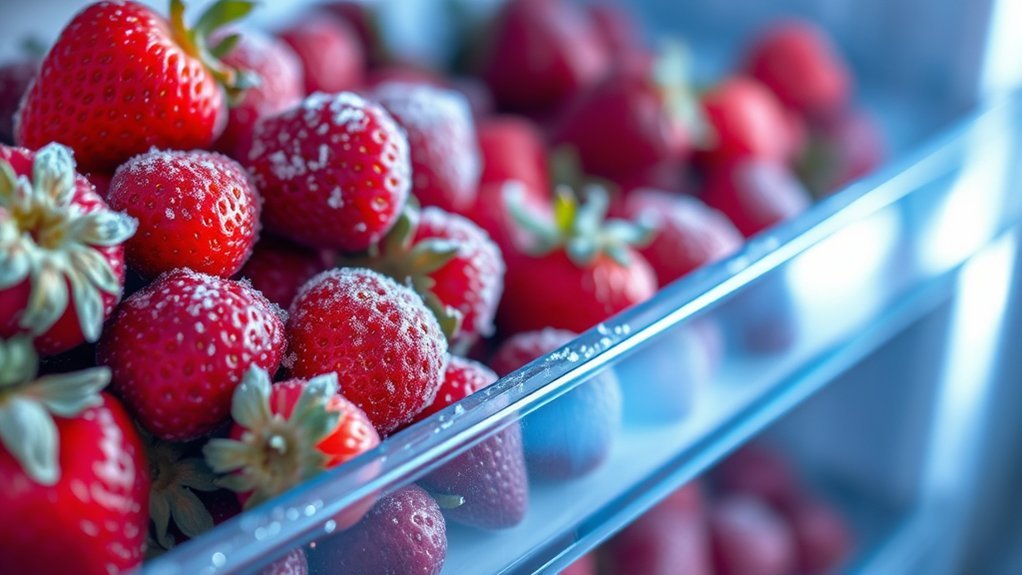
Wondering how long frozen strawberries last in your freezer? Typically, they maintain their best quality for about 12 months if you store them properly.
Frozen strawberries keep their best quality for about a year when stored correctly in your freezer.
Commercially frozen strawberries can last even longer, up to 18 months, thanks to advanced processing methods.
If you freeze strawberries at home, expect them to stay fresh between 6 to 12 months. To make frozen strawberries last, keep them sealed tightly and store them at a constant 0°F.
Watch out for ice crystals or discoloration, which signal freezer burn and a drop in quality.
Even after the recommended storage time, frozen strawberries are safe to eat, but you might notice a change in flavor and texture.
Proper storage is key to enjoying them at their best.
Key Factors That Affect Frozen Strawberries’ Shelf Life
Although freezing strawberries preserves them for months, several key factors determine how long they actually last. The freezing method plays a big role. Flash-frozen (IQF) strawberries generally have a longer shelf life than those frozen at home because they lose less moisture and stay protected from microbes.
You’ll also want to keep your freezer temperature stable. Fluctuations can damage the fruit and shorten its shelf life. Packaging matters, too. Vacuum-sealed bags reduce air exposure, preventing freezer burn and preserving quality.
How to Freeze Strawberries for Maximum Longevity

To freeze strawberries for maximum longevity, start by rinsing them gently and drying them thoroughly to prevent ice crystals from forming.
Remove stems and halve larger berries to guarantee they freeze evenly and are easier to use later.
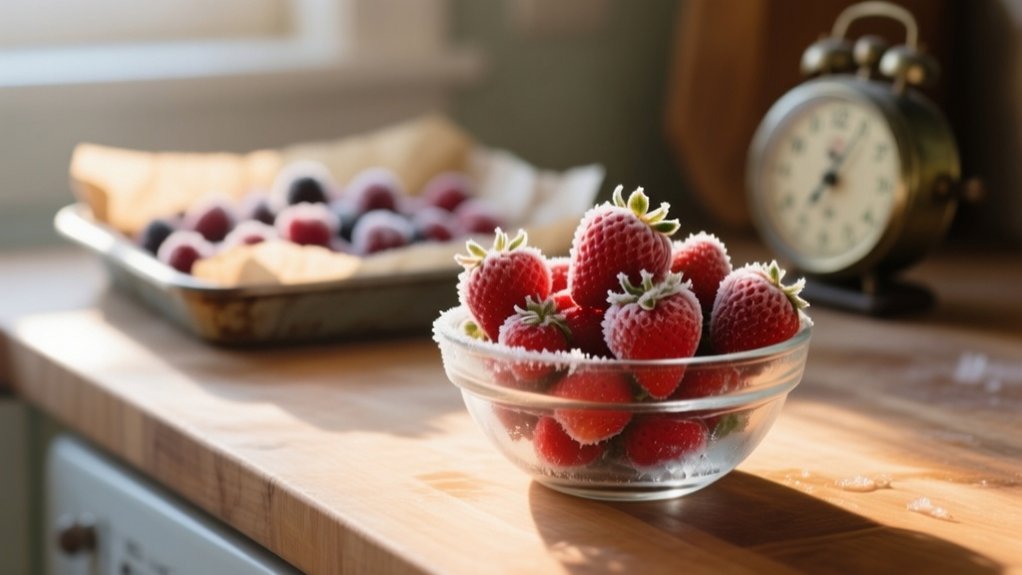
Next, spread the strawberries in a single layer on a baking sheet lined with wax paper. Freeze them uncovered for about six hours until they’re fully hardened.
Once frozen, transfer the strawberries to airtight, moisture-resistant containers or freezer-safe zip-top bags to minimize air exposure and avoid freezer burn.
Label your containers with the freezing date so you can track their storage time.
Following these steps will help you keep your frozen strawberries fresh and tasty for 6 to 12 months. This is the best way to freeze strawberries for maximum longevity.
Best Storage Containers and Packaging for Frozen Strawberries
Choosing the right storage containers and packaging plays a crucial role in keeping your frozen strawberries fresh and flavorful. Proper storage conditions prevent freezer burn and maintain texture.
Proper storage is key to preserving the freshness and texture of your frozen strawberries.
You’ll want to focus on containers that keep air and moisture out while fitting your usage habits.
Here are the best options for storing frozen strawberries:
Airtight, moisture-resistant containers or freezer-safe zip-top bags minimize air exposure.
Vacuum-sealed bags provide an excellent tight seal for long-term storage.
Portioning strawberries into single-use quantities avoids repeated thawing, preserving quality.
Labeling Tips to Track Frozen Strawberry Freshness
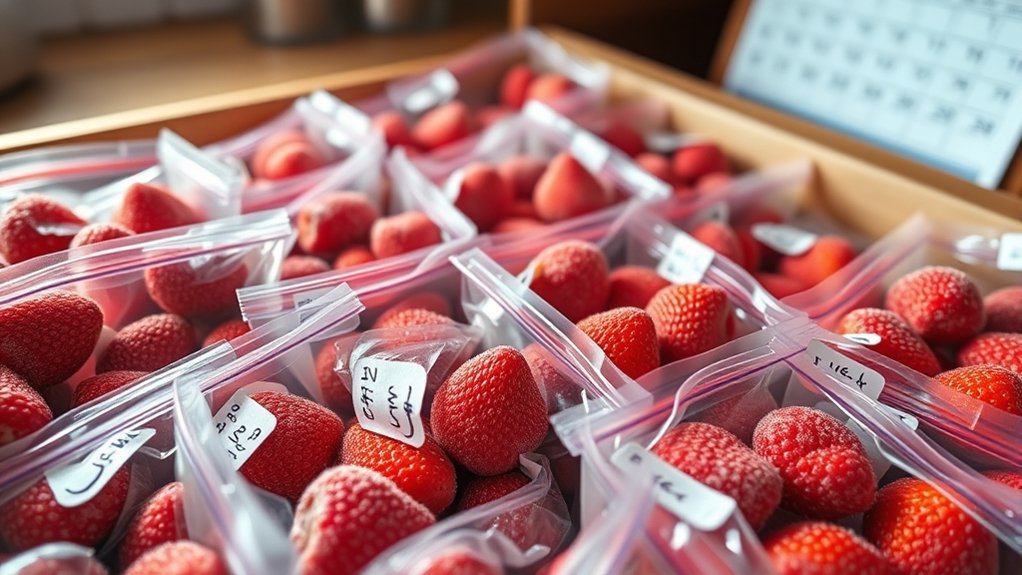
To keep your frozen strawberries fresh, always label containers with the date you froze them. That way, you can easily track how long they’ve been stored. It’s a simple step but really helps!
Also, use waterproof markers to make sure the info stays readable. You might want to include details like whether the berries are whole or sliced — it makes meal prep a lot easier later on.
Another handy tip is to use color-coded labels. This lets you quickly spot different batches and ensures you use them within their best 8 to 12 month window.
Keeping things organized means less waste and tastier berries!
Date Marking Importance
Although freezing preserves strawberries, labeling each container with the freezing date helps you track freshness and guarantees you use them within the ideal 6 to 12 months.
The date marking importance can’t be overstated when keeping your strawberries freezer safe to eat.
To make the most of your frozen strawberries, try these tips:
Use a permanent marker or label maker for clear, visible freezing dates.
Organize your freezer by storing strawberries based on their freezing dates.
Regularly check dates to prioritize using older stock first and reduce waste.
Labeling Methods Overview
When you freeze strawberries, labeling each container with the freezing date is key to keeping track of their freshness and ensuring you use them within 8 to 12 months.
A good labeling methods overview includes using waterproof markers or labels so the date won’t fade or smudge while stored properly.
You can also add details like the berry source or intended use to simplify meal prep. Updating labels regularly, especially if you’ve used some berries, helps maintain accuracy.
Some people find color-coding effective to quickly identify which batch to use first.
These simple steps help you manage your frozen strawberries efficiently, avoid waste, and make sure you always enjoy them at their best quality.
Tracking Storage Duration
Keeping track of how long your strawberries have been frozen is essential for enjoying them at their best. Proper tracking storage duration helps you maintain frozen strawberries‘ freshness and avoid waste.
Start by labeling each container or freezer bag with the freezing date using a permanent marker or waterproof label to keep the date legible over time. Remember, home-frozen strawberries are best within 6 to 12 months, while commercially frozen ones can last 12 to 18 months.
To efficiently track storage duration, consider these tips:
- Use clear labels with freezing dates on all packages
- Regularly inspect for freezer burn or discoloration
- Keep a log of your frozen strawberries inventory to manage usage
This way, you’ll always know when your frozen strawberries are at their peak quality.
How to Identify Signs of Spoilage in Frozen Strawberries
You’ll want to check your frozen strawberries for signs like whitish patches or dull colors. That can mean freezer burn or a loss of freshness.
Also, pay attention to any texture changes. For example, if they’re mushy after thawing, that’s definitely a red flag.
And don’t forget to use your nose—if there’s an off or sour smell, it’s time to toss them out.
Visual Spoilage Indicators
Visual cues play an essential role in spotting spoilage in frozen strawberries. When you inspect your frozen strawberries, look closely for any signs that suggest they’re no longer good to eat.
Here are key visual indicators to watch for:
Discoloration: Dull or brownish patches on the berries signal potential spoilage.
Ice crystals: Excessive frost or ice buildup means freezer burn, which can ruin flavor and texture.
Mold or unusual spots: Any fuzzy growth or strange marks indicate contamination.
Texture And Smell Changes
Besides appearance, texture and smell changes offer clear clues that your frozen strawberries might’ve spoiled.
When you thaw them, pay close attention to their texture. If the berries feel mushy or unusually soft, it’s a sign they’ve lost quality.
Ice crystals on the surface can indicate freezer burn, which negatively affects both texture and taste.
Also, trust your nose. A sour or fermented smell is a strong indicator the strawberries have gone bad and should be discarded.
Regularly checking these signs helps you avoid consuming spoiled fruit.
How Does Freezer Burn Affect Frozen Strawberries?
Freezer burn happens when air reaches the surface of your frozen strawberries, causing dehydration and creating whitish or grayish patches.
While freezer burn doesn’t make strawberries unsafe to eat, it seriously impacts their texture and flavor, leaving them dry and less tasty.
You’ll often spot ice crystals on freezer-burned berries, signaling moisture loss and air exposure. Once freezer burn sets in, the damage is permanent, so it’s best to use these strawberries in cooked dishes where texture isn’t as important.
To avoid freezer burn, consider these tips:
- Use vacuum-sealed bags or airtight containers to limit air exposure.
- Store strawberries promptly after freezing to maintain quality.
- Avoid fluctuating freezer temperatures that encourage moisture loss.
Taking these steps helps preserve your frozen strawberries longer and keeps them tasting fresh.
Can You Refreeze Thawed Strawberries Safely?
Although thawed strawberries can be refrozen safely if they’ve been kept in the refrigerator and not left out for more than two hours, you should be aware that their texture will likely suffer.
When you refreeze strawberries, expect them to become softer and less appealing for fresh eating. It’s best to use refrozen strawberries in recipes where texture isn’t essential, like smoothies, sauces, or baked goods.
Before you decide to refreeze strawberries, always check for spoilage signs such as off smells, discoloration, or mold.
If they’ve been left at room temperature for over two hours, it’s safer to discard them due to bacterial risks.
How to Thaw Frozen Strawberries Without Losing Quality
Once you’ve decided to thaw your frozen strawberries, handling them properly will help preserve their flavor and texture. The best method is to thaw frozen strawberries slowly in the refrigerator overnight. This keeps their quality intact.
If you’re short on time, submerge the sealed bag in cool water for about 30 minutes, but avoid warm water to prevent partial cooking. Steer clear of microwaving since it causes uneven thawing and mushiness.
To thaw frozen strawberries without losing quality, remember to:
Thaw frozen strawberries slowly in the fridge or use cool water to keep their texture fresh.
- Thaw slowly in the fridge overnight for best results
- Use cool water for a quick thaw, never warm or hot
- Avoid the microwave to maintain texture
After thawing, keep the strawberries refrigerated and use them within 3 to 5 days.
How Frozen Strawberries’ Texture and Flavor Change Over Time
As you store frozen strawberries over time, you’ll notice their texture tends to soften and become mushy due to ice crystal formation during freezing and thawing.
This process damages cell walls, making the berries less firm.
If you refreeze strawberries after thawing, their texture will degrade even more, turning softer and less appealing.
Flavor-wise, frozen strawberries start to lose their vibrant taste after about six months, becoming less fresh and flavorful.
If stored beyond 12 months, freezer burn or prolonged ice crystal exposure can cause a dry, rubbery texture and off-flavors.
While frozen strawberries remain safe to eat for a long time, their quality in flavor and texture greatly declines with extended storage, so it’s best to consume them within a year for the best experience.
Best Uses for Frozen Strawberries by Freshness Stage
You can get the most out of your frozen strawberries by matching their use to how long they’ve been stored.
Freshly frozen strawberries (0-3 months) shine in smoothies and desserts, preserving their vibrant flavor and texture.
Freshly frozen strawberries keep their vibrant flavor and texture, perfect for smoothies and desserts.
Once they’ve been frozen for 3-6 months, they’re great for baking. Think muffins, pies, and sauces. Their taste holds up even if the texture softens a bit.
For strawberries frozen 6-12 months, cooked recipes like jams and jellies work best since texture is less important and minor quality loss won’t hurt the outcome.
- Use freshly frozen strawberries in cold, fresh dishes.
- Bake with moderately frozen strawberries for best flavor.
- Cook older frozen strawberries to mask texture changes.
Always check for freezer burn or off smells before using your frozen strawberries.
Buying Quality Frozen Strawberries: What to Know
When you’re buying frozen strawberries, you’ll want to go for ones that are flash-frozen. This method locks in all the freshness and flavor, so your berries taste just as good as fresh ones.
Also, take a close look at the packaging—make sure it’s airtight and hasn’t been damaged. That way, you can avoid any pesky freezer burn.
And here’s a tip: stick with brands that have clear quality certifications and work with reliable suppliers. That’s usually a good sign you’re getting the best product possible.
Source and Freezing Method
Although frozen strawberries can last a long time, their quality depends heavily on the source and freezing method. When choosing frozen strawberries, you want to verify they’re sourced from reputable suppliers who prioritize freshness and quality.
How the strawberries are frozen also impacts their texture and taste.
Look for these key points:
Flash-frozen (IQF) strawberries preserve quality better and last longer than those frozen slowly.
Always check the packaging for a “Best By” date to enjoy peak flavor, ideally within 12 months.
Vacuum-sealed packaging reduces air exposure, preventing freezer burn and preserving freshness.
Packaging and Storage Conditions
Several factors in packaging and storage conditions play an essential role in maintaining the quality of frozen strawberries.
When you buy frozen strawberries, look for airtight, moisture-resistant packaging to reduce air exposure and prevent freezer burn.
Vacuum-sealed bags or containers are ideal since they better protect the berries from quality loss over time compared to traditional packaging.
Always check the packaging for a production or “best by” date to gauge freshness.
Also, opt for strawberries frozen using flash-freezing (IQF), as it preserves flavor and texture more effectively.
Before purchasing, inspect the packaging closely for any damage or signs of thawing, as compromised packaging can lead to spoilage and a decline in quality.
Proper packaging guarantees your frozen strawberries stay fresh longer.
Supplier Reputation and Certification
Because the quality of frozen strawberries depends heavily on the supplier, you should choose one with a strong reputation and verified certifications. A trusted supplier reputation guarantees the strawberries you buy maintain their freshness, flavor, and safety.
Look for suppliers that offer certifications like IQF (Individually Quick Frozen) to preserve texture and taste. Also, verify if they comply with food safety standards to assure safe consumption.
When selecting frozen strawberries, consider these factors:
- Positive reviews and traceability for quality assurance
- Certified freezing processes to maintain product integrity
- Packaging methods, such as vacuum-sealed bags, to prevent freezer burn
Frequently Asked Questions
Are Frozen Strawberries Nutritious Compared to Fresh Ones?
Yes, frozen strawberries are just as nutritious as fresh ones, especially when you consider the fresh comparison.
When strawberries are flash-frozen right after harvest, they retain most of their vitamins, minerals, and antioxidants.
So, you don’t lose much nutritional value compared to fresh berries.
Plus, frozen strawberries offer convenience without compromising health benefits, making them a smart choice when fresh strawberries aren’t in season or readily available.
Can Frozen Strawberries Be Used Directly in Smoothies?
Yes, you can use frozen strawberries directly in smoothies. Doing so gives your smoothie a thicker texture and keeps it colder without needing ice, which means your flavor won’t get diluted.
Just blend them with yogurt or milk for the best consistency.
Make sure your frozen strawberries are properly sealed and stored to keep their quality.
Using them this way makes your smoothie both delicious and nutritious.
Do Frozen Strawberries Lose Vitamin Content Over Time?
You might think frozen strawberries throw all their vitamins away over time, but that’s not how it works.
Thanks to good vitamin preservation, they actually keep most of their nutrients, especially vitamin C, for months.
Sure, they slowly lose some vitamin content, but you won’t notice much until after about a year.
How Do Frozen Strawberries Affect Baking Recipes?
When you use frozen strawberries in baking, they add moisture and natural sweetness, making them great baking substitutes for fresh berries.
You’ll want to mix them in frozen to avoid mushiness, and slightly reduce other liquids since they release water during baking. This helps keep your muffins or cakes from getting soggy while enhancing flavor.
Frozen strawberries also soften the texture, perfect if you want a tender crumb in your baked goods.
Can You Dehydrate Frozen Strawberries After Thawing?
Yes, you can dehydrate frozen strawberries after thawing.
Make certain you fully thaw and drain them to remove excess moisture before starting the dehydration process.
Slice them evenly to guarantee they dry uniformly and efficiently.
Set your dehydrator between 135°F and 145°F, and keep an eye on the strawberries to avoid over-drying, which can make them tough.
Once done, store them in an airtight container to keep their quality intact.
Conclusion
Frozen strawberries can be your kitchen’s little treasure chest, holding sweet bursts of summer ready whenever you need them. By freezing them properly and keeping track with labels, you’ll stretch their life and flavor far beyond fresh.
Remember, their texture might soften over time, but their taste stays vibrant. So, treat your frozen strawberries right, and you’ll always have a delicious, convenient ingredient at your fingertips to brighten up any dish.