
Months When Strawberries Are in Long Season
You can enjoy strawberries from February in warmer southern states through October in cooler northern areas. June-bearing varieties peak mid-June to July with a short harvest, while everbearing and day-neutral types extend picking from spring to fall with multiple smaller crops.
Weather and location affect exact timing, so local farms may offer different windows. If you want to savor fresh berries longer and understand picking tips, there’s plenty more to explore about strawberry seasons.
The Typical Strawberry Season Across U.S. Regions

Although strawberry season varies widely across the U.S., you can expect it to start as early as late February in southern states like Florida and peak around June in northern regions.
During early spring, southern areas enjoy an earlier harvest season, with peak strawberry picking happening from late April through May.
Southern regions welcome early spring with peak strawberry picking from late April to May.
In middle regions such as Tennessee and North Carolina, ripe strawberries usually arrive by late May or June.
June-bearing strawberries dominate the harvest season in northern zones, providing a concentrated spring crop that typically lasts about three weeks.
If you’re in cooler southern zones, everbearing varieties might extend your strawberry season beyond spring.
Understanding these regional differences helps you plan when to pick fresh, ripe strawberries, making the most of the brief but delightful strawberry season across the U.S.
How Long Does Strawberry Season Last Each Year?
Since strawberry season depends heavily on regional climate and weather, its length can vary markedly each year.
You’ll find that, on average, strawberry season lasts about three weeks, but weather conditions like moisture and temperature can shorten or extend this window.
To make the most of your chance to harvest strawberries, keep an eye on these key factors:
- In southern states, you’ll see strawberries in season mainly from late April through May.
- Northern regions typically enjoy peak harvest in late June.
- The first ripe strawberries mark the start of your picking opportunity, so timing is essential.
When Do June-Bearing Strawberries Ripen?
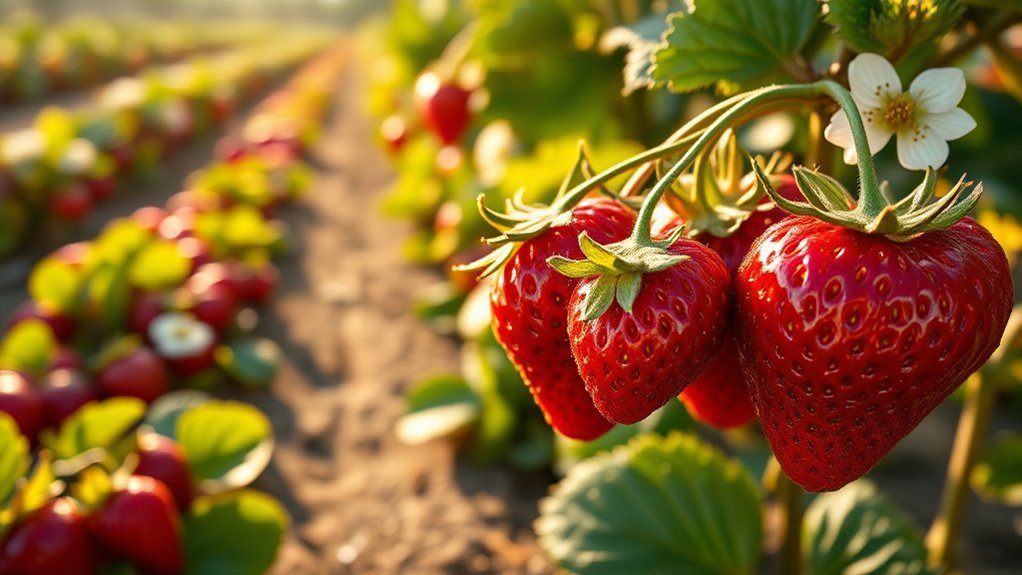
You’ll usually see June-bearing strawberries ripen between mid-June and mid-July.
Of course, the exact timing depends on your local climate.
And keep in mind, harvest times can shift a bit depending on the weather patterns in your area.
This short window is when the berries reach their peak flavor, offering the sweetest and juiciest fruit.
Ripening Time Frame
Strawberries don’t all ripen at the same time, and when June-bearing varieties reach peak ripeness depends largely on where you live. Understanding the ripening time frame helps you plan for the ideal harvest.
Typically, June-bearing strawberries ripen in late spring to early summer, producing one large crop over three to six weeks. To make the most of your harvest, keep these points in mind:
- In warmer areas, strawberries may start ripening as early as late April, while cooler climates see ripening in June.
- Pick strawberries when they’re fully red and fragrant, usually about 30 days after blossoms are fertilized, for the best flavor.
- The peak harvest usually occurs from mid-June to mid-July, so timing your picking is essential to enjoy fresh, juicy berries at their best.
Regional Harvest Variations
Knowing when strawberries ripen depends a lot on where you live, as regional climate variations affect their harvest times. June-bearing strawberries show clear regional variations in their harvest windows.
Depending on the strawberry varieties and local climate, the ripening period can shift by several months.
| Region | Typical Ripening Time |
|---|---|
| Florida (South) | Late March to April |
| Deep South | Late April to May |
| Midwest | Late May to June |
| Northern US | Mid to late June |
| Canada | Late June |
If you’re growing or buying June-bearing strawberries, knowing these regional differences helps you plan for the harvest and enjoy fresh berries at the right time.
Peak Flavor Period
Although harvest times vary by region, June-bearing strawberries typically reach their peak flavor from mid-June to mid-July.
These strawberries produce a concentrated harvest during their relatively short growing season, usually lasting three to six weeks.
To enjoy the best taste, you should keep an eye on the ripening process, which occurs about 30 days after the blossoms are fertilized.
Here’s why this period matters to you:
- You get strawberries at their sweetest and juiciest, thanks to full ripening.
- The large, deep-red berries guarantee a vibrant flavor experience.
- Harvesting during this peak flavor period assures superior quality for your recipes or fresh enjoyment.
Timing your harvest right lets you savor June-bearing strawberries at their absolute best.
What to Expect From Everbearing Strawberry Seasons?

How long can you expect to harvest from everbearing strawberries? These plants typically produce two main harvests, one in early summer and another in late summer or fall.
Unlike day-neutral varieties, everbearing strawberries produce the best yield when cooler growing conditions prevail, thriving in USDA Zones 6 to 8.
You’ll notice these strawberries bear fruit continuously from spring until the first frost, giving you an extended season of fresh berries.
Since they don’t produce runners, the plant focuses energy on fruit production, though the berries tend to be smaller than June-bearing types.
If you manage your garden to maintain ideal temperatures and soil moisture, you’ll enjoy consistent harvests throughout the season.
This makes everbearing strawberries a reliable choice for steady, long-lasting fruit production.
Day-Neutral Strawberry Season and Extended Harvest
You’ll love how day-neutral strawberries keep producing fruit nonstop from spring to fall.
That means you get a steady harvest without long breaks. Just keep in mind, they do best in cooler zones, so the temperature plays a big role in how long you can keep picking.
With the right care, this extended season gives you fresh berries for several months on end.
Continuous Fruit Production
When you choose day-neutral strawberries, you can enjoy fresh fruit continuously from spring through fall, as these plants produce berries regardless of day length.
Their continuous fruit production means you’re not limited to a short harvest window like with June-bearing types.
To get the best yield while growing day-neutral strawberries, you need to guarantee they receive 6 to 10 hours of sunlight daily and grow in well-drained, loamy soil with a pH between 5.5 and 7.
Here’s why you’ll love growing them:
- You get fresh strawberries every 1 to 3 days throughout the season.
- They keep producing until the first frost, extending your harvest.
- Their steady yield means you can enjoy berries for months, not weeks.
Temperature Impact Limits
Although day-neutral strawberries can fruit continuously from spring through fall, their production depends heavily on temperature limits. You’ll find that these strawberries thrive when temperatures stay below 85°F, allowing a long season of harvest every 1-3 days until the first frost.
If temperatures exceed this threshold, fruit production slows or stops, shortening your harvest window. Managing soil, sunlight, and irrigation also helps maximize your yield during this extended season.
| Temperature Range | Fruit Production | Harvest Frequency |
|---|---|---|
| Below 85°F | Continuous fruiting | Every 1-3 days |
| Above 85°F | Reduced or halted | Infrequent or none |
| Near frost | Stops | No harvest |
Understanding these limits helps you get the most from your day-neutral strawberries all season long.
Extended Harvest Benefits
Keeping temperatures below 85°F not only sustains fruit production but also releases the extended harvest benefits of day-neutral strawberries.
These resilient plants offer an extended harvest season from early July to October, giving you a longer production time than June-bearing varieties.
Unlike single large crops, day-neutral strawberries yield multiple smaller harvests that keep your garden vibrant and productive.
Here’s why you’ll love them:
- Continuous fruiting lets you enjoy fresh berries all season.
- Quick fruit production means you don’t have to wait long after planting.
- Multiple smaller harvests reduce waste and maximize flavor.
How Weather Affects Strawberry Season and Harvest Timing
Since weather plays an essential role in strawberry growth, you’ll notice that warm days speed up ripening while cooler temperatures or rain can slow it down. These weather conditions directly influence the strawberry season and its harvest timing.
Warm days speed up strawberry ripening, while cool or rainy weather slows it down.
For instance, in southern regions, the season can start as early as late February, but in northern areas, peak season typically arrives in late June. The peak season usually lasts around three weeks, yet its exact timing varies yearly due to shifting moisture and temperature levels.
Because strawberries begin ripening about 30 days after blossoms fertilize, consistent warm weather is vital.
To make the most of the harvest, keep an eye on local weather forecasts and stay in touch with local farms for updates on when the strawberry season will reach its peak.
Why Do Picking Dates Differ at Local Farms?
You might wonder why picking dates vary even among nearby farms. The differences come down to how local farms experience the ripening process and strawberry growth rates uniquely. Here’s why:
- Microclimates matter: Slight temperature and moisture variations affect how fast strawberries mature.
- Weather shifts: Changes in seasonal weather can speed up or slow down berry development.
- Farm practices: Each farm’s soil and care impact the timing of harvest readiness.
Because of these factors, picking dates don’t align perfectly, even in close locations.
To enjoy fresh strawberries at their best, you’ll want to check with local farms directly. They’ll give you the most accurate info about when their berries are ripe and ready for picking.
When Are Strawberries at Peak Flavor and Quality?
You’ll find strawberries hit their peak flavor at different times depending on where you live, usually sometime between late April and June.
When you’re picking them, look for berries that are deep red, shiny, and plump. They should also have a strong strawberry scent—that’s a good sign they’re at their best.
Try to pick them with a little bit of the stem still attached, and make sure there’s no mold.
That way, you’re guaranteed the sweetest taste.
Regional Peak Timing
Although strawberry season shifts across the country, you can usually count on fresh, ripe berries appearing first in the Deep South during late April and May.
This region offers an early picking opportunity to savor strawberries at their peak flavor.
As the season moves north, timing varies:
- Middle states like Tennessee and North Carolina hit their strawberry peak in late May to June, extending your enjoyment.
- Cooler Mid-Atlantic and northern areas reach peak flavor starting in late June, giving you plenty of time to indulge.
- Each region’s strawberry season lasts about three weeks, influenced by yearly weather changes.
Quality Indicators
When strawberries reach about 30 days after blossom fertilization, they develop their best flavor and quality. These quality indicators help you pick ideal strawberries with deep, shiny red color and a plump shape.
To enjoy the true taste of fresh strawberries, choose berries that are fully red, fragrant, and have medium firmness. Proper picking means selecting strawberries with about one-quarter of the stem attached and avoiding any with mold or damage.
Overly soft berries indicate they’re past their prime and won’t last long. By focusing on these key quality indicators, you guarantee your strawberries deliver peak flavor and freshness.
How Store Strawberry Availability Differs From Seasonal Picking
Since store strawberries come from different regions and are often harvested before they’re fully ripe, you’ll notice their availability stretches throughout the year.
This is unlike seasonal strawberries that are picked within a short, local window.
When you buy store strawberries, keep in mind:
- They’re often picked early to endure shipping, which can reduce flavor and texture.
- Their size and firmness are prioritized over sweetness, making them less tasty.
- You miss out on the freshness and peak ripeness that local farm strawberries offer during the season.
How to Find and Pick Fresh Strawberries All Season Long
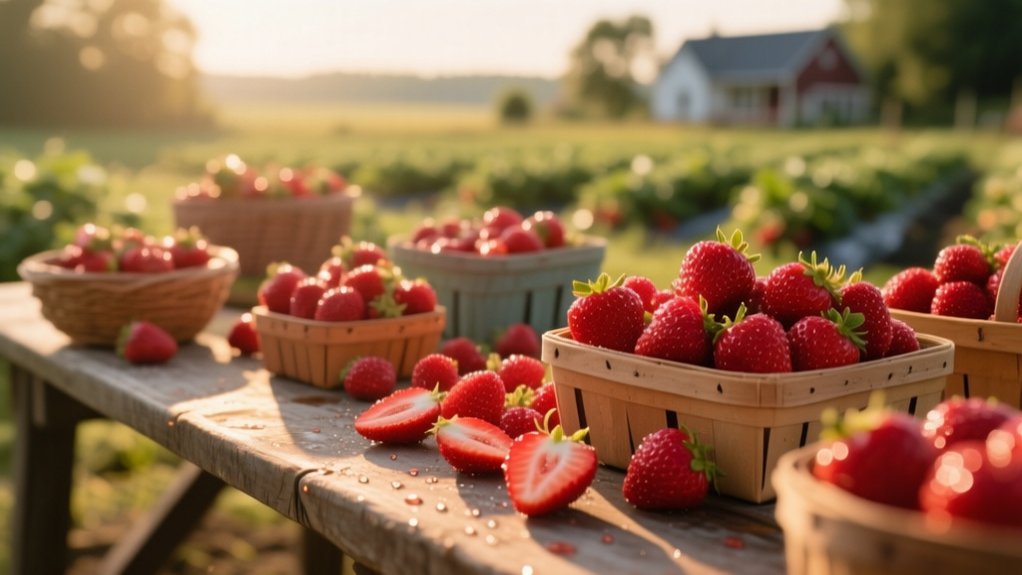
Finding fresh strawberries throughout the season means knowing where and when to look. Strawberries are typically available from local farms during their peak harvest season, which varies by region. Southern states start as early as February, while northern areas peak around June.
To find fresh berries, check local farm websites or farmers’ markets for picking dates and conditions. When you pick strawberries, choose fully red, shiny, and plump fruits with a strong scent that signals ideal ripeness. Handle them gently to avoid bruising, which speeds spoilage.
For the best freshness, pick strawberries in the cool morning hours and store them promptly in a cool, shady spot before refrigerating.
Frequently Asked Questions
Can Strawberries Be Grown Indoors Year-Round?
Yes, you can grow strawberries indoors year-round by using indoor gardening techniques like hydroponic systems, which provide nutrients directly to the roots.
You’ll want to use grow lights to guarantee your plants get 6 to 10 hours of light daily, especially in winter.
Temperature control is key too. Keeping it between 65°F and 75°F helps your strawberries thrive continuously regardless of outside weather conditions.
What Pests Most Affect Strawberry Plants?
Imagine you spot distorted strawberry fruits early on. That’s often the tarnished plant bug at work.
To tackle common strawberry pests like this, you’ll want to use pest identification methods such as regular leaf inspections and sticky traps.
Implement organic pest management strategies by introducing beneficial insects like ladybugs.
Crop rotation and early detection are smart pest control strategies you shouldn’t skip if you want healthy, bountiful strawberries without harsh chemicals.
How Do Soil Types Impact Strawberry Growth?
You’ll find that soil types greatly impact strawberry growth because soil pH affects nutrient availability, and proper drainage capacity prevents root diseases.
If your soil drains poorly, roots may rot, so sandy or loamy soils are best.
Nutrient retention varies too.
Clay holds nutrients but may retain too much water, while sandy soils need more fertilizing.
Don’t forget plant spacing; it helps air circulation, reducing disease risks linked to soil moisture.
Are Organic Strawberries Available Throughout the Long Season?
Yes, you can find organic strawberries throughout the long season, thanks to organic farming techniques, seasonal availability trends, and consumer demand impact.
You’ll notice that strawberry varieties comparison reveals different harvest times, so you’ll get fresh options nearly year-round.
You’ll enjoy fresher, chemical-free berries by choosing local farms that adapt to seasonal trends and consumer preferences.
What Are the Best Fertilizers for Strawberry Plants?
You’ll want fertilizers that meet strawberry plants’ nutrient requirements, focusing on phosphorus and potassium for strong roots and fruit.
Slow release fertilizers work great, providing steady nutrients without overwhelming the plants.
Don’t overlook organic options like compost or fish emulsion. They improve soil health naturally.
Foliar feeding can be a helpful supplement during growth, delivering nutrients directly to leaves for quick absorption.
Combine these methods to keep your strawberries thriving all season long.
Conclusion
Strawberry season stretches like a vibrant ribbon across the calendar, offering you juicy bursts of sweetness from early spring to late fall. Whether you’re chasing the early June-bearers or savoring the steady drip of day-neutral berries, each pick feels like gathering little jewels from nature’s treasure chest.
So grab your basket, follow the sun, and enjoy the dance of flavors that only fresh strawberries can bring throughout the long, luscious season.