


How Far Apart Do You Plant Strawberries?
You should plant strawberries about 10 to 18 inches apart, depending on the variety you choose. Day-neutral strawberries do best around 10 inches, everbearing at 12 inches, and June-bearing need about 18 inches or more for good runner growth.
Proper spacing helps promote healthy plants and bigger fruit while preventing overcrowding and disease. Choosing the right spacing and managing runners carefully can really boost your harvest.
Keep going to understand the best planting systems and runner care for your strawberry patch.
How Far Apart Should You Plant Strawberry Plants?
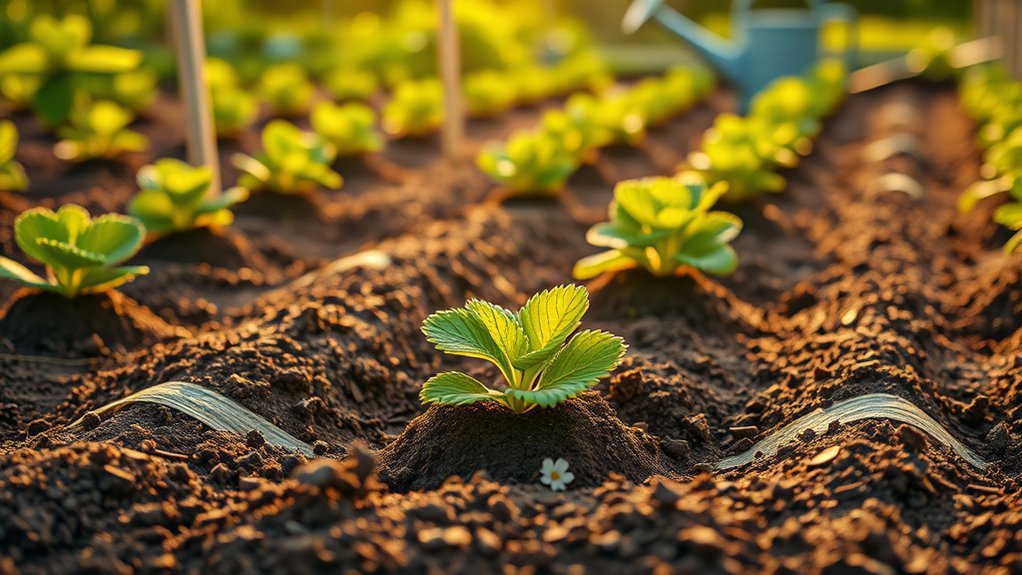
When planting strawberries, you’ll want to space them according to their variety to guarantee healthy growth and fruit production.
Strawberry plants need proper spacing to avoid overcrowding, which can limit nutrients and reduce fruit size.
Proper spacing prevents overcrowding, ensuring strawberries receive enough nutrients for larger, healthier fruit.
For example, everbearing varieties should be spaced about 12 inches apart, while Junebearing plants benefit from wider spacing, usually 18 inches or more.
If you’re using a matted row system, especially with Junebearing strawberries, space plants 18 to 30 inches apart in rows 3 to 4 feet apart to allow runners room to spread.
This spacing helps maintain healthy plants and increases fruit production by reducing competition and disease risk.
Spacing Differences for June-Bearing, Everbearing, and Day-Neutral Strawberries
You’ll want to space June-bearing strawberries about 18 inches apart to support their runner growth.
Everbearing types, on the other hand, do best at around 12 inches.
Then, there are day-neutral strawberries, which can be planted even closer—about 10 inches—to fill beds faster and boost yields.
Just keep in mind that tighter spacing can increase competition for nutrients and might affect fruit size.
Spacing Guidelines Overview
Three main types of strawberries: June-bearing, everbearing, and day-neutral, each require different spacing to thrive. Following proper spacing guidelines helps your strawberry plants avoid overcrowding, ensuring runner growth and proper air circulation.
This reduces disease risk and promotes healthy fruit production. Here’s a quick overview:
| Strawberry Type | Recommended Spacing | Notes |
|---|---|---|
| June-bearing | 18 inches | Allows ample runner growth |
| Everbearing | 12 inches | Fewer runners, more fruit |
| Day-neutral | 10 inches | Quick bed fill, square-foot gardening |
Make sure each plant’s crown stays level with the soil line to prevent rot. Keeping these spacing rules in mind will maximize your harvest while minimizing problems caused by overcrowding.
Runner Production Impact
Spacing plays an essential role in how your strawberry plants produce runners, which directly impacts bed coverage and fruit yield.
For June-bearing strawberries, spacing them 18 inches apart encourages ample runner production, helping fill your bed over time.
Everbearing strawberries, planted closer at about 12 inches, limit runner production but speed up bed fill for earlier harvests.
Day-neutral varieties do best around 10 inches apart, balancing runner growth and fruit production without overcrowding.
Keep in mind, closer spacing can reduce fruit size due to competition, especially in humid conditions.
To maximize quality and yield, you’ll need to manage runner production carefully by thinning runners regularly.
This practice guarantees your plants stay healthy and productive, regardless of the variety you choose.
Plant Density Effects
Understanding how plant density affects strawberry growth helps you make the most of your garden space and harvest.
June-bearing strawberries need about 18 inches spacing between plants since they produce runners that fill gaps and increase bed density over time.
Everbearing types can be planted closer, around 12 inches apart, fitting one plant per square foot.
Day-neutral strawberries thrive best at 10 inches spacing to balance growth and fruit production.
Although closer spacing speeds bed fill and early berries, overcrowding can reduce strawberry size and increase disease risk.
Managing plant density effects means you’ll avoid competition for nutrients and space, ensuring healthy plants and better yields.
Keeping proper spacing and thinning when necessary helps maximize your strawberries’ fruit production without sacrificing quality.
Which Planting System Is Best: Hill, Matted Row, or Spaced Row?
When deciding which planting system suits your strawberries best, consider the variety you’re growing and how much maintenance you’re willing to do.
The hill system works well for everbearing and day-neutral strawberry varieties, spacing plants 12-15 inches apart and removing all runners for larger fruit and easier plant management.
For June-bearing cultivars, the matted row system is common, with plants spaced about 18 inches apart in rows 3-4 feet apart, allowing runners to fill in naturally.
If you want more control over runner growth, the spaced row system spaces mother plants similarly to the matted row but requires spacing daughter plants 4 inches apart, demanding more upkeep.
Each system balances spacing between plants and maintenance differently, so pick one that fits your goals and gardening style.
How Does Spacing Affect Runner Growth and Plant Spread?
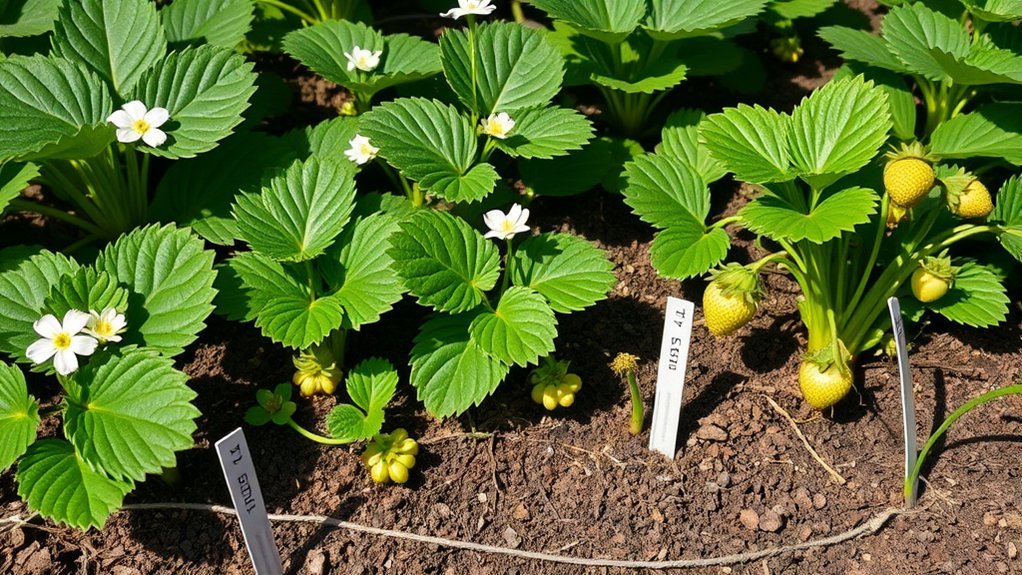
You’ll notice that spacing really affects how your strawberry runners grow and how dense your plants get.
When you plant them too close together, the runners can overcrowd the bed. That makes it tougher to manage and can raise the chances of diseases.
On the other hand, giving your plants enough room lets you keep their spread under control. This way, your patch stays healthy and productive.
Runner Development Patterns
Although closer spacing encourages rapid runner production and quicker bed fill, it can also cause smaller fruit due to nutrient competition. When plants are too close, runners sprout aggressively, but overcrowding limits air circulation. This raises disease risks and reduces fruit production quality.
If you space your strawberries 18-24 inches apart, runners develop more healthily, giving each plant room to thrive without battling for resources. Junebearing varieties produce more runners, so spacing is even more essential. Managing runner growth by thinning helps maintain this balance.
Watch your bed fill fast, but don’t let fruit size suffer. Feel the frustration of overcrowding stifling your plants. Enjoy better air circulation that keeps plants disease-free. Experience sweeter, larger fruit with proper spacing and runner control.
Impact on Plant Density
Spacing strawberry plants correctly directly influences how runners grow and how much the plants spread. When you use proper spacing, typically 10 to 18 inches apart depending on the variety, you guarantee adequate sunlight and airflow. This reduces overcrowding and disease risk.
Closer spacing might fill your bed faster but increases plant density, causing competition for nutrients and smaller fruit. Controlling runner growth through correct spacing helps prevent overcrowding and supports better fruit production.
If plants are too dense, runners root too close, making thinning necessary to maintain healthy beds. By spacing strawberry plants properly, you balance runner growth and plant spread, promoting larger fruit and higher yields without sacrificing plant health.
This careful spacing keeps your patch productive and manageable.
Managing Spread Effectively
Controlling how far apart you plant strawberries directly shapes how their runners spread and root. Proper spacing strawberry plants, 8-12 inches for day-neutral and everbearing, 18 inches for junebearing, ensures runners fill gaps without overcrowding.
When overcrowding occurs, plants compete for nutrients and sunlight, leading to smaller fruit and lower yields. Removing runners as they develop helps manage spread, maintaining productivity and ensuring each plant gets enough resources.
Adequate air circulation also reduces the risk of pests and diseases, keeping your strawberry bed healthy and fruitful.
Feel the satisfaction of a well-managed, lush strawberry bed.
Avoid frustration from overcrowded, unproductive plants.
Enjoy healthier plants free from pests and diseases.
Celebrate bigger, juicier strawberries with every harvest.
Can You Plant Strawberries Too Close Together? Risks of Overcrowding

When you plant strawberries too close together, they compete for nutrients and space, which leads to smaller fruits and lower yields.
Strawberries need adequate space between plants, typically 8 to 12 inches or more, to thrive.
Overcrowding creates a humid environment that encourages mold and fruit rot, especially in moist climates. It also reduces air circulation, making your plants more vulnerable to pests of strawberries and diseases.
To avoid these risks, thinning out strawberry plants is crucial. This helps maintain proper spacing and promotes healthier growth and better fruit quality.
When you plant strawberries with enough room, you guarantee each plant gets the nutrients and airflow it needs, preventing the common issues that overcrowding brings and boosting your harvest’s overall success.
Spacing Strategies for Faster Bed Fill and Bigger Harvests
You can plant strawberries closer together to fill your bed faster and help keep weeds at bay.
Just be careful not to overcrowd them, because that can make your berries smaller.
It’s all about finding the sweet spot where you get the biggest harvest without hurting your plants.
Closer Planting Benefits
Closer planting, with strawberry plants set 8-12 inches apart, speeds up bed fill and creates a dense crop that suppresses weeds naturally.
When you choose closer planting, you encourage faster berry production because the plants quickly cover the soil, creating an ideal microclimate.
This spacing strategy helps maximize harvests and yields, giving you more fruit sooner. However, you’ll want to watch for competition among plants, which might reduce berry size if spacing is too tight.
Benefits of closer planting include:
- Faster bed coverage for a lush, green patch
- Natural weed suppression without extra effort
- Earlier and more abundant berry production
- Increased overall harvests when managed properly
Managing Overcrowding Effects
Although planting strawberries closer together speeds up bed fill and early harvests, managing overcrowding is essential to avoid smaller fruit and increased disease risk. You’ll want to monitor crowding and practice thinning runners regularly to maintain proper spacing.
Overgrowth raises humidity, promoting mold and fruit rot. Keeping plants 18-24 inches apart, especially for Junebearing types, helps improve fruit size and quality.
| Factor | Management Tip |
|---|---|
| Crowding | Thin runners frequently |
| Spacing | Maintain 18-24 inches |
| Runners | Control to prevent overgrowth |
| Fruit Size | Avoid tight crowding |
How to Manage Strawberry Runners and Daughter Plants
Since strawberry plants naturally produce runners that develop into daughter plants, managing these runners is key to maintaining a healthy garden.
You’ll want to prune runners regularly to focus energy on fruit production instead of excessive spreading.
Thinning runners helps maintain proper spacing, about 4 to 12 inches between daughter plants, so they don’t overcrowd and compete for nutrients.
Maintain 4 to 12 inches between daughter plants to prevent overcrowding and nutrient competition.
This balance guarantees your strawberry plants stay vigorous and produce larger, tastier berries.
Feel the satisfaction of a well-organized, thriving strawberry patch.
Enjoy bigger, juicier fruit from focused plant energy.
Avoid frustration caused by overcrowded, struggling plants.
Watch your garden flourish with balanced runner management.
Ideal Strawberry Plant Spacing and Layout in Raised Beds
When you plant strawberries in raised beds, spacing plays an essential role in their health and productivity. The ideal strawberry plant spacing varies with the type: Junebearing strawberries need about 18 inches apart to grow well, while everbearing varieties do best at 12 inches, and day-neutral types around 10 inches.
Maintain rows 18 to 24 inches apart for easy access. When planting strawberries, especially Junebearing types, consider a matted row system with initial spacing of 18 to 30 inches, allowing runners to fill in without overcrowding.
Proper runner spacing is vital. Thin them regularly to prevent dense growth, improving air circulation and yield.
Budget-Friendly Planting: Using Wider Spacing and Runners
You can save money on your strawberry patch by spacing plants 2 to 3 feet apart, giving runners room to spread and create new plants naturally.
As a budget-conscious gardener, this wider spacing helps reduce initial planting costs by allowing runners to propagate and fill empty spaces over time.
While it takes patience for runners to establish, they’re genetic clones that help you expand your strawberry plants sustainably without buying more seedlings.
Runners grow patiently into new plants, cloning your strawberries and saving you the cost of extra seedlings.
This method lets you manage costs while gradually creating a denser patch.
Watch your garden grow organically and save money.
Enjoy the satisfaction of propagating your own plants.
Reduce planting costs without sacrificing yield.
Build a thriving strawberry patch over several seasons.
Wider spacing and runners make budget-friendly planting smart and sustainable.
How Many Strawberry Plants Do You Need Per Person and Space Considerations?
Planting between 10 and 15 strawberry plants per person usually provides enough fresh berries for home use. If you want a larger fresh harvest for freezing or jams, consider 15-25 plants per person.
Each strawberry plant yields about one quart annually, so calculate your space accordingly. Spacing recommendations depend on the variety: everbearing strawberries and day-neutral types do best 10-12 inches apart, while Junebearing strawberries require 18-inch spacing.
To maximize your garden, use raised beds with 18-24 inch row spacing. This hybrid method accommodates the different spacing needs efficiently.
Frequently Asked Questions
What Soil Type Is Best for Planting Strawberries?
You want to plant strawberries in soil with a pH between 5.5 and 6.8 to keep them happy.
Good drainage is essential, so consider using raised beds to prevent waterlogging.
Adding organic matter like compost improves nutrient content and drainage.
Mulching techniques with straw or wood chips help maintain soil moisture and temperature while controlling weeds.
Keep soil temperature moderate to encourage strong root growth and fruit production.
When Is the Best Time of Year to Plant Strawberries?
You should focus on spring planting to guarantee healthy growth and summer harvesting. Plant strawberries in March or April when temperatures are mild, allowing proper root establishment.
After that, fall care helps prepare your plants for winter protection, especially if you live in colder areas. Seasonal maintenance like removing flowers the first summer encourages strong runners.
Always consider temperature considerations to prevent transplant shock, planting during cooler, cloudy days or late afternoons for best results.
How Deep Should Strawberry Plants Be Planted in the Soil?
When you plant strawberries, keep the root crown right at soil level, about 1-2 inches deep.
Imagine Sarah, who buried her crowns too deep; her plants rotted before fruiting.
Proper planting depth guarantees roots get enough warmth from soil temperature and good drainage requirements are met.
Use gentle transplanting techniques to avoid crushing roots.
This careful placement supports healthy growth stages, helping your strawberries thrive and produce abundant fruit throughout the season.
Can Strawberries Be Grown in Containers or Pots?
Yes, you can grow strawberries using container gardening.
Choose pots with good drainage holes and a pot size that allows at least 10-12 inches between plants. Use nutrient-rich soil and balanced fertilizer types to support growth.
Make sure your containers get 6-8 hours of sunlight daily, meeting the sunlight requirements strawberries need.
Keep an eye on pest control to protect your plants, and water regularly to keep soil moist but not soggy.
How Often Should Strawberry Plants Be Watered After Planting?
You might think strawberries need constant watering, but it’s about maintaining consistent soil moisture rather than overwatering.
After planting, water your strawberries daily with about a pint each time until they establish.
Adjust your watering frequency based on rainfall, temperature effects, and drought considerations. Morning irrigation methods work best to reduce evaporation.
Keep an eye on soil moisture; during hot spells, increase watering, but avoid soggy soil to keep your plants thriving.
Conclusion
Think of planting strawberries like arranging a dance floor. You need just enough space for each dancer to move freely without bumping into others. By spacing your strawberry plants properly, you’ll encourage healthy growth, manage runners effectively, and avoid overcrowding risks.
Whether you choose hill, matted row, or spaced row systems, giving your plants room to breathe will lead to a bountiful harvest. Remember, happy plants make the sweetest berries!