

How Do You Winterize Strawberry Plants in 5 Simple Steps?
To winterize your strawberry plants in five simple steps, start by pruning dead leaves and trimming June-bearing varieties just above the crown. Next, feed your plants a balanced fertilizer about a month before the first frost.
Then, apply a 3-5 inch layer of natural mulch after that frost to protect crowns. For potted plants, add mulch, wrap the pot, and shelter them.
Finally, wait for warmer soil in spring before gently removing coverings. Keep going to uncover helpful tips on timing and care.
Remove Dead Leaves and Prune Strawberry Plants
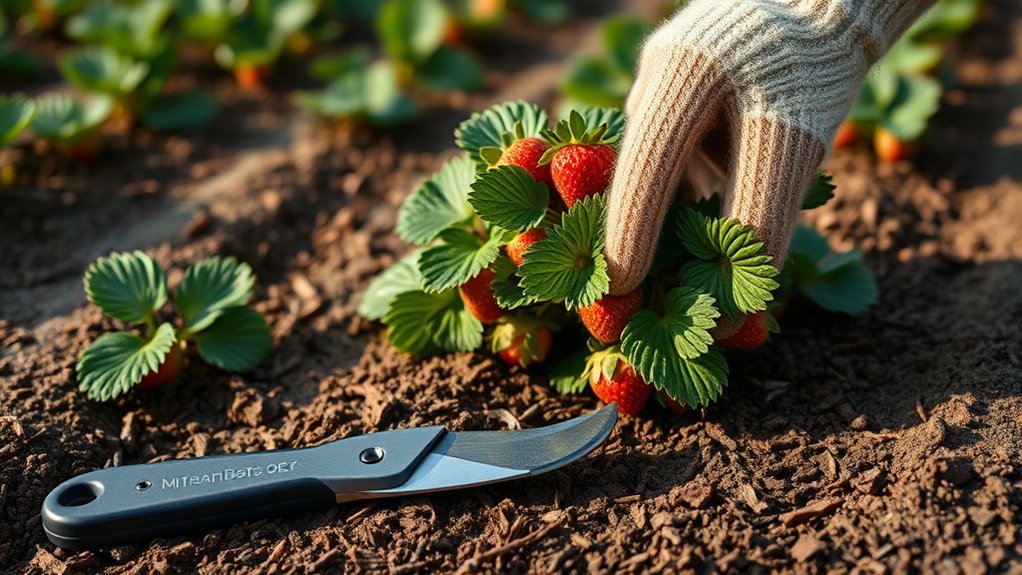
Once you’ve finished harvesting, you should prune June-bearing strawberries to about 1 ½ inches above the crown to encourage healthy growth next season.
Next, remove dead leaves from everbearing or day-neutral varieties to prevent disease and promote new growth.
Removing dead leaves from everbearing or day-neutral strawberries prevents disease and encourages fresh growth.
As you clean up your strawberry patch, thin tightly matted plants to maintain 4 to 6 inches of spacing. This guarantees proper airflow, reduces nutrient depletion, and limits overcrowding.
Clearing away weeds is also essential to avoid competition for resources.
Regularly pruning strawberry plants and removing debris in late July to early August helps you winterize strawberries effectively.
This clean-up not only fosters healthy growth but also prepares your patch for winter’s challenges, guaranteeing your plants stay vigorous and disease-free come spring.
Feed Your Strawberries About a Month Before Frost
As the first frost approaches, you should feed your strawberry plants with a slow-release, balanced fertilizer. This will strengthen their roots and encourage healthy bud development for next season. Applying fertilizer about a month before the frost guarantees your strawberry plants receive adequate nutrients during fall. This promotes strong root development and fruit bud formation.
This feeding helps your plants stay healthy through the winter months, preparing them for a bountiful harvest.
| Task | Details |
|---|---|
| When to feed | About 1 month before first frost |
| Type of fertilizer | Slow-release, balanced (NPK 10-10-10) |
| Amount to apply | 1 lb per 25 plants |
| Purpose | Strong roots & healthy fruit buds |
Feed your strawberries now to support strong growth next season.
Mulch Strawberry Plants to Winterize and Protect Crowns
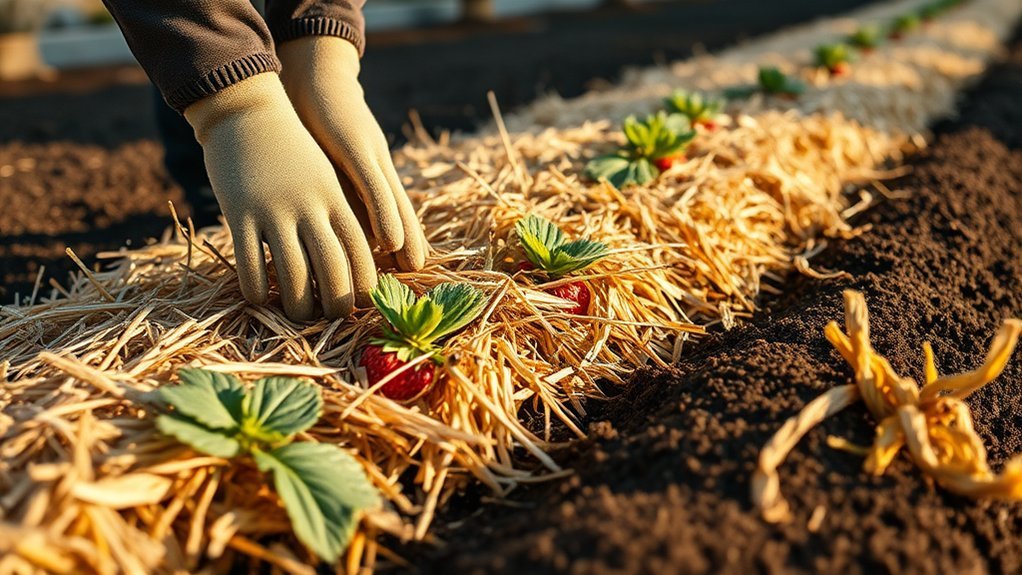
Although the first frost signals the end of the growing season, you should wait until it passes before applying mulch to your strawberry plants.
Mulching too early can trap moisture and cause rot, so timing is key to properly winterize and protect strawberry crowns.
Use a 3 to 5-inch layer of lightweight, natural mulch like pine needles or salt marsh hay to insulate and retain moisture.
Make certain the mulch allows good drainage and air circulation to prevent harmful moisture buildup.
Keep the mulch in place until spring when plants leaf out.
Follow these steps:
- Wait for the first frost before applying mulch.
- Lay a 3-5 inch layer around strawberry crowns.
- Verify mulch promotes drainage and air circulation to protect plants.
Insulate and Shelter Your Potted Strawberry Plants
To keep your potted strawberry plants healthy through winter, you’ll need to insulate the soil and shield the pots from freezing temperatures.
Start by applying a 4-6 inch layer of mulch, like straw or pine needles, over the soil to insulate and retain soil moisture.
Wrap the pot bases with bubble wrap for added frost protection, guarding the roots against extreme cold.
Place your potted strawberries in a sheltered location, such as near a wall or inside an unheated garage, to protect them from harsh winter weather and freezing winds.
Remember to provide light watering about once a month to prevent the soil from drying out or freezing.
When and How to Remove Winter Coverings in Spring
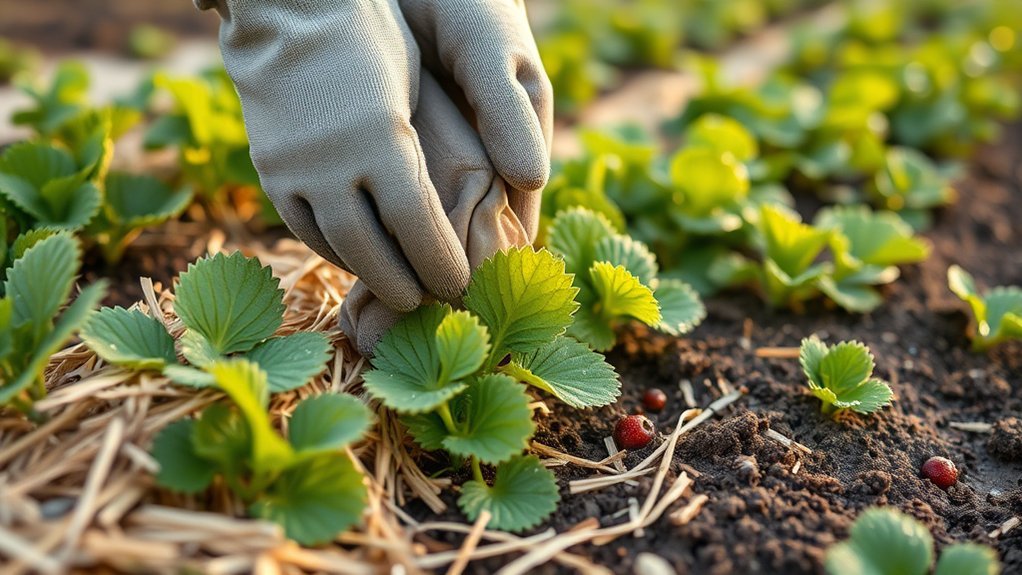
Spring signals the time to remove winter coverings from your strawberry plants, but timing is essential to protect them from late frost.
To guarantee healthy development, follow these steps:
- Wait until after the last frost date and when soil temperatures consistently exceed 40°F before you remove winter coverings. This prevents damage from unexpected frost.
- Gradually uncover plants to help them acclimate to warmer temperatures. Avoid fully removing winter protection all at once to reduce shock.
- Look for signs of new growth before completely removing covers.
Afterward, monitor soil moisture levels closely, as spring conditions can dry out the soil quickly.
Frequently Asked Questions
Can Strawberry Plants Survive Winter Without Mulch?
Strawberry plant survival without winter mulch depends on your plant hardiness zones. In warmer zones, they might make it, but in cold climate care, frost protection methods like mulch are key.
Mulch benefits include insulating soil temperature, preventing freeze/thaw damage, and supporting plant dormancy stages. Without it, you risk crown injury.
If you lack mulch, snow cover advantages or mulch alternatives help.
Also, consider winter watering tips to keep plants healthy through winter.
How Often Should Strawberries Be Watered During Winter?
Like a clock’s steady tick, your watering schedule during winter should be consistent but minimal.
During the dormant season, water frequency depends on soil moisture and weather conditions.
For potted plants, water lightly once a month, ensuring root care without overwatering.
In-ground strawberries usually need less irrigation, relying on frost protection and natural moisture.
Keep winter watering balanced to support plant health and prevent root rot while maintaining adequate soil moisture.
Is It Necessary to Fertilize Strawberries Every Year?
Yes, you should fertilize strawberries every year to support healthy plant growth and maximize strawberry yield.
Using the right fertilizer types, like balanced or organic options, maintains soil health and complements nutrient timing aligned with seasonal changes.
Proper fertilizer application during fall enhances growth cycles and helps with pest management.
Skipping this step can weaken your plants, so annual feeding guarantees they thrive and produce abundant fruit each season.
Can Strawberry Runners Be Winterized the Same Way as Mother Plants?
Imagine your strawberry runners nestled under a soft blanket of mulch, shielded from biting winds.
Yes, you can winterize runners just like mother plants by focusing on runners care, pruning leaves and spacing them to improve plant health.
Applying soil insulation boosts cold tolerance and supports root development.
Understanding growth habits and seasonal differences helps you adjust pruning techniques and propagation methods, ensuring your strawberries thrive come spring with effective winter protection.
What Pests Should I Watch for During Strawberry Winterization?
You should watch for winter pests like aphids and spider mites during pest identification, since they overwinter on strawberry plants and can cause infestations.
Slugs and snails are seasonal pests thriving in damp conditions, so pest monitoring is key.
Keep an eye out for strawberry diseases like leaf spot, which harbor pests.
Use organic methods for insect control and pest prevention to improve your pest management and overall strawberry care throughout winter.
Conclusion
Winterizing your strawberry plants is essential since nearly 60% of strawberry plants don’t survive harsh winters without protection. By removing dead leaves, feeding them before frost, mulching, and insulating potted plants, you’re giving your strawberries the best chance to thrive next season.
Don’t forget to carefully remove winter coverings in spring to avoid damage. Taking these simple steps guarantees you’ll enjoy a bountiful harvest when warmer days return. You’ve got this!