

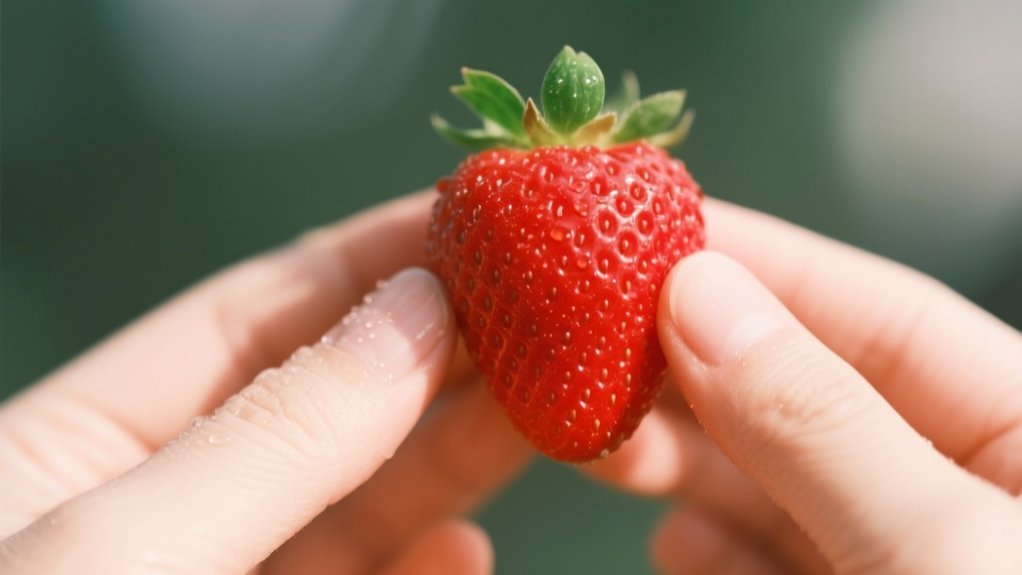
What Do You Say Strawberry in Korean?
You say strawberry in Korean as 딸기 (ttalgi). It’s pronounced with a tense “tt” sound, followed by “al-gi.” 딸기 means the sweet, red fruit packed with vitamin C and antioxidants that Koreans love in cakes, smoothies, and shaved ice desserts.
Using 딸기 in everyday conversation can be fun and healthy. If you want to expand your Korean fruit vocabulary and learn helpful phrases, there’s plenty more to discover about 딸기.
What Does 딸기 (Ttalgi) Mean in Korean?

딸기 (ttalgi) means strawberry in Korean, referring to the sweet, red fruit you probably enjoy. When you hear 딸기, think of that juicy, vibrant fruit packed with flavor.
딸기 is more than just a tasty treat; it’s an excellent source of vitamin C, which helps boost your immune system. In fact, strawberries are recognized as a top source of vitamins and antioxidants, making them a healthy snack choice.
If you love Korean dishes, you’ll find 딸기 used in desserts, smoothies, and salads, adding natural sweetness and nutrition.
How to Pronounce 딸기 Correctly
When you say 딸기, make sure to really focus on that tense “tt” sound. It’s important to break the word into two clear syllables: “ttal” and “gi.” Don’t rush it!
Also, watch out for common mistakes like softening the initial consonant or blending the vowels too quickly. To get it right, try elongating each part a bit.
Listening to native speakers can help a lot, too—just mimic how they say it, and you’ll improve in no time!
Pronunciation Breakdown
Mastering the pronunciation of Korean words often starts with understanding their unique sounds. Take 딸기, for example. It breaks down into two syllables: “ttal” and “gi.”
The first, “ttal,” uses a tense “tt” sound, which is stronger and more forceful than the English “t.” Think of it as a sharper “tall.” The vowel “a” here sounds like the ‘a’ in “father.”
Next, “gi” begins with a soft “g” as in “give,” followed by a short “i,” similar to “machine.”
To get this right, use a reliable source like native speakers’ audio clips or language apps. Listening closely will help you grasp the subtle tension and vowel quality, ensuring your pronunciation of 딸기 sounds natural and accurate every time.
Common Pronunciation Mistakes
Although it may seem simple, many learners struggle with the tense “tt” sound at the start, often softening it to a regular “t” or “d.” You’ll also want to make sure to clearly pronounce the “ㄹ” as an English “l” between the syllables, which can be tricky if you’re not used to Korean phonetics.
These phonetic challenges often lead to common mispronunciations of 딸기. Furthermore, regional variations in pronunciation might confuse you, but sticking to the standard tense “tt” and clear “l” sound will help.
To avoid these mistakes, focus on enunciating the two syllables distinctly: “ttal” with a sharp “tt” and “gi” with a softer “g.” Awareness of these pitfalls will improve your accuracy when saying strawberry in Korean.
Tips For Clear Speech
Getting 딸기 right requires paying close attention to its unique sounds. To pronounce it clearly, start by practicing tongue placement for the tense ‘tt’ sound at the beginning. Press your tongue firmly against the roof of your mouth.
Use clear articulation techniques to emphasize the first syllable “ttal,” which is key to sounding natural. For the second syllable “gi,” soften your ‘g’ like in “give” to maintain smooth flow.
Begin slowly, focusing on each sound, then gradually increase your speed to improve vocal clarity. Listening to native speakers also helps you grasp the correct intonation and rhythm.
With consistent practice using these tips, you’ll master 딸기’s pronunciation and speak Korean more confidently.
Example Sentences Using 딸기
Here are some useful example sentences using 딸기 to help you get comfortable with the word “strawberry” in Korean. You might say, “나는 딸기를 좋아해요,” meaning “I like strawberries.”
When exploring different strawberry varieties, you could say, “여러 가지 딸기 품종이 있어요,” which means “There are various strawberry varieties.”
If you enjoy cooking, try saying, “딸기 레시피를 배워보고 싶어요,” or “I want to learn strawberry recipes.”
Attending events is fun too; you might hear, “딸기 축제에 가고 싶어요,” meaning “I want to go to the strawberry festival.”
Remember, 딸기는 훌륭한 비타민 씨 공급원입니다 highlights their health benefits, saying “Strawberries are an excellent source of vitamin C.”
These sentences will boost your confidence using 딸기 naturally!
How to Say “I Like 딸기” and Similar Phrases

To say “I like strawberries” in Korean, you’ll use the phrase “나는 딸기를 좋아해요” (naneun ttalgi-reul joahaeyo). This simple expression connects you with Korea’s love for 딸기, which features prominently in strawberry recipes and holds cultural significance, especially during its seasonal availability in spring.
Say “I like strawberries” in Korean with 나는 딸기를 좋아해요 and celebrate Korea’s springtime strawberry season.
Here are three phrases to help you express your fondness for 딸기:
- “나는 딸기를 좋아해요” (formal) – I like strawberries.
- “나는 딸기를 좋아해” (casual) – I like strawberries (among friends).
- “딸기가 맛있어요” – Strawberries are delicious.
Use these to share your strawberry enthusiasm while appreciating how deeply 딸기 is woven into Korean culture and cuisine.
Nutritional Benefits of 딸기 in Korea
You’ll be surprised how much vitamin C 딸기 packs, giving you over 100% of your daily needs in just one cup. Isn’t that amazing?
Eating these berries regularly can boost your heart health and protect you from chronic diseases thanks to their antioxidants.
And the best part? They’re low in calories, so they’re a smart choice if you want to stay healthy and fit.
Vitamin C Richness
Strawberries, or 딸기 (ttalgi) in Korean, pack a powerful punch of vitamin C, delivering about 98 mg per 100 grams. That’s more than what most adults need in a day. This high vitamin C content supports your immune system and skin health.
Thanks to advanced strawberry cultivation methods in Korea, these fruits maintain their nutritional value and freshness. When you enjoy strawberry dessert recipes, you’re not only indulging your taste buds but also boosting your vitamin intake.
Here’s why 딸기 stands out:
- It provides more vitamin C per serving than many fruits.
- Its rich vitamin C content complements other strawberry health benefits like antioxidant support.
- Incorporating 딸기 in desserts makes healthy eating enjoyable and delicious.
Health Benefits
While enjoying 딸기 (ttalgi), you benefit from more than just their sweet taste. They provide essential nutrients that support your immune system, promote skin health, and aid digestion.
These strawberries are packed with vitamin C, a key player in immune support, helping your body fight off illness. Adding 딸기 to your diet, whether fresh or blended into strawberry smoothies, boosts your fiber intake, which promotes digestive health and helps manage weight.
The antioxidants in 딸기, like anthocyanins, reduce inflammation and may lower your risk of chronic diseases, including heart problems.
Popular Korean Dishes Featuring 딸기
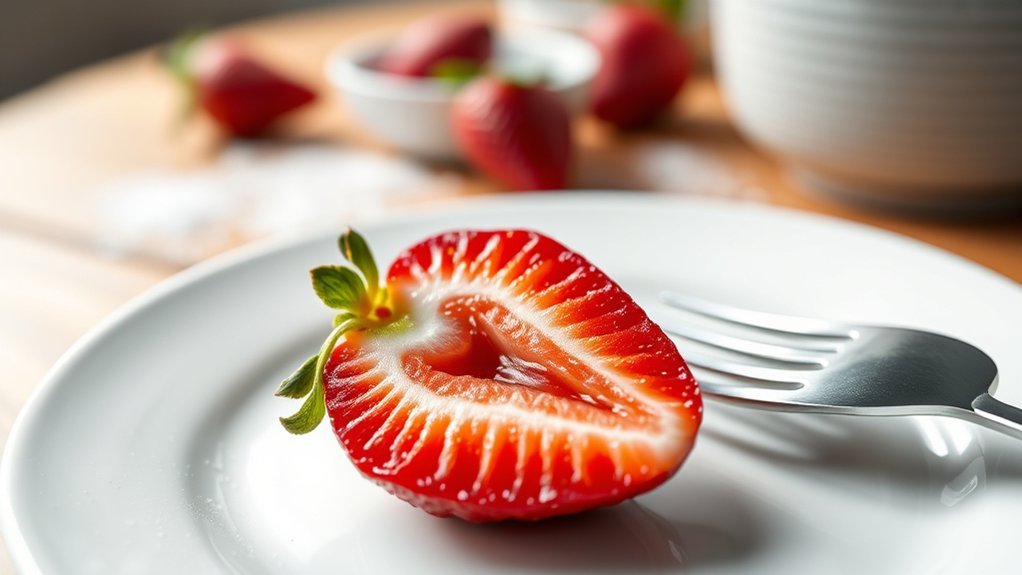
If you’ve ever visited a Korean café, you’ve likely encountered 딸기 (ttalgi) in a variety of delicious forms.
딸기 desserts are incredibly popular, and many 딸기 recipes highlight the fruit’s natural sweetness and health benefits.
Here are three popular Korean dishes featuring 딸기:
- 딸기 케이크 (strawberry cake). It’s a classic dessert layered with fresh strawberries and cream.
- 빙수 (bingsu). This shaved ice is topped with sweetened condensed milk, fresh 딸기, and other fruits.
- 딸기 스무디 (strawberry smoothie). A revitalizing blend of 딸기, yogurt, or milk that’s perfect for any time of day.
These dishes show how versatile and beloved 딸기 is in Korean cuisine, combining flavor and health in every bite.
딸기 vs. Other Korean Fruit Names
When you learn 딸기, you’ll notice it sounds quite different from English fruit names like apple or banana. It’s kind of fun to hear how Korean fruit words have their own unique rhythm and tone.
For example, Korean fruit vocabulary includes 사과, 바나나, and 포도. Each of these has a distinct pronunciation that you’ll want to practice to get the hang of the sounds.
Comparing these names side by side really helps you get comfortable with Korean sounds. Plus, it’s a great way to expand your fruit-related vocabulary.
Comparing Fruit Vocabulary
Fruit names in Korean offer a glimpse into both language and culture, with 딸기 (ttalgi) standing out as the word for strawberry. When exploring Korean fruit varieties, you’ll notice how 딸기 is commonly used in seasonal fruit dishes during spring.
Expanding your fruit vocabulary beyond 딸기 introduces you to 사과 (sagwa) for apple and 바나나 (banana) for banana. Each is tied to specific dishes and nutritional benefits.
Here’s a quick comparison to help you remember:
- 딸기 (ttalgi) – popular in desserts and smoothies, rich in vitamin C
- 사과 (sagwa) – often found in pies, high in dietary fiber
- 바나나 (banana) – breakfast favorite, packed with potassium
This fruit vocabulary expansion deepens your understanding of Korean culture and cuisine.
Common Korean Fruit Names
Learning common Korean fruit names like 딸기 (ttalgi) for strawberry can make your conversations about food more engaging and authentic.
Besides 딸기, you’ll want to know 사과 (sagwa) for apple, 바나나 (banana) for banana, and 포도 (podo) for grape.
These fruits often appear in Korean fruit desserts, highlighting their delicious appeal. Depending on seasonal fruit availability, you might enjoy fresh 딸기 during strawberry season or pick 사과 in autumn.
Experiencing fruit picking firsthand lets you connect with Korean culture and practice these words naturally.
Whether discussing fruit desserts or planning a visit to a farm, using these names helps you communicate clearly and enjoy your culinary adventures in Korea even more.
Pronunciation Differences Explained
Knowing the names of common fruits like 딸기 (strawberry) is a great start, but mastering their pronunciation will make your Korean sound more natural. 딸기 stands out because of its double consonant ‘ㄹ’, which gives it a sharper sound compared to fruits like 포도 (podo) or 바나나 (banana).
To grasp these Korean phonetics nuances and boost your fruit vocabulary expansion, focus on:
- Noticing how the double consonant in 딸기 creates a tension you don’t hear in 사과 (sagwa) or 체리 (cheri).
- Recognizing the stress pattern, with 딸기 emphasizing the first syllable more strongly.
- Using pronunciation practice strategies like repeating after native speakers to internalize subtle vowel and consonant differences.
This approach will sharpen your ability to distinguish fruit names and improve your overall Korean fluency.
Words You Should Know About 딸기 and Other Fruits
When you talk about 딸기 (ttalgi) in Korean, you’re referring to strawberries, a popular fruit enjoyed in many dishes.
You’ll find 딸기 in various strawberry recipes and Korean desserts like 딸기 케이크 (strawberry cake) or 딸기 빙수 (strawberry shaved ice).
Not only do these fruits add sweetness and flavor, but they also contribute to fruit health by providing vitamin C and antioxidants.
Besides 딸기, it’s helpful to know other fruit names like 사과 (sagwa) for apple, 바나나 (banana), and 수박 (subak) for watermelon.
Using these words can enrich your vocabulary and help you talk about healthy eating habits or favorite dishes featuring fresh fruits.
Embracing these terms makes discussing Korean cuisine and fruit health easier and more enjoyable.
Tips for Remembering and Using 딸기 in Daily Conversation
Although 딸기 might seem tricky at first, associating the word with its bright red color and sweet taste can make it easier to remember.
To help you use 딸기 confidently in daily conversation, try these tips:
- Visualize 딸기 while imagining strawberry picking or buying fresh strawberries at a market to link the word with a vivid scene.
- Practice sentences like “나는 딸기를 좋아해요” or talk about strawberry recipes, such as cakes or smoothies, to incorporate 딸기 naturally.
- Discuss strawberry health benefits in conversations to expand your vocabulary and use 딸기 in meaningful contexts.
More 딸기 and Korean Fruit Vocabulary Resources
Building on your practice with 딸기, expanding your Korean fruit vocabulary can make conversations more engaging and enjoyable.
Visit Korean fruit markets to see a variety of strawberry varieties and other fruits like 바나나 and 사과. This exposure helps you learn authentic terms and cultural context.
Trying 딸기 desserts, such as strawberry cakes or smoothies, lets you use vocabulary in real situations. You can also explore Korean recipes featuring 딸기 to deepen your language skills while enjoying tasty treats.
To reinforce your learning, use flashcards or mobile apps focused on Korean fruit vocabulary. These tools make memorization easier and more interactive.
Frequently Asked Questions
What Is the Origin of the Korean Word 딸기?
The etymology of 딸기 comes from the old Korean word “딸,” meaning to pick or pluck, highlighting how you harvest strawberries by hand.
Historically, strawberries were introduced from Western countries in the late 19th century, influencing the linguistic evolution in Korean.
You’ll notice this reflects the fruit’s harvesting process and its growing popularity, especially in spring, showing how language and culture adapted as strawberries became more common in Korea.
Are There Regional Variations in Saying Strawberry in Korean?
Sure, some subtle shifts show in regional dialects comparison when you say strawberry in Korean, but don’t expect drastic differences.
You’ll mostly hear 딸기 everywhere, though pronunciation differences might slightly sway sounds here and there.
Even local strawberry varieties don’t spark new names, keeping the term consistent across Korea.
How Is 딸기 Used in Korean Idioms or Expressions?
In Korean language, 딸기 idioms often use the fruit to symbolize sweetness and charm.
You might hear 딸기 expressions like “딸기처럼 달콤하다,” meaning someone’s personality is as sweet as a strawberry.
When you use 딸기 in conversations, it adds a warm, affectionate tone.
Can 딸기 Be Used Metaphorically in Korean Language?
Of course, 딸기 isn’t just a fruit in Korean. It’s a whole mood. You might think strawberries are just sweet snacks, but 딸기 symbolism runs deep.
When you use 딸기 in conversations, you’re tapping into 딸기 emotions like innocence and joy. It’s perfect for describing 딸기 relationships that are fresh and affectionate.
What Is the Cultural Significance of Strawberries in Korea?
You’ll find strawberries hold special meaning in Korea, symbolizing love, happiness, and good fortune.
When you attend strawberry festivals, you’ll see how much they celebrate this fruit’s sweetness and cultural importance.
You can try various strawberry dishes, from fresh treats to desserts, especially during peak seasons.
The vibrant red strawberry symbolizes romance and joy, making it a popular gift and a key part of festive traditions in Korea.
Conclusion
Isn’t it funny how just one word, 딸기 (ttalgi), can open up a whole world of flavor and culture? Now that you know how to say and use 딸기, you might find yourself craving strawberries while practicing Korean!
Whether you’re chatting about your favorite fruit or exploring other Korean fruit names, this little word will stick with you. So next time you enjoy a strawberry, remember you’re also enjoying a tasty piece of Korean language and life!