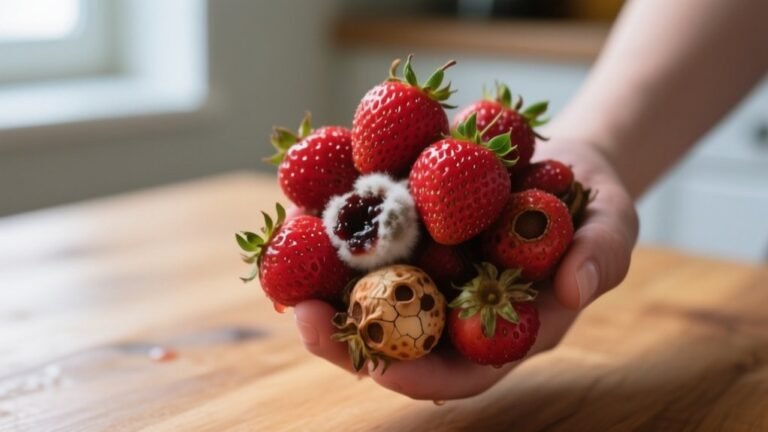

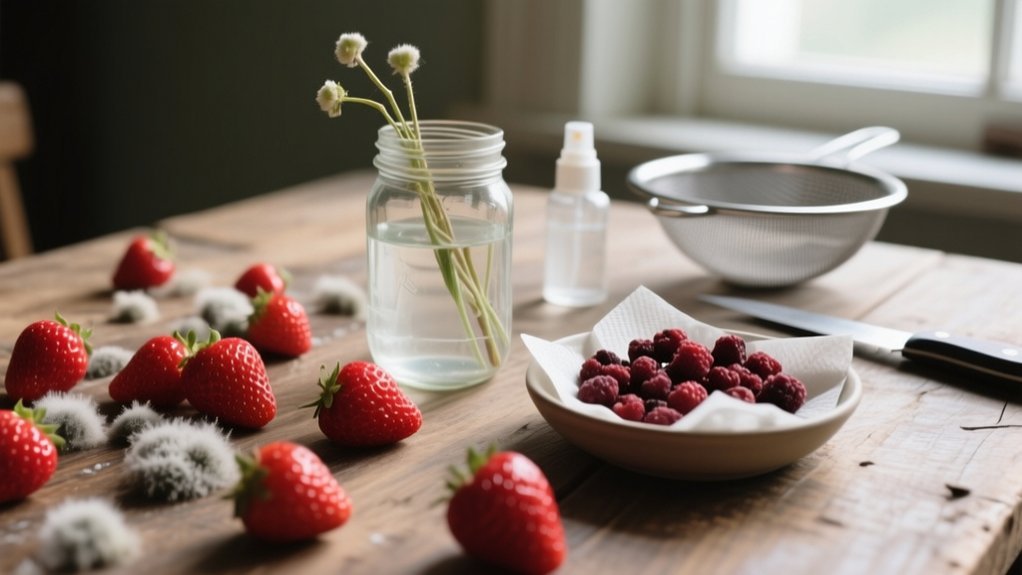
7 Tips to Keep Strawberries From Molding
To keep your strawberries from molding, don’t wash them until you’re ready to eat, and always keep them dry before storing. Try soaking them in a vinegar-water solution to kill mold spores, then dry thoroughly.
Store strawberries in their original container for airflow, and regularly check for spoiled berries to remove promptly. Picking strawberries often and clearing dead leaves also helps reduce mold.
If you want to guarantee your strawberries stay fresh longer, you can explore more helpful tips.
Prevent Moisture Build-Up During Strawberry Storage
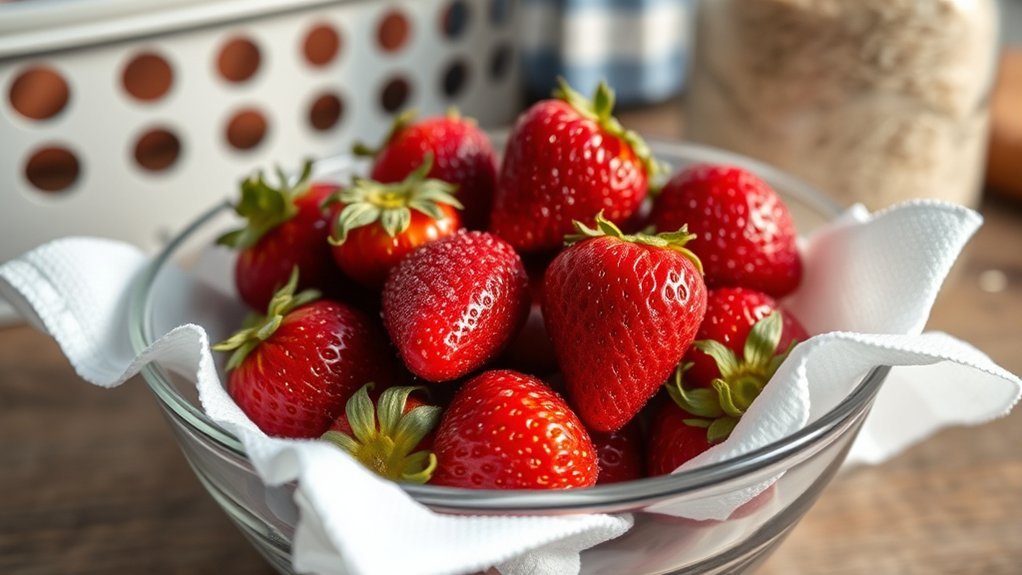
Since moisture speeds up spoilage and mold growth, you should keep strawberries dry before storing them. Avoid washing them until right before you eat them, as extra moisture encourages mold. If you must rinse, dry the berries thoroughly with a clean towel.
Choose storage containers that allow air circulation, like original packaging or breathable storage containers. These work best to prevent moisture buildup. Avoid airtight containers because they trap humidity and accelerate spoilage.
While a vinegar solution is effective for killing mold spores, don’t soak strawberries before storage. Instead, use it as a cleaning step beforehand if needed.
Regularly check your stored strawberries and remove any that show signs of spoilage to stop mold from spreading.
Keeping moisture in check is key to extending strawberry freshness.
Soak Strawberries in Vinegar Solution to Stop Mold
Although you should avoid soaking strawberries before storage under normal circumstances, soaking them briefly in a vinegar-water solution can dramatically reduce mold spores and extend their freshness.
Mix three parts water to one part vinegar and soak strawberries for a short time to kill mold spores effectively. This storage method reduces spoilage rates to about 5%, making it one of the best ways to keep strawberries fresh.
After soaking, drain and thoroughly dry the berries using a salad spinner to remove excess moisture, which is essential for preventing mold growth.
Finally, store the dry strawberries in a clean, dry container in the refrigerator. This technique not only slows spoilage but also helps maintain the strawberries’ vibrant color and firmness, ensuring they stay fresh longer.
Wait to Wash Strawberries Until Just Before Eating
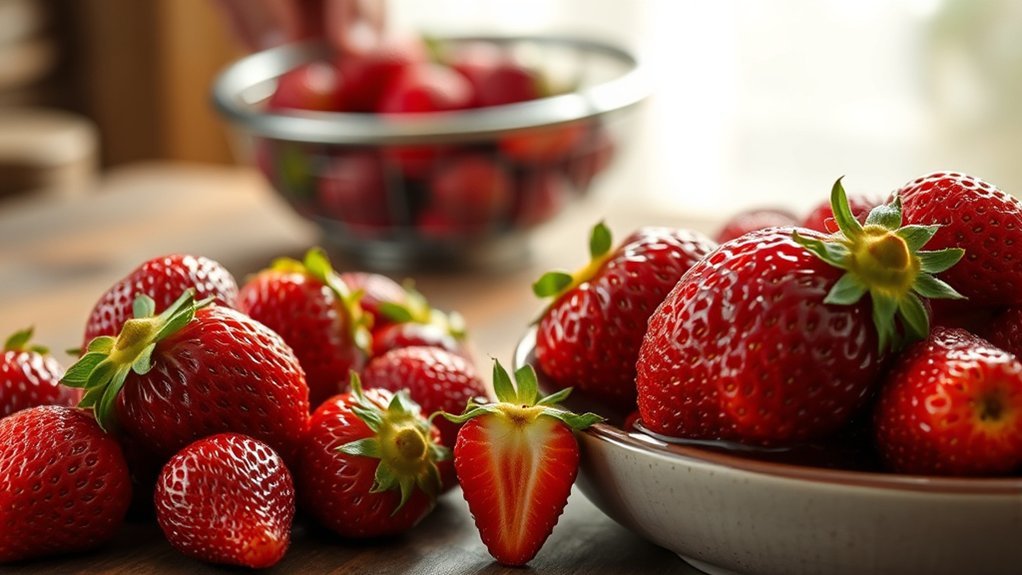
If you want your strawberries to stay fresh longer, hold off on washing them until right before you eat them. When you wait to wash strawberries, you reduce the risk of introducing moisture during storage, which can speed up mold growth and spoilage.
Moisture is the main culprit that causes strawberries to deteriorate quickly, so keeping them dry helps maintain their firmness and vibrant color.
If you prefer to clean them with a vinegar-water soak, do so just before consuming, and dry them thoroughly to eliminate excess moisture.
Store Strawberries in Their Original Container for Airflow
One simple way to keep your strawberries fresh is to store them in their original container. This container is designed with ventilation holes that allow airflow, which helps reduce moisture buildup, a key factor in slowing spoilage.
When you store strawberries this way, fresh strawberries stay dry and less prone to mold. Before putting them back, quickly sort through and remove any spoiled or damaged berries to prevent mold from spreading.
This method isn’t only effective but also quick and requires no extra materials. Studies show that using the original container results in only about 15% spoilage after seven days, making it ideal for short-term storage.
Regularly Inspect and Remove Moldy or Damaged Berries
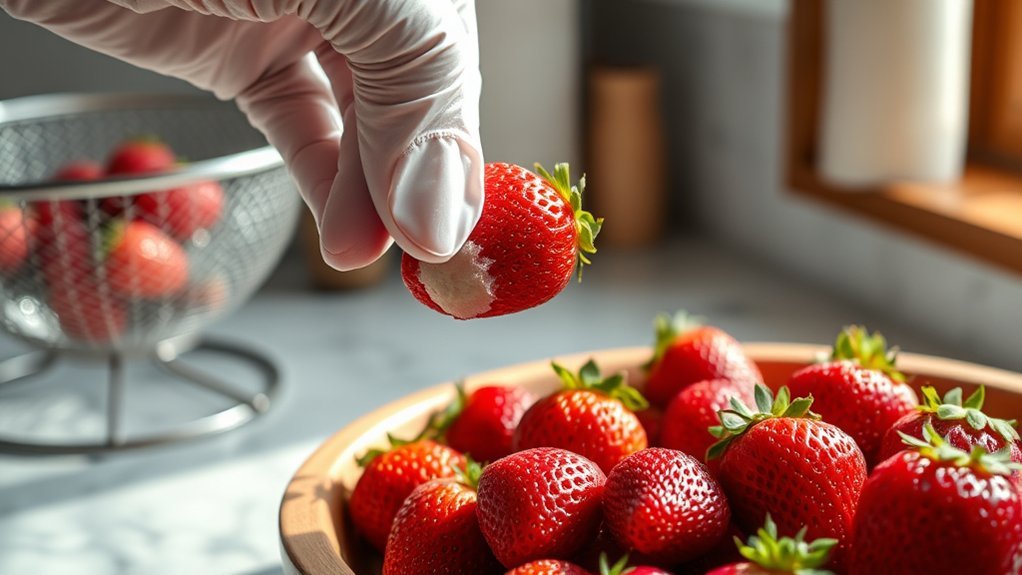
Check your strawberries at least twice a week for any signs of mold, bruising, or damage. Even a single spoiled berry can speed up spoilage in the whole batch.
Make it a habit to inspect every berry carefully, especially those at the bottom of the container where moisture tends to accumulate. Remove moldy or damaged berries immediately to protect the rest. Here’s a quick guide:
| Condition | Action | Reason |
|---|---|---|
| Moldy | Discard immediately | Prevents mold spread |
| Bruised | Remove | Stops quick decay |
| Damaged | Separate & inspect | Avoid contamination risk |
| Firm & fresh | Keep | Lasts longer, reduces spoilage |
Regular inspection keeps your strawberries fresh longer and helps avoid waste.
Harvest Strawberries Often in Warm, Humid Weather to Reduce Mold
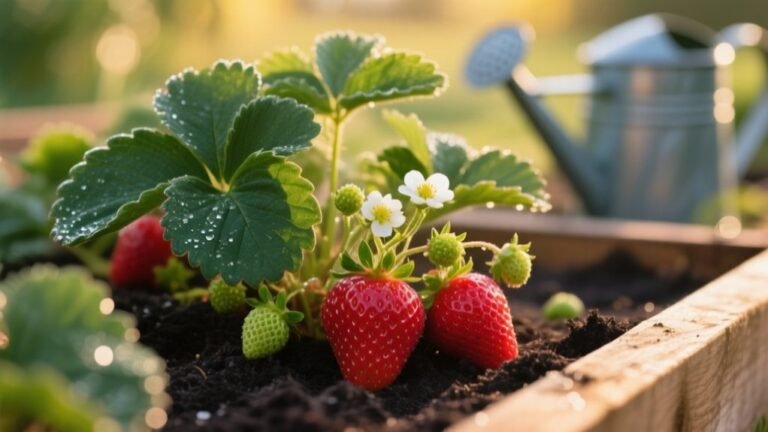
You’ll want to harvest strawberries every few days during warm, humid weather to keep mold at bay.
If you leave ripe berries on the plant too long, it invites gray mold, especially in these conditions.
Frequent Harvesting Benefits
Because warm, humid weather encourages mold growth, you should harvest strawberries frequently to keep them fresh. By picking berries every few days, you reduce the time they stay on the plant, limiting their exposure to moisture that promotes mold.
Harvesting at the right stage guarantees strawberries remain firm and vibrant, making them less prone to spoilage. Removing ripe fruit regularly also helps prevent gray mold from spreading to nearby berries through the stem.
When you stay on top of harvesting, you maintain healthier plants and improve the overall quality of your crop. This active approach not only minimizes mold but also leads to a more abundant, fresh yield, assuring your strawberries stay delicious and mold-free for longer.
Warm Weather Challenges
When warm, humid weather sets in, harvesting your strawberries every few days becomes essential to prevent mold from taking hold. High humidity creates the perfect environment for gray mold, especially if overripe berries remain on the plant. By picking frequently, you reduce the chance of mold spores settling on your fruit.
To keep your strawberries fresh, harvest during cooler parts of the day, like early morning or late afternoon. This lowers stress on the berries and helps them resist mold.
After picking, handle and store berries properly, avoiding excess moisture during storing berries.
Also, guarantee good air circulation around your plants by spacing them well, so they dry quickly after rain or watering. This further reduces humidity and the risk of mold growth in warm weather.
Clear Old Leaves and Refresh Plants to Prevent Gray Mold
Although gray mold can devastate your strawberry crop, clearing away old leaves and revitalizing your plants greatly reduces its chances of taking hold.
Make it a habit to clear old leaves and debris at the end of the growing season, as gray mold thrives in this organic matter during winter.
Clear away old leaves and debris each season to prevent gray mold from thriving over winter.
Keep an eye out for non-productive growth and remove those plants promptly to boost overall plant vigor.
Proper spacing is key too. It improves air circulation, helping leaves and fruit dry faster after rain or irrigation, which prevents mold growth.
After harvest, apply a balanced fertilizer to strengthen your plants, making them more resistant to diseases like gray mold next season.
Following these steps keeps your strawberries healthier and less prone to mold problems.
Frequently Asked Questions
What Soil Conditions Help Reduce Strawberry Mold?
To reduce strawberry mold, you need to focus on drainage improvement by choosing well-drained, sandy loam soil.
You shouldn’t let water linger around the roots.
Keep your soil pH between 5.5 and 6.8 to optimize nutrient uptake and plant health.
Don’t forget to add organic amendments like compost or well-rotted manure regularly; they boost soil structure and beneficial microbes that fight mold pathogens.
This way, your strawberries stay healthy and mold-free.
Can Companion Planting Prevent Strawberry Mold?
Companion plants can cleverly curb mold by crafting a cooler, drier garden layout.
You’ll find that planting basil, mint, or marigolds near strawberries not only deters pests but also delivers natural mold prevention.
Garlic’s antifungal abilities add extra armor against gray mold.
How Does Mulch Type Affect Mold Growth on Strawberries?
Mulch type directly affects mold growth on strawberries by influencing mulch moisture and air circulation around your plants.
Organic mulch materials like straw or wood chips offer mulch benefits by retaining soil moisture while promoting faster drying, reducing mold risk.
Using straw mulch creates a barrier between fruit and soil, preventing fungal spores from splashing onto berries.
Choose mulch materials allowing good airflow, like pine needles, to minimize moisture buildup and keep your strawberries mold-free.
Are There Natural Predators That Control Mold on Strawberries?
You’ll see ladybugs flutter, lacewings glide, and beneficial insects swarm, all acting as natural fungicides against mold on strawberries.
These organic treatments don’t just fight mold; they balance your garden’s ecosystem.
By encouraging these natural predators, you reduce harmful pathogens and protect your plants without chemicals.
What Temperature Range Is Best for Growing Mold-Resistant Strawberries?
You’ll find the best temperature range for growing mold-resistant strawberries is between 60°F and 75°F.
This range optimizes mold resistance factors by maintaining ideal humidity levels that discourage fungal growth.
Choosing strawberry varieties suited to these conditions helps too.
Keeping soil temperatures near 60°F supports strong plant health and reduces gray mold risks.
Avoid letting temperatures rise above 80°F, as heat stress can compromise the plants’ natural defenses.
Conclusion
By following these tips, you’ll keep your strawberries fresh and mold-free longer. Think of moisture like a sneaky thief. If you don’t stop it, it’ll ruin your sweet berries fast.
So, keep them dry, wash just before eating, and check for any bad ones regularly. With a little care, your strawberries will stay delicious, juicy, and ready to enjoy, just like picking them fresh from your own garden every time.