


How Do You Grow Sweet Strawberries
To grow sweet strawberries, pick varieties like Honeoye, Albion, or Mara Des Bois for their natural sweetness. Give your plants 6 to 8 hours of direct sunlight daily and keep the soil pH between 5.5 and 6.5, enriched with potassium-rich fertilizers to boost sugar levels.
Water consistently but avoid overwatering, and prune runners to focus energy on fruit. Proper care leads to juicy, flavorful berries. Keep exploring to reveal more tips on berry-perfecting techniques.
Which Strawberry Varieties Produce the Sweetest Fruit?

Wondering which strawberry varieties deliver the sweetest fruit?
June-bearing types like Honeoye and Earliglow top the list for the sweetest strawberries, prized by home growers and jam makers alike.
If you want a longer harvest, everbearing varieties such as Ozark Beauty and Quinault offer sweet berries in both spring and fall, though they produce fewer runners.
For a steady supply throughout the season, day-neutral cultivars like Albion and Seascape consistently produce sweet strawberries regardless of daylight.
You can boost sweetness further by choosing potassium-rich fertilizers that help convert sugars during fruit development.
Keep in mind, varieties like Mara Des Bois shine with intense flavor when grown in ideal climates, so selecting the right variety and conditions is key to growing the sweetest strawberries.
How Much Sunlight Do Sweet Strawberries Need?
You’ll want to give your sweet strawberries about 6 to 8 hours of direct sunlight each day. This helps them grow firm and flavorful.
Sunlight really makes a big difference in how sweet and abundant your berries turn out to be.
If you’re growing your strawberries in containers or in a shady spot, no worries! You can just move them around during the day to catch the best light.
That way, they’ll get the sunlight they need to thrive.
Ideal Sunlight Hours
Because sweet strawberries need plenty of sunlight to develop their signature flavor, you should provide them with at least 6 to 8 hours of direct sun daily.
Full sun exposure is essential for producing red, firm berries with the best flavor and sugar levels.
While strawberries can handle some shade, too little sunlight weakens their sweetness and overall health.
To maximize fruit quality and yield, plant your strawberries where they’ll get the most sun throughout the day.
If you’re growing them in containers, keep an eye on their position and move them as needed to maintain ideal sunlight hours.
Effects Of Sunlight
Sunlight plays a critical role in growing sweet strawberries, as they need 6 to 8 hours of direct sunlight each day to develop their rich flavor and vibrant color. Without enough sunlight, your strawberries won’t reach their full sweetness or firmness.
You can plant them in full sun locations or use movable containers to maximize sunlight exposure. Even though strawberries tolerate some shade, full sunlight guarantees the best fruit quality.
| Sunlight Hours | Fruit Color | Sweetness Level |
|---|---|---|
| Less than 4 | Pale, less vibrant | Low |
| 4 to 5 | Some red patches | Moderate |
| 6 to 8 | Bright red | High |
| 8+ | Deep red | Very High |
| Full Shade | Greenish | Very Low |
Adjusting Sunlight Exposure
When growing sweet strawberries, aim to provide them with 6 to 8 hours of direct sunlight daily to achieve the best flavor and firmness. Adequate sunlight boosts strawberry sweetness by encouraging the development of red, firm berries with rich taste.
While strawberries tolerate some shade, their sweetness drops without full sun.
If you grow strawberries in containers, position them where they receive maximum sun and move them if needed. Remember, planting in well-draining, sunny spots also prevents disease and supports vigorous growth.
To adjust sunlight exposure effectively:
- Choose a location with 6-8 hours of direct sun
- Rotate container plants to maximize light
- Avoid shaded areas that reduce sweetness
- Confirm soil drains well to promote healthy growth
This way, your strawberries will reach peak sweetness.
How to Prepare Your Soil for Sweeter Strawberries
To grow sweeter strawberries, you’ll want to start by adjusting your soil’s pH to between 5.5 and 6.5. If needed, you can use sulfur or peat moss to get it just right.
Adding some quality compost is also a good idea—it boosts nutrients and improves soil fertility.
Another thing to keep in mind is drainage. Make sure your soil drains well. If it tends to hold too much water, consider mixing in some sand or planting your strawberries in raised beds.
That way, you’ll keep the moisture levels just right for those sweet berries to thrive.
Soil pH Adjustment
Although soil quality varies, adjusting its pH to between 5.5 and 6.5 is essential for growing sweeter strawberries. This slightly acidic range boosts sugar production in your fruit, enhancing flavor.
Before planting, conduct a soil test to determine your soil’s current pH and what amendments it needs.
For effective soil pH adjustment, consider these steps:
Add sulfur or peat moss to lower pH and acidify the soil.
Monitor soil pH regularly to maintain ideal levels.
Avoid overcorrecting, as extreme pH can harm plants.
Use amendments gradually, allowing time for changes to take effect.
Compost and Drainage
Adjusting your soil’s pH sets the stage, but enriching the soil with compost and ensuring proper drainage will really boost your strawberries’ sweetness.
Before planting, mix plenty of compost into your soil to improve fertility and nutrient content. Both are essential for sweeter fruit.
Make sure your soil drains well and stays slightly acidic, ideally with a pH between 5.5 and 6.5. If drainage is poor, add sand or consider raised beds to prevent waterlogging and root rot. These issues can reduce sweetness.
Regularly test your soil’s pH and amend it with sulfur or peat moss as needed to maintain the right acidity.
How to Water Strawberries for Maximum Sweetness

When you water strawberries consistently, you keep the soil just moist enough to boost their natural sweetness without causing root problems.
Consistent watering keeps soil moist, enhancing strawberry sweetness while protecting roots from damage.
Strawberries thrive when soil remains lightly moist but not waterlogged, so regular watering is key. Adjust your routine based on rainfall to provide about 1-1.5 inches of water weekly.
Water in the early morning to let plants absorb moisture before heat hits. Avoid overhead watering to prevent disease; instead, focus water delivery at the roots.
Use drip irrigation or soaker hoses. Water container strawberries daily during heat. Monitor soil moisture closely. Schedule watering early in the day.
Following these tips helps your strawberries develop maximum sweetness and stay healthy throughout the growing season.
Which Fertilizers Boost Sweet Strawberry Sugar Content?
You’ll want to go for fertilizers that are rich in potassium because they help convert sugars, which makes your strawberries sweeter.
It’s pretty cool how potassium plays a big role in boosting that natural sweetness.
Also, using balanced nutrient blends made specifically for strawberries is a smart move.
These blends support healthy growth without compromising the fruit’s sugar levels.
So, you get juicy, sweet strawberries and strong plants at the same time.
And don’t forget—timing is key.
Applying these fertilizers at just the right time ensures your strawberries develop the maximum sugar content possible.
That way, every bite is as sweet as can be!
Potassium-Rich Fertilizer Benefits
Because potassium plays an essential role in converting sugars within strawberries, using potassium-rich fertilizers can dramatically increase their sweetness.
These fertilizers, especially those with a high K value in the NPK ratio, help transform sugars, making your strawberries taste richer and sweeter.
Applying them during flowering and fruiting stages maximizes flavor development. You can choose from synthetic options or natural sources like wood ash and compost for organic cultivation.
To get the most from potassium-rich fertilizers, remember to:
- Test your soil regularly to monitor potassium levels
- Apply fertilizers during key growth stages for ideal sugar conversion
- Select products formulated with elevated potassium content
- Consider organic potassium sources for a chemical-free approach
This targeted potassium boost guarantees your strawberries reach peak sweetness and flavor.
Balanced Nutrient Application
Although potassium plays a key role in boosting strawberry sweetness, applying a balanced fertilizer that includes the right amounts of potassium, phosphorus, and nitrogen guarantees healthy growth and ideal sugar content. Potassium-rich fertilizers promote sugar conversion, but too much nitrogen can cause excessive foliage and reduce sweetness.
Use compost before planting for a nutrient foundation and test soil regularly to tailor your balanced nutrient application. This ensures your sweet strawberries reach their fully ripe, sugary potential.
| Nutrient | Role in Growth | Effect on Sweetness |
|---|---|---|
| Potassium (K) | Enhances sugar conversion | Increases sweetness |
| Phosphorus (P) | Supports root development | Indirectly aids fruit quality |
| Nitrogen (N) | Promotes foliage growth | Excess reduces sweetness |
When Is the Best Time to Plant Sweet Strawberries?
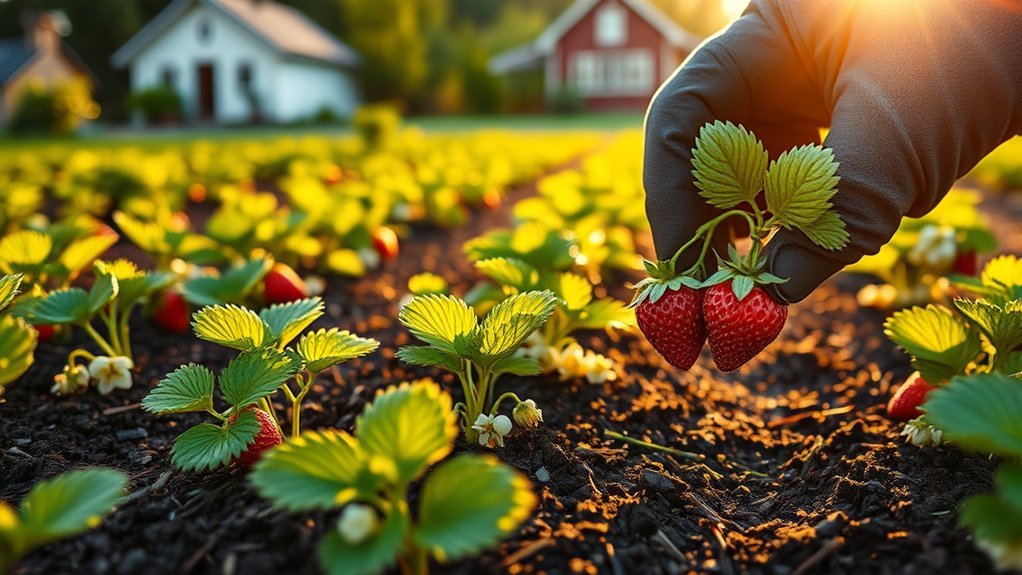
When should you plant sweet strawberries to get the best results? The best time to plant sweet strawberries is either early spring or fall.
Fall is often preferred because it encourages stronger root development.
If you choose spring, wait until after the last frost and when the soil is workable. For bare-root plants, soil temperatures around 60°F (15.5°C) are ideal.
Keep these tips in mind: plant bare-root strawberries in spring when soil warms. Transplant potted plants after frost risk passes. Avoid burying the crown to prevent rot. Verify at least 12 inches between plants for good airflow.
Choosing the right time helps your sweet strawberries thrive and produce a bountiful harvest.
How to Space Strawberry Plants for Better Growth
Spacing your strawberry plants at least 12 inches apart gives them the room they need to grow strong and healthy. Proper spacing guarantees good airflow, reducing disease risk and promoting vigorous growth.
When planting, keep rows 3 to 4 feet apart to allow easy access for maintenance and harvesting. This setup also maximizes sunlight exposure, which is essential for sweeter, larger berries.
Avoid overcrowding your strawberries, as crowded plants compete for nutrients and water, resulting in smaller, less flavorful fruit.
To manage spacing effectively, consider using raised beds or containers. These options help control soil quality and improve drainage, giving your plants the best environment to thrive.
How to Prune Strawberry Plants to Improve Sweetness
To boost your strawberries’ sweetness, you’ll want to prune the runners, keeping about 4 to 5 per plant. This redirects the plant’s energy toward fruit production rather than excessive spreading.
For June-bearing varieties, prune foliage right after harvest to improve air circulation and strengthen growth for next season.
Always remove dead or diseased leaves promptly to keep your plants healthy and your fruit sweet.
Timing is key: prune in early spring or post-harvest to maximize fruit development.
Remember to:
- Limit runners to focus energy on fruit
- Remove dead or diseased leaves regularly
- Prune foliage after harvest for June-bearing types
- Prune at the right time (early spring or after harvest)
Properly pruning guarantees your strawberries grow sweeter and healthier each season.
How to Naturally Protect Sweet Strawberries From Pests and Diseases
Pruning does more than improve sweetness; it also helps keep your strawberry plants healthy and less attractive to pests and diseases.
To naturally protect your strawberries, inspect plants regularly for early signs of pests and diseases.
Use organic methods like introducing beneficial insects. Ladybugs are great for controlling aphids and supporting pollination.
Apply natural repellents such as neem oil or insecticidal soap to deter spider mites, aphids, and beetles without harming helpful insects.
Guarantee good air circulation by spacing plants properly and trimming excess foliage. This reduces humidity and fungal risks.
Finally, spread straw mulch around your plants to keep berries off the soil, which helps prevent rot and discourages certain pests.
These steps create a balanced, natural defense system for your sweet strawberries.
How to Pollinate Strawberries to Increase Sweetness
Although pollination often goes unnoticed, it plays an essential role in developing sweet, juicy strawberries by enabling pollen transfer within each flower. To increase sweetness, you need to encourage effective pollination.
Bees are your best allies; introducing them to your strawberry patch boosts pollen transfer and improves fruit flavor. Pollination thrives in warm, dry conditions, so try to work during these times.
You can also plant companion flowers nearby to attract more pollinators.
Keep these tips in mind to enhance pollination:
- Make sure your strawberry plants have plenty of insect activity.
- Introduce or encourage bees in the garden.
- Plant companion flowers that attract pollinators.
- Time your pollination efforts during warm, dry weather.
These steps help your strawberries develop fuller, sweeter fruits through the best pollination.
When and How to Harvest Strawberries for Peak Flavor
When should you pick strawberries to capture their sweetest flavor? You want to harvest strawberries when they are fully ripe. Look for a uniform red color with no green shoulders.
Picking berries every other day during peak season keeps them fresh and prevents overripening. Morning is the best time to pick because cooler temperatures help maintain firmness and reduce bruising.
Handle the fruit gently to avoid damage.
| Tip | Details |
|---|---|
| Ripeness Indicator | Fully red, no green shoulders |
| Harvest Frequency | Every other day during peak production |
| Best Time to Harvest | Morning, when it’s cool |
| Picking Technique | Gently pick to avoid bruising |
Following these steps guarantees you get the sweetest, freshest strawberries possible.
How to Store and Use Sweet Strawberries to Keep Their Flavor
After picking your strawberries at their peak ripeness, how you store and use them will make all the difference in keeping their sweet flavor intact.
To enjoy strawberries often and preserve their taste, follow these simple steps:
Store fresh strawberries in the fridge, ideally in a breathable container lined with a paper towel.
Avoid washing strawberries until just before you eat them to prevent mold from moisture buildup.
Freeze strawberries for longer storage: wash, hull, freeze them individually on a baking sheet, then transfer to airtight containers.
Use ripe strawberries in recipes like smoothies, salads, or desserts that highlight their natural sweetness.
Frequently Asked Questions
Can Strawberries Be Grown Indoors Year-Round?
Yes, you can grow strawberries indoors year-round through indoor cultivation.
You’ll need to provide 12-16 hours of light daily using south-facing windows or grow lights. Use containers with well-draining soil and maintain temperatures between 65-75°F.
Keep the soil lightly moist but not soggy by watering regularly.
You might also try hydroponic systems for better nutrient control and space efficiency.
With the right care, your indoor strawberries will thrive continuously.
How Do Temperature Fluctuations Affect Strawberry Sweetness?
You’ll notice strawberries get sweeter when nighttime temps drop below 60°F (15°C) during ripening.
This temperature fluctuation boosts flavor development by allowing sugars to accumulate more effectively.
When days stay warm and nights cool, the berries balance sugar and acid perfectly, enhancing their taste.
What Role Does Soil pH Play in Strawberry Flavor?
Soil pH plays a big role in strawberry flavor because it affects nutrient availability and sugar production.
When you maintain the soil composition at a slightly acidic pH between 5.5 and 6.5, your plants can absorb nutrients better, making the berries sweeter.
If the pH drops too low, nutrient deficiencies can reduce sweetness.
Can Companion Planting Enhance Strawberry Sweetness?
Think of your strawberry patch as a bustling village where companion crops like basil, borage, and marigolds act as friendly neighbors.
They ward off pests and invite helpful pollinators, creating harmony that lets your strawberries thrive and sweeten.
By planting these companions, you’re not just adding greenery.
You’re hosting a community that boosts soil health and shields plants from stress, making your strawberries taste even sweeter and more delicious.
How Do Different Watering Methods Impact Strawberry Taste?
Different watering techniques directly impact strawberry taste by controlling moisture levels.
You’ll want to use drip irrigation or water early in the morning to provide consistent moisture without over-watering. This helps your strawberries accumulate sugars, making them sweeter.
Avoid water-logged soil, which dilutes flavor and harms roots.
If you grow strawberries in containers, you might need to water daily. Proper watering guarantees better nutrient uptake and sweeter, tastier fruit.
Conclusion
Growing sweet strawberries is like nurturing a treasure chest of flavors right in your garden. By choosing the right varieties, giving them plenty of sunlight, preparing nutrient-rich soil, and watering carefully, you set the stage for sweetness to shine.
Protect them naturally and pollinate well to boost their flavor. Harvest at peak ripeness, and store them properly to savor every juicy bite.
With these steps, your strawberries will be as sweet as a summer sunset.