
How Do You Clean Strawberries?
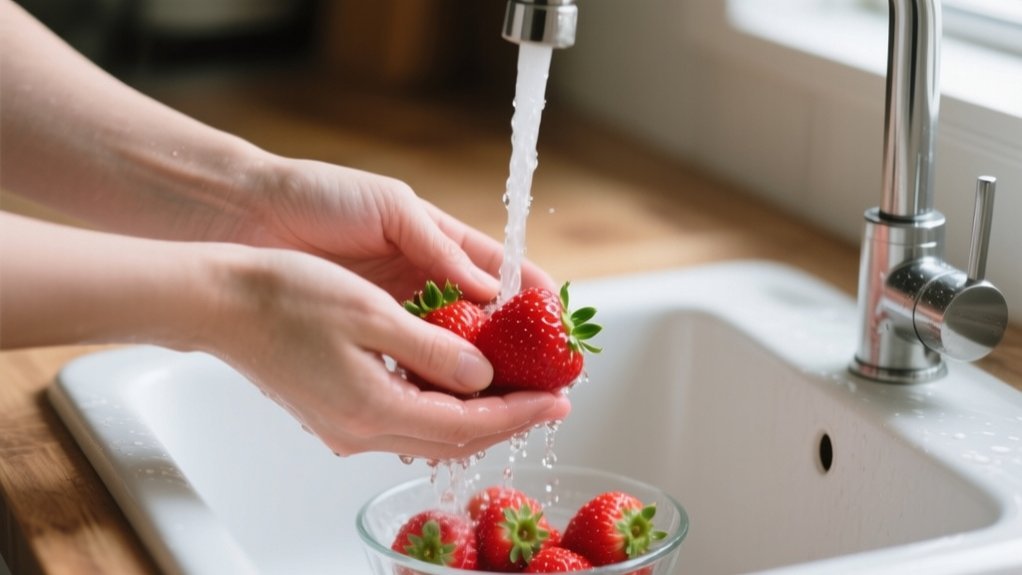
You clean strawberries best by soaking them briefly in a vinegar solution, about one tablespoon of vinegar per 12 cups of water. This helps reduce pesticides and slow down mold growth.
After soaking, rinse them thoroughly under cold running water. If you want to reduce mold even more, use warm water around 125°F, but don’t soak them too long to keep them firm.
Pat them dry gently before storing. Keep going to discover tips on hulling, storing, and freezing strawberries for lasting freshness.
Why Washing Strawberries Removes Harmful Residues
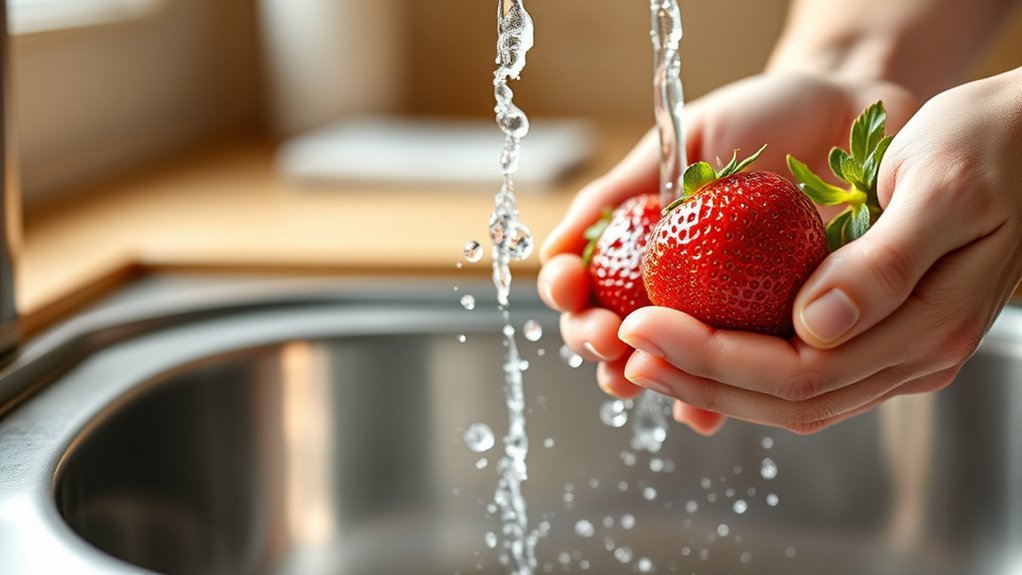
Because strawberries have thin skins that easily absorb pesticides, washing them is essential to reduce harmful residues. When you’re washing strawberries, a simple rinse isn’t always enough to remove all the contaminants clinging to their surface.
Using a vinegar solution helps break down pesticide residues and washes away bacteria and mold spores more effectively than water alone. This method not only improves the safety of your fruit but also helps extend its freshness.
Studies show that washing strawberries with a vinegar solution can slow down mold growth, which often accelerates when pesticide residues remain.
What Happens If You Don’t Wash Strawberries Properly
If you don’t wash strawberries properly, you risk leaving pesticide residues and harmful bacteria on their surface. This can lead to several problems you definitely want to avoid:
- You may consume bacteria and mold spores that cause foodborne illnesses, putting your health at risk.
- The strawberries can spoil faster because leftover contaminants promote mold growth, ruining your fruit quicker.
- Poor cleaning affects the taste and texture, making your strawberries less enjoyable and possibly gritty.
Additionally, an improper storage method after skipping a good wash can worsen spoilage by encouraging fungal infections.
To keep your strawberries fresh, tasty, and safe, always wash them thoroughly before eating or storing. You’ll protect yourself from contamination and extend their shelf life considerably.
The Best Water Temperature for Cleaning Strawberries
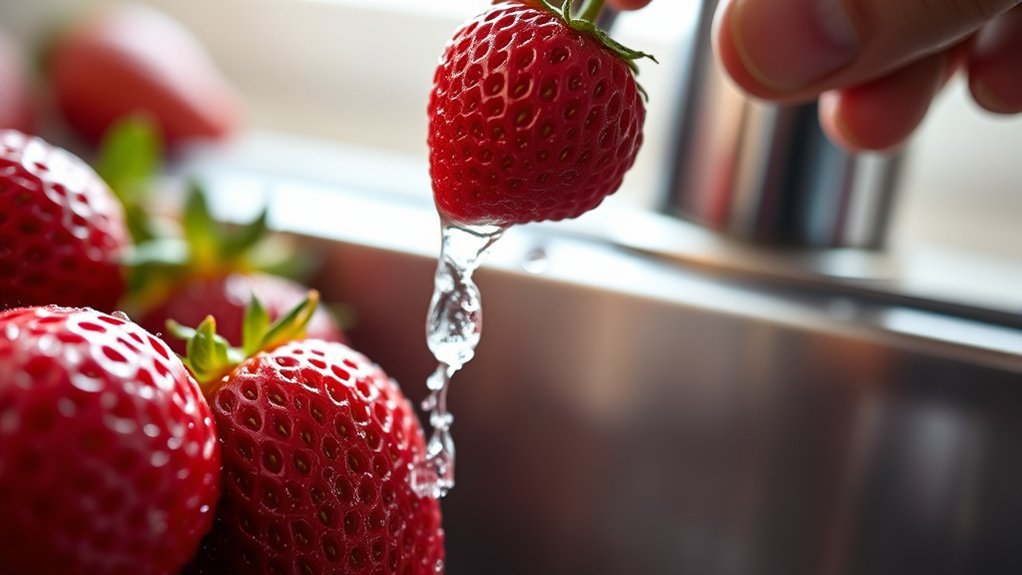
Water temperature plays an essential role when you clean strawberries, as it helps eliminate heat-sensitive bacteria and mold spores effectively.
For washing berries, the ideal temperature ranges between 110°F to 130°F (43°C to 54°C).
Research shows that washing strawberries in hot water around 125°F (51°C) reduces mold growth more effectively than cooler water. Temperatures above 109°F already offer significant benefits, so you don’t need to go too hot.
Using hot water not only cleans better but also extends your strawberries’ shelf life by minimizing surface bacteria and mold. In contrast, cold water doesn’t remove contaminants as efficiently.
Cleaning Strawberries With Vinegar and Baking Soda
When you want to remove dirt and pesticides from strawberries effectively, using vinegar or baking soda solutions can be a great option.
For cleaning strawberries with vinegar, mix 1 tablespoon of vinegar per 12 cups of water and soak your berries for a few minutes. Alternatively, dissolve 1 tablespoon of baking soda in the same amount of water, but be aware this can make your strawberries softer.
To wash strawberries properly after soaking, rinse thoroughly under cold, running water to remove any residual cleaning agents. Avoid leaving them in soaking solutions too long to prevent sogginess.
Rinse strawberries well under cold running water after soaking to remove residue and prevent sogginess.
Dry them well using a salad spinner or air-dry to keep them fresh and mold-free.
This method guarantees clean, tasty strawberries ready to enjoy!
How to Quickly Hull Strawberries Without a Knife
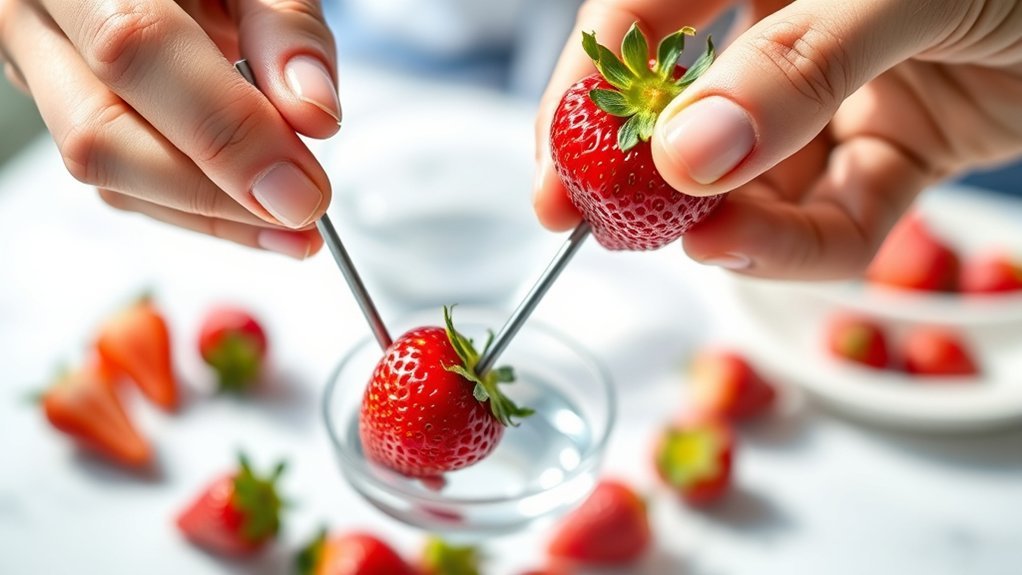
A quick and mess-free way to hull strawberries without a knife is by using a simple drinking straw. Just insert the straw through the bottom of the strawberry and push it up toward the stem to remove the core. This method helps you hull strawberries efficiently while keeping their shape intact and minimizing waste.
Plus, it’s perfect for clean strawberries since it avoids extra handling or cutting tools.
| Aspect | Benefit |
|---|---|
| Tool | Simple drinking straw |
| Technique | Insert from bottom, push up |
| Mess Level | Low |
| Fruit Integrity | Preserved shape and texture |
| Time Efficiency | Faster than cutting with a knife |
Try this to speed up your strawberry prep with less mess!
How to Dry Strawberries Properly After Washing
After washing your strawberries, you’ll want to remove every bit of moisture to keep them fresh longer.
To dry strawberries properly, follow these steps carefully:
- Gently pat the berries dry with a clean towel or paper towels to remove excess water without bruising them.
- Use a salad spinner lined with paper towels to spin off remaining moisture while keeping the strawberries intact.
- Alternatively, lay the strawberries in a single layer on a tray and let them air-dry completely before storing.
Should You Wash Strawberries Before or Just Before Eating?
Why should you wait to wash strawberries until just before eating them? Washing strawberries too early can cause moisture to linger, encouraging mold growth and spoilage during storage.
Since strawberries are highly perishable, it’s best to keep them dry until you’re ready to eat.
When you do wash them, rinse them thoroughly under cool, running water. This effectively removes dirt, bacteria, and pesticide residues.
If you plan to eat them immediately, a quick rinse works, but thorough washing is essential for safety when storing longer.
After rinsing, make sure to dry them properly to preserve their texture and flavor.
How to Store Strawberries to Keep Them Fresh Longer
If you want your strawberries to stay fresh longer, storing them properly is key. First, give your strawberries a quick rinse in a mixture of vinegar and water, then soak briefly in baking soda water to remove residues before drying thoroughly.
Next, follow these steps to store them right:
- Place strawberries in a sealed container without paper towels to prevent mold and preserve freshness.
- Keep the container cold, ideally at 32°F (0°C), to slow decay and maintain quality.
- Check daily, removing any damaged or moldy berries to stop spread.
Avoid leaving strawberries at room temperature, as this speeds spoilage. Proper storage guarantees every berry tastes as fresh as the day you bought it.
How to Freeze Strawberries for Long-Term Storage
To freeze strawberries for long-term storage, start by washing them well and drying them thoroughly.
Then, go ahead and remove the tops or cut them if you prefer smaller pieces.
Once that’s done, spread the strawberries out on a baking sheet so they freeze individually. This step is key to keeping them from sticking together later on.
After they’re frozen, pack them into freezer-safe containers or bags.
When stored properly, your strawberries can keep their flavor and quality for up to a year.
Pretty simple, right? This way, you can enjoy fresh-tasting strawberries anytime you want!
Preparing Strawberries Properly
Freezing strawberries properly starts with thorough washing using a hot water soak between 110ºF and 130ºF to eliminate bacteria and mold.
You can add a splash of vinegar to the soak to boost its effectiveness.
After washing, prepare your strawberries by removing the green tops and slicing them if you prefer, which makes using them later much easier.
To get the best results:
- Wash and soak strawberries in hot water with vinegar to clean thoroughly.
- Remove stems and slice strawberries for convenient use after thawing.
- Spread strawberries evenly on a baking sheet to freeze individually before storing.
Following these steps guarantees your strawberries stay fresh, flavorful, and ready for any recipe you have in mind.
Freezing Techniques Explained
When you want to preserve strawberries for months, proper freezing techniques make all the difference.
Start by washing your berries thoroughly in a mixture of water and distilled white vinegar to remove bacteria and mold spores. Rinse them well and dry completely.
Next, slice off the green tops or leave the strawberries whole, depending on your preference. Spread them in a single layer on a lined baking sheet to prevent clumping. Freeze for at least four hours until solid.
Once frozen, transfer the berries to a freezer-safe container or resealable bag, squeezing out as much air as possible to avoid freezer burn.
This method preserves flavor and texture, letting you enjoy your strawberries in smoothies or desserts anytime.
Storage Tips And Duration
Although freezing strawberries can preserve them for months, how you store them greatly affects their quality. To guarantee your berries stay fresh and flavorful, follow these essential storage tips when freezing strawberries:
- Wash, dry, and remove any damaged berries before freezing strawberries to avoid spoilage.
- Slice or hull the strawberries, then freeze them individually on a lined baking sheet for at least 4 hours to prevent clumping.
- Transfer the frozen berries to an airtight container or freezer-safe bag, removing excess air to prevent freezer burn.
Properly stored, frozen strawberries can last up to 12 months without losing taste or texture.
When ready to use, thaw them at room temperature for the best flavor. These storage tips make freezing strawberries simple and effective for long-term enjoyment.
Tips to Enjoy Fresh, Clean Strawberries Every Time
You can keep your strawberries fresh and clean by soaking them briefly in warm water or a vinegar solution before rinsing.
Just make sure to dry them completely—using a salad spinner works great, or you can let them air-dry. This helps prevent mold from forming.
Then, store your berries in a sealed container in the fridge to keep them fresh longer.
Effective Washing Techniques
Three simple steps can help you enjoy fresh, clean strawberries every time.
First, avoid washing them right after purchase to prevent mold growth.
Second, soak your strawberries in a vinegar solution. Mix 1 tablespoon of vinegar with 12 cups of water to tap into vinegar’s natural antibacterial power.
Finally, rinse thoroughly under cold water.
Here’s a quick guide:
- Use hot water (about 125ºF/51ºC) for 30 seconds to kill heat-sensitive bacteria and mold spores.
- Soak strawberries in the vinegar solution to enhance cleanliness.
- Rinse well and prepare to dry.
Proper Drying Methods
Once you’ve rinsed your strawberries thoroughly, drying them properly helps keep them fresh and flavorful. Excess water can cause mold, so removing moisture is key.
A salad spinner lined with paper towels efficiently removes water without bruising the fruit. You can also pat strawberries gently with a clean towel or air-dry them on a tray in a single layer for even airflow.
| Drying Method | Tips |
|---|---|
| Salad spinner lined | Use paper towels to absorb water |
| Patting with towel | Be gentle to avoid bruising |
| Air-drying on tray | Spread strawberries evenly |
| Avoid piling up | Prevent moisture buildup |
| Use breathable storage | Maintain freshness after drying |
Optimal Storage Tips
Although strawberries are best enjoyed fresh, proper storage can greatly extend their shelf life and keep them tasting great.
After using the Best Way to Wash your strawberries and drying them thoroughly, follow these tips to guarantee your strawberries will stay fresher longer:
- Store strawberries in a sealed container to lock in freshness and prevent exposure to air, which speeds spoilage.
- Keep them in a single layer inside the refrigerator at around 32°F (0°C) to avoid bruising and maintain quality.
- Regularly check for any spoiled berries and remove them immediately to stop mold from spreading.
Frequently Asked Questions
Can I Use Lemon Juice Instead of Vinegar to Clean Strawberries?
Yes, you can use lemon juice instead of vinegar to clean strawberries.
Lemon juice benefits include natural antibacterial properties that make it an effective cleaning alternative.
Mix one part lemon juice with three parts water, soak the strawberries briefly, then rinse thoroughly with cold water.
This method not only removes dirt and bacteria but also leaves a revitalizing citrus hint, which some people prefer over vinegar’s stronger scent.
Are Organic Strawberries Safer Without Washing?
No, organic strawberries aren’t safer without washing.
Even with organic farming, these berries can still carry pesticide residues, dirt, and bacteria from handling or the environment.
You shouldn’t assume they’re clean straight from the package.
Washing them under running water helps remove contaminants and reduces the risk of foodborne illness.
How Long Should Strawberries Soak in the Cleaning Solution?
Just like Achilles had his heel, strawberries have a sweet spot too: the soaking duration. You should soak strawberries in a vinegar solution for about 5 minutes to maximize cleaning effectiveness.
Any longer, and you risk altering their texture, much like overcooking a fine dish.
After soaking, rinse them thoroughly under running water to wash away any leftover solution, ensuring your berries stay fresh and safe to enjoy.
Can You Clean Strawberries in a Dishwasher?
You shouldn’t clean strawberries in a dishwasher because it lacks dishwasher efficiency for delicate fruits like these.
The high heat and strong water pressure can bruise and damage them.
Instead, focus on gentler cleaning methods, like rinsing under running water or soaking briefly in a vinegar solution.
These methods preserve the fruit’s texture and remove dirt and pesticides effectively, unlike the dishwasher, which isn’t designed for such fragile produce.
Does Washing Strawberries Affect Their Nutritional Value?
Washing strawberries doesn’t have a significant nutritional impact, so you don’t need to worry about losing vitamins or minerals.
Different washing methods, like rinsing with water, vinegar, or baking soda, effectively remove dirt and pesticides without harming the fruit’s nutrients.
Conclusion
You might think washing strawberries takes too much time, but a quick rinse really makes a difference in removing pesticides and bacteria. Using cool water or a vinegar soak guarantees they’re clean and safe to eat without altering their flavor.
Just wash them right before you enjoy them to keep that fresh taste. Taking these simple steps helps you savor every bite confidently, knowing your strawberries are both delicious and safe.