

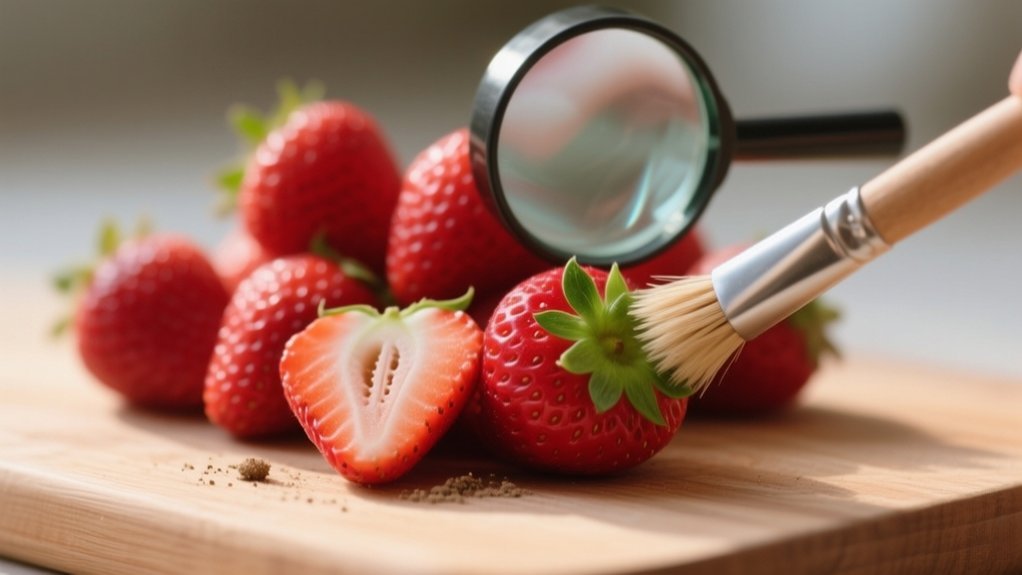
How to Check if Strawberries Have Worms Before Eating Them
To see if your strawberries have worms, look for tiny scars, blemishes, or soft spots on the fruit’s surface. Gently squeeze the berry to check for unusual softness, and peek under the green leafy part for any bug activity.
Cut a strawberry open to spot any small white larvae inside. Washing in a vinegar or saltwater solution can help remove hidden worms. Keep going to discover effective washing methods and safe storage tips.
Why Strawberries Sometimes Have Worms
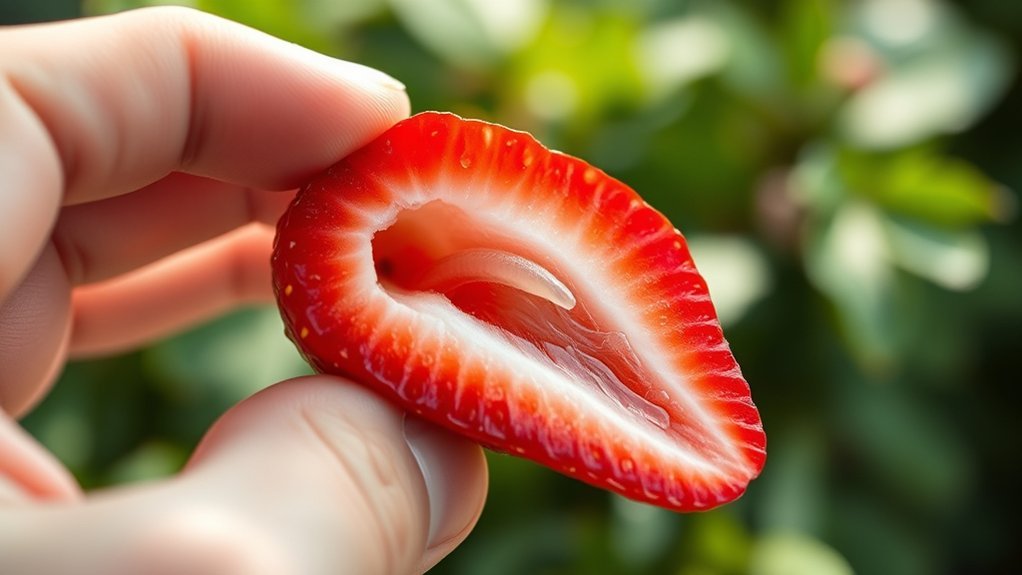
Although it might be off-putting, finding worms in strawberries often happens because of the spotted-wing drosophila (SWD), an invasive fruit fly that lays eggs inside ripe fruit.
Finding worms in strawberries is often due to the invasive spotted-wing drosophila laying eggs inside ripe fruit.
These flies are drawn to the sugar and yeast in strawberries, especially when they’re ripe.
Once the eggs hatch, tiny white larvae, commonly mistaken for worms, develop inside the fruit.
You might find these larvae more often in summer, especially in ever-bearing strawberry varieties.
The Food and Drug Administration actually allows a small number of such natural defects, including larvae, in food products.
So, worms in strawberries are more common than you might think.
Farmers use pest management techniques like timely harvesting and regular monitoring to keep SWD infestations under control.
This helps reduce the number of worms you might encounter.
How To Spot Worms In Strawberries Before Eating
You can start spotting worms by carefully inspecting strawberries for tiny scars or blemishes on the skin.
Then, try soaking the berries in warm, salty water for about 15 minutes—any larvae should float to the surface.
These simple steps really help you catch worms before enjoying your fruit.
Visual Inspection Techniques
A careful visual inspection can help you spot worms in strawberries before eating. First, closely inspect strawberries for tiny scars or dark spots on their skin. These could be signs of larvae from pests.
Also, watch for any signs of fruit decay like wrinkling or soft spots, which often indicate infestation.
Don’t forget to check the green calyx for hidden bugs or pest activity. When you handle the fruit, gently squeeze it. Overly soft or mushy strawberries might harbor larvae inside.
Keep these tips in mind:
- Look for tiny white larvae or eggs near scars or damaged areas
- Identify signs of fruit decay as a warning of worm presence
- Observe any unusual softness while handling before washing
While warm salt water soaking helps detect worms, focus first on these visual cues.
Water Soaking Method
After visually inspecting your strawberries, soaking them in salted water offers another reliable way to spot hidden worms before eating.
Mix cold water with one tablespoon of salt per cup and soak the berries for about 15 minutes. This process encourages any larvae hiding inside to crawl out, often floating to the surface where you can easily see them.
If you find tiny white larvae, don’t worry, they’re harmless and safe to eat according to FDA guidelines.
After soaking, make certain to rinse the strawberries thoroughly to remove any salt water residue.
Regularly using this water soaking method, especially for berries harvested from July onward, helps you catch infestations caused by pests like the spotted-wing drosophila and guarantees your strawberries are clean and safe to enjoy.
How To Wash Strawberries Properly
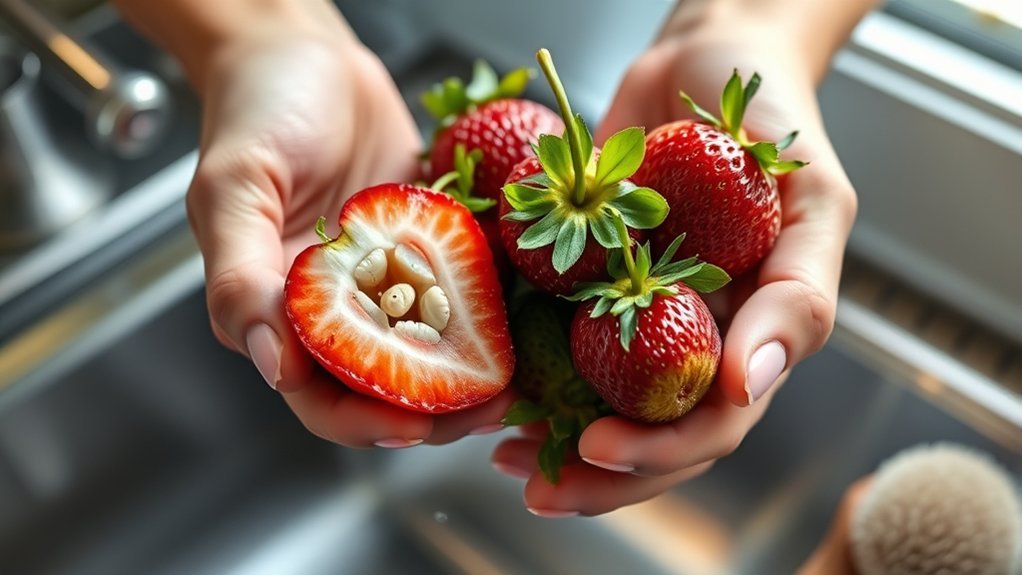
When preparing strawberries for eating, start by inspecting them carefully and discarding any that show signs of mold or rot.
Learning how to wash strawberries properly guarantees you enjoy clean, fresh fruit. Begin by soaking strawberries in a mixture of white vinegar and water, three parts water to one part vinegar, for about 20 minutes. This soak helps remove pesticides and potential pests.
After soaking, drain the berries and rinse strawberries thoroughly under cold running water to eliminate any vinegar taste. Finally, let them dry on a paper towel-lined tray before storing.
Remember these key steps:
- Soak strawberries in a white vinegar solution to cleanse effectively.
- Drain and rinse strawberries well to remove residues.
- Dry completely to preserve freshness and prevent spoilage.
Using Salt Water Soaks To Remove Hidden Worms In Strawberries
To guarantee your strawberries are free from hidden worms, try soaking them in salt water.
Mix one tablespoon of salt per cup of cold tap water and soak your strawberries for about 15 minutes.
This saltwater soak encourages any hidden worms, including larvae from the spotted-wing drosophila, to crawl out.
After soaking, rinse the strawberries thoroughly with cold water to wash away salt and dislodged pests.
This method is particularly effective for removing visible bugs compared to vinegar soaks, which mainly prevent mold.
While the tiny white larvae are generally harmless, a saltwater soak can ease your concerns and improve safety.
Using this simple step helps confirm your strawberries are cleaner, safer, and fresher before you enjoy them.
Is It Safe To Eat Strawberries With Worms?
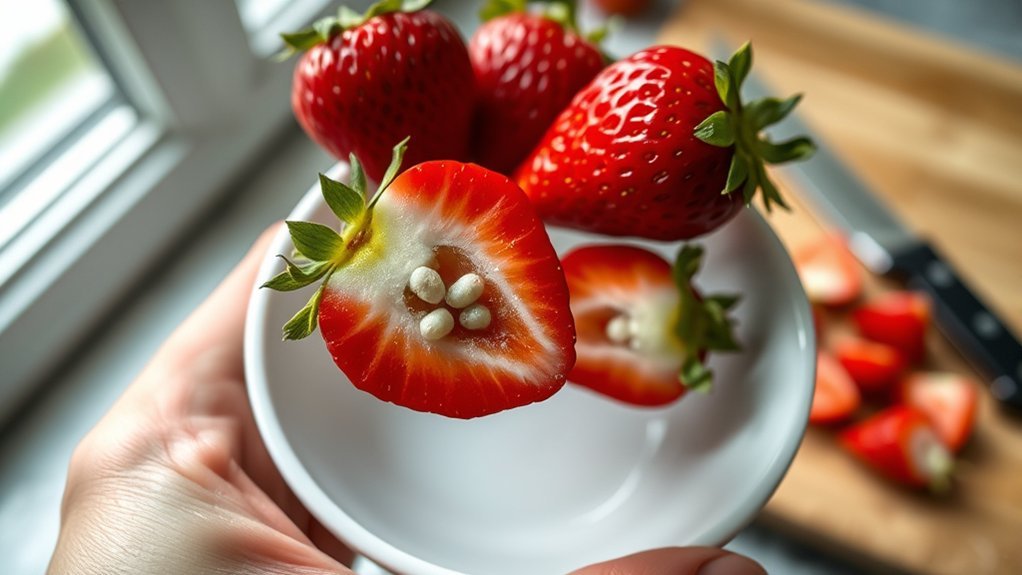
Wondering if it’s safe to eat strawberries with worms? The good news is that these worms, usually larvae from the spotted-wing drosophila, are harmless and don’t pose health risks.
Strawberries with worms are safe to eat since these harmless larvae pose no health risks.
The FDA even allows a certain amount of such larvae in fruit, meaning strawberries with worms are generally safe to eat despite being considered a food defect.
Here’s what you should know: Worms in strawberries are common and have been consumed safely for generations. The presence of larvae usually falls below FDA food defect limits.
Proper washing techniques help remove visible worms but aren’t necessary for safety.
How To Inspect Strawberries For Damage And Infestation
You’ll want to start by checking your strawberries for any visible damage, like tiny scars or wrinkled skin.
These little signs can actually mean there might be larvae inside.
After that, soak the berries in warm, salty water for about 15 minutes.
This helps any larvae float to the surface.
It’s a simple step that makes spotting infestations way easier before you eat or cook with your fruit.
Visual Signs Inspection
Careful visual inspection helps you spot early signs of worm infestation in strawberries. When you inspect fruit closely, you can catch subtle clues that hint at the presence of strawberries with worms before they spoil your snack.
Focus on these key areas:
Tiny scars or blemishes on the skin often indicate larvae inside the fruit. Wrinkling or decay suggests larvae have started feeding, signaling infestation. Check the green caps for small pests or signs of bugs hiding there.
Fresh-looking strawberries usually mean they’re safe, but larvae can be hidden until damage appears.
Soaking Techniques Effectiveness
One effective way to detect hidden worms in strawberries is by soaking them in warm salt water for about 15 minutes. This soaking technique encourages any larvae inside the strawberry to crawl out, making them easier to spot.
Use one tablespoon of salt per cup of water to maximize effectiveness. After soaking, you’ll often see larvae floating on the surface if infestation is present.
Don’t worry, these larvae are harmless if accidentally eaten, but soaking helps you avoid them.
Make certain to rinse your strawberries thoroughly with cold water afterward to remove salt and any debris.
Pair this method with a visual inspection for scars or damage on the strawberry’s skin to guarantee you catch signs of infestation before enjoying your fruit.
How To Store Strawberries To Prevent Worm Growth
Properly storing strawberries is essential to slow down worm development and keep your berries fresh longer.
Like storing cookies, strawberries need the right environment to stay safe and tasty. Here’s how you do it:
Use a breathable container, such as a paper towel-lined bowl or one with ventilation holes. This helps reduce moisture buildup.
Store strawberries in breathable containers like paper towel-lined bowls to keep moisture low and fresh.
Avoid washing strawberries until just before you eat them since extra moisture invites pests and speeds spoilage.
Monitor stored strawberries regularly and remove any overripe or moldy ones. This stops decay from spreading.
Common Worms And Bugs Found In Strawberries
Insects like the spotted-wing drosophila (SWD) larvae are common pests that can infest your strawberries, often hiding inside the fruit as tiny white worms. These larvae develop when the SWD lays eggs inside the berries, causing infestations that might go unnoticed until the fruit starts to decay.
Besides SWD, you might also find aphids, armyworms, lygus bugs, and mites, all common pests that can affect strawberries.
While the presence of larvae is unsettling, the FDA allows an average of four or more larvae per 500 grams of berries, so some worm presence is considered normal.
Knowing these common pests helps you understand what to look out for when checking your strawberries for infestations before eating them.
How Farmers And Stores Help Keep Worms Out Of Strawberries
Although pests like the spotted-wing drosophila can be challenging to control, farmers actively monitor and manage these threats to keep your strawberries worm-free.
They use targeted pest management techniques to reduce infestation risks, focusing on controlling adult SWD flies before larvae develop. Stores also play their part by conducting thorough quality checks to remove any infested fruit before it reaches you.
Here’s how farmers and stores work to protect your strawberries:
- Monitor SWD flies and apply insecticides only when necessary to minimize infestations and environmental impact.
- Harvest strawberries promptly and remove rotting fruit to discourage pest attraction.
- Use fine-mesh netting as a physical barrier against SWD flies, preventing them from accessing crops.
These combined efforts help guarantee the strawberries you buy are safe and worm-free.
Tips For Buying Strawberries Less Likely To Have Worms
Farmers and stores work hard to keep worms out of strawberries, but you can also take steps when buying to reduce the chances of getting infested fruit.
Choose locally grown strawberries harvested in June since they’re less likely to be infested with worms compared to those picked later when pests like the spotted-wing drosophila are more active.
Look for fresh strawberries without scars or blemishes, as damaged skin may hint at worm presence.
Whenever possible, buy organic strawberries, as they often have fewer pesticides and lower pest levels than conventional ones.
Pick strawberries from reputable vendors who inspect their produce carefully.
Also, opt for berries sold in sealed containers to avoid contamination from other infested strawberries during transport and display, ensuring you get cleaner, safer fruit.
Frequently Asked Questions
Can Washing Strawberries Remove Pesticide Residues as Well as Worms?
Washing strawberries can help with pesticide removal and dislodge some worms, but it’s not foolproof.
You should use effective rinsing techniques, like a gentle rinse under running water for at least 10 seconds or soaking in saltwater to improve vegetable cleaning.
While these methods reduce surface pesticides and pests, they mightn’t remove all internal worms or chemicals.
Do Organic Strawberries Have Fewer Worms Than Conventionally Grown Ones?
You won’t necessarily find fewer worms in organic strawberries compared to conventionally grown ones.
While organic farming benefits include reduced synthetic chemicals, pest management techniques in both systems aim to protect fruit quality.
Consumer preferences often lean toward organic for health reasons, but studies show worm presence can be similar.
What Are the Health Risks if I Accidentally Eat a Worm in Strawberries?
You don’t need to worry about worm ingestion effects when eating strawberries.
There are no significant health concerns linked to accidentally eating small larvae, as they’re harmless and don’t cause digestive issues.
Food safety standards recognize this, allowing some natural defects like tiny worms in produce.
Are Frozen Strawberries Less Likely to Contain Worms?
Yes, frozen strawberries are less likely to contain worms because frozen storage helps maintain quality and kills larvae.
When you buy frozen berries, they usually undergo worm inspection and berry preservation steps like washing and processing before freezing. This reduces the chance of pest contamination.
Still, it’s smart to check the packaging for labels indicating proper inspection and handling to guarantee you get safe, worm-free strawberries every time.
Can Strawberries From Local Farmers’ Markets Have More Worms Than Store-Bought?
Yes, strawberries from local farmers’ markets can have more worms than store-bought ones because local farming practices often use fewer pesticides and different strawberry cultivation methods.
These market sourcing differences mean farmers may rely on natural pest management strategies, which aren’t as strict as commercial growers’.
Conclusion
Did you know that nearly 30% of strawberries can have tiny worms hidden inside? It might sound gross, but with a careful eye and proper washing, especially soaking them in salt water, you can enjoy your strawberries worry-free.
By knowing how to spot and remove these pests, you’re protecting your health and savoring every sweet bite. So next time you grab strawberries, take a moment to check. They’re worth the extra effort!