
Do You Prune Strawberry Plants?
Yes, you should prune your strawberry plants to boost fruit size, health, and overall yield. Pruning removes dead leaves and excess runners, directing energy to the mother plant for larger, tastier berries.
The best time to prune depends on your strawberry type. Usually, it’s after harvest for June-bearers and regularly for day-neutrals. Proper pruning also improves airflow and reduces disease risks.
Keep going to discover how to prune effectively and care for your plants year-round.
Why Pruning Strawberry Plants Boosts Fruit Size and Quality
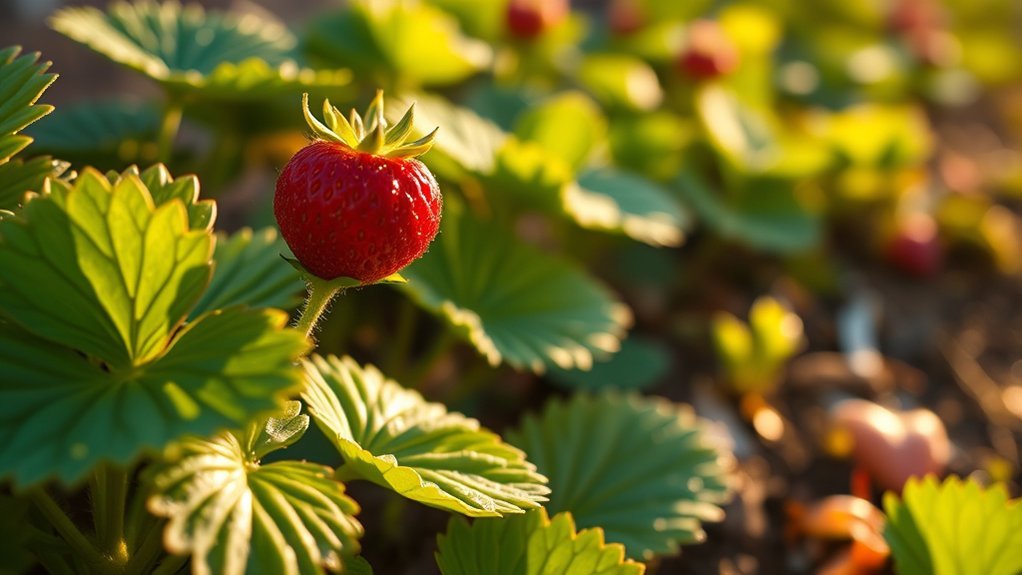
When you prune your strawberry plants, you redirect energy from runners and excess leaves back to the mother plant, which helps produce larger, tastier fruit.
Pruning removes dead or diseased foliage, improving plant health and boosting fruit size by allowing the plant to focus on developing quality berries.
Better air circulation results from thinning leaves and runners, reducing fungal diseases that can cause misshapen fruit. This improved environment encourages vigorous growth and increases yields considerably.
By regularly pruning, you guarantee your strawberry plants aren’t wasting energy on unnecessary growth, which means more abundant, high-quality harvests.
Ultimately, pruning plays an essential role in maximizing both fruit size and overall yields, making your strawberry plants healthier and more productive season after season.
When Is the Best Time to Prune Your Strawberry Plants?
Knowing the right time to prune your strawberry plants helps you get the most out of their growth and fruit production.
The best time to prune June-bearing strawberry plants is typically from mid-July to the end of July, right after the last harvest. This renovation pruning encourages healthy growth for the next season.
In spring, you should remove dead or damaged foliage left over from winter to promote new growth.
While pruning strawberry plants, focus on preserving healthy green leaves and carefully remove only older or diseased parts.
For day-neutral varieties, pruning happens throughout the growing season by removing runners and old growth as needed.
Timing your pruning correctly guarantees your plants stay healthy and productive year after year.
How to Identify Leaves and Runners to Prune for Healthy Plants
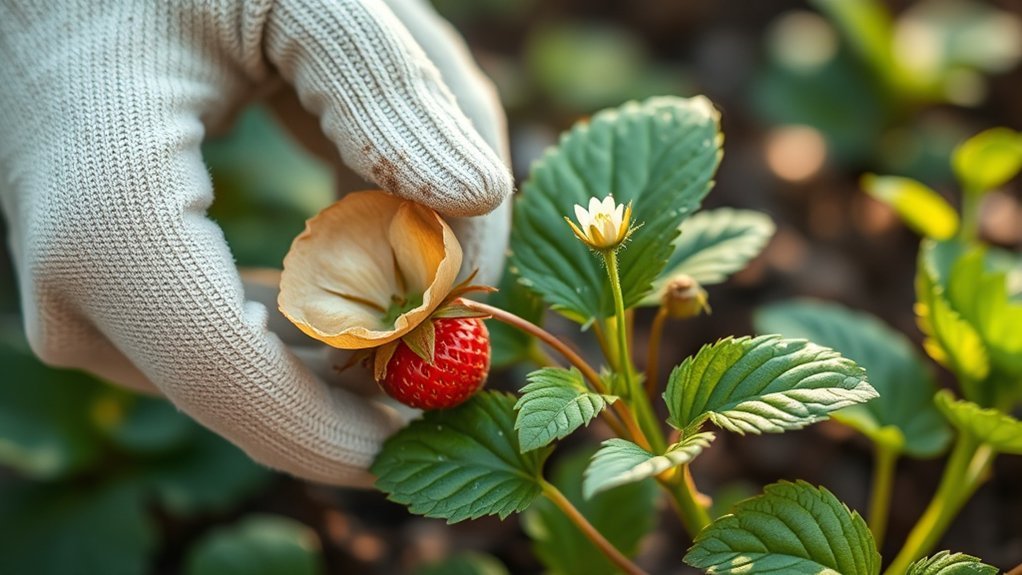
How can you tell which leaves and runners need pruning to keep your strawberry plants healthy? Start by inspecting the leaves for any yellowing, damage, or disease. These should be pruned to boost growth and improve air circulation.
Inspect leaves for yellowing, damage, or disease and prune them to promote growth and better air circulation.
Also, look for dense areas where leaves overlap. Thinning these spots prevents fungal infections and encourages better fruit quality.
When it comes to runners, identify the long stems extending from the mother plant. Prune excess runners, leaving just three to four healthy ones to conserve energy for fruit production.
Don’t forget to prune lower leaves to enhance airflow around the fruit.
Should You Keep or Cut Strawberry Runners for a Better Harvest?
Why should you cut strawberry runners to improve your harvest? Strawberry runners drain energy from the mother plant, reducing the resources available for fruit development.
By pruning strawberry plants and removing excess runners, especially during the growing season, you help the plant focus on producing larger, tastier berries.
Keeping just three to four healthy runners per plant strikes a good balance, supporting propagation without sacrificing fruit quality.
June-bearing varieties, which produce many runners, especially benefit from regular pruning to maintain a better harvest. Even everbearing and day-neutral types will yield improved fruit quality if you manage their runners.
Plus, you can use the pruned runners to start new plants, making pruning a smart way to boost both current and future strawberry crops.
Step-by-Step Guide to Pruning Strawberry Plants Successfully
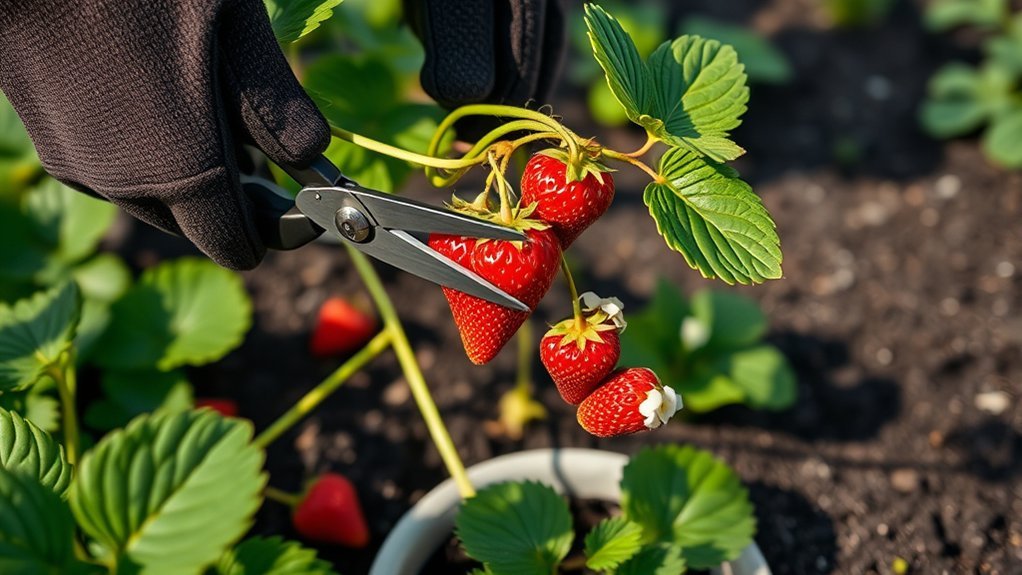
You’ll want to start by identifying which leaves, runners, and plants need pruning to keep your strawberries healthy.
It’s really about spotting the parts that look old, damaged, or are just crowding the rest of the plant.
Using the right tools and techniques makes the job easier and more effective. A sharp pair of scissors or pruning shears will do the trick, and it helps to clean them before you start.
That way, you avoid spreading any diseases.
Timing is key, so knowing when and how often to prune will boost your harvest. Generally, pruning right after the harvest season is ideal, but it can vary depending on your local climate.
Keeping an eye on your plants regularly means you won’t miss the best time to trim.
Identifying Pruning Targets
Before pruning your strawberry plants, start by carefully identifying which parts need removal to promote healthy growth. To prune strawberries effectively, focus on areas that hinder development or harbor disease.
First, remove dead leaves that drain energy and block sunlight. Next, remove runners, but keep three to four healthy ones to balance growth and fruit production. Finally, thin out crowded plants to improve air circulation, reducing fungal risks and boosting fruit quality.
Here’s what to look for:
- Old, damaged, or diseased leaves and branches
- Excess runners beyond the healthy three to four
- Crowded or weak plants limiting airflow
Pruning Tools And Techniques
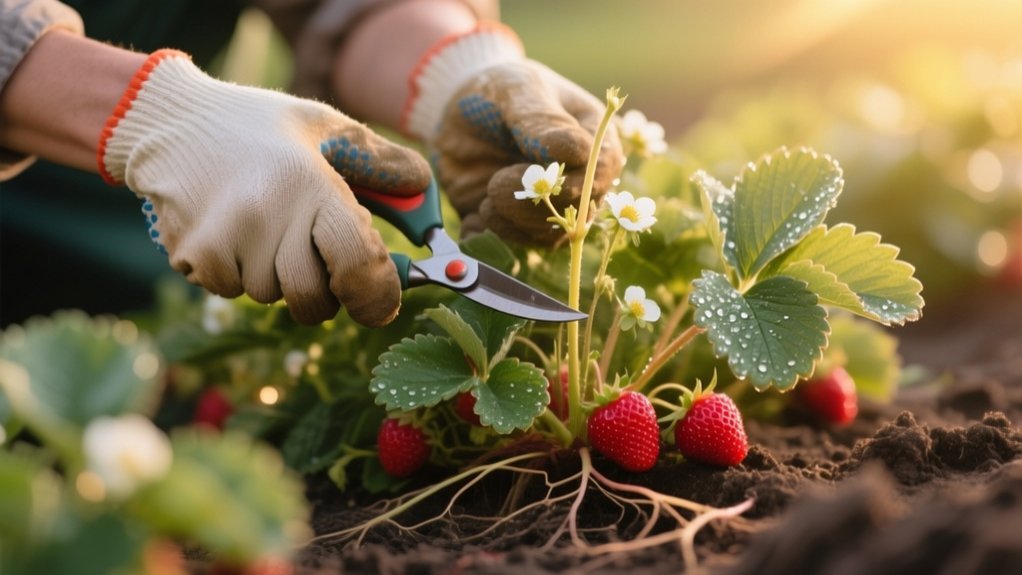
A sharp, sterile pair of pruning shears or scissors is essential for trimming your strawberry plants effectively.
Start by using your pruning shears to remove old leaves that are damaged or diseased. This promotes plant health and improves air circulation.
Next, cut back runners, leaving only three to four healthy ones per plant to guarantee energy goes toward fruit production.
Be sure to trim any weak or crowded plants after fruiting to maintain space for vigorous growth.
After pruning, clean up debris thoroughly around your plants to prevent disease and pest issues.
Using these tools and techniques carefully will help your strawberry plants stay healthy and productive throughout the growing season.
Timing And Frequency
When your strawberry plants finish fruiting, prune them between mid-July and the end of July to prepare for the next season and boost yields.
For June-bearing strawberries, renovation pruning 1-2 weeks after the last harvest is key. Mow plants down to about an inch above the crowns.
Throughout the growing season, regularly prune runners to conserve energy, allowing only three to four healthy runners per plant.
In spring, remove dead leaves to encourage healthy new growth.
Keep in mind that pruning frequency depends on growing conditions and the strawberry variety. Day-neutral plants need longer runner removal periods compared to June-bearers.
Remember these tips:
- Prune runners regularly to focus energy on fruit.
- Remove dead leaves in spring for healthy growth.
- Adjust pruning based on your strawberry type and local growing conditions.
Common Pruning Mistakes and How to Avoid Them
Anyone pruning strawberry plants can easily make mistakes that weaken the plants or reduce their fruit yield. One common error is removing too many leaves and runners at once, which stunts growth and lessens fruit production.
Another mistake is pruning at the wrong time. Too early in spring or too late in the season can disrupt the plant’s natural cycle. Be careful not to cut the growing tip, as this stops new growth.
Prune strawberries at the right time and avoid cutting growing tips to ensure healthy new growth.
Also, failing to sanitize your pruning tools spreads diseases that harm plants. To avoid these mistakes, prune selectively, time your cuts properly, and keep tools clean.
After pruning, monitor your plants closely and adjust care to support recovery and healthy growth.
How Pruning Differs Among Strawberry Varieties
Since each strawberry variety grows and produces differently, you’ll need to adjust your pruning approach accordingly.
June-bearing strawberry plants require more extensive pruning because they produce many runners that can drain the mother plant’s energy.
Day-neutral varieties, on the other hand, benefit from longer periods of runner removal to support continuous fruiting throughout the season.
Everbearing strawberries need less frequent pruning since they produce fewer runners and have a shorter productive lifespan.
Here’s how to prune different strawberry plants effectively:
- For June-bearing, focus on removing excess runners early to conserve energy.
- With day-neutral, prune runners consistently to keep plants vigorous.
- For everbearing, prune sparingly to maintain plant health without overdoing it.
Understanding these differences guarantees you get the best growth and harvest from your strawberries.
Pruning Strawberry Plants to Prevent Disease and Improve Airflow
Although it might seem like a simple task, pruning your strawberry plants plays an essential role in preventing disease and boosting airflow. By removing dead or diseased leaves, you stop harmful pathogens from spreading, keeping your plants healthy.
Pruning also thins out crowded foliage, allowing better airflow and sunlight penetration. This reduces moisture buildup, which is a common cause of fungal diseases.
Regularly cutting back runners helps the mother plant save energy for fruit production. This results in larger, tastier strawberries.
Maintaining a clean, well-pruned strawberry bed not only prevents disease but also makes your plants more resilient to pests and environmental stress.
Feeding and Mulching After Pruning Strawberry Plants
Once you’ve finished pruning, it’s important to feed and mulch your strawberry plants to support their recovery and growth.
After you prune, apply a layer of mulch, like mushroom compost, to retain soil moisture and suppress weeds.
Apply mulch such as mushroom compost after pruning to conserve moisture and keep weeds at bay.
Then, water thoroughly to help the nutrients soak in. Avoid heavy fertilizing before fruiting to prevent excessive leaf growth.
Instead, fertilize with a balanced 12-12-12 mix after harvest to prepare plants for the next season.
Keep an eye on soil moisture and adjust your watering to keep the soil consistently moist but not soggy.
- Mulch with nutrient-rich compost after pruning
- Fertilize post-harvest, not before fruiting
- Water deeply after mulching and monitor soil moisture regularly
Integrating Pruning Into Your Year-Round Strawberry Care Routine
To keep your strawberry plants healthy and productive, it’s a good idea to follow a seasonal pruning schedule. This means focusing on runners, old growth, and any renovation your plants might need.
When you use the right pruning techniques, it helps the plant channel its energy into producing better fruit.
After you’ve done the pruning, don’t forget to give your plants some proper care. Feeding and mulching are key steps that help your strawberries bounce back strong and ready for the next growing cycle.
With this routine, your plants will stay happy and fruitful all year round.
Seasonal Pruning Schedule
When you integrate pruning into your year-round strawberry care, you’ll boost plant health and fruit production. Knowing when to prune is key: remove dead or damaged leaves in late February to encourage new growth as winter fades.
After harvesting June-bearing strawberries, prune in mid to late July to prepare plants for next season’s yield. For day-neutral varieties, regularly prune runners during the growing season, keeping just three to four healthy ones per plant.
Here are some gardening tips to follow:
Remove weaker plants after harvest to improve air circulation and fruit quality.
Space plants 6 to 8 inches apart for ideal growth.
Always clean pruning tools with isopropyl alcohol to prevent disease.
Pruning Techniques Overview
Although pruning might seem like a chore, it plays an essential role in boosting your strawberry plants’ health and fruit quality throughout the year.
To prune effectively, carefully remove runners as they appear, especially on June-bearing varieties. Use sterile scissors to conserve energy for fruit production.
After the last harvest, perform renovation pruning by cutting back plants to about 1 inch above the crowns. Thin them to 6 to 8 inches apart to improve air circulation and reduce disease risk.
Incorporate seasonal pruning techniques by removing dead or diseased leaves in spring and cutting back flowering stems in fall.
These steps guarantee your strawberry plants stay robust and productive, making pruning a key part of your year-round strawberry care routine.
Post-Pruning Plant Care
Since pruning opens up your strawberry plants, you’ll need to keep the garden clean by removing debris and monitoring for pests and diseases.
Post-pruning care is vital to promote healthy growth and prevent potential threats that pruning might expose.
After you prune, water your plants thoroughly and make certain they get adequate sunlight and moisture.
Applying organic mulch can help retain soil moisture and suppress weeds, supporting your strawberries year-round.
Regular pest monitoring is essential to catch issues early and maintain plant health.
To integrate pruning into your routine effectively, focus on:
- Removing fallen leaves and debris to reduce disease risk
- Consistent pest monitoring to protect your plants
- Mulching to retain moisture and encourage healthy growth
This care routine guarantees your strawberry plants thrive after pruning.
Frequently Asked Questions
Can Pruning Affect the Flavor of Strawberry Fruits?
Yes, pruning can greatly affect the flavor of your strawberry fruits. By practicing growth regulation, you direct the plant’s energy toward producing sweeter, more flavorful berries rather than excessive runners. This leads to flavor enhancement and improved fruit quality.
Moreover, pruning boosts plant health by removing old leaves and promoting better air circulation, which reduces disease risks.
How Often Should I Prune Strawberry Plants Each Year?
Think of your strawberry plants as dancers needing breaks and direction. You should prune them at least once a year, usually after fruiting in late summer.
Timing considerations matter. Mid to late July is ideal.
Use pruning techniques like removing runners and dead leaves to boost plant health.
Seasonal variations affect how often you prune. June-bearers need frequent runner removal, while everbearing types require less.
Stay attentive all year for best results.
Do I Need Special Tools for Pruning Strawberries?
You don’t need special tools for pruning strawberries, but using sharp, sterile scissors or pruning shears makes pruning techniques more effective.
These essential tools help you follow a pruning schedule that supports plant health by reducing disease risks and promoting clean cuts.
While hedge trimmers can speed up extensive pruning, a good pair of garden gloves also protects your hands and improves grip.
Keeping your tools sharp is key to maintaining healthy plants.
Can Pruning Help Control Pests on Strawberry Plants?
Yes, pruning can reduce pest problems by up to 40% through improved pest management.
When you prune your strawberry plants, you boost plant health by removing dead leaves and excess growth, which promotes healthy growth and reduces disease prevention risks.
This creates an environment less inviting to pests, limiting their hiding spots and breeding grounds.
Regular pruning keeps your plants vigorous, helping you control pests naturally and maintain a thriving garden.
Is It Necessary to Prune Strawberries Grown in Containers?
Yes, pruning strawberries grown in containers is necessary for effective container care. By using proper pruning techniques, you redirect the plant’s energy towards fruit production rather than runners, which helps with growth management.
Removing dead leaves and excess runners improves airflow and light exposure, preventing diseases.
This focused care not only keeps your plants healthy but also leads to yield improvement, ensuring you get the best harvest from your container strawberries.
Conclusion
Pruning your strawberry plants is like giving them a fresh breath of spring air. You clear away the old to make space for new, vibrant growth. When you trim thoughtfully, you’re not just cutting leaves and runners; you’re shaping a sweet future bursting with bigger, juicier fruit.
Embrace pruning as a gentle dance with your garden. It nurtures health and abundance that will reward your care season after season.