
Do Strawberry Plants Grow Back Every Year?
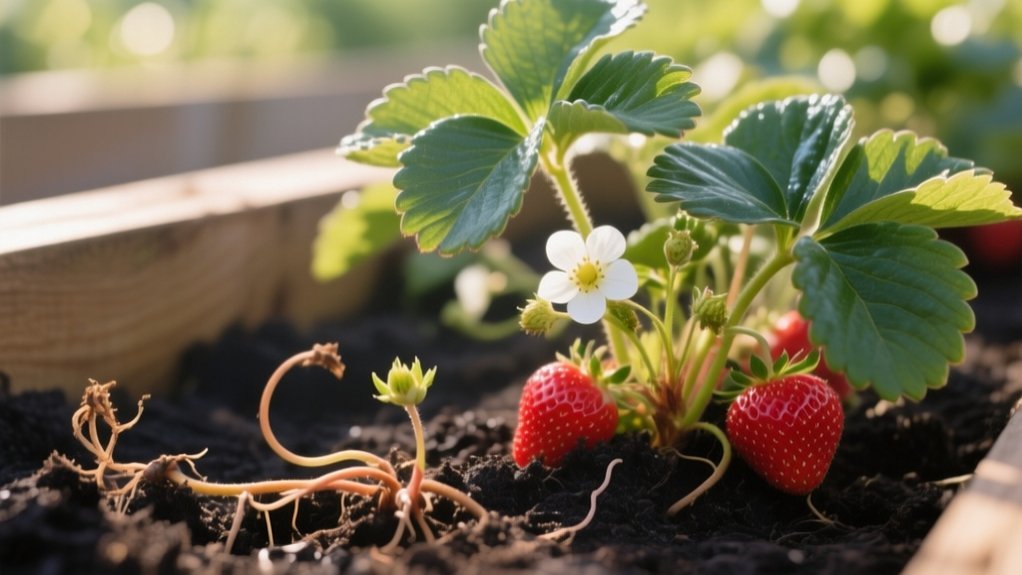
Yes, your strawberry plants will come back every year since they’re perennial. You’ll see the best fruit harvest in the first season, but with proper care like cutting runners and mulching, you can keep them productive for two to three years.
Winter causes dormancy, but roots survive if protected. Spring growth varies by climate, and consistent maintenance helps your patch thrive.
Keep learning to discover how to extend your strawberry plants’ lifespan and when to replace them for the best results.
Do Strawberry Plants Come Back Every Year?
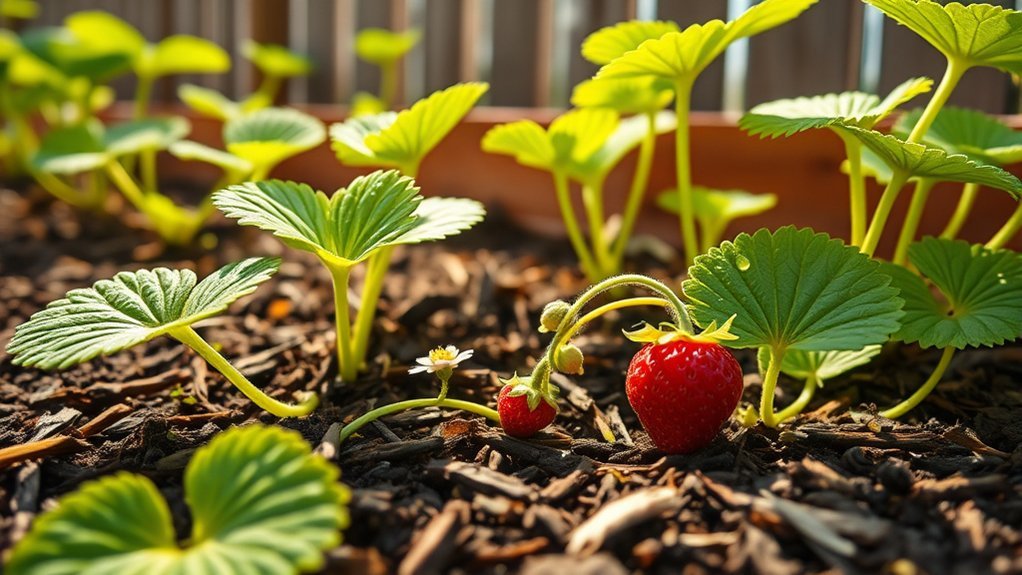
Although strawberry plants are perennial and can come back for several years, you should know their fruit production typically declines after 2-3 seasons.
You’ll find that strawberry plants do come back year after year, but to keep your patch productive, you need regular maintenance. This includes cutting runners and replanting them as new plants each season.
These new plants help replace mother plants that stop producing fruit effectively after a few years. Early spring mightn’t show much new growth, but don’t be discouraged. Strawberries can flower even after cold spells.
How Long Are Strawberry Plants Productive?
Strawberry plants typically stay productive for about two to three years, with their best yields happening in the first year.
After that, fruit production declines, and the berries become smaller. To keep your strawberry patch fruitful, you’ll want to replace older plants regularly.
Here’s what to remember:
- Strawberry plants give peak fruit production in the first year.
- Expect reduced yields and smaller fruit in the second and third years.
- Replace older plants every 2-3 years to maintain productivity.
- Use propagated runners from healthy parent plants to establish new, vigorous plants annually.
How Does Winter Affect Strawberry Plant Growth?
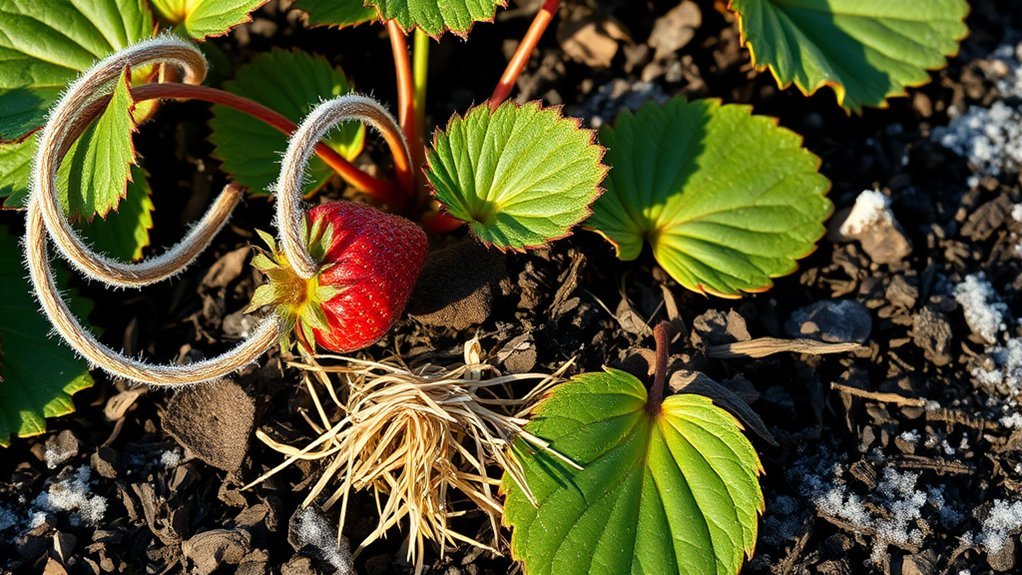
Keeping your strawberry plants healthy over the years means understanding how they handle seasonal changes, especially winter. During cold months, strawberry plants typically enter dormancy and may die back above ground, but their roots stay alive underground.
Their hardiness varies by variety and location. In milder climates like Zone 8b, some plants may even flower after cold snaps. Providing winter protection, such as covering plants with straw, helps shield them from freezing temperatures and harsh weather, promoting survival.
However, not all varieties need extra cover. Knowing your plants’ hardiness is key.
When winter ends, your strawberries will respond with new growth, resuming their life cycle. Monitoring local weather guarantees you can protect them effectively and encourage healthy growth year after year.
When Do Strawberry Plants Start Growing in Spring?
You’ll notice strawberry plants begin showing new growth in early spring.
It might be slow at first, but you’ll definitely see some signs of life. How quickly they start really depends on where you live.
In warmer regions, growth tends to show up sooner, while cooler areas might take a bit longer.
Early Spring Growth
Although strawberry plants are perennials that return each year, you mightn’t see new growth right away in early spring since they often stay dormant until temperatures stay consistently warm.
When strawberry plants grow again, you’ll notice new leaves and buds emerging from the crown, signaling the end of winter dormancy.
Keep in mind, local climate plays a big role in when this happens.
To better understand early spring growth:
- Watch local temperatures rise steadily above freezing.
- Expect initial leaf and bud growth soon after.
- Remember plants in warmer climates start earlier than those in cooler zones.
- In some areas, strawberries might flower shortly after cold snaps.
Regional Growth Variations
Since strawberry plants respond directly to local climate conditions, the timing of their spring growth can vary widely depending on your region.
In warmer areas like Zone 8b, such as middle Georgia, strawberry plants often start new growth and even flower despite occasional cold snaps.
However, if you’re in a cooler region like Northeast Ohio, you’ll notice spring growth begins later due to prolonged cold winter temperatures.
Monitoring local winter temperatures helps you predict when your strawberry plants will start growing in spring.
While these plants are hardy enough to survive winter in many climates, specific varieties might need extra care, which can influence how quickly they resume growth.
Understanding these regional growth variations guarantees you’re ready to nurture your strawberries at the right time.
How Do Regional Climates Affect Strawberry Growth?
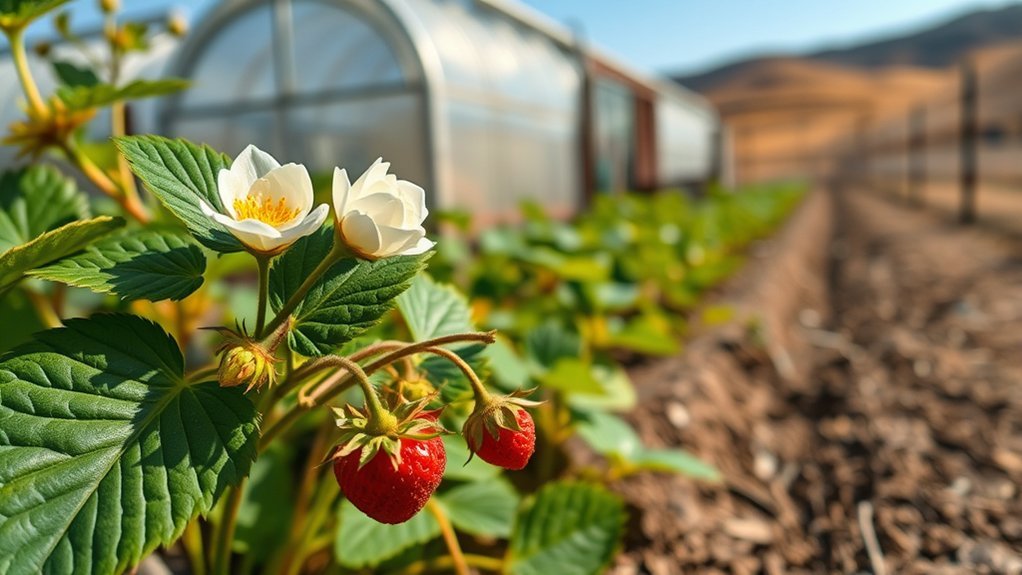
Regional climates play an essential role in shaping how and when your strawberry plants grow and flower. Depending on where you live, the growth cycle of your strawberry plants can vary considerably throughout the year.
Here’s how regional climate impacts them:
- In warmer climates like Zone 8b in middle Georgia, strawberries flower earlier after winter cold snaps.
- Colder regions such as Northeast Ohio experience delayed growth due to extended low temperatures.
- Strawberries are hardy and survive winters, but local weather affects when new growth starts each spring.
- Temperature fluctuations in your area influence how quickly your plants resume growth after dormancy.
Understanding your regional climate helps you anticipate your strawberry plants’ growth patterns and maintain their health and productivity year after year.
Should You Cut and Replant Strawberry Runners?
How often should you cut and replant strawberry runners to keep your patch thriving? You should do this annually, ideally in late winter or early spring. This practice helps you keep back year after year the healthiest runners, guaranteeing a productive and healthy strawberry patch.
Removing excessive runners at summer’s end focuses energy on fruit, while replanting runners promotes fruit production continuity.
| When to Cut | Why Cut | When to Plant |
|---|---|---|
| End of summer | Focus energy on fruit | Late winter to early spring |
| Annually | Maintain healthy runners | Replanting runners yearly |
| Select healthiest | Guarantee abundant crop | Plant a strawberry with care |
Cutting and replanting runners keeps your strawberry plants healthy and fruitful year after year.
What Maintenance Helps Strawberry Plants Thrive Year After Year?
To keep your strawberry plants thriving year after year, you’ll need to perform regular maintenance tasks that encourage healthy growth and fruit production. Proper care helps your strawberry patch stay productive for a long time. Here’s what you should focus on:
- Cut back runners annually to promote new growth. Replant them to expand your strawberry patch.
- Mulch with straw or organic material to retain moisture, suppress weeds, and reduce fungal diseases.
- Fertilize every 4-6 weeks during the growing season with balanced nutrients. This supports vigorous growth.
- Monitor for pests and fungal diseases. Remove dead leaves promptly to maintain plant health.
Following these steps guarantees your plants continue to produce runners and fruit reliably year after year.
Can Proper Care Extend Strawberry Plant Lifespan?
Although strawberry plants naturally produce fruit for only 2 to 3 years, proper care can greatly extend their productive lifespan. When planting strawberries, choose healthy runners and space them well to encourage strong growth.
Regular maintenance is essential; you should trim runners and remove dead leaves to keep plants vigorous. Fertilizing strawberries every 4-6 weeks during the growing season provides essential nutrients, boosting fruit production and plant health.
Proper winter care also plays a key role. Replace straw mulch and clear away debris to protect roots from pests and diseases.
When Is It Time to Replace Strawberry Plants?
Even with the best care, strawberry plants don’t stay productive forever.
Strawberries typically show a decline in yield after 2-3 years, so you’ll need to replace strawberry plants to keep your harvest strong.
Here’s when to act:
For June-bearing varieties, replace plants every third year.
Everbearing types often need replacement every other year.
Use runners from healthy parent plants to propagate new plants.
Plant new runners annually for a continuous supply of strawberries.
How to Care for Strawberry Plants Between Seasons
To care for your strawberry plants between seasons, start by removing dead leaves and old mulch before winter.
This helps keep pests and diseases at bay.
You’ll also want to keep an eye on runners.
Pick the healthiest ones to replant for a strong crop next year.
These simple steps will help your patch stay productive and ready for the next growing cycle.
Winter Preparation Tips
When winter approaches, you should remove dead leaves and old straw mulch from your strawberry plants to prevent pests and diseases from taking hold.
Following these winter preparation tips will keep your plants healthy and ready for spring:
- Remove dead leaves thoroughly to eliminate pest habitats and reduce disease risk.
- Apply a fresh layer of straw mulch to protect roots from harsh cold and retain soil moisture.
- Check your plants for any signs of disease or pests, addressing issues promptly to guarantee healthy plants.
- Confirm proper drainage around your strawberry plants to avoid waterlogging, which can damage roots during winter.
If your strawberries are in pots, consider transplanting them into garden soil to provide better root insulation against freezing temperatures.
Runner Maintenance Strategies
Although runners are essential for expanding your strawberry patch, managing them carefully between seasons guarantees your plants stay healthy and productive.
Effective runner maintenance strategies involve regularly cutting and replanting daughter plants each year to establish a strong patch and maintain high yields.
At the end of summer, remove excess runners to redirect energy from vegetative growth to fruit production.
During the growing season, monitor plants closely for disease or pests, removing any affected foliage promptly to prevent spread.
Furthermore, verify proper mulching in spring to retain moisture, suppress weeds, and replace old mulch to avoid pest buildup.
Feeding your strawberries with a balanced fertilizer every 4-6 weeks also supports vigorous growth and bountiful harvests.
Following these steps helps your strawberry plants thrive year after year.
Frequently Asked Questions
What Soil Type Is Best for Growing Strawberry Plants?
You’ll want strawberry soil that’s well-draining with good soil structure to keep roots healthy.
Drainage importance can’t be overstated. It prevents root rot and fungal issues.
Aim for slightly acidic pH levels between 5.5 and 6.8 to help your plants absorb nutrients better.
Adding organic amendments like aged compost improves fertility and soil texture.
This gives your strawberries the best chance to thrive and produce juicy, delicious fruit year after year.
How Often Should You Water Strawberry Plants During Fruiting?
You should maintain a consistent watering frequency of about 1 to 1.5 inches per week during fruit development to support healthy growth.
Regularly check soil moisture by feeling the top inch of soil; if it’s dry, it’s time to water.
Use irrigation techniques that deliver water at the base to prevent diseases.
While strawberries have some drought tolerance, avoid letting them dry out to guarantee good fruit quality and yield.
Can Strawberries Be Grown Indoors Successfully?
Yes, you can grow strawberries indoors successfully by focusing on indoor gardening techniques.
Use container planting with well-draining potting mix, and guarantee your plants get at least 8 hours of direct sunlight or strong artificial light to meet light requirements.
Keep temperature control consistent, ideally between 60-75°F, and watch for pests by inspecting leaves regularly.
With proper care and attention to watering and fertilization, your indoor strawberries will thrive and produce fruit.
What Are Common Pests That Affect Strawberry Plants?
Imagine you spot tiny aphids clustering on your strawberry leaves; that’s a common pest you need to manage.
Effective pest management starts with pest identification so you can choose organic solutions like neem oil or introduce natural predators like ladybugs.
Taking preventive measures, such as crop rotation and companion planting, helps keep pests at bay.
How Do You Propagate Strawberry Plants From Seeds?
To propagate strawberry plants from seeds, start with careful strawberry seed selection. Choose ripe berries for quality seeds.
Use seed germination techniques by sowing seeds indoors 10-12 weeks before the last frost. Lightly cover them with soil and keep moisture consistent.
Understand your growing zones overview to time planting well.
After germination, follow seedling care tips like transplanting and hardening off.
Finally, use harvesting strawberries advice to enjoy your homegrown fruit.
Conclusion
Think of your strawberry plants as a treasured storybook. Each year, new chapters bloom with care and patience. Though they don’t last forever, your attention through seasons can extend their vibrant tale.
Winter’s rest is their quiet pause, spring their hopeful beginning. By nurturing them well, you keep the story alive, ensuring sweet rewards season after season.
When the pages fade, you’ll know it’s time to start a fresh, delicious journey.