
Do Strawberries Like Acid or Alkaline Soil?
You’ll want to grow strawberries in slightly acidic soil, ideally with a pH between 5.5 and 6.5. That range helps your plants absorb key nutrients like iron and phosphorus.
If the soil is too alkaline (above 7.0), your strawberries might struggle with yellow leaves, poor fruit, and weaker growth due to nutrient deficiencies. Keeping soil pH balanced also helps prevent diseases common to strawberries.
Learn how to keep your soil just right for the best berry harvest.
Why Soil pH Matters for Strawberry Growth and Health
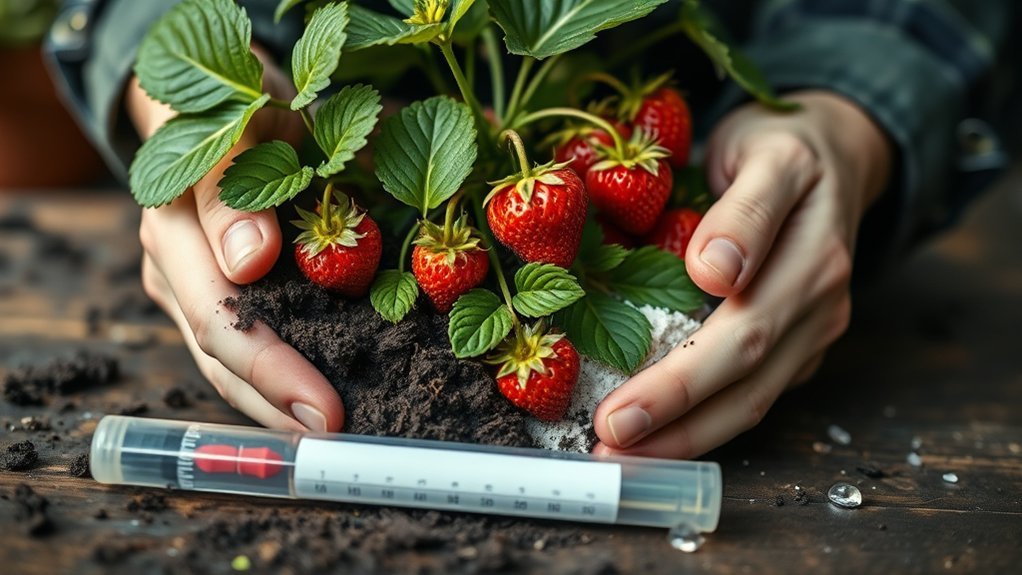
Because soil pH directly affects nutrient availability, maintaining a slightly acidic range of 5.5 to 6.5 is vital for growing healthy strawberries.
Maintaining soil pH between 5.5 and 6.5 is essential for nutrient-rich, healthy strawberry growth.
When you keep soil pH within this range, strawberries benefit from better uptake of important nutrients like iron, manganese, and phosphorus.
If the soil pH rises to 7.0 or above, nutrient deficiencies can occur, leading to weaker plants and reduced yields.
You’ll also find that proper soil pH helps suppress soil-borne diseases, further protecting your crop.
To stay on track, regular soil testing is key.
You’ll know exactly when to make adjustments and keep your soil in the ideal state.
What Is the Ideal Soil pH Range for Strawberries?
While soil conditions can vary, strawberries perform best in a slightly acidic environment with a pH between 5.5 and 6.5. Maintaining this soil pH range guarantees your strawberry plants access essential nutrients efficiently, improving growth and fruit quality.
If the pH rises above 7.0, nutrient uptake declines, and you’ll need to amend the soil to lower its alkalinity. Regular soil testing helps you monitor and maintain the ideal acidity, preventing issues before they affect your crop.
To optimize soil pH for strawberries, consider:
- Conducting soil testing before planting
- Using elemental sulfur or organic matter to adjust pH
- Keeping soil slightly acidic for nutrient availability
- Supporting healthy root development and disease resistance
How Acidic Soil Boosts Strawberry Nutrient Uptake and Quality

You’ll want to keep your soil’s pH between 5.5 and 6.5 to get the most nutrients to your strawberries.
This slightly acidic environment is just right for helping your plants soak up important minerals like iron and phosphorus.
Plus, it lowers the chances of soil-borne diseases cropping up.
When you keep things in this range, your strawberry roots stay healthier, and the fruit quality really improves.
Optimal pH Range
If you want your strawberries to thrive, maintaining soil pH between 5.5 and 6.5 is key. This ideal pH range guarantees your plants absorb essential nutrients like iron and phosphorus effectively.
Slightly acidic soil not only boosts nutrient uptake but also suppresses soil-borne diseases, promoting healthier roots and better fruit quality. Regular soil tests help you monitor and adjust pH levels to keep conditions perfect.
To manage your soil’s acidity:
- Conduct a soil test before planting
- Amend soil with organic materials like compost
- Avoid letting pH rise above 7.0 to prevent nutrient deficiencies
- Maintain slightly acidic soil for ideal nutrient availability
Nutrient Availability Impact
Because strawberries absorb nutrients best in slightly acidic soil, keeping the pH between 5.5 and 6.5 greatly boosts their uptake of iron, manganese, and phosphorus.
When the soil pH stays within this range, nutrient availability improves considerably, allowing your strawberry plants to develop strong roots and carry out photosynthesis efficiently.
This ideal pH also enhances the absorption of nitrogen and potassium, which are essential for producing high-quality fruit.
If the soil becomes too alkaline, above pH 7.0, nutrient availability drops, especially for micronutrients, leading to deficiencies that stunt growth and reduce yield.
For effective nutrient management, regularly test your soil and adjust its pH to maintain this slightly acidic environment.
Doing so guarantees your strawberries get the nutrients they need for healthy growth and better fruit quality.
Disease Suppression Benefits
Maintaining a slightly acidic soil pH between 5.5 and 6.5 doesn’t just improve nutrient uptake.
It also helps your strawberries resist soil-borne diseases like verticillium wilt and Phytophthora root rot. This pH range enhances soil health by boosting beneficial microbial activity, which supports disease suppression and nutrient availability.
As a result, your strawberry plants grow stronger and produce higher-quality fruit. To maximize these benefits, keep your soil conditions ideal by regular testing and adjustments.
- Increases availability of iron, manganese, and phosphorus for strawberries
- Suppresses verticillium wilt and other harmful pathogens
- Encourages beneficial microbes that improve soil health
- Leads to vigorous growth and improved fruit production
What Happens If Strawberry Soil Is Too Alkaline?
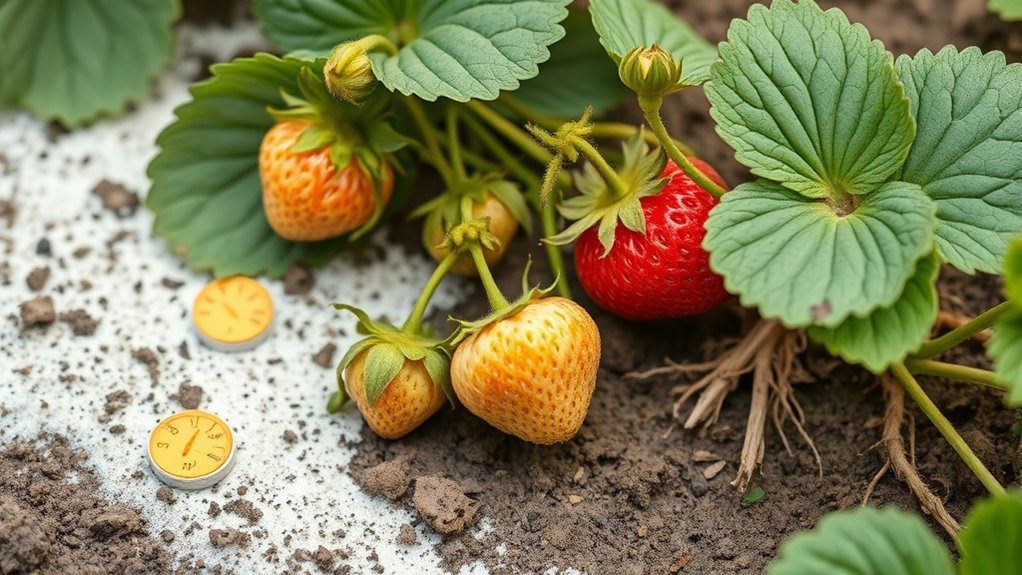
When strawberry soil becomes too alkaline, you’ll notice your plants struggling to absorb key nutrients like iron, manganese, and phosphorus.
Strawberries prefer a pH range of 5.5 to 6.5, so alkaline soil with a pH of 7.0 or higher disrupts nutrient availability, leading to nutrient deficiencies.
This imbalance hampers root growth, weakening the plant’s ability to take up water and nutrients effectively.
Poor root development also makes your strawberry plants more vulnerable to diseases such as verticillium wilt and Phytophthora root rot.
Ultimately, alkaline soil conditions stunt your plants’ growth, reduce fruit quality, and limit yields.
To avoid these problems, regularly test your soil’s pH and amend it if necessary to maintain the ideal slightly acidic environment strawberries thrive in.
Signs Your Strawberry Plants Need Lower Soil pH
If your strawberry plants show yellowing leaves, poor fruit development, or reduced vigor, their soil pH might be too high.
Strawberries need slightly acidic soil, ideally between pH 5.5 and 6.5, to absorb nutrients effectively.
When soil pH rises above 6.8, nutrient uptake drops, leading to unhealthy soil conditions.
To keep your plants thriving, watch for these signs indicating a need for lower soil pH:
- Yellowing or pale leaves despite adequate watering
- Smaller or fewer strawberries than usual
- Slower growth and weak plant structure
- Soil test results showing pH above 6.5
Regularly testing soil pH helps guarantee you maintain the best acidic environment strawberries need for peak growth and fruit production.
Natural Ways to Lower Soil pH for Strawberries
If your soil’s pH is too high for strawberries, don’t worry—you can naturally lower it by adding coffee grounds.
It’s a simple way to gently increase soil acidity and your plants will thank you for it.
Another great option is using pine needle mulch. It not only helps with acidity but also keeps the soil moist and healthy.
If you want a more targeted approach, you might also consider applying granulated sulfur.
This method works a bit faster to adjust pH levels, giving you more control over the soil conditions.
Just keep in mind that changes take some time, so be patient and monitor your soil as you go.
Using Coffee Grounds
Many gardeners find that incorporating coffee grounds into their soil can gently lower pH levels, creating an ideal environment for strawberries.
Since strawberries thrive in acidic conditions with a soil pH between 5.5 and 6.5, coffee grounds offer a natural way to support strawberry growth.
Unbrewed coffee grounds work best when mixed into the soil before planting or used as a top dressing.
Besides lowering soil pH, coffee grounds improve soil structure and add nitrogen, which is essential for healthy plants.
Remember to monitor your soil pH regularly to maintain the right acidity for the best results.
- Use unbrewed coffee grounds for greater acidity impact
- Mix grounds into soil before planting or apply gradually on top
- Coffee grounds improve soil texture and provide nitrogen
- Regularly test soil pH to keep acidity within ideal range
Pine Needle Mulch
One simple way to naturally lower your soil’s pH for strawberries is by using pine needle mulch. As pine needles decompose, they acidify the soil, creating a perfect environment for strawberry growth.
This mulch also boosts organic matter, improving soil structure and nutrient availability. Plus, it helps retain moisture and suppress weeds, supporting healthy plants.
Regular application keeps soil pH in the ideal 5.5 to 6.5 range without chemical additives.
| Benefit | Effect on Strawberries |
|---|---|
| Lowers soil pH | Enhances nutrient uptake |
| Adds organic matter | Improves soil fertility |
| Retains moisture | Supports consistent growth |
| Suppresses weeds | Reduces competition |
Using pine needle mulch is a natural, sustainable way to promote vibrant strawberry growth.
Applying Granulated Sulfur
When you apply granulated sulfur to your soil, bacterial activity gradually converts it into sulfuric acid. This lowers the pH to create an ideal environment for strawberries. This natural method helps maintain the soil pH between 5.5 and 6.5, which is essential for optimal plant health.
You should apply 1 to 4 pounds of granulated sulfur per 100 square feet, depending on your soil’s current acidity. Since the process takes several months, plan ahead before planting.
Enhancing your soil with organic matter like compost alongside sulfur improves soil structure and supports healthier plants.
Apply granulated sulfur well before planting strawberries. Monitor soil pH regularly after application. Combine sulfur with organic matter for improved plant health. Adjust sulfur quantity based on initial soil pH.
Using Sulfur and Other Amendments to Acidify Strawberry Soil
If you want to lower your strawberry soil’s pH effectively, applying elemental sulfur is a reliable method. It works gradually as soil bacteria break it down. For quicker results, ammonium sulfate acidifies soil pH immediately and adds nitrogen.
Organic materials like sphagnum peat or pine needles also acidify soil slowly while improving structure and moisture retention.
| Amendment | Effect on Soil pH |
|---|---|
| Elemental Sulfur | Gradual acidification |
| Ammonium Sulfate | Immediate acidification |
| Organic Materials | Slow acidification |
Using these amendments helps you maintain the ideal pH range of 5.5 to 6.5, which is essential for strawberry growth and nutrient uptake. Regular application of organic materials also supports long-term soil health.
How to Test and Monitor Soil pH Effectively
To keep your strawberry plants thriving, you’ll want to check soil pH regularly using a soil testing kit or by sending samples to a local Extension agency for precise results. Monitoring soil pH helps guarantee your soil stays within the ideal range of 5.5 to 6.5, which supports nutrient uptake and plant health.
Here’s how you can effectively test and monitor soil pH:
Use a reliable soil testing kit for quick, on-site measurements. Collect samples from different garden spots to get a representative reading.
Send samples to a local Extension agency for detailed analysis, including nutrient levels. Record your soil pH results and any amendments applied to track changes over time.
When and How Often to Adjust Soil pH for Strawberries
You should test your soil pH at least a year before planting strawberries so you can plan any needed adjustments.
It’s a good idea to check the pH annually or every few years after that to make sure it stays in the ideal range.
Timing Soil pH Tests
Since soil pH directly affects strawberry growth and nutrient uptake, you should conduct pH tests at least a year before planting.
Early soil testing helps you create favorable conditions by allowing time to apply necessary amendments like sulfur or lime.
Perform tests again in early spring or late summer to prepare for planting and monitor changes.
Gradually adjusting soil pH guarantees your strawberries thrive within the ideal range of 5.5 to 6.5.
Keep an eye on plant health throughout the season, as nutrient deficiencies may signal a need for further pH adjustments.
- Test soil pH at least a year before planting
- Retest in early spring or late summer
- Apply amendments gradually for effective integration
- Monitor plants for signs of nutrient deficiency
Frequency Of pH Checks
Regularly checking soil pH keeps your strawberries growing strong by catching shifts before they become a problem. You should test soil pH at least once a year, ideally before planting, to assess acidity and make adjustments for best strawberry growth.
During the growing season, consistent monitoring is crucial, especially after applying amendments that might alter the soil’s acidity. If your soil pH rises above 7.0, act quickly to restore it to the acidic soil range strawberries prefer, between 5.5 and 6.5.
Checking pH at the start of each season and after heavy rainfall helps you stay on top of natural fluctuations.
Keep detailed records of your soil pH and any changes you make to maintain healthy, thriving strawberries year after year.
Seasonal pH Adjustment Strategies
Although strawberries need slightly acidic soil to thrive, maintaining the ideal pH requires timely adjustments throughout the year.
Since strawberry plants need a soil pH between 5.5 and 6.5, you should monitor and adjust regularly using soil amendments.
Start with a soil test a year before planting to guide your seasonal adjustments.
Elemental sulfur lowers pH gradually but requires early application.
For quicker fixes, diluted vinegar during watering can help, but use it cautiously.
- Test soil pH annually before planting
- Apply sulfur months in advance for lasting effects
- Monitor pH throughout the growing season
- Use vinegar sparingly for immediate pH drops
How to Keep Nutrients Balanced When Lowering Soil pH
When you lower soil pH to suit strawberries, keeping nutrient levels balanced becomes crucial because pH changes directly impact nutrient availability. To maintain nutrient balance, regularly test your soil to monitor key nutrient levels.
Adding organic matter like compost improves soil structure, supplies essential nutrients, and helps gradually lower soil pH without harming strawberry growth.
Using ammonium sulfate as an acidifier lowers pH and adds nitrogen, supporting healthy plant development.
But avoid over-fertilizing with nitrogen to prevent imbalances that can reduce fruit quality.
If you apply elemental sulfur, do it well before planting since it works slowly, allowing nutrient levels to adjust steadily.
How Acidic Soil Helps Prevent Common Strawberry Diseases
Lowering soil pH to suit strawberries does more than balance nutrients; it also creates an environment that helps keep common diseases at bay.
When you maintain acidic soil with a pH between 5.5 and 6.5, you boost your plants’ disease resistance and promote beneficial microbes that combat harmful pathogens.
This pH range suppresses soil-borne diseases like verticillium wilt and Phytophthora root rot, which prefer alkaline conditions. Plus, acidic soil improves water absorption, strengthening your strawberries’ health.
Here’s how acidic soil helps prevent diseases:
- Enhances nutrient uptake essential for disease resistance
- Suppresses harmful soil-borne pathogens
- Supports beneficial microbes that protect roots
- Improves water absorption for healthier plants
Keeping your soil pH in check is key to healthier, disease-resistant strawberries.
Tips for Maintaining the Right Soil Acidity Throughout the Growing Season
To keep your strawberries healthy, you need to monitor and maintain the right soil acidity throughout the growing season. Regularly test your soil pH to guarantee it stays within the ideal range of 5.5 to 6.5, which supports nutrient availability and peak plant growth.
You can adjust soil acidity by adding organic matter such as coffee grounds, pine needles, or sphagnum peat. These materials gradually lower pH as they decompose.
For quicker adjustments, watering with a diluted vinegar solution (1 tablespoon per gallon) helps reduce pH temporarily.
Furthermore, applying ammonium sulfate not only lowers soil pH but also provides nitrogen, boosting plant growth.
Frequently Asked Questions
Can Strawberries Grow Well in Container Soil?
Yes, strawberries can grow well in containers if you follow container gardening tips like choosing the right pot size to allow root growth.
Prioritize soil drainage importance by using pots with drainage holes and well-draining soil to avoid root rot.
Implement nutrient management strategies by regularly fertilizing and adding organic matter to maintain soil fertility.
Keep the soil consistently moist but not waterlogged, and your container strawberries will thrive beautifully.
What Are the Best Companion Plants for Strawberries?
You’ll love knowing that planting marigolds can reduce harmful pests by up to 50% around your strawberries.
The best companion flowers like marigolds and beneficial herbs such as basil and borage boost pollination and improve soil nutrients.
They also offer natural pest control, keeping your berry patch healthy without chemicals.
Pairing strawberries with spinach or lettuce helps retain moisture and suppress weeds, creating a thriving garden ecosystem you’ll enjoy nurturing.
How Does Soil pH Affect Strawberry Flower Production?
Soil pH directly influences flowering ideal conditions by affecting soil nutrient balance essential for strawberry blooms.
When you keep pH within the perfect range, your plants absorb nutrients better, boosting flower production and increasing strawberry yield correlation.
Using pH testing methods regularly helps you spot imbalances early, letting you adjust soil acidity or alkalinity.
This guarantees your strawberries thrive with healthy flowers and a bountiful harvest.
Are There Strawberry Varieties More Tolerant to Alkaline Soil?
Like a sailor adjusting sails to changing winds, you can select strawberry varieties that handle alkaline soil better. While no strawberry variety is truly alkaline-tolerant, some, like ‘Chandler’ and ‘Seascape,’ show better alkaline soil adaptation.
Your strawberry variety selection should consider pH level impact on soil nutrient balance to guarantee healthy growth.
Regular soil testing and amendments help maintain nutrients, letting your strawberries thrive despite less-than-ideal pH.
Does Watering Frequency Influence Soil pH for Strawberries?
Yes, your watering frequency directly influences soil pH for strawberries.
Using proper watering techniques helps maintain moisture retention, preventing soil from becoming too dry or overly saturated.
Overwatering can cause soil amendments to leach out, altering pH levels.
Regular pH testing lets you adjust watering and soil amendments effectively, keeping conditions ideal.
Conclusion
You want your strawberry plants thriving in soil that’s just right, slightly acidic, like a soft, tangy breeze nurturing each root. Picture bright red berries bursting with sweetness, fueled by the perfect pH balance beneath the surface.
Too alkaline, and those vibrant fruits fade, struggling to grow. Keep an eye on your soil’s acidity, adjusting as needed so your garden stays lush and your strawberries shine, juicy and full of life all season long.