
How Much Iron Do Strawberries Have?
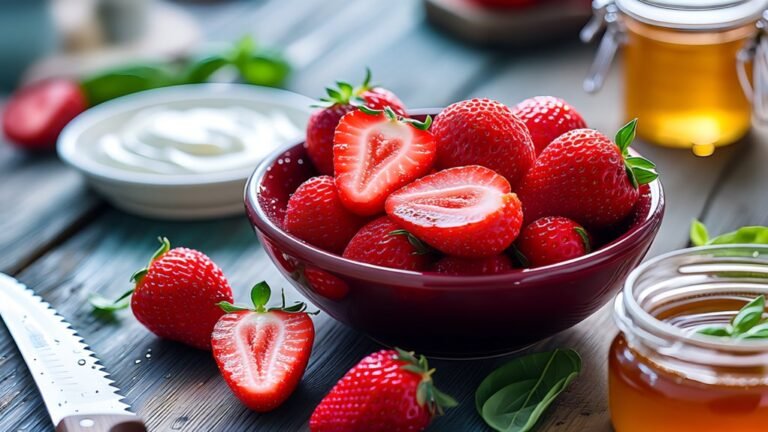
You’ll get about 0.62 mg of iron from a serving of eight strawberries, which covers nearly 8% of your daily iron needs if you’re an adult woman.
Strawberries contain non-heme iron, which doesn’t absorb as well as heme iron from meat, but their vitamin C helps boost absorption. While strawberries alone won’t meet all your iron requirements, pairing them with other iron-rich foods can help.
Keep exploring to understand how strawberries fit into a balanced, iron-friendly diet.
Iron Content of Strawberries Per Serving
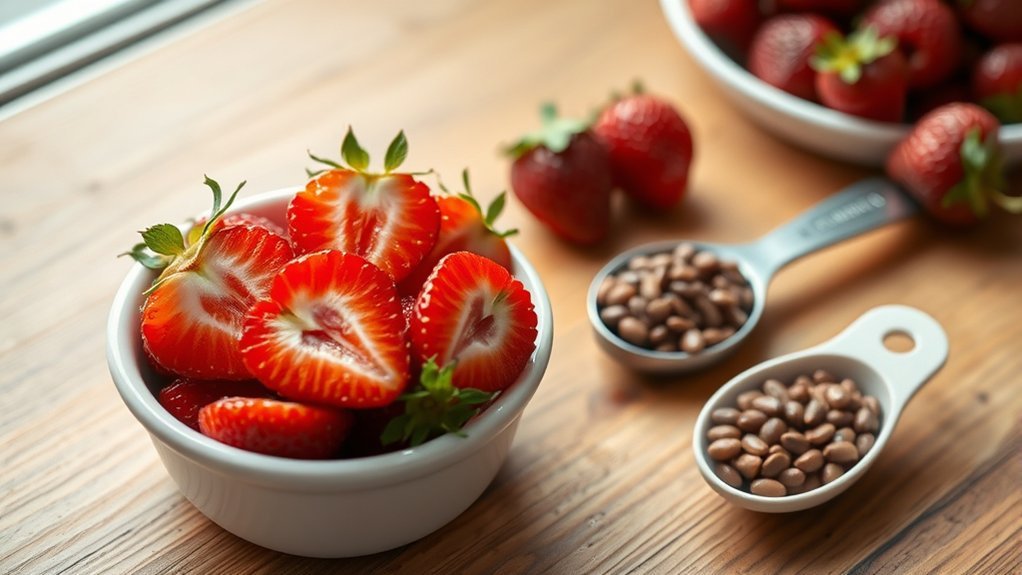
A serving of about eight strawberries provides you with 0.62 mg of iron, roughly 7.8% of the daily iron needs for adult women.
While strawberries contain non-heme iron, which your body doesn’t absorb as easily as heme iron from animal sources, their iron content still contributes to your daily intake.
Strawberries offer non-heme iron, contributing to your daily intake despite lower absorption than animal-based heme iron.
What’s more, strawberries are vitamin C-rich foods, and that vitamin C greatly boosts how well your body absorbs the non-heme iron present.
So, when you eat strawberries, you’re not just getting a modest iron boost. You’re also enhancing iron absorption naturally.
Including strawberries regularly in your diet supports nutrient diversity and helps you meet your iron requirements more effectively, especially when combined with other iron sources.
How Strawberries Compare to Other Iron-Rich Fruits
You’ll find that strawberries have less iron than dried fruits like apricots and dates.
But here’s the cool part—the vitamin C in strawberries actually helps your body absorb iron better.
When you compare strawberries to other berries, like raspberries and blackberries, they offer about the same iron boost.
Iron Content Comparison
Three-quarters of a cup of strawberries offers about 0.7 mg of iron, which covers roughly 7.8% of your daily needs based on the recommended daily allowance.
While strawberries provide some iron content, other fruits pack a stronger punch.
For instance, dried apricots give you 1.3 mg per ¼ cup, or 10.8% of the RDA.
Dried peaches are even more impressive, offering 2.7 mg per ½ cup, about 33.8% of your daily iron needs.
Raisins also outshine fresh strawberries, with 1.3 mg per ½ cup, covering 15% of the RDA.
Although strawberries have less iron, their vitamin C content can help boost iron absorption, making them a valuable part of your diet despite the lower iron content compared to these dried fruits.
Bioavailability Differences
Although strawberries contain less iron than some dried fruits, their vitamin C content helps your body absorb the non-heme iron they provide more effectively.
When you compare iron levels, strawberries offer about 0.62mg per cup, which is lower than dried apricots or peaches, but the bioavailability differences matter more than just the amount.
Non-heme iron in strawberries is harder to absorb than heme iron from animal sources, yet the vitamin C in strawberries boosts absorption considerably.
Other iron-rich fruits like dried peaches have higher iron levels but lack the same vitamin C punch to aid absorption.
Understanding these bioavailability differences helps you maximize iron intake from plant sources, making strawberries a valuable part of a balanced diet despite their modest iron content.
Complementary Nutrient Pairing
When comparing iron-rich fruits, strawberries may not top the list in iron content, but their vitamin C boosts your body’s ability to absorb iron from other plant sources.
Here’s how they stack up:
- Strawberries: 0.62 mg iron per cup, plus vitamin C to enhance absorption.
- Dried apricots: 0.86 mg iron per ¼ cup, higher iron but less vitamin C.
- Dried peaches: 2.7 mg iron per ½ cup, a rich iron source but lower in vitamin C.
- Raisins: 1.3 mg iron per ½ cup, moderate iron without vitamin C benefits.
Heme vs. Non-Heme Iron in Strawberries
Strawberries contain one type of iron called non-heme iron, which your body doesn’t absorb as easily as the heme iron found in animal products.
While non-heme iron is less bioavailable, strawberries still provide about 0.62 mg per serving, making them a modest source of this nutrient.
Since strawberries are also a rich source of vitamin C, they help boost the absorption of non-heme iron when you eat them alongside iron-rich meals.
This combination is especially valuable if you follow a vegetarian or vegan diet and rely on plant-based sources for your iron needs.
Although strawberries aren’t the richest iron source, their vitamin C content makes them a smart choice to support your overall iron intake effectively.
How Much Iron You Need Daily and Where Strawberries Fit In
Since your daily iron needs vary by age and gender, it’s important to understand how strawberries can contribute to your intake. Though strawberries aren’t a high source of iron, they provide about 0.62mg per cup, or 7.8% of the RDA. Here’s how they fit in:
- Adult women (19-50) need around 18mg of iron daily; postmenopausal women need about 8mg.
- Strawberries offer non-heme iron, absorbed less efficiently than heme iron.
- Pairing strawberries, a good source of vitamin C, with iron-rich foods can boost absorption.
- If you’re iron deficient or vegetarian, regular strawberry intake supports overall nutrient diversity.
Strawberries alone won’t meet your iron needs but can be a tasty part of a balanced diet to help prevent iron deficiency.
Signs You Need More Iron
Iron plays an essential role in your body’s ability to produce hemoglobin, so not getting enough can lead to noticeable symptoms. Iron deficiency often causes fatigue, difficulty regulating body temperature, and shortness of breath.
You might even experience cravings for unusual substances, known as pica. Remember, the recommended daily amount varies: women aged 19-50 need 18mg, while postmenopausal women need 8mg. Vegetarians should watch out since plant-based iron absorbs less efficiently.
| Symptom | Description | Who’s Affected |
|---|---|---|
| Fatigue | Constant tiredness | Everyone, especially women |
| Temperature Issues | Feeling cold easily | Those with low iron |
| Pica | Craving non-food items | Severe iron deficiency |
If you notice these signs, consider consulting a healthcare provider.
How Strawberries Help Prevent Iron Deficiency Anemia
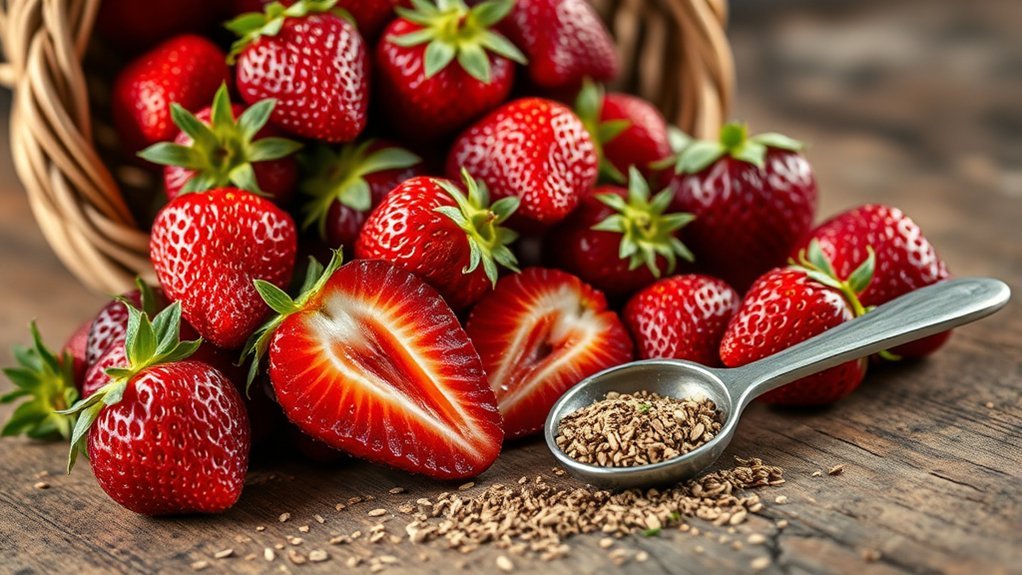
You mightn’t realize this, but strawberries actually pack about 0.7mg of iron per cup. That little bit can give your daily intake a nice boost.
Plus, strawberries are loaded with vitamin C, which helps your body absorb iron way more effectively—especially the iron that comes from plants.
Iron Content In Strawberries
One cup of strawberries provides about 0.62 mg of iron, covering nearly 8% of your daily needs. Though the iron content isn’t very high, strawberries offer several health benefits that support your body’s iron levels and overall wellness.
Here’s how strawberries can help you:
- Provide a modest amount of iron to contribute to your daily intake.
- Supply potassium, which supports healthy blood pressure and cardiovascular health.
- Enhance your diet’s nutrient variety, promoting better absorption of iron from other foods.
- Offer antioxidants and vitamins that support overall health, indirectly aiding anemia prevention.
Including strawberries in your meals is a tasty way to boost your iron intake while enjoying multiple health benefits.
Vitamin C Enhances Absorption
Although strawberries contain a modest amount of iron, their high vitamin C content plays an essential role in helping your body absorb this nutrient more effectively.
With about 85 mg of vitamin C per cup, strawberries greatly boost the absorption of non-heme iron, the type found in plant-based foods.
This means when you eat strawberries, the vitamin C helps convert iron into a form your body can use more efficiently. By including strawberries in your diet, you enhance iron uptake from other meals, supporting healthy blood iron levels.
Strawberries And Anemia Prevention
Because strawberries contain both iron and vitamin C, they play a valuable role in helping prevent iron deficiency anemia. Including strawberries in your diet supports anemia prevention in several ways:
- Strawberries provide about 0.62 mg of non-heme iron per cup, contributing to your daily iron needs.
- Their vitamin C content boosts absorption of non-heme iron from plant sources, making the iron more available to your body.
- Strawberries’ phytonutrients reduce inflammation and oxidative stress, factors linked to anemia risk.
- They supply folate, essential for producing healthy red blood cells and preventing anemia.
While strawberries alone won’t meet all your iron needs, eating them regularly alongside other iron-rich foods helps maintain healthy iron levels and supports effective anemia prevention.
How Vitamin C in Strawberries Helps Iron Absorption
When you eat strawberries, the vitamin C they contain plays an essential role in boosting your body’s ability to absorb iron. Vitamin C converts non-heme iron from plant sources into a form that’s easier for your body to absorb, improving iron absorption considerably.
Since strawberries provide 85 mg of vitamin C per serving, they’re a powerful ally in preventing iron deficiency.
| Nutrient | Amount per Cup |
|---|---|
| Non-heme Iron | 0.62 mg (7.8% RDA) |
| Vitamin C | 85 mg |
| Role in Iron Absorption | Converts iron to absorbable form |
| Benefit | Enhances iron absorption |
Including strawberries regularly helps maintain higher vitamin C levels. This supports better iron absorption and overall iron status.
Foods to Pair With Strawberries for Better Iron Absorption
To boost your iron absorption, pair strawberries with other vitamin C-rich foods like citrus fruits or bell peppers.
Vitamin C helps your body absorb non-heme iron more efficiently, making your meals more nutritious.
Here are some tasty combos to try:
- Blend strawberries with orange juice for a smoothie that maximizes iron absorption.
- Add strawberries to a salad with chickpeas or quinoa, both high in non-heme iron.
- Snack on strawberries with nuts or seeds to get healthy fats and extra iron.
- Combine strawberries with beans or lentils and bell peppers to enhance iron uptake.
How to Eat Strawberries to Boost Iron
You can boost your iron intake by pairing strawberries with vitamin C-rich foods like citrus fruits. This combo helps your body absorb iron better.
Plus, if you add iron-rich ingredients like spinach or lean meats, it makes the iron even easier for your body to use.
Try to time your meals so you include these combinations—this way, you get the most benefit from every bite.
Pairing With Vitamin C
Although strawberries provide a modest amount of iron, you can boost your body’s absorption by pairing them with vitamin C-rich foods.
Vitamin C transforms the non-heme iron in strawberries into a form your body can absorb more efficiently. To maximize iron uptake, try these tips:
- Add strawberries to a citrus fruit salad with oranges or kiwi for a vitamin C punch.
- Mix sliced strawberries into a bell pepper and spinach salad.
- Enjoy strawberries alongside a yogurt parfait with nuts for added protein and vitamin C synergy.
- Blend strawberries with lemon juice in a smoothie to enhance iron absorption.
Combining With Iron-Rich Foods
Pairing strawberries with vitamin C-rich foods sets a strong foundation for better iron absorption, but combining them with iron-rich foods can take your intake even further. To maximize iron absorption, try adding strawberries to meals featuring beans, lentils, or fortified cereals.
Blending them into smoothies with spinach or kale also enhances iron content and absorption. Here’s a quick look at some iron-rich foods you can combine with strawberries:
| Iron-Rich Foods | Benefits for Absorption |
|---|---|
| Lentils | High in non-heme iron |
| Spinach | Adds iron + vitamin C |
| Beans | Boosts iron intake |
| Fortified cereals | Enriched with easily absorbed iron |
| Kale | Iron and vitamin C combined |
Timing For Maximum Absorption
When aiming to boost iron absorption from strawberries, timing your consumption plays a crucial role. To maximize iron absorption, consider these tips:
- Eat strawberries fresh and raw to preserve vitamin C-rich foods that enhance iron uptake.
- Pair strawberries with meals containing heme iron, like lean meats, for a synergistic effect.
- Include strawberries alongside other vitamin C-rich foods such as citrus fruits to convert non-heme iron into a more absorbable form.
- Consume strawberries as part of balanced meals instead of alone, ensuring steady iron absorption throughout the day.
Can Eating Strawberries Alone Meet Your Iron Needs?
Since strawberries contain only about 0.62 mg of iron per cup, they can’t meet your daily iron needs on their own. This amount accounts for roughly 7.8% of the Recommended Daily Allowance, which is insufficient, especially if your iron requirements are higher.
While strawberries contribute some iron to your nutrition, they’re better known for their vitamin C content, which helps your body absorb iron more efficiently from other plant sources.
Strawberries provide vitamin C that enhances iron absorption from other plant-based foods.
Relying solely on strawberries won’t provide enough iron, so it’s important to include a variety of iron-rich foods like leafy greens, nuts, or legumes in your diet.
Incorporating strawberries alongside these foods can boost iron absorption, but eating strawberries alone won’t fulfill your daily iron needs.
Strawberry Nutrients That Support Blood Health
Although strawberries alone don’t supply enough iron to meet your daily needs, they contain several other nutrients that actively support blood health. You can rely on strawberries for more than just iron because they offer a variety of benefits:
- Rich in vitamin C (85 mg per serving), strawberries boost your body’s absorption of non-heme iron, improving iron uptake.
- They provide about 220 mg of potassium, which helps regulate blood pressure and supports overall blood health.
- Consuming strawberries regularly raises your blood folate levels, essential for red blood cell formation and preventing anemia.
- Anthocyanins in strawberries act as antioxidants, reducing oxidative stress and promoting cardiovascular health.
Together, these nutrients make strawberries a valuable part of maintaining healthy blood and supporting iron utilization.
Tips for Choosing and Storing Strawberries to Preserve Iron Content
To get the most iron from your strawberries, pick ones that are bright red and firm, as these qualities indicate peak ripeness and nutrient levels. Strawberries contain essential minerals, including iron, but their content can decrease with poor handling.
To preserve iron, guarantee you’re getting fresh strawberries and store them in the refrigerator inside a breathable container to avoid moisture buildup. Don’t wash them until right before eating; that helps keep their vitamins and minerals intact.
Eating strawberries soon after purchase guarantees you benefit from their maximum iron content. For better absorption, pair strawberries with vitamin C-rich foods like citrus fruits.
These tips help you enjoy strawberries while making sure you’re getting the most iron they’ve to offer.
Frequently Asked Questions
Can Cooking Strawberries Affect Their Iron Content?
Cooking strawberries doesn’t greatly reduce their iron content, so you’ll still get most of the iron after using common cooking methods.
However, cooking can lower vitamin C levels, which helps your body absorb iron better.
To maximize iron retention and absorption, you should pair cooked strawberries with other vitamin C-rich foods.
This way, you’ll enjoy the benefits of iron without losing too much nutritional value through cooking.
Are Frozen Strawberries as Good as Fresh for Iron Absorption?
Frozen strawberries hold their ground just like fresh ones do; they’re like a treasure chest locking in frozen benefits.
When you grab frozen berries, you’re still getting excellent nutrient retention, especially iron and vitamin C.
This means you won’t miss out on iron absorption, as the vitamin C helps your body soak it up.
Do Strawberries Contain Any Compounds That Inhibit Iron Absorption?
Strawberries don’t have significant compounds that inhibit iron absorption.
In fact, their vitamin C content helps boost iron absorption, especially from plant-based sources.
While some fruits contain polyphenols or oxalates that can hinder iron uptake, strawberries are relatively low in these inhibitors.
Can Children Get Enough Iron From Strawberries Alone?
You won’t find a treasure chest of iron in strawberries alone, so children can’t rely solely on them for their iron needs.
While strawberry recipes add a delicious touch and provide some iron, they’re just one piece of the puzzle.
To guarantee kids get enough iron, you’ll want to include a variety of iron sources like meats, beans, and fortified cereals alongside those sweet strawberries.
How Does the Iron Content Vary Among Different Strawberry Varieties?
You’ll find that the iron content in strawberry hybrids varies slightly, but not drastically.
When you make nutritional comparisons among different varieties, the differences in iron levels are usually marginal.
Factors like soil quality and growing conditions impact the iron content more than the strawberry type itself.
Conclusion
You might be surprised to learn that just one cup of strawberries gives you about 0.6 mg of iron, enough to contribute to nearly 3% of your daily needs. While strawberries won’t meet your iron requirements alone, their bright red color and vitamin C content help your body absorb iron better from other foods.
So, adding strawberries to your diet not only delights your taste buds but also supports your blood health in a tasty way!