

Do Strawberries Contain Acid?
Yes, strawberries do contain acid, mainly citric, malic, and vitamin C (ascorbic acid), which give them their tasty tang. They’re mildly acidic with a pH around 3.0 to 3.5, less acidic than lemons or pineapples.
Riper strawberries are even less acidic, so you’re likely to enjoy a gentler flavor. If you have acid sensitivity, organic or freeze-dried options may irritate less. Discover how to balance their acidity and explore friendly alternatives ahead.
Strawberry pH and Acidity Levels
Although strawberries have a pH level between 3.0 and 3.5, making them slightly acidic, you might be surprised to learn that their acidity mainly comes from natural fruit acids like citric, malic, and ascorbic acid.
Strawberries are mildly acidic, thanks to natural acids like citric, malic, and ascorbic acid.
When you consider strawberry pH, you’ll see they’re less acidic than common acidic foods such as lemons and pineapples.
This mild acidity influences their taste and how they interact with your digestive system.
Curiously, fully ripe strawberries tend to have a higher pH, meaning less acidity, compared to unripe ones, which might reduce potential acid reflux triggers.
Even though strawberries are acidic foods, after digestion, they often produce an alkalizing effect in your body, balancing overall acidity.
What Acids Are in Strawberries?
When you bite into a strawberry, you’re tasting a mix of natural acids that give the fruit its distinctive flavor. The primary acids in strawberries are citric acid, malic acid, and ascorbic acid, which is better known as vitamin C.
Citric acid provides the sharp, tart taste common in many fruits, while malic acid adds a subtle, pleasant acidity. Together, these acids create the balanced flavor that strawberries are famous for.
Beyond flavor, vitamin C plays an essential role, offering over 100% of your daily recommended intake in just one cup of strawberries.
Strawberry Acidity Compared to Other Fruits
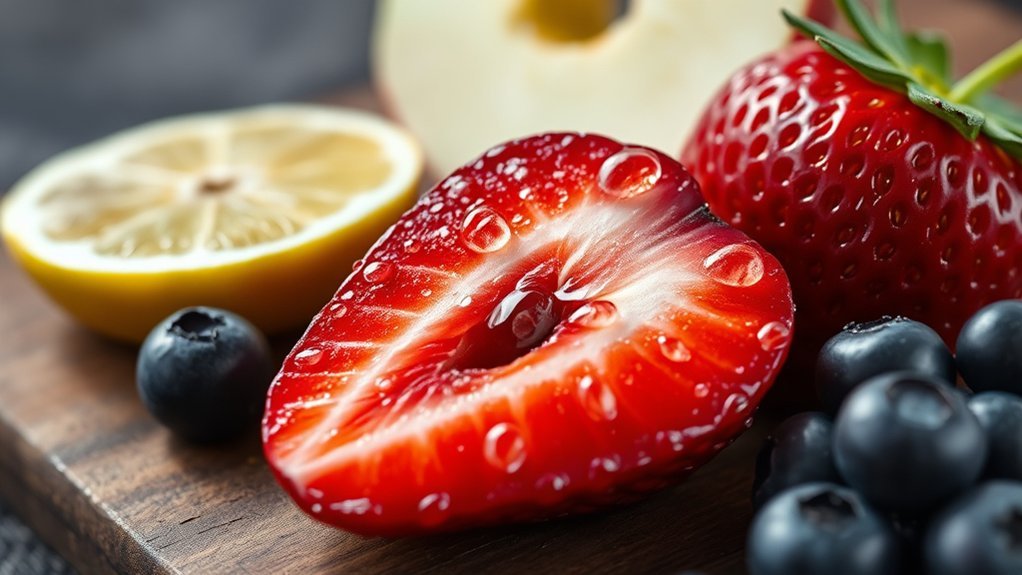
If you compare strawberries to other fruits, you’ll find they’ve a moderate acidity with a pH ranging from 3.0 to 3.5. This makes strawberries acidic, but not as acidic as lemons, which have a pH between 2.0 and 2.6, or even pineapples, whose pH ranges from 3.2 to 4.0.
On the other hand, strawberries are more acidic than low acid fruits like bananas and watermelons, both with pH levels above 5.0.
You’ll also notice that ripe strawberries tend to be less acidic than unripe ones, offering a milder taste.
Curiously, despite their acidic nature, strawberries can be alkaline-forming after digestion due to their mineral content, which helps support your body’s internal pH balance.
Can Strawberry Acidity Trigger Acid Reflux?
You might be wondering if the acidity in strawberries can actually cause acid reflux.
Well, strawberries have a pH between 3.0 and 3.5, so they’re mildly acidic. However, they’re less acidic than citrus fruits like oranges or lemons.
That said, if you’re someone who’s prone to acid reflux, strawberries might still trigger your symptoms. It really depends on how much you eat and when you eat them.
Strawberry pH Levels
Although strawberries have a pH level between 3.0 and 3.5, making them acidic, they’re less harsh on your stomach than many citrus fruits. This moderate acidity means strawberries can be easier on you if you’re concerned about acid reflux.
Here’s what you should know:
- The pH level reflects their natural acids like citric, malic, and ascorbic acid, which are less aggressive than citrus acids.
- Eating ripe strawberries lowers your acid intake since they’re less acidic than unripe ones.
- Pairing strawberries with meals helps because their fiber content can reduce acid reflux symptoms.
Acid Reflux Risk
Strawberries contain acids that give them a pH between 3.0 and 3.5, making them less acidic than many citrus fruits.
If you suffer from acid reflux, you’ll be glad to know that strawberries are generally easier on your stomach than high-acid fruits like lemons or oranges.
Their acidity is mild enough that they often don’t trigger acid reflux symptoms, especially when eaten ripe.
Including strawberries as part of a meal can also help, since their fiber and relatively low acidity work well alongside other foods.
To further reduce your risk, try pairing strawberries with low-acid fruits or alkaline foods like spinach and avocado.
This way, you can enjoy strawberries without worrying too much about acid reflux flares.
Does Ripeness Change Strawberry Acidity?
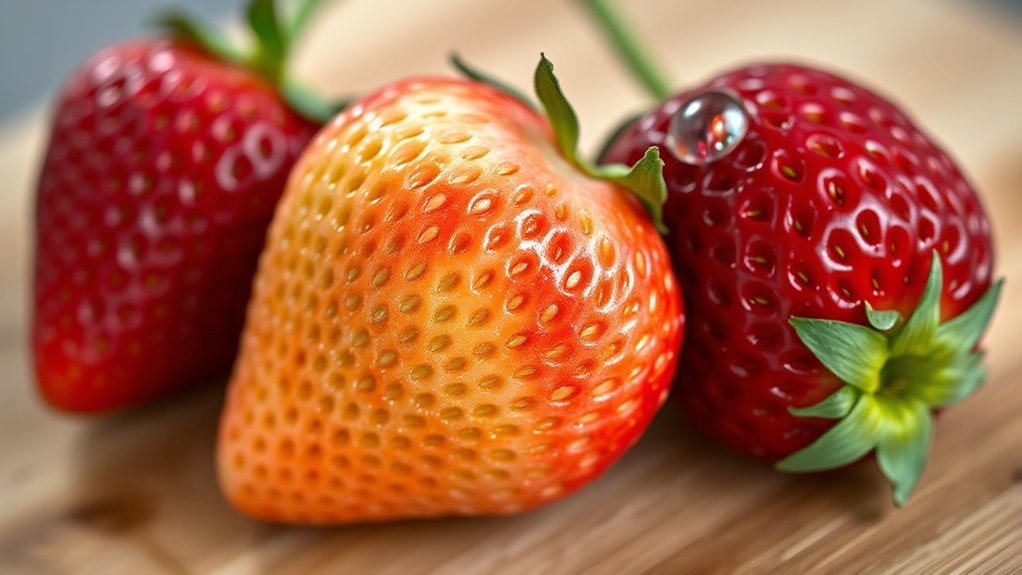
When berries ripen, their acidity changes noticeably, and you can taste the difference. Ripeness directly impacts strawberry acidity, affecting both flavor and how your body reacts.
Unripe strawberries have higher acid levels, making them tart and more likely to aggravate acid reflux. As they ripen, the citric and malic acids decrease, softening their sharpness.
Here’s what you should know:
- Unripe strawberries have a lower pH (~3.0) and higher acid content.
- Fully ripe strawberries reach a pH closer to 3.5, with less acidity.
- Choosing ripe strawberries reduces acid reflux risk due to milder acidity.
Are Strawberries Alkaline-Forming After Digestion?
Even though they taste slightly acidic, strawberries actually have an alkaline-forming effect once digested. Their pH ranges from 3.0 to 3.5, but after digestion, the metabolic “ash” they leave behind supports an alkalizing effect in your body.
This happens because strawberries are rich in minerals like potassium and magnesium, which contribute to their alkaline-forming properties.
If you suffer from acid reflux, including strawberries in your diet might help balance your internal pH and reduce discomfort.
Plus, the antioxidants in strawberries help lower systemic inflammation, further promoting an alkaline environment.
Health Benefits of Strawberries Beyond Acidity
Beyond their impact on acidity, these vibrant berries offer a range of health benefits that can support your overall well-being.
Strawberries provide powerful antioxidants and nutrients that do more than just affect pH balance. Here are three key health benefits you should know:
- They’re packed with vitamin C, boosting your immune system and improving skin health.
- The fiber content helps regulate digestion and blood sugar, which may ease GERD symptoms by promoting gut health.
- Flavonoids in strawberries support heart health by lowering blood pressure and may slow cognitive decline, especially in women.
Incorporating strawberries into your diet offers a natural way to enhance your health beyond concerns about acidity, making them a smart choice for overall wellness.
How to Enjoy Strawberries With Acid Sensitivity
If you’re sensitive to acid, don’t worry—you can still enjoy strawberries! One easy trick is to eat them alongside alkaline foods like spinach or avocado. This helps balance out the acidity and makes them gentler on your system.
Also, try choosing fully ripe strawberries or even freeze-dried ones. These options tend to be less irritating.
And here’s a simple tip: after eating strawberries, rinse your mouth with water. It’s a great way to protect your tooth enamel and keep things feeling fresh.
Pairing With Alkaline Foods
One simple way to enjoy strawberries without triggering acid sensitivity is to pair them with alkaline foods like spinach, avocado, or bananas.
These combinations help neutralize the acidity of strawberries, reducing the risk of acid reflux. To make the most of this pairing, consider these tips:
- Combine strawberries with low-acid fruits such as melons to create a balanced, gentle meal.
- Add healthy fats from nuts or seeds to aid digestion and buffer acidity.
- Use creamy bases like yogurt or almond milk in smoothies to offset strawberry acidity.
Preparation And Consumption Tips
Although strawberries are delicious, their acidity can sometimes cause discomfort for those with sensitive stomachs or acid reflux. To enjoy them without irritation, follow these preparation and consumption tips.
Choose fully ripe strawberries. They tend to be low in acid compared to unripe ones.
Pairing strawberries with alkaline-forming foods like spinach or avocado helps balance acidity. If fresh strawberries still bother you, try freeze-dried varieties, which are gentler on acid-sensitive systems.
After eating, rinse your mouth with water to protect your tooth enamel from acid damage. Avoid brushing your teeth immediately; wait at least 30 minutes to prevent enamel erosion.
These simple steps let you enjoy strawberries while minimizing acid-related discomfort effectively.
Do Freeze-Dried or Blended Strawberries Irritate Less?
How do freeze-dried or blended strawberries compare to fresh ones when it comes to irritation?
Freeze-dried strawberries often irritate less because the dehydration process reduces their acidity. This may ease acid reflux symptoms.
Freeze-dried strawberries irritate less as dehydration lowers their acidity, helping to ease acid reflux symptoms.
Blended strawberries offer a smoother texture, making them gentler on your stomach.
Here’s why you might prefer these forms:
- Freeze-dried strawberries undergo chemical changes that lower acidity, reducing irritation risk.
- Blending strawberries creates a uniform consistency, minimizing potential stomach discomfort.
- Both forms retain nutrients but tend to trigger acid reflux less than fresh ones.
Why Choose Organic Strawberries If Acid-Sensitive?
If you’re sensitive to acid, going for organic strawberries can be a smart move.
They help reduce your exposure to synthetic pesticides, which might otherwise make irritation worse. Plus, organic farming focuses on healthier soil, so the fruits often come packed with more nutrients and antioxidants.
When you choose organic, you’re also lowering the chance of coming across allergens.
And let’s be honest, organic strawberries usually taste fresher and sweeter, making them a better fit for your diet overall.
Pesticide Impact Reduction
Because conventional strawberries often carry high pesticide residues, choosing organic ones can help you reduce exposure to these chemicals, especially if you’re sensitive to acids or irritants.
Organic farming limits synthetic pesticides, supporting pesticide impact reduction and a healthier diet.
Here’s why organic strawberries make a difference for you:
- They contain fewer chemical residues, lowering the risk of irritation for acid-sensitive individuals.
- They often offer higher antioxidant levels, boosting your overall health.
- Supporting organic agriculture promotes sustainable practices that protect the environment and biodiversity.
Sensitivity and Exposure
Choosing organic strawberries does more than reduce pesticide exposure. It also helps minimize irritation for those sensitive to acids. If you have acid sensitivity or experience discomfort from stomach acid, organic strawberries can be gentler.
They’re grown without synthetic pesticides that may worsen acid sensitivity and digestive issues. Plus, organic berries often ripen fully, enhancing flavor and nutrients that support digestive health.
| Factor | Organic Strawberries | Conventional Strawberries |
|---|---|---|
| Pesticide Residues | Minimal to none | Often present |
| Acid Sensitivity Risk | Lower irritation potential | Higher irritation risk |
| Nutritional Content | Typically higher | May be lower |
Choosing organic helps you enjoy strawberries without aggravating acid sensitivity or stomach acid discomfort.
Organic Farming Benefits
Although organic strawberries might cost a bit more, they offer clear benefits for anyone sensitive to acid. Choosing them helps you avoid synthetic pesticides and fertilizers, which can irritate your digestive system and worsen acid reflux.
Here are three key organic farming benefits to contemplate:
- Reduced chemical residues lower the chance of acid reflux flare-ups.
- Enhanced flavor and sweetness come from healthier soil and natural growth.
- Higher antioxidant levels in organic strawberries support overall digestive health.
Pairing Strawberries With Alkaline Foods to Reduce Acidity
When you pair strawberries with alkaline foods like spinach, avocado, or bananas, you can help neutralize their acidity and reduce the chance of acid reflux.
Combining strawberries with these foods balances the meal’s pH, making it gentler on your stomach.
For example, blending strawberries into a smoothie with almond milk or yogurt creates a delicious mix that minimizes acidity.
Adding healthy fats from nuts or seeds also helps buffer the acid during digestion.
Choosing fully ripe strawberries enhances this effect since they’re less acidic than unripe ones.
By thoughtfully pairing strawberries with alkaline foods, you can enjoy their sweet flavor without worrying about acid reflux discomfort or digestive upset.
It’s a simple way to savor strawberries while keeping acidity in check.
Low-Acid Fruit Alternatives to Strawberries
If you find strawberries too acidic for your stomach, you can try several low-acid fruits that are gentle and delicious.
These fruits are less likely to trigger acid reflux and can be great alternatives.
1. Watermelon
With a pH of around 5.4, watermelon hydrates you and is low in acidity, making it ideal for those sensitive to acid reflux.
2. Honeydew Melon
Its pH of 6.3 places it among the safest fruits for minimizing acid irritation.
3. Papaya
At a pH of 5.6, papaya not only has low acidity but also contains digestive enzymes that support your digestion.
Choosing these low-acid fruits can help you enjoy sweet flavors without aggravating acid reflux symptoms.
Frequently Asked Questions
How Does Strawberry Acidity Affect Dental Health?
Strawberry acidity can lead to dental erosion by weakening your enamel strength.
When you eat strawberries, their natural acids soften your enamel, making it more vulnerable to damage.
If you brush your teeth right after, you risk accelerating enamel loss.
To protect your teeth, wait at least 30 minutes before brushing and rinse your mouth with water after eating strawberries.
This helps neutralize acids and preserves your enamel strength.
Can Strawberry Acid Impact Skin When Used Topically?
Yes, strawberry acid can impact your skin positively when used topically. You’ll enjoy strawberry benefits like natural skin exfoliation thanks to the mild acids in strawberries, which help remove dead skin cells and brighten your complexion.
Plus, their vitamin C boosts collagen, improving elasticity.
Just be cautious. If you have sensitive skin, test a small area first to avoid irritation. Incorporating strawberries can enhance your skincare routine effectively.
Do Strawberries Cause Allergic Reactions Related to Their Acid Content?
Imagine biting into a strawberry like shaking hands with a friend who’s a bit too enthusiastic.
Sometimes, that enthusiasm stings. You might experience strawberry allergies not just from proteins but also because acid sensitivity can make symptoms worse.
While the acid itself rarely triggers allergies, it can irritate your mouth and skin if you’re sensitive.
How Should Strawberries Be Stored to Preserve Their Acidity?
To preserve strawberries’ acidity, you should use proper storage methods.
Keep them unwashed until you’re ready to eat, and store them in the refrigerator in a breathable container.
Using their original packaging or a paper towel-lined container helps absorb excess moisture, which prevents mold and maintains acidity.
Avoid freezing if you want to keep their natural flavor and tartness intact, as freezing can change texture and acidity perception.
Does Cooking Strawberries Alter Their Acid Levels?
You might be surprised, but yes, cooking strawberries does alter their acidity levels. Depending on your cooking methods, heat breaks down some natural acids like citric and malic acid, making strawberries taste sweeter and less tart.
However, it doesn’t completely remove all acidity. So, when you simmer or bake them, expect a softer texture and a milder tang, while still enjoying many of the fruit’s nutritional benefits.
Conclusion
You might be surprised to learn that strawberries do contain natural acids like citric and malic acid. These can sometimes trigger acid reflux if you’re sensitive.
For example, Sarah, who loves strawberries, noticed mild heartburn after eating them but found relief by pairing strawberries with alkaline foods like bananas. So, if you’re acid-sensitive, try balancing your strawberry intake with low-acid options to enjoy their flavor without discomfort.