

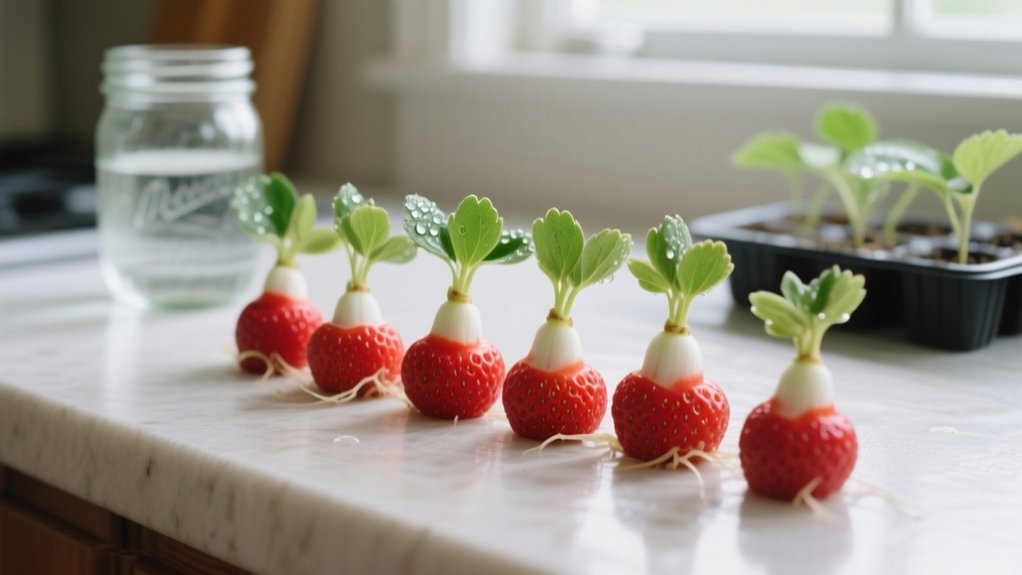
How You Can Grow Strawberries From Strawberry Tops
You can grow strawberries from strawberry tops by cutting off the tops with a bit of white flesh attached. Then place them on nutrient-rich, well-draining soil.
Keep them in a container covered lightly to create humidity and water sparingly to avoid rot. Place in bright, indirect sunlight and watch roots develop in a few weeks.
Once established, transplant them outdoors to a sunny spot with good soil. Keep exploring to learn how to nurture your plants to fruiting success.
How To Prepare Strawberry Tops For Planting
Before planting, you’ll want to prepare your strawberry tops by cutting a thin slice of the skin that includes some white flesh. This helps the tops root more effectively.
Next, fill a small container with nutrient-rich soil, which provides essential nutrients for healthy growth. Place the prepared strawberry tops gently on the soil surface without burying them deeply.
Use nutrient-rich soil in a small container and gently place strawberry tops on the surface without deep burying.
Be sure to cover the strawberry tops carefully to create a humid microenvironment; using a shot glass or similar cover works well. This moisture retention encourages rooting and prevents the tops from drying out.
Water lightly to avoid over-saturation, which can cause rot. Position your setup in a sunny indoor spot, and within about eight days, you should start to see new growth emerging from your strawberry tops.
Setting Up Soil And Pots For Strawberry Tops
When setting up soil and pots for your strawberry tops, choose a container that’s at least 6 to 8 inches deep to give roots enough room to develop.
Use a well-draining potting mix that holds moisture but prevents waterlogging, which can cause root rot.
Fill the pot with soil, leaving about an inch of space at the top to avoid overflow when watering.
Before planting, make sure the strawberry tops are clean and free from mold or rot to encourage healthy growth.
Place the tops gently into the soil, covering the roots but keeping the strawberry buds above the surface.
After planting, water the soil thoroughly to settle it around the roots and maintain consistent moisture as your new strawberry plants take root.
How To Create A Humid Environment For Sprouting
To create the right humid environment for your strawberry tops, start by lightly watering the soil.
Then, cover the container with a shot glass or some plastic wrap. This traps moisture and keeps the soil from drying out too quickly.
Be sure to check on it every day.
You’ll want to lift the cover a bit to let in some fresh air and help prevent mold from forming.
It’s all about finding that balance between moisture and airflow!
Using A Shot Glass
Creating a humid environment for sprouting strawberry tops is simple with just a few materials.
Place your strawberry top on moist soil inside a small cup or pot. Then, cover it with a shot glass. This is where the shot glass benefits come into play.
Acting as a mini greenhouse, the glass traps moisture and maintains ideal humidity control, which is essential for sprouting. Before covering, water the soil lightly to kickstart growth.
Keep an eye on condensation inside the glass. If it builds up too much, briefly lift the shot glass to let fresh air in.
This method guarantees your strawberry tops enjoy a stable, moist environment, boosting their chances to sprout successfully while allowing enough light for healthy development.
Maintaining Soil Moisture
Maintaining soil moisture plays an essential role in helping your strawberry tops sprout successfully. To create a humid environment, use moisture retention techniques like covering the setup with a shot glass to trap humidity.
Lightly water the strawberry skin, focusing on consistent soil moisture measurement to keep the soil damp but not waterlogged. Place the pot in a sunny indoor spot, as warmth supports humidity levels ideal for sprouting.
Check the soil moisture regularly and adjust watering frequency accordingly to prevent oversaturation or drying out. After about eight days, you should notice sprouts emerging, signaling that your moisture management is working.
Choosing The Best Indoor Spot For Strawberry Tops
Where you place your strawberry tops indoors plays an essential role in their growth. For successful indoor gardening, choose a spot with ample natural light, at least 6-8 hours of direct sunlight daily. A south-facing window works best, providing consistent light and warmth to meet your strawberry tops’ light requirements.
Temperature control is equally important. Keep the room between 65°F and 75°F (18°C to 24°C) to encourage sprouting and healthy root development.
Maintain indoor temperatures between 65°F and 75°F for optimal strawberry sprouting and root growth.
You can boost humidity by covering the tops with a shot glass or plastic wrap. This helps maintain moisture while preventing drying.
Regularly check soil moisture and water lightly. Make sure there’s proper drainage to avoid root rot.
Selecting the right spot indoors sets your strawberry tops up for strong growth and success.
What To Expect In The First Week After Sprouting
Once your strawberry tops sprout, you’ll start seeing small green shoots emerge within about eight days. This sprouting timeline marks the first major growth milestone, signaling the start of your plant’s development.
During this initial week, you’ll notice tiny leaves forming, which will grow steadily as your plant matures. To support plant health, keep the soil consistently moist but not soggy, since young sprouts are sensitive to drying out.
Make sure the environment stays warm and sunny, as these conditions encourage robust growth.
Keep a close eye for any signs of mold or pests, which can quickly affect vulnerable young plants.
Understanding these early growth milestones helps you track progress and maintain ideal conditions for your strawberry tops.
How To Care For Young Strawberry Plants Indoors
Although young strawberry plants thrive outdoors, you can successfully nurture them indoors by providing bright, indirect sunlight for at least 6 to 8 hours daily.
To keep your plants healthy, follow these essential care tips:
- Maintain consistent soil moisture. Water regularly but avoid soggy soil to prevent root rot.
- Use pruning techniques to remove dead leaves. This encourages stronger growth and better airflow.
- Practice pest management by inspecting leaves often. You might try companion planting with herbs like basil to naturally deter pests.
Keep your indoor temperature between 65°F and 75°F, and feed your plants a balanced, water-soluble fertilizer every 4 to 6 weeks.
When And How To Transplant Strawberry Tops Outdoors
Before transplanting your strawberry tops outdoors, make sure they’ve developed a strong root system and reached about 4 to 6 inches tall. This usually takes 4 to 6 weeks. Proper transplant timing is essential to help the plants adjust and thrive outside.
Different strawberry varieties may have varying growth rates, so observe your plants closely. When you’re ready, gently remove the tops from their indoor containers, keeping the root system intact. Handle the roots carefully to avoid damage.
Transplant them into their new outdoor spot, ensuring the soil is moist but well-drained. Water immediately after transplanting to reduce shock.
Choosing The Right Location And Pot For Transplanted Plants
You’ll want to pick a pot that’s at least 12 inches deep and wide. This gives your strawberry plants plenty of room to spread out and grow.
Then, make sure to put the pot somewhere it can soak up 6-8 hours of direct sunlight each day—this is key for getting the best fruit yield.
Finding a sunny, sheltered spot is really important. It helps your plants stay protected from harsh winds and extreme weather, so they can thrive and produce healthy, delicious berries.
Selecting Pot Size
When selecting the right pot for your strawberry tops, make sure it’s at least 6 to 12 inches deep to support healthy root growth.
Consider pot material options like terracotta for breathability or plastic for lightweight convenience.
Use well-draining potting mix types designed for fruits or vegetables to keep roots healthy.
Always prioritize pot drainage solutions. Holes at the bottom are essential to prevent waterlogging and root rot.
To get the best results:
- Choose a pot size that allows roots to spread comfortably.
- Select a pot with adequate drainage to avoid soggy soil.
- Pick a pot material that matches your gardening style and climate.
This thoughtful selection sets your strawberry tops up for strong growth and a fruitful harvest.
Optimal Sunlight Placement
Where should you place your transplanted strawberry plants to assure they thrive? The ideal placement is a spot receiving 6-8 hours of direct sunlight daily. Proper sunlight duration guarantees vigorous growth and abundant fruit.
Avoid shaded areas since shade effects stunt growth and reduce yield. Use a pot at least 12 inches deep and wide with drainage holes to prevent waterlogging.
Position the pot where it’s sheltered from strong winds but gets full sun, like a patio or balcony.
| Factor | Recommendation |
|---|---|
| Sunlight Duration | 6-8 hours of direct sun daily |
| Shade Effects | Reduces growth and fruit yield |
| Pot Size | Minimum 12 inches deep and wide |
| Placement | Sunny, wind-sheltered location |
Follow these tips for healthy, productive strawberry plants.
How To Watch Strawberry Flowers Turn Into Fruit
As spring arrives, watch closely as your strawberry plants produce small white flowers that hold the key to future fruit. Each flower’s health and successful pollination are essential, so use flower pollination techniques like gentle hand-pollination or encouraging bees to boost your yield.
Keep an eye on flower health indicators. Vibrant petals and intact reproductive parts mean good fruit potential.
Understanding the fruit development timeline helps you stay patient and attentive. Watch flowers swell gradually over a few weeks. Notice green fruit forming as petals fall.
Harvest only when strawberries turn fully red and ripe.
Benefits Of Growing Strawberries From Tops
You’ll find that growing strawberries from tops is a smart way to cut down on food waste while supporting sustainable gardening.
It’s pretty cool because it lets you produce fresh fruit right at home without having to spend extra money. Plus, you’re making the most of scraps that would otherwise just go to waste.
Sustainable Gardening Practice
Although many people toss strawberry tops without a second thought, you can grow new plants from them, turning what would be waste into a fresh, homegrown supply. This sustainable gardening practice fits perfectly with urban gardening and self-sufficiency strategies, letting you reduce food waste and enjoy fresh fruit right at home.
By growing strawberries from tops, you:
- Cut down on waste by repurposing parts of strawberries usually discarded.
- Build your gardening skills, gaining confidence in plant care and growth cycles.
- Support environmental sustainability by lowering reliance on store-bought fruit that involves packaging and transport.
Embracing this approach not only boosts your food security but also connects you to nature, making your garden a small but meaningful part of a greener future.
Cost-Effective Fruit Production
When you grow strawberries from tops, you save money by transforming fruit scraps that would otherwise be discarded into productive plants. This approach is one of the best budget gardening tips, letting you skip buying new plants while still enjoying fresh fruit.
By propagating strawberries at home, you tap into home gardening advantages like a steady supply of organic fruit benefits without the premium price of store-bought produce. Growing your own strawberries guarantees a sustainable, cost-effective fruit production that supports self-sufficiency and healthier eating habits.
Plus, it helps stretch your grocery budget throughout the growing season. Embracing this simple method not only cuts costs but also enriches your garden with delicious, homegrown strawberries all season long.
Enhanced Food Waste Reduction
Since strawberry tops often end up in the trash, repurposing them to grow new plants helps you cut down on food waste considerably. Instead of tossing these food scraps, you transform potential waste into fresh strawberries, reducing landfill contribution and its negative environmental impact.
By growing strawberries from tops, you reduce the volume of organic waste, easing the burden on local compost systems. You also harness compost benefits by recycling nutrients back into your garden, promoting healthier soil.
Plus, you support sustainability by minimizing the need for store-bought seeds and packaging waste. This simple practice not only lowers your carbon footprint but also deepens your connection to eco-friendly gardening.
You get to enjoy delicious, pesticide-free fruit while actively participating in food waste reduction. It’s a small step with a big environmental payoff.
Frequently Asked Questions
Can I Grow Strawberries From Tops Year-Round?
Yes, you can enjoy year-round growth by practicing indoor gardening with strawberry tops.
With the right strawberry care, like placing them in a sunny spot, keeping temperatures between 65°F and 75°F, and maintaining proper humidity, you’ll encourage healthy sprouting anytime.
Just water them regularly and watch for sprouts within about a week.
While indoor growth works well year-round, moving them outdoors during warmer months boosts fruit production and overall plant health.
How Long Do Strawberry Plants Live From Tops?
Strawberry plant lifespan from tops typically ranges between 3 to 5 years, depending on your care and the variety you choose.
Using proper propagation techniques, like ensuring healthy roots and good soil, helps extend their life.
Keeping your plants healthy not only boosts longevity but also maximizes the health benefits of fresh strawberries you harvest.
Are Certain Strawberry Varieties Better for Growing From Tops?
Picture vibrant red strawberries bursting from lush green leaves. Those are the best strawberry varieties for growing from tops.
June-bearing types like ‘Earliglow’ thrive in well-drained soil, offering strong strawberry growth conditions.
Ever-bearing and alpine varieties also respond well with ideal planting methods. They produce fruit throughout the season.
To get the most from your garden, choose healthy plants and match each variety to your local climate for vibrant, fruitful results.
Can I Use Regular Tap Water for Watering Strawberry Tops?
Yes, you can use regular tap water for your strawberry tops, but pay attention to tap water quality.
Let it sit for 24 hours to reduce chlorine, and check the mineral content. High minerals may affect soil health.
Adjust your watering frequency to keep soil moist but not soggy, preventing root rot.
Guarantee good drainage to help your strawberry tops thrive with the water you provide.
What Pests Commonly Affect Strawberry Tops Grown Indoors?
You’ll commonly face aphids, spider mites, fungus gnats, whiteflies, and scale insects when growing strawberry tops indoors.
These pests can stunt growth, cause yellowing leaves, and spread strawberry diseases.
For effective pest management, regularly inspect your plants and maintain good air circulation and proper humidity.
Doing so helps prevent infestations and keeps your indoor gardening healthy and thriving.
Don’t forget to act quickly if you spot any signs of pests!
Conclusion
Growing strawberries from tops is like giving new life to a sweet secret. With a little patience and care, you’ll watch those tiny green shoots burst through the soil, reaching for sunlight like enthusiastic little hands.
Soon, vibrant flowers will bloom, promising juicy rewards. By nurturing your strawberry tops, you’re not just planting fruit; you’re cultivating a garden full of hope and harvest.
You’re turning kitchen scraps into nature’s sweetest treasure. Keep caring, and watch magic grow!