

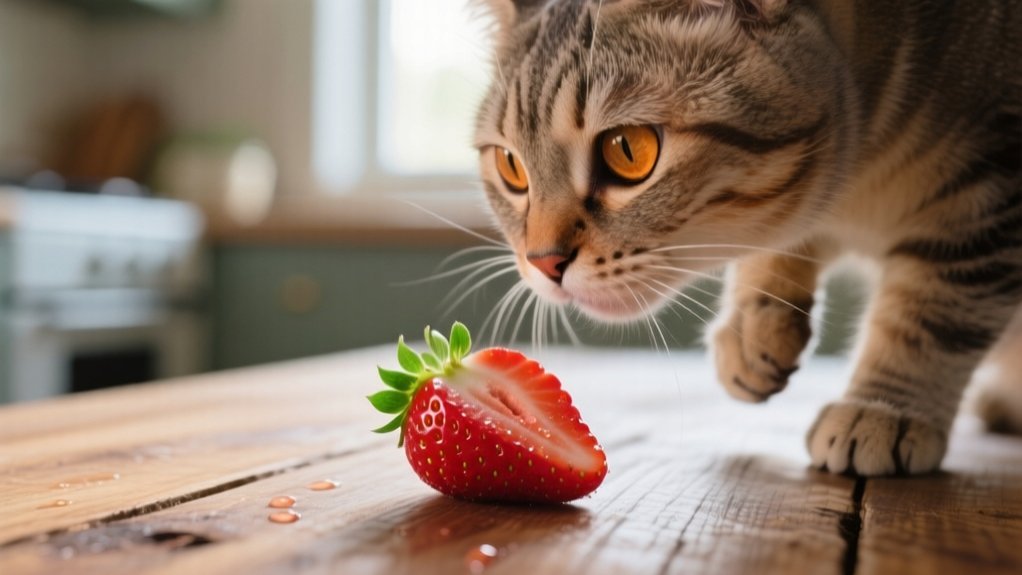
What Happens If a Cat Eats Strawberries?
If your cat eats strawberries, they’ll likely be fine if you only offer small, washed pieces without stems or leaves. Strawberries provide some antioxidants and fiber but aren’t essential to your cat’s diet.
Watch for any vomiting, diarrhea, or allergic reactions like itching. Avoid giving strawberries to kittens, as their systems are sensitive. Moderation and preparation matter to keep your cat safe and comfortable.
Keep exploring to understand how to introduce strawberries safely and recognize potential risks.
Are Strawberries Safe and Healthy for Cats?
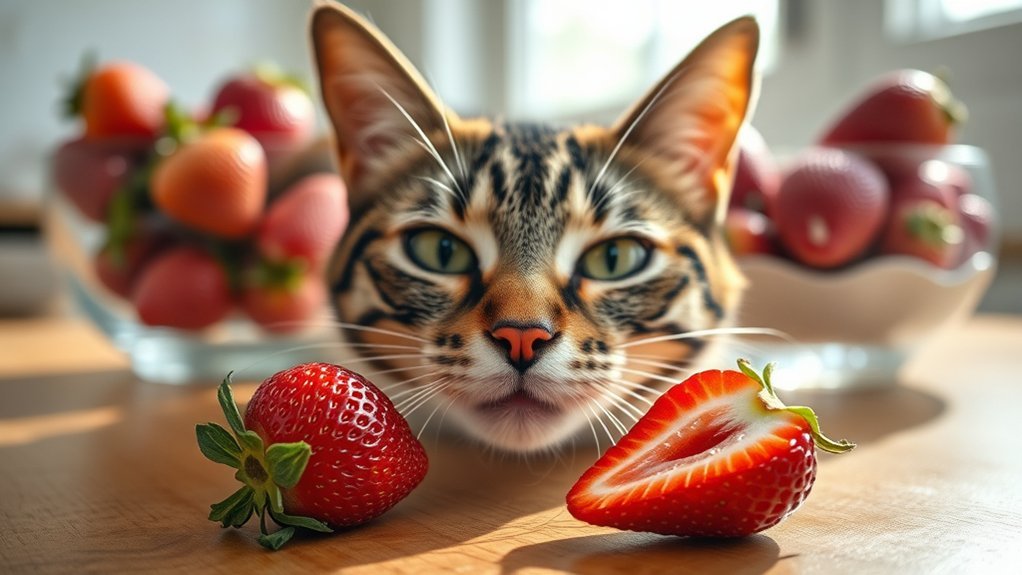
While strawberries are non-toxic and can be a safe occasional treat for your cat, you should only offer them in small amounts. When cats eat strawberries, they get a non-toxic to cats fruit that won’t harm them if given sparingly.
However, feeding too many strawberries can cause digestive issues like diarrhea or stomach pain because of their high sugar content. To keep your cat safe, wash the strawberries thoroughly, remove stems and leaves, and cut them into small pieces to avoid choking hazards.
What Nutrients Do Strawberries Provide Cats?
Besides being a safe occasional treat, strawberries offer several nutrients that can benefit your cat. These juicy fruits contain potassium, which helps maintain proper nerve and muscle function essential for your feline’s daily activities.
Strawberries also provide fiber, supporting digestion and promoting gastrointestinal health in small amounts.
While cats produce their own vitamin C, the antioxidants found in strawberries, like anthocyanins and quercetin, may help combat oxidative stress, supporting your cat’s overall well-being.
Moreover, strawberries contain folate, vital for protein metabolism and cell building.
Though your cat doesn’t rely on dietary vitamin C, the combination of fiber, antioxidants, and potassium in strawberries contributes valuable nutrients that can enhance your cat’s immune system and general health when given in moderation.
What Are the Effects of Eating Strawberries on Cats?
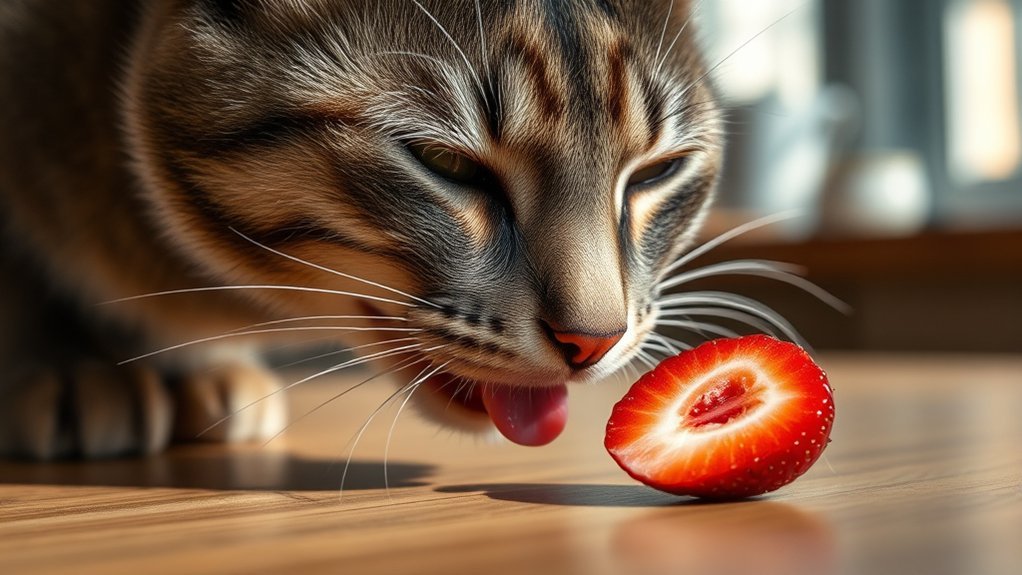
If your cat eats strawberries, you might notice some mild benefits from the fruit’s hydration and antioxidants, though these effects are limited since cats primarily rely on animal-based nutrients.
When cats eat strawberry in small amounts, it can be safe for cats and provide minor vitamins like vitamin C and potassium. However, you should be cautious because some cats may develop a strawberry allergy, showing symptoms like itching or coughing.
Also, feeding too many strawberries can lead to gastrointestinal upset due to their sugar and fiber content, affecting your cat’s digestive systems.
Always monitor your cat after offering strawberries, ensuring they only get a small amount of strawberries and that the fruit is properly prepared to avoid choking or digestive problems.
Can Strawberries Cause Digestive Issues in Cats?
Although small amounts of strawberries can offer some vitamins to your cat, feeding them too much might cause digestive problems.
Cats are obligate carnivores, so their gastrointestinal systems aren’t built to process the fructose and fiber found in strawberries. Eating more than a small amount can lead to digestive issues like diarrhea or vomiting.
Furthermore, the stems and leaves may pose choking hazards or cause blockages, increasing health risks. Overindulgence also raises calorie intake, which can contribute to obesity and further gastrointestinal distress.
To keep your cat safe, introduce strawberries gradually and watch for any signs of intolerance. Sticking to small amounts minimizes digestive issues and helps you avoid unnecessary health risks related to feeding strawberries to your feline friend.
What Are the Signs of Strawberry Allergy in Cats?
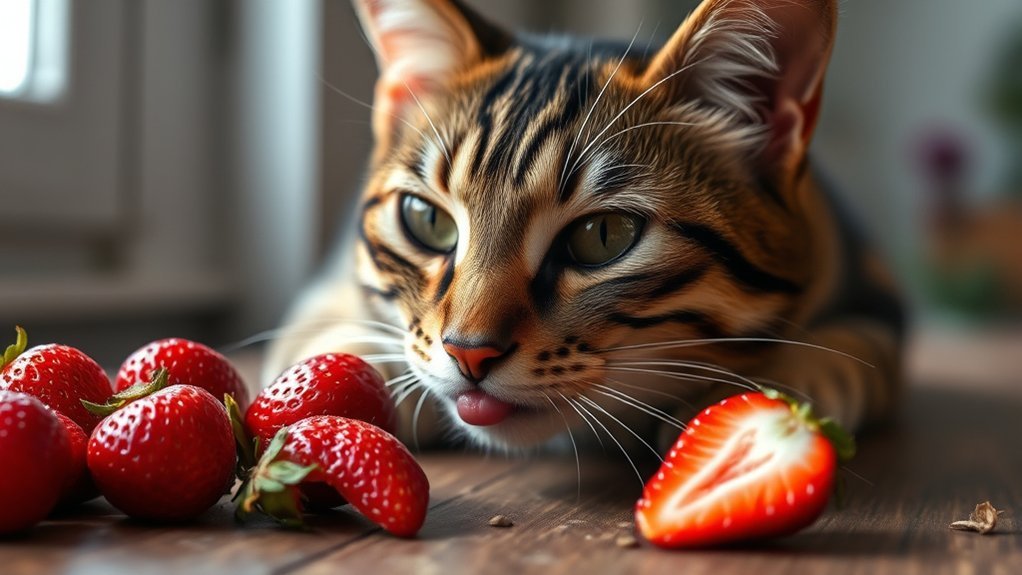
If your cat eats strawberries, keep an eye out for common allergy symptoms like itching, coughing, or swelling.
You might also notice vomiting or diarrhea, which could mean your cat is having a gastrointestinal reaction.
If you see any of these signs, it’s best to stop giving strawberries and take your cat to the vet right away.
Common Allergy Symptoms
When your cat eats strawberries, you might notice symptoms like vomiting, diarrhea, or other digestive issues due to their sensitive stomachs.
These common allergy symptoms often signal gastrointestinal upset, which is a frequent allergic reaction to new foods like strawberries.
Alongside digestive problems, your cat may show itching, skin irritations, or swelling around the face, paws, or ears.
Respiratory signs such as coughing or wheezing can also occur but are less common.
It’s essential to monitor new foods closely, as allergies can appear on first exposure or after repeated ones.
If you spot any of these signs, stop feeding strawberries immediately and consult your vet to guarantee your cat’s safety and comfort.
Gastrointestinal Reaction Signs
You might notice one or more clear signs of gastrointestinal distress if your cat has a strawberry allergy. Common symptoms include gastrointestinal upset such as vomiting, diarrhea, and abdominal pain.
These reactions can occur even with a small amount of strawberry, so careful monitoring after your cat tries strawberries is essential.
Diarrhea and abdominal discomfort often signal that their digestive system is struggling to handle the fruit. Since allergies can vary in severity, keeping a close eye on your cat’s behavior and physical condition helps you catch any signs early.
If you observe repeated gastrointestinal upset or worsening symptoms, it’s a strong indication of an allergy.
Prompt recognition through monitoring can prevent more serious complications related to your cat’s strawberry allergy.
When To See Vet
Although some cats tolerate strawberries without issue, you should watch closely for signs of an allergic reaction. Symptoms like vomiting, diarrhea, abdominal pain, itching, swelling, or hives, especially around the face and ears, can indicate an allergy.
Respiratory distress, such as coughing or difficulty breathing, signals a severe reaction. If you notice any of these adverse reactions, don’t hesitate to consult a veterinarian immediately. Early intervention can prevent complications and guarantee your cat’s safety.
Monitoring your cat carefully during and after introducing strawberries is crucial to detect symptoms promptly.
Always prioritize your cat’s well-being by recognizing when to see a vet, as timely professional evaluation and treatment make all the difference in managing potential strawberry allergies.
Can Strawberries Cause Choking in Cats?
Since strawberries can be a choking hazard for cats, you should always cut them into small, bite-sized pieces before offering them as a treat. Whole strawberries or large chunks can easily get stuck in your cat’s throat, causing distress or difficulty breathing.
It’s also important to remove the stem and leaves, as they’re difficult to digest and may increase choking risks.
When your cat is eating strawberries, supervise them closely to guarantee they chew properly and don’t try to swallow large pieces.
Watch for signs of choking, such as coughing, gagging, or pawing at the mouth. If you notice any of these symptoms, seek immediate veterinary help to keep your cat safe from choking hazards.
Are Strawberry Leaves and Stems Harmful to Cats?
You should know that strawberry leaves and stems can be tough for your cat to digest and might even cause choking or stomach issues.
Plus, the leaves contain small amounts of toxins that could lead to mild symptoms if your cat eats a lot of them.
So, it’s a good idea to always remove the leaves and stems carefully before giving strawberries to your furry friend.
That way, you’ll help keep your cat safe and comfortable.
Toxicity Of Leaves
When cats nibble on strawberry leaves or stems, they can face digestive issues because these parts are hard to digest and might cause blockages.
Although the strawberry fruit itself is non-toxic, the leaves and stems may irritate your cat’s digestive system, leading to potential health risks such as gastrointestinal obstruction.
If your cat eats these parts, watch for symptoms like vomiting, diarrhea, or abdominal pain.
To protect your cat’s health, always remove strawberry leaves and stems before offering any part of the fruit.
Sticking to the fleshy part of the strawberry guarantees your cat enjoys a safe treat without risking digestive discomfort or blockages caused by the indigestible leaves and stems.
Your cat’s wellbeing depends on avoiding these potentially harmful parts.
Choking Hazard Risks
Although strawberry leaves and stems might seem harmless, they can pose serious choking hazards to your cat if not removed properly.
These parts are tough to digest and may cause gastrointestinal obstruction, leading to discomfort.
To keep your cat safe, remember to remove all strawberry leaves and stems before feeding.
Cut strawberries into small, bite-sized pieces and wash them thoroughly to eliminate pesticides.
Also, monitor your cat closely when introducing strawberries.
Watch for signs of choking such as coughing or gagging.
Safe Removal Practices
Removing strawberry leaves and stems properly can help prevent choking and digestive issues in your cat. Since the leaves and stems contain compounds that are hard to digest, they can cause gastrointestinal obstruction or stomach upset.
To guarantee safe removal practices, always carefully pick off all leaves and stems before offering strawberries to your cat. These parts pose choking hazards and increase the risk of digestive problems.
After your cat eats strawberries, watch closely for any signs of discomfort like vomiting or abdominal pain. If you notice any unusual symptoms, consult a veterinarian promptly to avoid complications.
How Much Strawberry Is Safe for a Cat?
You should limit your cat to one small strawberry or less per day to keep their diet balanced and safe. Knowing how much strawberry is safe for a cat helps prevent digestive upset and maintains their overall health.
When feeding cats strawberries, keep these points in mind:
- Offer only a small amount of strawberry, ideally one per day or less.
- Treats like strawberries should stay under 10% of your cat’s daily food intake.
- Introduce strawberries slowly to monitor for signs of digestive issues such as vomiting or diarrhea.
- Limit feeding strawberries to a couple of times per week rather than daily.
- If your cat shows any adverse reactions, consult a veterinarian immediately.
Can Kittens Eat Strawberries Safely?
Since kittens have delicate digestive systems and specific nutritional needs, feeding them strawberries isn’t advisable.
Kittens have delicate digestive systems and unique nutritional needs, so feeding them strawberries is not recommended.
When kittens eat strawberries, the high sugar content can upset their cat’s digestive system, causing diarrhea or vomiting. Their sensitive digestive tracts require appropriate age-specific nutrition found in kitten food, which supports healthy growth and development.
Offering strawberries to kittens can interfere with nutrient absorption, potentially hindering their progress. Furthermore, kittens face a higher risk of choking on whole strawberries or large pieces due to their small size.
To keep your kitten safe and healthy, avoid giving strawberries altogether and stick to a balanced diet tailored for their age. While strawberries might be safe for adult cats in moderation, it’s best to keep them away from your young feline friend.
How Do I Safely Introduce Strawberries to My Cat?
Although strawberries can be a fun occasional treat, introducing them to your cat requires care and attention.
To safely feed your cat strawberries, follow these steps:
Wash the strawberries thoroughly to remove pesticides or chemicals.
Remove stems and leaves to prevent choking hazards and digestion issues.
Cut strawberries into small bite-size pieces for easy consumption.
Gradually introduce strawberries by offering a tiny piece first and observe your cat for any allergic reactions or digestive upset.
Limit strawberry treats to a couple of times a week, ensuring they don’t exceed 10% of your cat’s daily calorie intake.
What Are the Best Alternatives to Strawberries for Cats?
If your cat isn’t a fan of strawberries or you want to offer more variety, several safe and nutritious alternatives can keep treat time exciting.
Blueberries are a great option, packed with antioxidants and low in sugar, making them a healthy treat for your feline friend.
Blueberries offer a nutritious, antioxidant-rich, low-sugar treat perfect for your cat’s snacking pleasure.
Small, seedless pieces of apples also work well, providing fiber and vitamin C without too much sugar.
Many cats enjoy cantaloupe, which offers hydration thanks to its high water content.
Cooked and chopped carrots add a crunchy texture and supply beneficial vitamins and fiber.
When introducing these alternatives, start slowly to watch for any digestive issues or allergies.
These safe alternatives help you diversify your cat’s diet while keeping treats enjoyable and healthy.
When Should I Contact a Vet After My Cat Eats Strawberries?
If your cat starts vomiting or has diarrhea after eating strawberries, it’s a good idea to call your vet right away.
Keep an eye out for any signs of an allergic reaction, too—things like coughing, itching, or swelling. If you notice any of those, definitely get in touch with your vet.
And if your cat seems off or uncomfortable after eating strawberries, don’t hesitate to reach out for some veterinary advice.
Signs Of Allergic Reaction
When your cat eats strawberries, watch closely for signs of an allergic reaction like itching, coughing, or vomiting.
These symptoms can indicate your cat is sensitive to strawberries or experiencing gastrointestinal upset due to excessive consumption. It’s important to monitor your cat carefully and know when to seek veterinary assistance.
Look out for:
- Persistent itching or scratching
- Coughing or wheezing
- Vomiting or diarrhea
- Swelling of the face or mouth
- Difficulty breathing or lethargy
If you notice any of these allergic reaction symptoms, especially swelling or breathing issues, contact your vet immediately.
Early intervention can prevent complications and provide your cat with proper care. Always monitor your cat’s response after introducing strawberries to their diet to keep them safe.
Digestive Distress Symptoms
Although strawberries can be a safe treat in small amounts, you should watch for signs of digestive distress like vomiting, diarrhea, or abdominal pain after your cat eats them.
These symptoms may indicate that your cat’s gastrointestinal system is struggling to process the sugars and carbohydrates in strawberries.
Keep an eye out for any adverse reactions, including decreased appetite or lethargy, which could signal deeper issues in the digestive system.
While allergic reactions to strawberries are rare, if you notice coughing, itching, or swelling alongside digestive symptoms, seek immediate veterinary consultation.
It’s essential to monitor your cat closely for 24 hours after they eat strawberries.
Contact your vet promptly if any symptoms of digestive distress or allergic reactions appear to guarantee your cat’s well-being.
Frequently Asked Questions
Can Strawberries Interact With My Cat’s Medications?
Yes, strawberries can interact with your cat’s medications. Their vitamin interactions might alter medication absorption rates, affecting how well treatments work.
The feline digestive system may react differently, potentially causing upset or changing toxicity levels. If your cat has potential allergies, combining strawberries with meds could worsen symptoms.
Although strawberries act as a natural appetite stimulant, you should always consult your vet to guarantee safety and avoid harmful interactions with your cat’s medications.
Do Strawberries Affect a Cat’s Dental Health?
Think of strawberries as double-edged swords for your cat’s smile.
While their fibrous texture might offer slight dental benefits by scraping away plaque, their natural sugars can fuel tooth decay and speed up tartar buildup.
Relying on strawberries alone won’t keep your cat’s gum health in check.
You’ll want to stick with proven dental treats and maintain regular oral hygiene routines to truly protect your feline friend’s pearly whites.
How Do I Store Strawberries Safely Around My Cat?
To store strawberries safely around your cat, follow these strawberry storage tips:
Keep them in cat safe containers with secure lids to prevent access. Store these containers in your fridge, practicing good fridge organization to keep food fresh and avoid spoilage.
Always wash strawberries before storing and regularly check for mold.
Are Frozen Strawberries Safe for Cats?
Even back in the days of knights and castles, you’d want to be cautious with your cat’s diet.
Frozen strawberries can be safe treats if you prepare them right. Wash them thoroughly and cut into small pieces.
Keep an eye on your cat’s preferences and watch for any digestive issues. These fruit alternatives can support cat health when given occasionally.
But remember, not all cats enjoy cold textures.
Always prioritize safe treats for your furry friend.
Can Feeding Strawberries Influence a Cat’s Behavior?
Feeding strawberries won’t really influence your cat’s behavior much. Since cats don’t taste sweetness, fruit cravings rarely develop.
You won’t see a significant playfulness increase or stress relief from this fruit.
While introducing strawberries might spark brief curiosity or sensory interest, it won’t cause lasting dietary changes or alter cat behavior.
Always watch your cat’s reaction, but don’t expect strawberries to shift their food preferences or mood noticeably.
Conclusion
If your cat nibbles on strawberries occasionally, it’s usually safe and can even offer some vitamins. For example, a cat named Whiskers once enjoyed a small piece without any issues, showing mild curiosity but no allergic reaction.
Still, introduce strawberries slowly and watch for any digestive upset or allergies. When in doubt, check with your vet to keep your furry friend happy and healthy while exploring new treats safely.