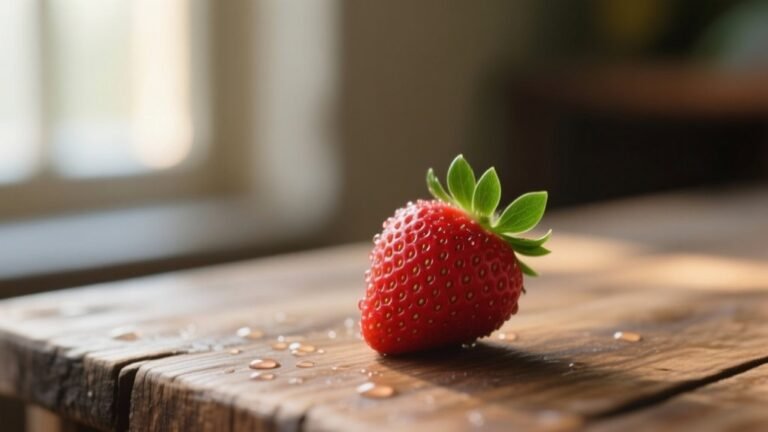

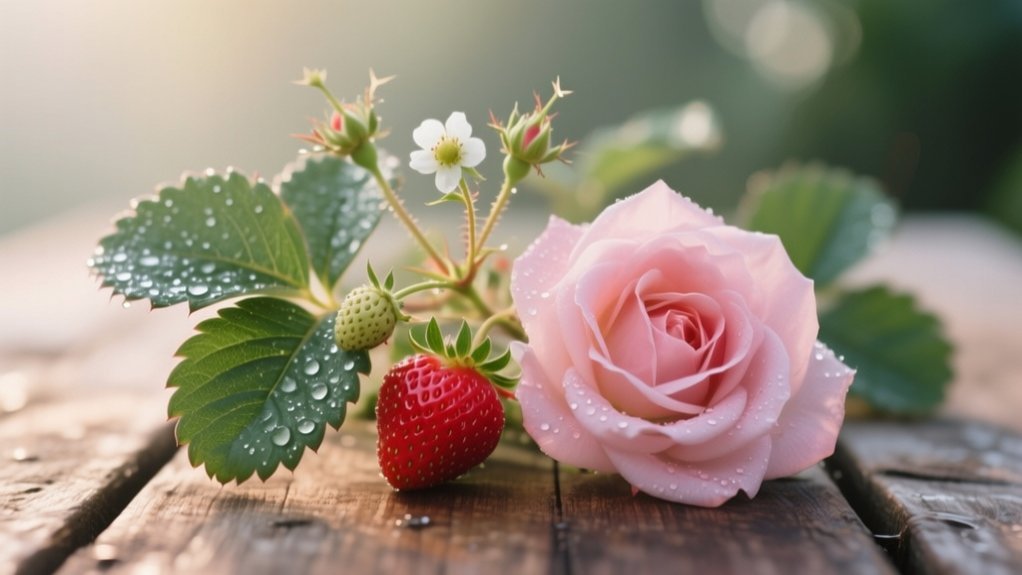
What Family Do Strawberries and Roses Belong To?
You belong to the Rosaceae family, just like strawberries and roses do. This plant family includes many familiar fruits and beautiful flowers, sharing traits like five-petaled blooms and special flower structures.
While strawberries aren’t true berries, roses and strawberries are botanically related, thriving in similar conditions. They’re not only important for your garden but also for food and culture worldwide.
If you want to uncover how this connection affects growth and uses, there’s more to explore.
What The Rosaceae Family Is And Why It Matters
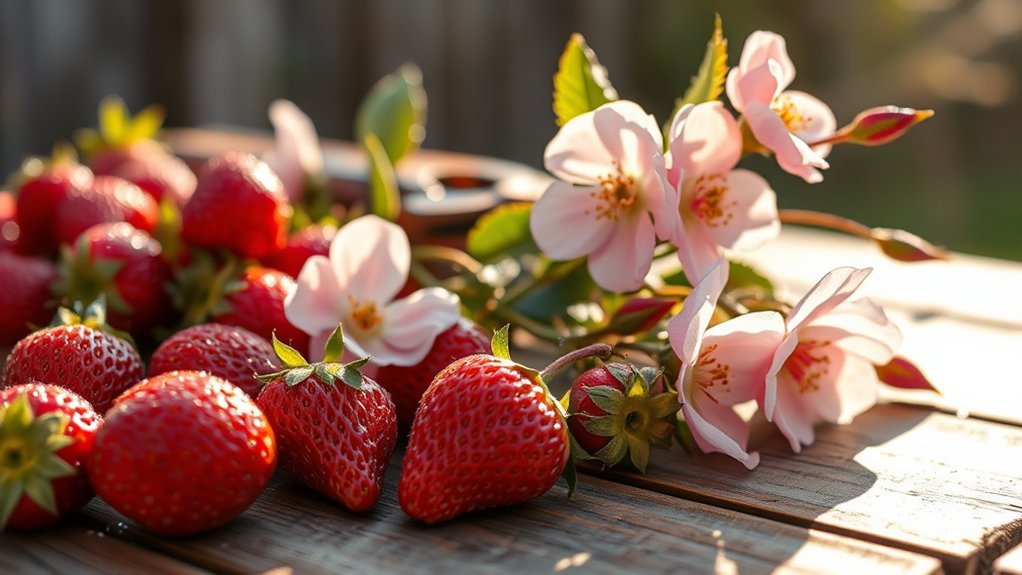
The Rosaceae family, known as the rose family, includes over 4,800 species across 91 genera. Many of these produce fruits you’re likely familiar with, like strawberries, apples, and cherries.
The Rosaceae family encompasses over 4,800 species, including familiar fruits like strawberries, apples, and cherries.
When you look closer, you’ll notice many flowers in the Rosaceae family have five petals and sepals, plus numerous stamens. They often form hermaphroditic blooms.
This family isn’t just about beauty; it’s one of the six most economically important crop plant families. It supports agriculture and horticulture worldwide with both edible fruits and ornamental plants.
Thanks to recent taxonomic studies, scientists have refined its classification into three subfamilies. This sheds light on its evolutionary diversity.
Where Rosaceae Plants Grow And Thrive Worldwide
Although Rosaceae plants like strawberries and roses appear all over the world, you’ll find the greatest variety in the Northern Hemisphere. These plants thrive in temperate regions, avoiding deserts and tropical rainforests. They prefer well-drained, organic-rich soils and plenty of sunlight, which helps them flower and fruit efficiently.
Whether herbaceous plants, shrubs, or trees, Rosaceae species adapt to many ecological niches worldwide.
| Habitat Type | Soil Preference | Sunlight Requirement |
|---|---|---|
| Temperate forests | Organic-rich, well-drained | Full to partial sun |
| Mountain slopes | Rocky, nutrient-rich | Full sun |
| Meadows and grasslands | Loamy, fertile | Full sun |
| Urban gardens | Cultivated, enriched | Full sun |
You’ll see Rosaceae thriving in diverse settings thanks to their adaptability.
Botanical Relationship Between Strawberries And Roses
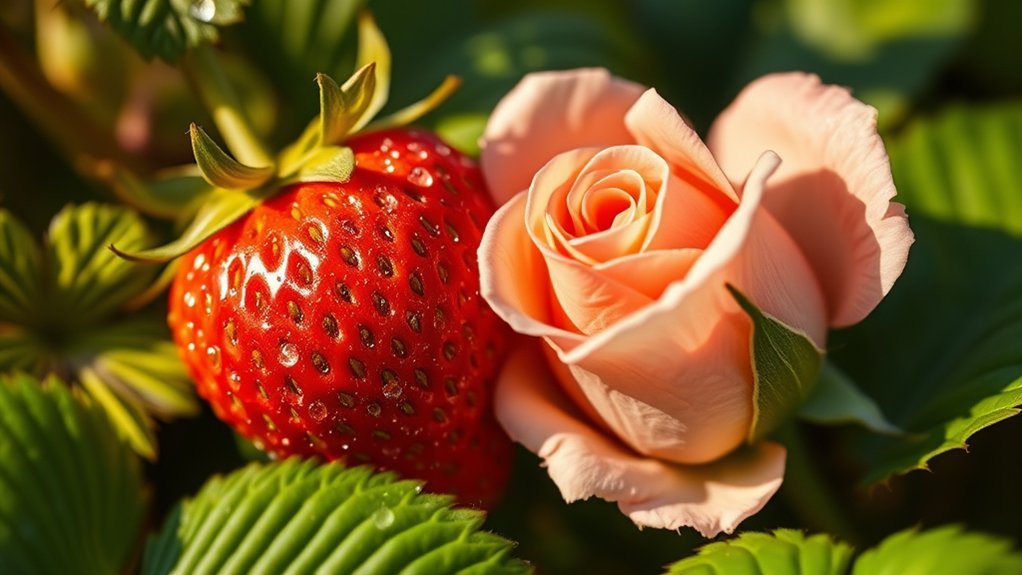
You might find it interesting that both strawberries and roses are part of the Rosaceae family.
They share some pretty cool features, like having five-petaled flowers and a special structure called a hypanthium.
Now, strawberries belong to the genus Fragaria, while roses fall under the genus Rosa.
Even though they’re in different genera, their close botanical relationship shows there’s more connecting them than just how they look.
Knowing these shared traits can really help you see how these plants are related on a deeper level.
It’s pretty fascinating once you start to notice!
Shared Botanical Traits
Because strawberries and roses both belong to the Rosaceae family, you can spot several shared botanical traits between them. Both showcase actinomorphic flowers with five petals, a hallmark of the rose family.
While strawberries have a swollen flower receptacle, roses display a traditional flower shape; yet both contain hermaphroditic reproductive organs. You’ll notice strawberries produce aggregate fruits formed from multiple ovaries of one flower, reflecting their connection to roses, which often grow in clusters.
Their shared lineage also influences how they grow. You’ll find both thrive best in well-drained, organic-rich soils.
Understanding these traits helps you appreciate how closely related strawberries (genus Fragaria) and roses (genus Rosa) are within the diverse and fascinating rose family.
Family Classification Insights
Understanding the shared traits between strawberries and roses naturally leads to examining their family classification. Both belong to the Rosaceae family, a vast group known as the Rose Family, which includes over 4,800 species across 91 genera.
Strawberries fall under the genus Fragaria, while roses are classified in the genus Rosa, showing their close botanical relationship. You’ll notice members of the Rosaceae family typically have flowers with five petals and numerous stamens, a feature both strawberries and roses share.
They also thrive in similar environments, preferring well-drained, organic-rich soil with ample sunlight.
This family’s economic importance is significant, too, as strawberries and roses contribute heavily to agriculture and ornamental horticulture, alongside other fruits like apples and cherries.
Botanical Classification: Why Strawberries Aren’t True Berries
You might think strawberries are berries, right? But botanically speaking, they actually don’t fit the definition of true berries.
Here’s the interesting part: what you’re eating isn’t really the berry itself. Instead, it’s a swollen part of the flower.
And there’s more! The seeds on a strawberry? They’re on the outside, not tucked inside like you’d find in true berries.
Botanical Definition Of Berries
Although strawberries look like typical berries, they don’t meet the botanical criteria that define true berries. True berries develop from a single ovary and contain seeds embedded within the flesh, like tomatoes or grapes.
In contrast, strawberries belong to plants in the rose family but are aggregate fruits. Their seeds sit on the outside. The juicy part you enjoy is actually a swollen receptacle, not an ovary.
True berries have a pericarp with three layers: exocarp, mesocarp, and endocarp. Strawberries lack this due to their unique development.
Other fruits like raspberries and blackberries also belong to plants in the rose family and are often mistaken for true berries.
Understanding these botanical definitions helps you appreciate the complexity behind fruit classification.
Strawberry Fruit Structure
Strawberries might look like typical berries, but their fruit structure tells a different story. Unlike true berries, which develop from a single ovary and house seeds inside, strawberries belong to the rose family yet have seeds on the outside.
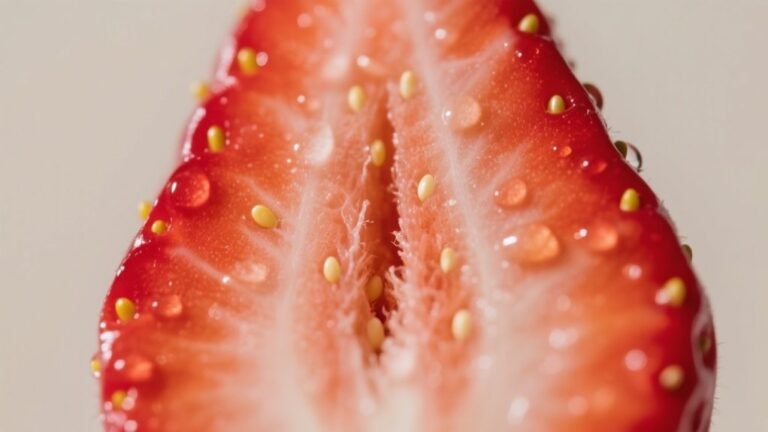
The fleshy part you enjoy isn’t a fruit in the strict botanical sense. It’s a swollen receptacle that supports multiple ovaries from one flower. Each tiny seed, or achene, you see embedded on the surface is actually one of these ovaries.
This aggregate fruit structure sets strawberries apart from other Rosaceae members, emphasizing their unique classification.
Seed Placement Explained
When you examine the surface of a strawberry, you’ll notice tiny seeds called achenes scattered externally rather than embedded inside. This seed placement sets strawberries apart from true berries, which have seeds inside their fleshy fruit.
Strawberries belong to the family Rosaceae, and unlike many other plants in this family, their fleshy part isn’t derived from the ovary but from a swollen receptacle.
Because strawberries develop from multiple ovaries of a single flower, they’re classified as aggregate fruits.
This unique structure explains why strawberries aren’t true berries like blueberries or grapes, whose seeds are enclosed within the fruit.
Understanding this seed placement helps you appreciate the botanical nuances behind fruit classification and the diversity found within plant families.
Key Characteristics Of Rosaceae Flowers And Leaves
Flowers and leaves in the Rosaceae family display distinct features that make them easy to recognize. You’ll notice their flower structure is typically symmetrical with five sepals and petals, plus many stamens arranged spirally.
A unique hypanthium often forms at the flower’s base, created by fused sepals, petals, and stamens. Leaves usually alternate along stems, appearing simple or compound, often with stipules at their bases. These traits not only define the family but also help attract pollinators through varied colors and shapes.
| Feature | Description |
|---|---|
| Flower Structure | Actinomorphic, 5 sepals & petals, many stamens |
| Hypanthium | Fused base of sepals, petals, stamens |
| Leaves | Alternate, simple or compound, with stipules |
Common Fruits In The Rosaceae Family
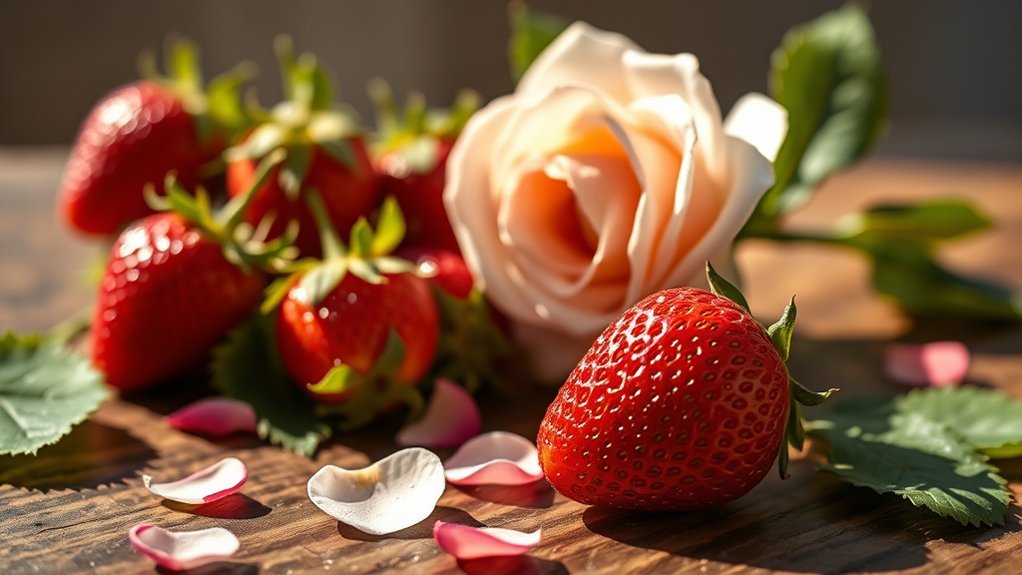
You’ll find many popular fruits in the Rosaceae family, like apples, cherries, and raspberries. They’re all known for their delicious flavors.
Strawberries, for example, stand out because they’ve those unique seeds on the outside.
And peaches? They add a juicy twist to the mix.
Popular Rosaceae Fruits
Although the Rosaceae family includes many plants, its fruits stand out for their popularity and flavor. You’ll find a variety of edible fruits here, like strawberries, apples, cherries, raspberries, peaches, and blackberries.
Apples, one of the most widely cultivated fruits worldwide, boast over 7,500 varieties you can enjoy.
Cherries come in sweet and sour types, perfect for desserts and preserves.
Raspberries offer high fiber and antioxidants, making them a smart choice if you’re health-conscious.
Peaches, with their fuzzy skin and juicy flesh, are major crops in the U.S., especially in California and South Carolina.
These popular Rosaceae fruits not only taste great but also provide valuable nutrients, making them favorites in many kitchens around the globe.
Edible Fruit Varieties
The Rosaceae family offers a rich assortment of edible fruits that you’ll likely recognize and enjoy. Members of the Rosaceae include popular fruits like apples, cherries, and peaches, all staples in agriculture.
Strawberries, unique for their seeds on the fruit’s exterior, belong to this family under the genus Fragaria. You’ll also find pears, known for their juicy, sweet flesh, and berries such as raspberries and blackberries, both from the genus Rubus, prized for antioxidants.
Don’t forget almonds, a drupe within the Rosaceae family, showcasing its diverse fruit types.
Understanding these members of the Rosaceae helps you appreciate how this plant family contributes delicious, nutritious options to your diet every day.
Rosaceae Family Classification
Since the Rosaceae family includes over 4,800 species across 91 genera, understanding its classification can seem complex.
You’ll find that this family of flowering plants is known for its distinctive flowers, usually with five sepals, five petals, and numerous stamens arranged radially.
Strawberries and roses, for example, belong to different genera, Fragaria and Rosa, within this diverse family.
Recent classifications favor tribes over traditional subfamilies to better capture evolutionary relationships.
Here’s what you should know about the Rosaceae family classification:
- It’s one of the largest families of flowering plants.
- Flowers have a unique hypanthium structure.
- Fruits vary: drupes, pomes, achenes, or aggregate fruits.
- Classification now focuses on tribes reflecting evolution.
This helps you appreciate how strawberries and roses fit botanically together.
Why Rosaceae Plants Matter Economically And Culturally
When you consider how much strawberries and roses contribute to daily life, their economic and cultural impact becomes clear.
The Rosaceae family ranks among the top six most economically important plant families, providing fruits like apples, pears, and cherries essential for nutrition worldwide. You rely on these fruits for food security, while roses, a key ornamental plant in this family, drive a global cut flower market worth over $100 billion annually.
Beyond economics, Rosaceae plants hold deep cultural significance, featuring prominently in traditions, celebrations, and garden designs across cultures.
Their diverse uses, from fruit production to ornamental gardening, underline how plant families like Rosaceae shape local economies and global trade. This makes them invaluable to both your daily life and cultural heritage.
How To Grow Strawberries And Roses Together Successfully
Although strawberries and roses have different growth habits, you can successfully cultivate them together by paying close attention to soil quality, sunlight, and spacing.
Both are flowering plants that include species thriving in well-drained, organic-rich soil, so enrich your garden bed with compost and mulch before planting.
Ascertain strawberries get at least 6-8 hours of sunlight daily and that roses also receive ample light to bloom well.
Space them 12-18 inches apart to improve air circulation and reduce fungal issues.
- Prepare soil with organic compost and mulch
- Provide 6-8 hours of sunlight daily
- Water strawberries deeply but infrequently; keep roses consistently moist
- Maintain 12-18 inch spacing between plants
This approach helps you grow healthy, vibrant strawberries and roses side by side.
Allergies Related To Rosaceae Fruits And Flowers
Allergies to strawberries often signal sensitivity to other fruits in the Rosaceae family, like apples, cherries, and peaches. Because these fruits share allergenic proteins, you might experience oral allergy syndrome, which causes itching or swelling in your mouth and throat soon after eating them.
You could also face skin reactions such as hives or gastrointestinal symptoms from exposure to these fruits or even parts of the rose, since it’s part of the same family.
Cross-reactivity happens because of similar pollen characteristics among Rosaceae fruits and flowers.
Frequently Asked Questions
Can Rose Petals Be Used in Cooking or Beverages?
Yes, you can definitely use rose petals in cooking and beverages. Their culinary applications are vast. They add a fragrant, floral flavor to dishes, syrups, jams, and jellies.
You can also steep fresh or dried petals in hot water to make soothing herbal teas. Just make sure you use pesticide-free, edible varieties for safety.
Rose water, made from petals, is popular in Middle Eastern desserts and drinks. It enhances aroma and taste beautifully.
What Pests Commonly Affect Rose Bushes?
You’ll often find aphids, spider mites, Japanese beetles, thrips, and rose slugs attacking your rose bushes.
Each pest causes unique damage like leaf curling, yellowing, petal discoloration, or skeletonized leaves.
To protect your roses, focus on effective pest management by regularly inspecting plants, using insecticidal soaps, or introducing beneficial insects.
Staying proactive helps keep these pests under control and your roses healthy and vibrant throughout the growing season.
How Long Do Strawberry Plants Typically Live?
You might find it interesting that strawberry plants typically live around 3 to 5 years, and oddly, their plant longevity peaks in the second and third years.
You’ll want to care for them well, as soil quality and disease control play big roles.
Even though you can get fruit for up to 6 years under ideal conditions, many gardeners replace plants after 3 years to keep yields high and vibrant.
Are There Any Medicinal Uses for Rose Hips?
Yes, you can definitely benefit from rose hips medicinally.
Rose hip benefits include boosting your immune system with their high vitamin C content and fighting oxidative stress thanks to antioxidants.
They also help reduce joint pain and inflammation, especially if you struggle with arthritis.
Drinking rose hip tea might improve your skin by promoting collagen production and hydration.
Plus, rose hips can support your digestion and even help lower cholesterol for better heart health.
What Is the Best Soil Type for Growing Roses?
Imagine soil as a cozy blanket for your roses. Loamy soil with rich organic matter offers the perfect soil composition.
You’ll want well-drained, nutrient-rich soil with a pH between 6.0 and 6.8 to help roots breathe and grow strong.
Avoid heavy clay or compacted soil, as it traps moisture and harms roots.
Adding compost or manure boosts nutrients, ensuring your roses flourish beautifully under your care.
Conclusion
Now that you know strawberries and roses both belong to the Rosaceae family, doesn’t it make you appreciate their beauty and utility even more? Understanding their shared botanical traits helps you grow them better and recognize their economic and cultural importance.
Whether you’re tending a garden or enjoying their fruits and flowers, this knowledge connects you to nature in a deeper way. So, why not embrace the wonders of the Rosaceae family in your own life?