

What Should You Know About Strawberries IBS and Good Choices?
If you have IBS, you can enjoy strawberries by paying attention to portion size. Stick to about five medium strawberries (65 grams) to avoid triggering symptoms. Fresh strawberries are low FODMAP in small servings, but larger amounts or dried forms can cause digestive issues.
Space servings several hours apart and track how you feel. Knowing which forms and quantities work best helps you make good choices. Keep exploring for tips on smart meal planning and symptom management.
Understanding FODMAPs and IBS
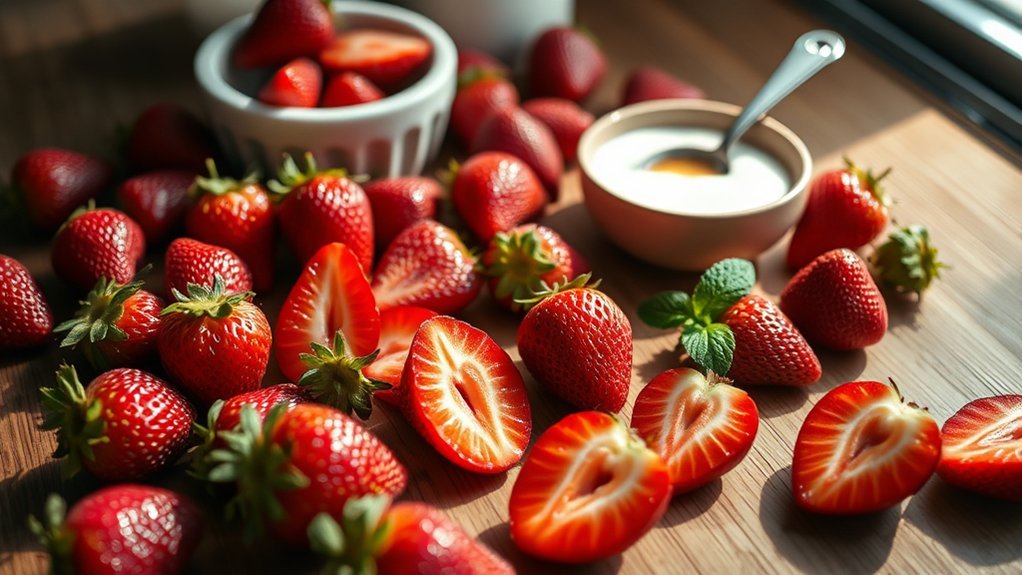
Although strawberries are a tasty and nutritious fruit, you need to watch your portion size if you have IBS because they contain FODMAPs, short-chain carbs like fructose that can trigger digestive issues. FODMAPs can worsen digestive symptoms in many people with IBS, so understanding how strawberries fit into your diet is key.
According to Monash University, strawberries are considered low FODMAP if you stick to 65 grams or about five medium strawberries. Eating more than 100 grams increases fructose intake, which may cause discomfort.
Monash University advises keeping strawberries to 65 grams (about five medium) to stay low FODMAP.
Portion control is critical; spacing servings 3-4 hours apart and limiting yourself to one fruit type per meal can help reduce symptoms.
Since individual tolerance varies, tracking your intake and symptoms helps you manage IBS better.
Are Strawberries Low FODMAP?
When managing IBS, knowing whether strawberries are low FODMAP can help you decide how to include them in your diet safely. Fresh strawberries are considered low FODMAP when you stick to serving sizes of 65 grams or less, about 5 medium strawberries.
Monash University updated its guidelines to recommend smaller portions during the restriction phase to protect your digestive health. Exceeding 100 grams increases the fructose content, which may trigger IBS symptoms.
Keep in mind, factors like ripeness and growing conditions can affect FODMAP levels, so individual tolerance varies.
Also, avoid dried strawberries, as their FODMAP content is much higher, with a safe serving size of only 5 grams.
Why Strawberry Serving Size Matters for IBS
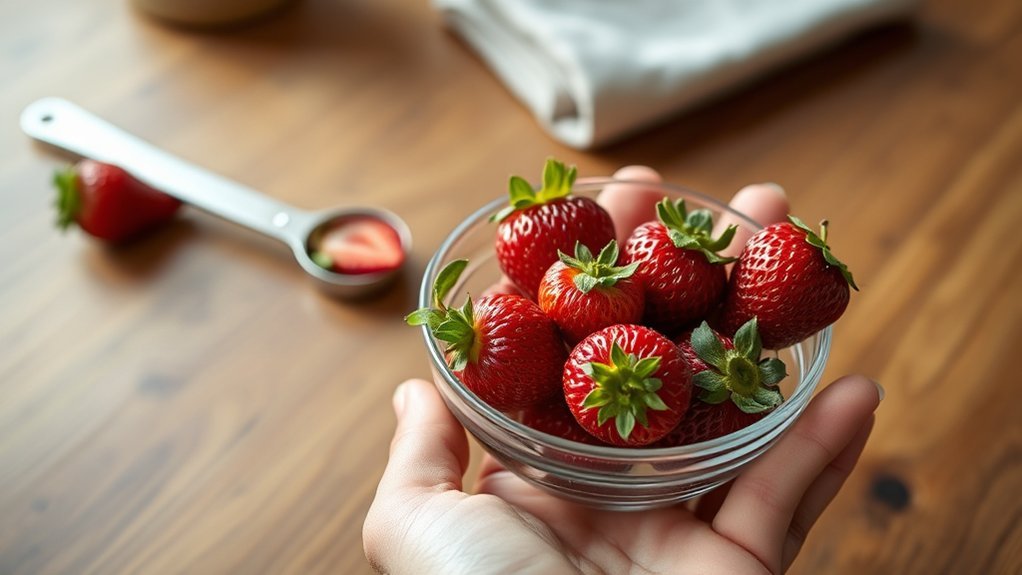
You want to keep your strawberry servings small to avoid triggering IBS symptoms. Eating too many strawberries can increase FODMAP levels, which might upset your digestion.
So, it’s a good idea to stick to about five medium strawberries at a time.
Also, try to space out your fruit intake throughout the day. This helps prevent any digestive discomfort that could come from eating too much fruit all at once.
Keeping track of how many strawberries you eat and how you feel afterward is really helpful. That way, you can figure out the right portion size that works best for you.
Portion Control Importance
Because strawberries can shift from low to moderate FODMAP levels depending on how much you eat, controlling your serving size is key to managing IBS symptoms.
Keeping portions at 65 grams or fewer, about five medium strawberries, helps maintain a low FODMAP intake and reduces digestive discomfort.
Exceeding 75 grams pushes strawberries into the moderate FODMAP category, which may trigger symptoms for sensitive individuals.
During the elimination phase, monitoring your individual responses to serving sizes is essential to find your personal threshold.
Portion control also means spacing servings 3-4 hours apart and avoiding multiple fruit types per meal to minimize cumulative FODMAP load.
Even dried strawberries require careful portioning, with a safe limit of just 5 grams.
Mastering these serving sizes lets you enjoy strawberries without compromising your IBS management.
Symptom Prevention Strategies
Controlling your strawberry serving size directly impacts how well you prevent IBS symptoms. Strawberries are low FODMAP when you keep your serving size around 65 grams, about five medium strawberries.
Eating more than 100 grams increases fructose intake, which can trigger IBS symptoms like bloating and discomfort.
To manage symptoms effectively, practice portion control and space your servings 3-4 hours apart to avoid cumulative FODMAP overload. Start by testing your tolerance during the reintroduction phase with 75 grams of strawberries, then monitor your symptoms over a few days.
Keeping a food and symptom diary helps you identify your personal tolerance level, allowing you to enjoy strawberries without risking IBS flare-ups.
Fresh Strawberries vs. Processed Forms: What to Know
Although fresh strawberries are low FODMAP in moderate servings, processed forms like jams and dried strawberries vary widely in their impact on IBS symptoms.
Fresh strawberries are generally safer for your digestive system, especially when you stick to about 65 grams, roughly five medium berries.
Processed forms, such as strawberry jam, can be low FODMAP at around 40 grams, but you need to check the ingredient list carefully.
Avoid jams containing high fructose corn syrup or other high FODMAP sweeteners, as these can worsen IBS symptoms.
Dried strawberries are trickier, only safe in tiny amounts (about 5 grams), so they may not be the best choice.
Enjoying Strawberries Without IBS Flare-Ups
Enjoying strawberries without triggering IBS flare-ups means paying close attention to how and when you eat them. Stick to low FODMAP servings of 65 grams or about five medium strawberries to reduce fructose intake and avoid digestive discomfort.
Fresh strawberries are better than processed forms since they contain fewer concentrated FODMAPs. Space out your servings by 3-4 hours and limit yourself to one fruit type per meal to help your gut manage the load.
During reintroduction, you can cautiously try larger servings like 75 grams, but watch for symptoms over 2-3 days. Keeping a food diary is essential.
It helps you track how strawberries affect your IBS, allowing you to personalize your diet and enjoy this tasty fruit without flare-ups.
Other Low FODMAP Fruits to Rotate With Strawberries
You can switch strawberries out for other low FODMAP fruits like blueberries, oranges, and firm unripe bananas.
This way, your diet stays varied and balanced. Mixing up your fruit choices not only helps keep IBS symptoms in check but also gives you a nice range of nutrients and fiber.
Just be sure to space out your servings so you don’t overwhelm your digestive system.
Variety Of Low FODMAP Fruits
When managing IBS with a low FODMAP diet, rotating fruits like blueberries, firm unripe bananas, and oranges can help keep your meals varied and enjoyable without triggering symptoms.
Incorporating a variety of low FODMAP fruits alongside strawberries guarantees you get balanced nutrients while controlling fermentable carbohydrates intake.
Consider these fruit choices for effective meal planning:
- Blueberries: Low in fermentable carbohydrates and IBS-friendly.
- Firm unripe bananas: Versatile for snacks or smoothies, low FODMAP.
- Oranges: High in vitamin C and easy to digest.
- Grapes: Minimal fermentable sugars, great fresh or frozen.
Remember to watch portion sizes, especially with fruits like raspberries, to maintain symptom control while enjoying diverse flavors and nutrients during your IBS management.
Benefits Of Fruit Rotation
Although strawberries are a great choice for a low FODMAP diet, rotating them with other fruits like blueberries, firm unripe bananas, and oranges helps you maintain variety and balance in your meals.
Fruit rotation lets you enjoy a range of nutrients and flavors while sticking to FODMAP guidelines, which is essential for managing IBS.
By spacing out different low FODMAP fruits 3-4 hours apart, you reduce the risk of digestive discomfort caused by cumulative FODMAP intake.
Including grapes and other suitable fruits alongside strawberries supports your digestive health and overall well-being.
This mindful approach to fruit rotation not only enriches your diet but also makes it easier to enjoy sweet treats without triggering IBS symptoms.
It promotes long-term health and helps you stick to your dietary plan.
Tracking IBS Symptoms When Eating Strawberries
Since IBS symptoms can vary widely, keeping a detailed food and symptom diary is essential to understand how strawberries affect you.
When following a low FODMAP diet, monitoring your intake of strawberries helps identify your personal tolerance and manage IBS symptoms effectively.
Start with small portion sizes, about 65 grams or 5 medium strawberries, and track how you feel. During the reintroduction phase, gradually increase servings while noting any changes in symptoms. Remember, spacing servings 3-4 hours apart can reduce cumulative FODMAP effects.
- Record portion sizes and timing of strawberry consumption
- Note any IBS symptoms occurring within hours after eating
- Observe patterns to distinguish between mild and severe reactions
- Adjust strawberry intake based on your personal tolerance and symptom tracking
This approach helps individuals with IBS make informed dietary choices.
Planning Ibs-Friendly Meals With Strawberries
To enjoy strawberries without triggering IBS symptoms, you’ll want to keep servings at 65 grams or less and space them out by 3 to 4 hours. This portion control helps manage fructose intake, keeping you within low FODMAP guidelines recommended by Monash University.
When planning your IBS-friendly diet, include strawberries alongside other low FODMAP fruits like blueberries or oranges to add variety without overwhelming your digestive system.
Start by monitoring your personal tolerance during the reintroduction phase, adjusting serving sizes based on how your body responds.
Incorporate strawberries as fresh additions to salads or smoothies, ensuring you don’t exceed recommended serving sizes.
Using Strawberries in Low FODMAP Recipes
Enjoying strawberries while managing IBS symptoms gets easier when you incorporate them thoughtfully into your recipes.
Strawberries are low FODMAP when you keep serving sizes to 65 grams or about 5 medium strawberries.
To maintain good digestive response, watch your portion sizes and adjust based on your personal tolerance.
Here are some ways to include strawberries in low FODMAP recipes:
- Add strawberries to salads with spinach or arugula for a revitalizing mix
- Blend them into smoothies with lactose-free yogurt and low FODMAP greens
- Use strawberries in desserts like Strawberry Shortcake or Coconut Meringue Cake
- Start with small servings to monitor your digestive response and tolerance
When to Talk to a Dietitian About Strawberries and IBS
If you notice persistent digestive discomfort after eating strawberries, it’s a good idea to talk to a dietitian.
Even though strawberries are low FODMAP, factors like fructose content and serving sizes can affect your IBS symptoms.
A dietitian can help you determine the right serving sizes, usually no more than 65 grams or about 5 medium strawberries, to include safely in your diet to manage IBS.
If you’re reintroducing strawberries after a low FODMAP elimination phase, they’ll guide you in monitoring your body’s response.
Working with a dietitian also guarantees you get a personalized meal plan that balances strawberries with other low FODMAP foods while minimizing symptoms.
They’ll help you understand how ripeness and growing conditions impact strawberries, supporting informed choices in your diet.
Frequently Asked Questions
Can Strawberries Interact With IBS Medications?
Strawberries generally don’t cause IBS medication interactions, so you can enjoy them without worry.
Their dietary fiber supports strawberry digestion and gut health, but watch out if you have fructose intolerance or other food sensitivities.
Everyone’s personal experiences differ, so track your symptoms closely for effective symptom management.
If you notice discomfort, consult your healthcare provider to adjust your diet or medications accordingly and keep your IBS under control.
Are Strawberry Seeds Problematic for IBS Sufferers?
Think of strawberry seeds as tiny warriors in your digestive battlefield. Generally, strawberry seed digestion isn’t a problem if you manage portion control.
Stick to about five berries to avoid IBS flare ups. Their high fiber impact can support gastrointestinal health but might irritate if you’re sensitive.
Watch for seed allergy concerns too. Balancing fiber sources helps maintain nutrient absorption and comfort.
If seeds bug you, blending strawberries can keep the benefits without the rough texture.
Do Strawberries Affect Ibs-Related Anxiety or Stress?
Yes, strawberries can help reduce IBS-related anxiety and stress. Their fiber content supports gut health, easing digestive discomfort linked to emotional eating and food sensitivities.
The antioxidant benefits and hydration levels in strawberries promote stress relief by calming your body.
When you practice mindful eating with strawberries, you not only nourish yourself but also manage anxiety better.
This makes them a smart, enjoyable choice for maintaining both gut health and emotional balance.
Can Frozen Strawberries Trigger IBS Symptoms Differently?
Imagine biting into juicy frozen strawberries that burst with flavor, yet worry if they’ll upset your stomach.
Frozen strawberries don’t trigger IBS symptoms differently from fresh ones because they retain nutrient retention and fiber content.
However, you should watch portion sizes and cooking methods, as these affect digestive reactions.
Since individual tolerances vary, it’s wise to monitor how your body responds and adjust intake accordingly to keep IBS symptoms in check.
Is Organic Strawberry Better for IBS Than Conventional?
Organic strawberries might be better for you if you’re worried about pesticide concerns since they usually have fewer residues. This can ease digestion rates for IBS.
Nutrient comparison shows little difference between organic benefits and conventional types, but some people notice flavor differences.
Environmental impact and consumer preferences often sway choices.
Keep in mind, organic costs more, so weigh cost analysis against your priorities when deciding what’s best for you.
Conclusion
When it comes to strawberries and IBS, remember that moderation is key. Too much of a good thing can trigger symptoms. Strawberries are generally low FODMAP, but serving size matters, and fresh is usually better than processed.
Keep track of how your body reacts and plan your meals thoughtfully. As the saying goes, “An ounce of prevention is worth a pound of cure.” Listen to your body, and don’t hesitate to consult a dietitian for personalized advice.