
Are Strawberries Nightshade Plants?
You don’t need to worry. Strawberries aren’t nightshade plants. Nightshades, like tomatoes, potatoes, peppers, and eggplants, belong to the Solanaceae family and contain certain alkaloids.
Strawberries are part of the rose family, with seeds on the outside and no nightshade toxins. They’re nutritionally different and don’t usually trigger nightshade allergies.
If you want to understand how these plant families differ and what that means for your diet or sensitivities, there’s more useful information ahead.
What Makes a Plant a Nightshade?
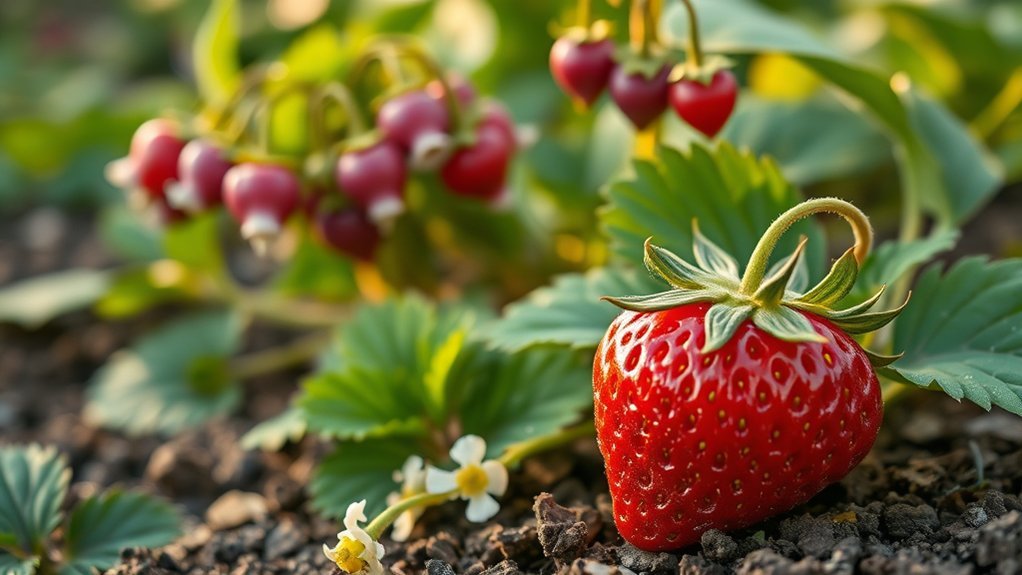
Although you might be familiar with common nightshade vegetables like tomatoes and peppers, what truly defines a nightshade plant is its membership in the Solanaceae family.
Nightshade plants are defined by their belonging to the diverse Solanaceae family, beyond just tomatoes and peppers.
This family includes over 2,700 species characterized by star-shaped flowers with five united petals, sepals, and stamens, as well as a two-chambered ovary filled with many seeds.
When you look at plants in the nightshade family, you’ll notice these unique floral traits set them apart.
Another key feature is the presence of alkaloids, natural chemicals that defend the plant from pests but can affect humans, especially those sensitive to them.
Common Nightshade Vegetables to Know
When you explore the world of nightshade vegetables, you’ll find some familiar favorites like tomatoes, potatoes, peppers, and eggplants. All these vegetables belong to the Solanaceae family, commonly called the nightshade family.
Here are some common nightshade vegetables to know:
- Tomatoes: Versatile fruits rich in lycopene, great in salads, sauces, and soups.
- Potatoes: Starchy tubers you can bake, fry, or mash to perfection.
- Peppers: Including sweet bell peppers and spicy chili peppers, perfect raw, roasted, or stuffed.
- Eggplants: Known for their purple skin, often grilled, baked, or stewed in Mediterranean dishes.
Understanding these vegetables helps you recognize the diversity within the nightshade family. It also shows how they enrich your meals every day.
Why Strawberries Aren’t Nightshades
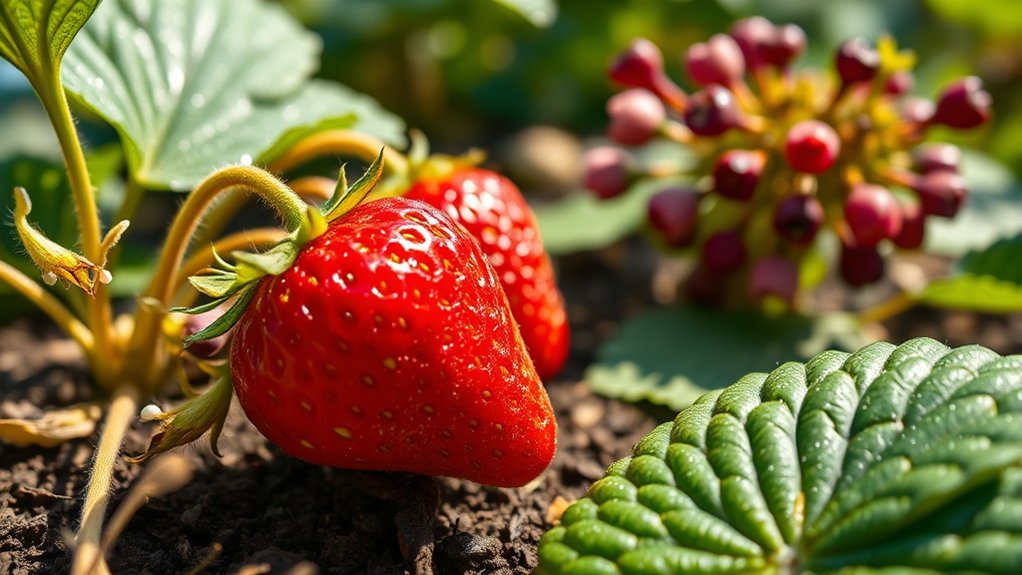
You might think strawberries are nightshades, but actually, they belong to the rose family. Nightshades, on the other hand, are part of the Solanaceae family.
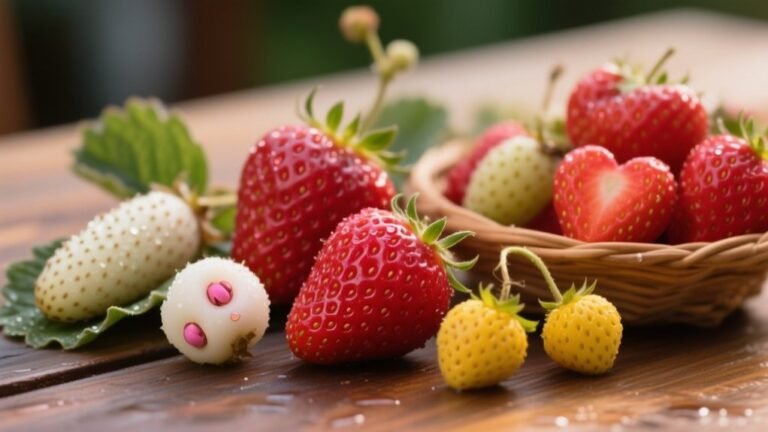
Also, strawberries aren’t true berries in the botanical sense because their seeds are on the outside. That’s a pretty big difference!
And here’s another thing: nightshade plants often contain alkaloids, which can be toxic.
Strawberries don’t have those, so that makes them quite different too.
Botanical Family Differences
Since strawberries and nightshades belong to entirely different botanical families, it’s easy to see why they’re not related.
Strawberries are part of the rose family (Rosaceae), while nightshades belong to the Solanaceae family. This plant family difference means they’ve unique characteristics and chemical compositions.
When you compare them, keep in mind:
- Nightshades include potatoes, tomatoes, peppers, and eggplants, which strawberries aren’t related to.
- Strawberries have seeds on their surface; nightshades’ seeds are inside the fruit.
- Nightshades contain alkaloids that can affect some people; strawberries do not.
- Always check a plant’s family classification like you’d review a Privacy Policy or Terms of Service. Knowing these details helps clear up misconceptions.
Understanding these botanical family differences clarifies why strawberries aren’t nightshade plants.
Strawberry Fruit Classification
Although strawberries might seem like typical berries, their fruit classification sets them apart from nightshades. You should know that strawberries belong to the rose family, Rosaceae, not the Solanaceae family where nightshades like tomatoes and peppers reside.
Unlike true berries, strawberries wear their seeds on the outside, with each seed acting as a tiny individual fruit. This unique trait makes them fundamentally different from nightshade fruits.
If you’re logged in to post comments or questions about this topic, you must be logged in to access detailed discussions. Remember, all Rights Reserved content clarifies that strawberries don’t contain the alkaloids found in nightshades, reinforcing why they aren’t classified in that manner.
Understanding their fruit classification helps clear up common misconceptions you might encounter.
Nightshade Plant Characteristics
Strawberries’ unique fruit structure already sets them apart, but the differences extend deeper into their plant characteristics.
When you compare strawberries to nightshade plant varieties, you’ll notice clear distinctions:
Strawberries belong to the rose family (Rosaceae), unlike nightshades, which are Solanaceae.
Nightshade fruits like tomatoes and peppers have seeds inside, while strawberries’ seeds are on the outside.
Nightshades contain alkaloids linked to nightshade toxicity concerns; strawberries do not.
Culinary nightshade uses often cause confusion, but strawberries don’t share the same chemical makeup.
Where Strawberries Fit in the Plant Family Tree
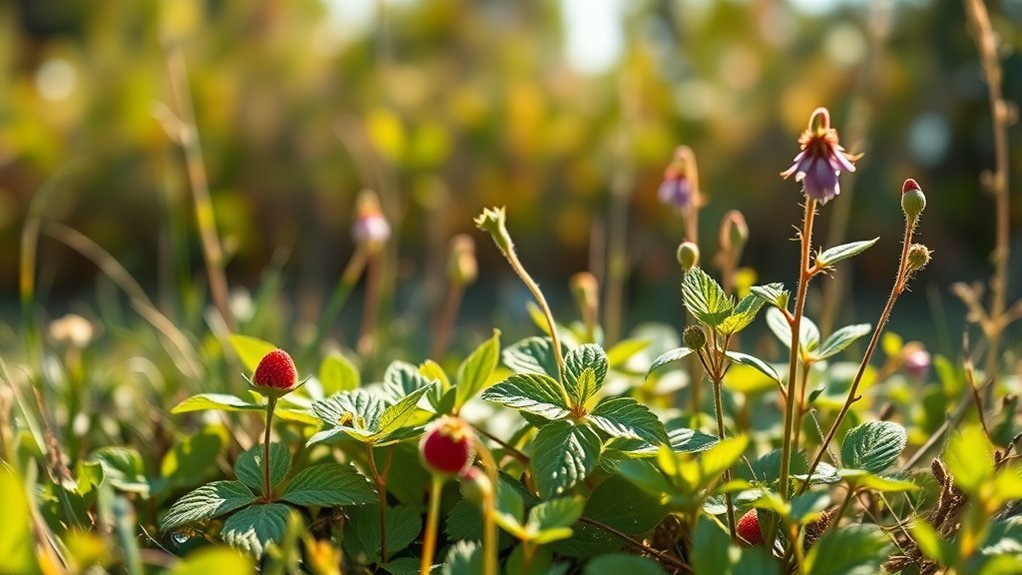
You might be surprised to learn that strawberries actually belong to the rose family.
Yep, not the nightshade family like tomatoes or peppers.
So, they’re more closely related to apples, peaches, and raspberries than to nightshades.
Knowing this little botanical fact helps clear up why strawberries aren’t considered nightshade plants.
Botanical Family Classification
While many people confuse strawberries with nightshade plants, they actually belong to the rose family, Rosaceae, which also includes apples, peaches, and raspberries. Understanding botanical family classification helps you see these family tree differences clearly, especially through plant classification systems and botanical terminology explanations.
Here’s where strawberries fit in:
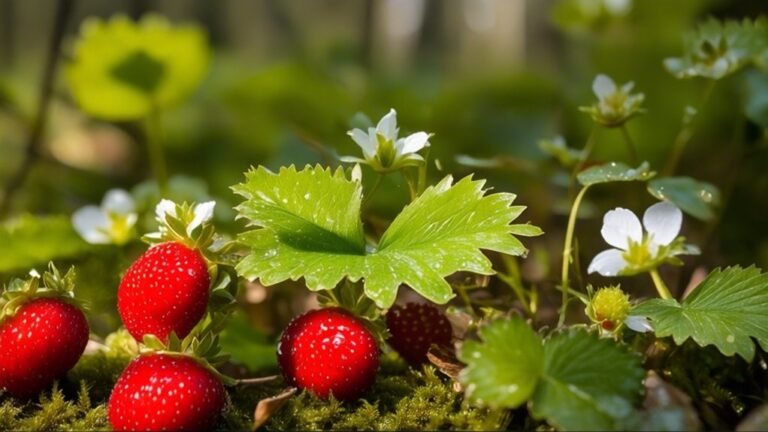
- Strawberries are part of Rosaceae, known for flowering plants with star-shaped blooms.
- Nightshades belong to the Solanaceae family, entirely separate from strawberries.
- Botanically, strawberries aren’t true berries since their seeds grow outside.
- Rosaceae members often share similar fruiting patterns and floral structures.
Knowing this classification clears up misunderstandings and highlights strawberries’ unique place in the plant kingdom, far from nightshade relatives.
Differences From Nightshades
Although strawberries and nightshades might appear similar in some culinary contexts, they belong to completely different plant families. Strawberries are part of the rose family (Rosaceae), while nightshades belong to the Solanaceae family, which includes potatoes, tomatoes, and peppers.
This distinction is key when exploring strawberry cultivation and debunking common nightshade myths. Unlike true berries with seeds inside, strawberries are aggregate fruits, with seeds on the outside, differentiating their fruit classifications from nightshades.
Understanding these differences helps you avoid confusion, especially if dietary restrictions related to nightshade vegetables apply.
Related Fruit Examples
Recognizing that strawberries aren’t nightshade plants opens up a clearer understanding of their place in the plant family tree.
Strawberries belong to the rose family (Rosaceae), known for its diverse fruit types, each offering unique related fruit benefits.
When you explore berry classifications, strawberries stand out because their seeds sit on the outside, unlike true berries such as blueberries.
Here’s where strawberries fit among related fruits with rose family characteristics:
- Apples and peaches share the same family, offering a variety of flavors and nutrients.
- Raspberries and blackberries show close botanical ties to strawberries.
- Cherries also belong to this family, known for their antioxidant properties.
- Contrary to strawberries, nightshade plants like tomatoes and peppers belong to a different family entirely.
Understanding this helps you appreciate strawberries’ unique botanical identity and health benefits.
Can Strawberries Trigger Nightshade Allergies?
Can strawberries trigger nightshade allergies? No, they don’t. Strawberries belong to the rose family, not the nightshade family like tomatoes or peppers.
If you’re worried about strawberry allergies, know that these are different from nightshade allergies. People with nightshade allergies typically react to foods like potatoes, tomatoes, or peppers, not strawberries.
However, some fruit sensitivities might cause symptoms that seem similar, which often leads to confusion and nightshade myths.
If you experience skin rashes, itching, or digestive issues after eating strawberries or nightshade foods, it’s important to consult an allergist. They can help pinpoint whether you have a strawberry allergy, a nightshade sensitivity, or another food intolerance, ensuring you avoid the right triggers safely.
Nutritional Benefits of Strawberries vs. Nightshade Vegetables
You’ll find that strawberries pack a powerful antioxidant punch with vitamins C and K.
On the other hand, nightshade vegetables offer a broader range of minerals and dietary fiber.
When you compare their nutrient profiles, it really helps you understand how each supports your health in different ways.
Antioxidant Profiles Compared
When comparing the antioxidant profiles of strawberries and nightshade vegetables, you’ll find that both offer unique nutritional benefits.
This antioxidant comparison reveals distinct health benefits and dietary implications worth considering.
Strawberries are packed with anthocyanins, which help reduce inflammation and improve insulin sensitivity.
Nightshade vegetables like tomatoes and peppers provide lycopene and vitamin C, boosting immune function.
Here’s what you should know:
- Strawberries may lower hypertension due to their antioxidant content.
- Nightshades add dietary fiber and essential vitamins to your meals.
- Strawberries have fewer calories but more natural sugars.
- Alkaloids in nightshades might affect sensitive individuals differently.
Understanding these differences helps you balance variety and health in your diet effectively.
Vitamins And Minerals
Beyond their antioxidant differences, strawberries and nightshade vegetables provide distinct vitamins and minerals that impact your nutrition in various ways.
Strawberries stand out with their high vitamin C content, delivering about 98 mg per 100 grams. That’s much more than nightshades like tomatoes, which offer around 14 mg. This vitamin C boost supports your immune system and skin health.
Nightshade vegetables, such as bell peppers, offer plenty of vitamin A thanks to beta-carotene, benefiting your vision and immune function. Strawberries contain minimal vitamin A.
Both foods contribute dietary fiber that supports digestion and gut health, with strawberries providing around 2 grams per 100 grams and nightshades about 3 grams.
Their antioxidant properties also differ. Strawberries are rich in anthocyanins, while nightshades like tomatoes contain lycopene, each offering unique health perks.
Dietary Fiber Content
Although both strawberries and nightshade vegetables contribute to your daily fiber intake, they offer different types and amounts that affect your digestion uniquely.
When you compare these fiber sources, you’ll notice:
- Strawberries provide about 2 grams of mostly soluble fiber per 100 grams. This helps with blood sugar control and cholesterol reduction.
- Nightshade veggies like potatoes offer roughly 2.2 grams, combining soluble and insoluble fiber. This supports overall digestive health.
- Tomatoes, another nightshade, contain about 1.2 grams of fiber per 100 grams.
Both fit well within dietary guidelines recommending 25 grams (women) to 38 grams (men) daily, promoting various health benefits.
Including both strawberries and nightshade vegetables in your diet guarantees a balanced fiber intake that supports gut health and meets nutritional needs.
Debunking Strawberry and Nightshade Confusion
Since strawberries belong to the rose family, not the nightshade family, you shouldn’t confuse them with plants like tomatoes or peppers. Many strawberry myths arise from misunderstanding plant classifications, which can affect your dietary choices, especially if you have sensitivities.
Unlike nightshades, strawberries don’t contain alkaloids that may cause reactions. Here’s a quick comparison to clear up the confusion:
| Feature | Strawberries (Rosaceae) | Nightshades (Solanaceae) |
|---|---|---|
| Seed Location | Outside (achenes) | Inside |
| Alkaloid Content | None | Present |
| Common Examples | Strawberry, rose | Tomato, eggplant, pepper |
| Dietary Sensitivity | Generally safe | May trigger reactions |
Knowing this helps you avoid unnecessary restrictions and debunk strawberry myths effectively.
Managing Strawberry Consumption With Nightshade Sensitivities
How can you manage eating strawberries if you have nightshade sensitivities? Since strawberries aren’t nightshades, you might tolerate them well, but it’s smart to stay cautious. Here are some practical tips for managing your intake:
Strawberry preparation tips: Wash thoroughly and consider starting with small portions to test your reaction.
Cross reactivity considerations: Watch for symptoms if you’re sensitive to other fruits high in salicylates, like blueberries.
Organic strawberry benefits: Choose organic to reduce exposure to pesticides, which can trigger sensitivities.
Symptom monitoring: Reintroduce strawberries gradually after eliminating allergens, noting any changes in your body.
Identifying Nightshade Plants at Home or Market
Wondering how to spot nightshade plants at home or in the market? Start with plant identification tips focusing on distinguishing features like star-shaped flowers and alternate leaf arrangements.
Nightshades often produce fruits with glossy skins, such as tomatoes, peppers, and eggplants, which come in various colors from red to purple.
Nightshade fruits like tomatoes, peppers, and eggplants feature glossy skins in vibrant reds to purples.
When shopping, use market shopping strategies like checking labels or asking vendors about plant families to avoid confusion.
Since many nightshade varieties and hybrids exist, it’s smart to consult reliable plant identification guides or apps to confirm your findings.
Remember, strawberries don’t belong to the nightshade family but to the rose family, so they won’t share these features.
These steps will help you confidently identify nightshade plants and make informed choices.
Should You Avoid Strawberries If You’re Sensitive to Nightshades?
Now that you know strawberries don’t belong to the nightshade family, you might be wondering if you still need to avoid them when managing nightshade sensitivities.
The good news is, strawberries are safe for most people with dietary restrictions related to nightshades. However, individual food sensitivities vary, so it’s wise to be cautious.
Consider these points:
Strawberries have a different chemical makeup than nightshades, so reactions rarely overlap.
If you have strawberry allergies, avoid them regardless of nightshade concerns.
Introduce strawberries gradually to monitor any unexpected reactions.
Consult a healthcare provider if you’re unsure about adding new fruits to your diet.
Frequently Asked Questions
Can Nightshade Plants Be Toxic if Eaten Raw?
Yes, raw nightshade toxicity can be a concern because some nightshade plants contain alkaloids that are harmful if eaten uncooked.
You should practice careful nightshade plant identification to know which parts are safe.
For example, unripe potatoes and green tomatoes have higher toxicity.
To guarantee safe nightshade consumption, you should cook these vegetables properly, which reduces the harmful compounds and makes them safe to enjoy without worry.
Are Nightshade Spices Like Paprika Derived From Nightshade Plants?
You might be surprised to learn that over 2,000 nightshade varieties exist worldwide, including the peppers used for paprika.
Yes, nightshade spices like paprika are definitely derived from nightshade plants, specifically from the Capsicum genus.
If you’re curious about nightshade health, these spices offer antioxidants that support your well-being.
When exploring nightshade cultivation, remember that growing these plants requires specific conditions to maximize flavor and nutrient content, making paprika a flavorful and healthful choice.
Do Nightshade Plants Have Medicinal Uses in Herbal Remedies?
Yes, nightshade plants do have medicinal uses in herbal remedies.
You’ll find their traditional uses include pain relief and inflammation management, thanks to their medicinal properties like alkaloids and capsaicin.
In herbal applications, plants like bell peppers and deadly nightshade have been used for their sedative and antispasmodic effects.
Just remember, if you’re sensitive or allergic, it’s best to approach these remedies cautiously to avoid adverse reactions.
How Do Nightshade Plants Affect Pets if Ingested?
If your pet ingests nightshade plants, you should be concerned about pet health issues like gastrointestinal upset, lethargy, and increased heart rate.
Nightshade toxicity levels vary, but even small amounts can cause serious problems, especially in dogs and cats.
To keep your pet safe, practice safe pet habits by preventing access to these plants.
If ingestion occurs, seek immediate veterinary care. Acting quickly can protect your pet’s well-being.
Are Nightshade Plants Commonly Used in Traditional Cooking Worldwide?
Oh, you’d think nightshade plants are just a garden nuisance, but they’re actually stars in traditional dishes worldwide!
You’ll find them deeply embedded in global cuisines, from Italian tomato sauces to spicy Mexican peppers and savory Indian eggplants.
Their culinary uses are versatile and essential, enriching flavors and nutrition.
Conclusion
Now that you know strawberries aren’t nightshade plants, you can enjoy them without worry if you’re sensitive to nightshades.
Curiously, over 2,000 nightshade species exist worldwide, but strawberries belong to a completely different family, the rose family. So next time you bite into a juicy strawberry, remember it’s not part of that nightshade group.
You can confidently add strawberries to your diet, even if you’re avoiding tomatoes or peppers due to nightshade sensitivities.