

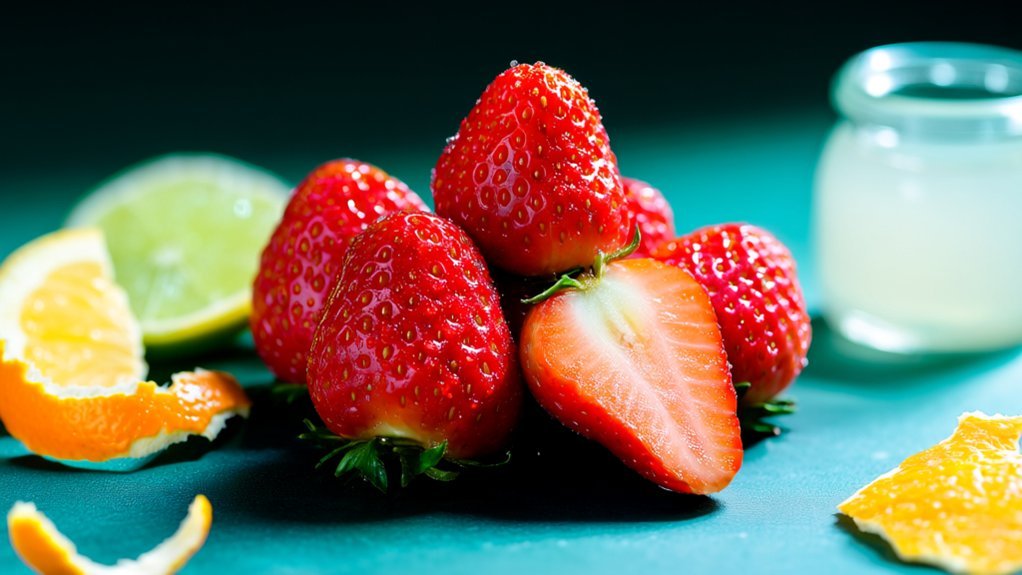
How to Determine if Strawberries Are a Citrus Food
You can tell strawberries aren’t citrus by looking at their botanical family and acidity. Citrus fruits, like oranges and lemons, belong to the Rutaceae family and have high acidity with a pH between 2.0 and 4.2.
Strawberries, however, come from the Rosaceae family and have milder acidity, with a pH around 3.0 to 3.5. They also contain different acids and grow on herbaceous plants, not trees.
Keep exploring to understand their unique differences and benefits.
What Defines a Citrus Fruit Botanically and Chemically?
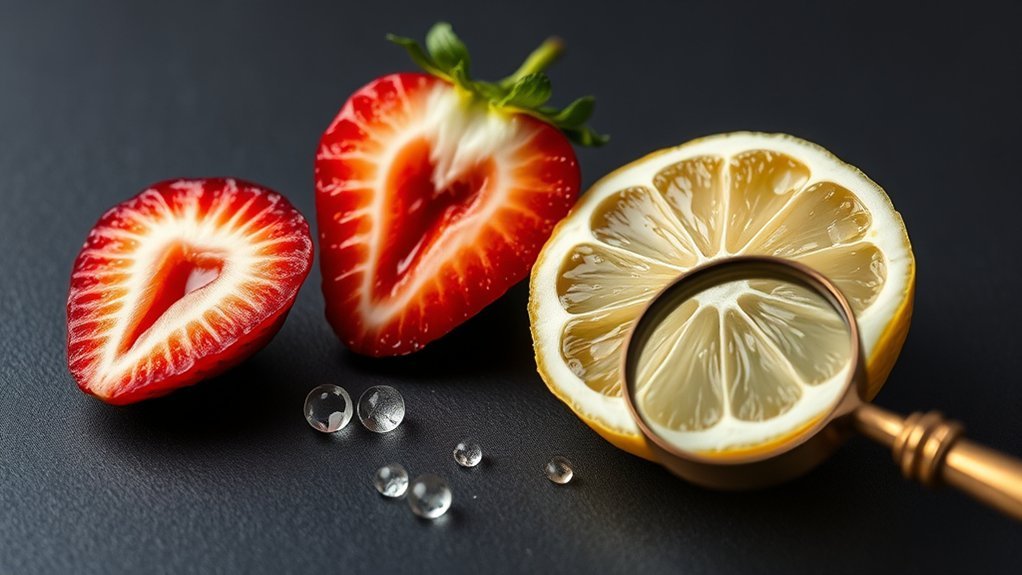
To understand whether strawberries qualify as citrus, you first need to know what defines citrus fruits botanically and chemically.
Botanically, citrus fruits belong to the Rutaceae family and have a segmented structure, thick rind, and high juice content.
Citrus fruits belong to the Rutaceae family, characterized by segmented flesh, thick rind, and abundant juice.
Chemically, these fruits are especially acidic, with a pH level typically between 2.0 and 4.2.
Lemons and limes, for instance, have particularly low pH levels, reflecting their strong acidity. This acidic nature is largely due to their high citric acid content.
In contrast, strawberries differ both botanically and chemically. They’re aggregate fruits formed from multiple ovaries, and their pH level ranges from 3.0 to 3.5.
While somewhat acidic, strawberries don’t share the same chemical profile or botanical traits that define true citrus fruits.
Are Strawberries Citrus Fruits? The Simple Answer
Although strawberries share some acidic qualities with citrus fruits, you won’t find them classified as citrus. Strawberries have a pH ranging between 3.0 and 3.5, which means they’re less acidic than common citrus fruits like lemons or limes, whose pH levels fall closer to 2.0.
While both strawberries and citrus fruits contain Vitamin C, the amounts and types of acids differ. Citrus fruits are rich in citric acid, whereas strawberries contain ascorbic acid in different proportions.
So, even though strawberries are acidic foods and provide some Vitamin C, their acid profile and pH level set them apart from true citrus fruits.
If you’re wondering whether strawberries fall into the citrus category, the simple answer is no.
Botanical Classification: Strawberries vs. Citrus Fruits
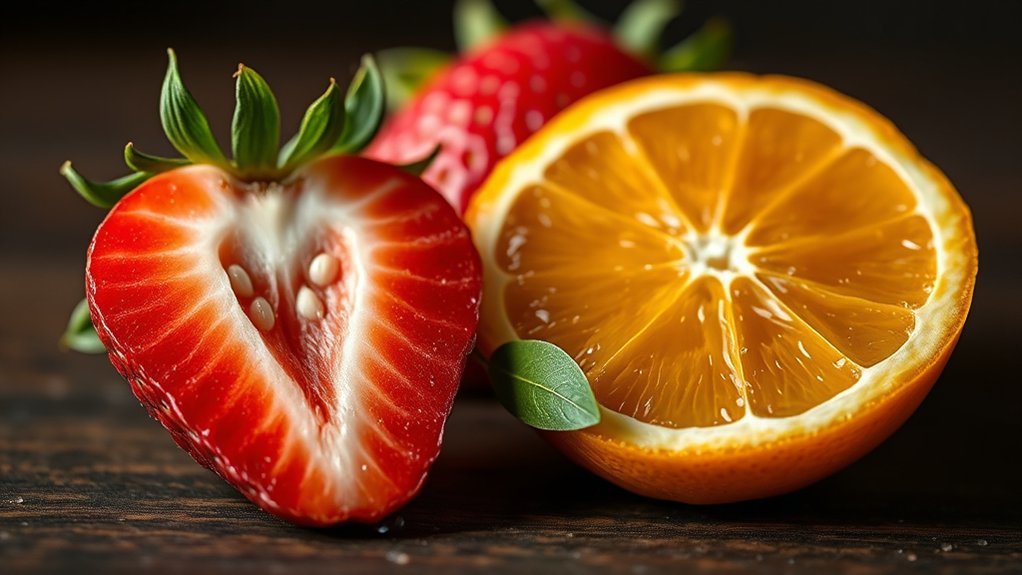
You’ll notice that strawberries and citrus fruits come from completely different botanical families. This difference really impacts how they grow and develop.
For instance, strawberries actually form from multiple ovaries of just one flower. On the other hand, citrus fruits grow as single segments inside a peel.
Botanical Family Differences
When you compare strawberries and citrus fruits, their botanical families reveal clear differences that set them apart.
These botanical family differences are key to understanding why strawberries aren’t considered citrus. Here’s what you should know:
1. Strawberries belong to the Rosaceae family, while citrus fruits are in the Rutaceae family. This shows a fundamental botanical distinction.
2. Citrus fruits, like oranges and lemons, have a more acidic profile with a pH range of 2.0 to 4.19.
Strawberries are less acidic, with a pH range of 3.0 to 3.9 on the pH scale.
3. This acidity difference arises because strawberries contain malic and ascorbic acids, not the citric acid dominant in citrus fruits.
These points prove strawberries don’t fit into the citrus category despite both being fruits.
Fruit Structure Comparison
Fruit structure reveals key differences between strawberries and citrus fruits that reflect their distinct botanical classifications.
When you compare their fruit structure, strawberries are aggregate fruits, formed from multiple ovaries of one flower. Citrus fruits, like oranges and lemons, have segmented, juicy structures typical of the Rutaceae family.
This fruit structure comparison matters if you manage acid reflux or blood sugar levels. Citrus fruits contain more citric acid, which can worsen acid reflux, while strawberries have milder malic acid and a higher pH, making them less likely to trigger symptoms.
Also, strawberries’ sweet, fleshy texture contrasts with the zesty, juicy citrus segments.
Understanding these structural and acid differences helps you choose fruits better suited to your dietary needs without confusing strawberries as citrus.
Growth and Harvest Traits
Understanding how strawberries and citrus fruits grow and are harvested sheds more light on their botanical differences beyond just their structure. You’ll notice these key growth and harvest traits:
- Strawberries grow as herbaceous perennials with runners from a plant base, while citrus fruits develop on trees or shrubs.
- Harvest times differ: strawberries ripen in late spring to early summer, whereas citrus fruits vary based on species and climate.
- Strawberries prefer temperate climates and well-drained soil; citrus thrives in subtropical to tropical areas with lots of sunlight.
Just like how high school students learn differently at diverse television stations, these fruits’ growth conditions affect their nutritional benefits, such as helping lower blood pressure.
Comparing pH Levels: Strawberries and Citrus Fruits
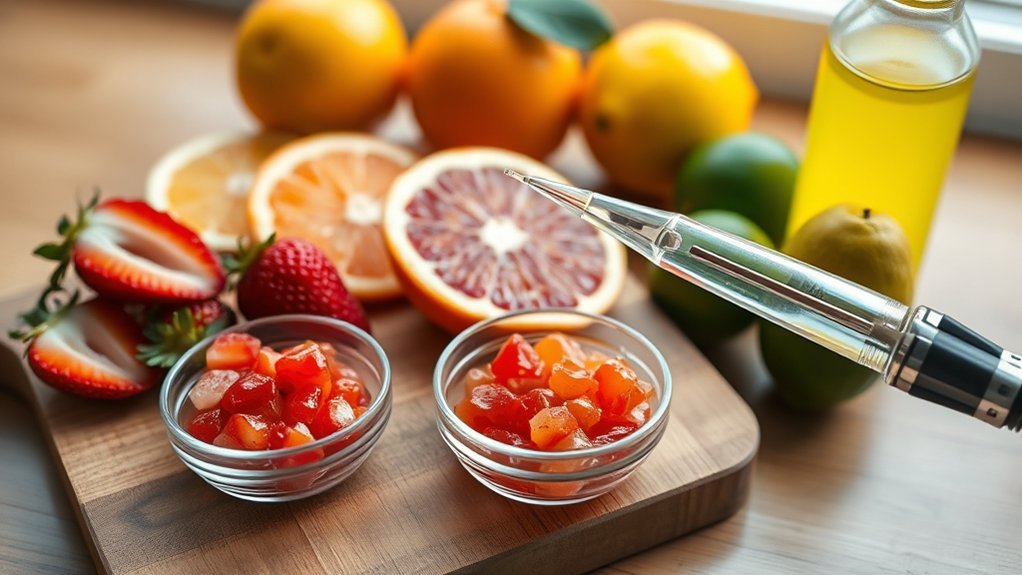
Although strawberries are acidic, their pH levels range from 3.0 to 3.5, which is higher than most citrus fruits like lemons and limes. These citrus fruits typically fall between 2.0 and 2.6.
When you do a pH comparison, you’ll notice strawberries have milder acidity effects. This influences their sweeter taste profiles compared to the sharp tanginess of citrus fruits. This difference in acidity impacts how you experience their flavors.
| Fruit | pH Range |
|---|---|
| Strawberries | 3.0 – 3.5 |
| Lemons | 2.0 – 2.6 |
| Limes | 2.0 – 2.6 |
Why Acidity Doesn’t Define Citrus Fruits
You might think acidity alone determines if a fruit is citrus, but that’s not actually the case.
It’s really about botanical traits and classification. Citrus fruits belong to the Rutaceae family, which is defined by their genetic lineage and unique characteristics—not just how sour they taste.
Citrus Classification Criteria
While acidity plays a noticeable role in the flavor of citrus fruits, it doesn’t determine whether a fruit is classified as citrus. Instead, classification depends on key botanical traits.
When identifying citrus varieties, focus on family lineage. Citrus fruits belong to the Rutaceae family, unlike strawberries, which are part of the Rosaceae family.
Next, look at fruit structure. Citrus fruits have segmented, juicy pulp with essential oils in their peel. This differs from the fleshy, seed-studded surface of strawberries.
Finally, consider fruit ripening and dietary benefits. Citrus undergoes specific ripening that enhances their unique flavors and nutritional profiles, including vitamin C and antioxidants.
Acidity Versus Botanical Traits
Even though acidity influences a fruit’s taste, it doesn’t determine whether a fruit is citrus. You might notice strawberry acidity gives a tangy bite, but that alone won’t classify strawberries as citrus.
Citrus flavor comes from a unique combination of compounds and genetic lineage, specifically within the Rutaceae family, unlike strawberries in the Rosaceae family.
| Feature | Strawberries |
|---|---|
| Family | Rosaceae |
| pH (Acidity) | 3.0 – 3.5 |
| Main Acids | Citric, Malic, Ascorbic |
| Citrus Flavor | Absent |
| Fruit Classification | Non-citrus |
Common Misconceptions About Citrus
Although acidity often makes people think of citrus fruits, it doesn’t actually define them. You might assume all acidic fruits are citrus, but that’s not true. Here’s why:
- Citrus fruits belong to the Rutaceae family, while strawberry varieties come from the Rosaceae family, showing clear botanical differences.
- Citrus hybrids contain primarily citric acid, whereas strawberries mainly have malic and ascorbic acids, affecting their acidity profile and your acidity tolerance.
- Many non-citrus fruits, including strawberries, can be acidic but aren’t classified as citrus due to their genetic makeup and traits.
Citric Acid: Why Strawberries Aren’t Citrus
Because strawberries contain citric acid alongside malic and ascorbic acids, they might seem similar to citrus fruits at first glance.
However, when you look at the citric acid comparison, strawberries have a lower acidity level, with a pH of 3.0 to 3.5, compared to citrus fruits like lemons that often have a pH closer to 2.0.
This difference in strawberry acidity affects their fruit flavor profiles considerably.
While citrus fruits are known for their sharp, tangy taste due to high citric acid, strawberries offer a sweeter, milder flavor because their acidity is balanced by malic and ascorbic acids.
How to Identify Citrus Fruits by Their Physical Traits?
You can spot citrus fruits by their thick, pebbled peel and bright colors like orange or yellow. It’s pretty distinctive!
When you cut one open, you’ll notice juicy segments filled with pulp, which is different from fruits like strawberries.
Typical Citrus Fruit Features
When you examine a typical citrus fruit, you’ll notice its juicy, segmented interior paired with a thick, aromatic rind that’s easy to peel.
These citrus fruit characteristics set them apart from other fruits like strawberries.
To recognize common citrus fruit varieties, keep these features in mind:
- Bright, vibrant colors such as yellow, orange, or green.
- High acidity with a tangy flavor, thanks to citric acid and vitamin C.
- Growth on small trees or shrubs in warm climates.
Citrus fruit uses range from fresh eating and juicing to flavoring dishes and making essential oils.
By understanding these typical citrus fruit features, you can easily identify whether a fruit, like a strawberry, shares these traits.
Hint: it doesn’t.
Peel Texture And Color
Noticing the differences in peel texture and color can help you quickly distinguish citrus fruits from others like strawberries.
Citrus fruits have a smooth, shiny surface that can be either thin or thick, unlike strawberries, which have a textured, bumpy exterior dotted with tiny seeds.
When it comes to color variations, citrus peels range from yellow to orange, sometimes green. Ripe strawberries are mainly red with a green leafy cap on top.
These texture differences are key: citrus peels are often bitter and used for zesting, while strawberries lack a true peel and have a soft, fleshy surface.
Shape And Segment Structure
Citrus fruits stand out because of their distinctive shape and internal structure. When you analyze segment differences, you’ll notice citrus fruits have clear, juicy segments inside, unlike strawberries, which lack this segmentation.
For a quick shape comparison: citrus fruits are usually round or oval, while strawberries are heart-shaped or conical.
Texture analysis reveals citrus fruits have a thick, zesty rind; strawberries have a soft, seeded surface. Internally, citrus segments contain juice vesicles, contrasting with the solid interior of strawberries.
Common Misconceptions About Strawberries as Citrus Fruits
Why do so many people mistakenly think strawberries are citrus fruits? It’s mostly due to strawberry myths that confuse their tartness with that of citrus.
Strawberries have acidity levels ranging from pH 3.0 to 3.5, which is less acidic than typical citrus fruits like lemons or oranges. Their juiciness and tangy flavor can trick you into thinking they belong to the same family.
Nutritional misconceptions also play a role since strawberries contain vitamin C, similar to citrus. But their acids differ, mainly malic and ascorbic acids, not the high citric acid found in citrus fruits.
Understanding these differences helps clear up confusion and reminds you that strawberries, botanically from the genus Fragaria, aren’t citrus despite their appealing tang.
Strawberries vs. Citrus: Nutrient Differences
Though strawberries share some tangy qualities with citrus fruits, their nutrient profiles reveal key differences. When comparing strawberries to citrus, you’ll notice:
Strawberries and citrus fruits share tanginess but differ significantly in nutrients and acidity.
- Vitamin C & Antioxidants: Strawberries pack over 100% of your daily vitamin C and unique antioxidants like anthocyanins. These differ from citrus flavonoids, offering varied antioxidant benefits.
- Acidity Levels: Strawberries have milder acidity (pH 3.0–3.5) than citrus fruits. This affects nutrient absorption and makes them gentler on digestion.
- Dietary Preferences: If you prefer lower acidity foods, strawberries fit better, especially since they’re less likely to trigger acid-related discomfort common with citrus.
Understanding these differences helps you make informed choices based on nutrient absorption, antioxidant intake, and personal dietary preferences.
Can Strawberries Cause Citrus-Like Reactions in Sensitive People?
Can strawberries cause reactions similar to citrus fruits in people with sensitive stomachs? While strawberries have a mildly acidic pH of 3.0 to 3.5, they’re less likely to provoke citrus-like acidity sensitivity effects than lemons or oranges.
If you’re prone to acid reflux or irritation, fully ripe strawberries might be gentler due to their lower acidity.
Plus, strawberries offer health benefits like antioxidants without the strong irritation common in citrus.
To minimize any discomfort, try dietary pairing suggestions such as eating strawberries with alkaline-forming foods or as part of a meal.
This approach can help reduce acidity’s impact, allowing you to enjoy strawberries without triggering unpleasant reactions often linked to citrus fruits.
Why Strawberries Are Considered Berries, Not Citrus
Since strawberries belong to the Rosaceae family, they’re classified as aggregate fruits rather than citrus.
You can easily tell strawberries apart from citrus fruits by understanding these key differences:
- Berry Characteristics: Strawberries have multiple seed-bearing structures on their surface, which is typical for aggregate fruits, unlike the segmented structure of citrus.
- Acidity and Flavor: Unlike citrus, strawberries don’t rely on citric acid. Instead, they’ve malic and ascorbic acids, giving them a sweet flavor with mild tartness rather than a sharp tang.
- Family Classification: Strawberries belong to Rosaceae, while citrus fruits are part of the Rutaceae family, emphasizing their distinct botanical groupings.
Recognizing these points helps you see why strawberries are true berries, celebrated for their unique aggregate fruit nature and sweet flavor profile.
Choosing Strawberries or Citrus Fruits for Your Diet
When choosing between strawberries and citrus fruits for your diet, you should consider their acidity levels and potential effects on digestion. Strawberry varieties offer lower acidity and may be easier on your stomach, especially if you have acid reflux.
Citrus benefits include high vitamin C and antioxidants but come with stronger acidity that might not suit all dietary preferences. Here’s a quick comparison:
| Feature | Strawberries |
|---|---|
| pH Level | 3.0 – 3.5 |
| Acid Reflux Trigger | Less likely |
| Post-Digestion Effect | Alkaline-forming |
| Vitamin C Content | High |
| Suitable for Sensitive Stomachs | Yes |
Choosing depends on your digestion and taste preferences. Both provide health perks, but strawberries usually suit sensitive diets better.
Frequently Asked Questions
Can Strawberries Be Used as a Substitute for Citrus in Recipes?
Yes, you can use strawberries as a substitute for citrus in recipes, but you’ll need recipe adaptations to balance the flavor profiles.
Strawberries add sweetness and mild acidity, so when fruit pairing, consider adding a splash of lemon juice or zest to mimic citrus tartness.
This approach helps maintain the dish’s brightness while introducing a unique twist.
Experimenting with strawberries lets you create fresh, vibrant flavors without losing that essential tang.
How Do the Flavors of Strawberries and Citrus Fruits Differ?
Imagine strawberries as gentle storytellers, their flavor profiles weaving sweet tales with a hint of tartness, like a soft breeze on a summer day.
Citrus fruits, on the other hand, are bold adventurers, bursting with sharp tartness and bright zestiness.
You’ll notice the sweetness comparison clearly.
Strawberries offer mellow sweetness balanced by mild acidity, while citrus fruits hit you with higher tartness levels and a tangy punch that wakes up your taste buds instantly.
Are There Any Health Benefits Unique to Strawberries Compared to Citrus?
Yes, you’ll find unique health benefits in strawberries compared to citrus.
In a nutritional comparison, strawberries boast higher antioxidant levels, like anthocyanins and ellagic acid, which support vascular health and cognitive function.
They also provide over 100% of your daily vitamin C needs in one cup, along with potassium and magnesium.
This vitamin content plus their lower acidity makes strawberries a great choice if you want powerful nutrients without citrus’s acidic effects.
Do Strawberries Affect Dental Enamel Like Citrus Fruits?
Strawberries’ acidity levels are lower than those in citrus fruits, so their impact on your dental health isn’t as harsh.
While they can cause some enamel erosion effects if eaten in excess, they’re less likely to damage your teeth compared to lemons or oranges.
To protect your enamel, rinse your mouth with water after eating strawberries and wait 30 minutes before brushing.
This helps minimize any potential harm to your dental health.
What Are the Best Storage Methods for Strawberries Versus Citrus Fruits?
Imagine a cool, crisp garden morning. That’s the freshness you want to keep.
For strawberry refrigeration techniques, store them in their original container or a breathable one with paper towels to soak moisture.
Citrus storage containers work best at room temperature briefly, but refrigeration extends fruit shelf life, especially once cut.
Keep both fruits away from ethylene producers to avoid early spoilage.
This way, your strawberries and citrus stay fresh and tasty longer.
Conclusion
You might think strawberries are citrus because they’re tart and juicy, but they’re actually not. Unlike citrus fruits, strawberries don’t belong to the citrus family botanically, even if their acidity sometimes feels similar.
So, if you’re avoiding citrus for allergies or diet reasons, strawberries are usually safe to enjoy. They’re delicious berries with their own unique nutrients, giving you a fresh, flavorful option without the citrus confusion.