
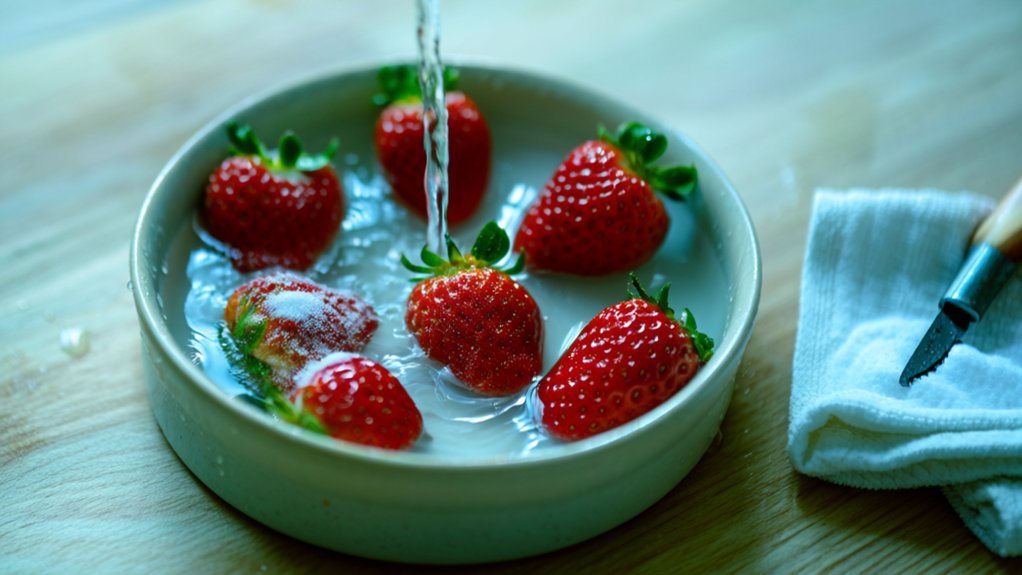
7 Steps for the Best Way to Clean Strawberries
You should always wash your strawberries to remove pesticides, dirt, and bacteria. Start by gathering a large bowl, baking soda or vinegar, and hot water around 110ºF to 130ºF.
Soak your strawberries for about 30 seconds in baking soda water to break down residues. Rinse them gently under cool running water and dry carefully to avoid bruising.
Store them in an airtight container in the fridge. If you want to keep them fresher longer, here’s what else to know.
Why You Should Always Wash Your Strawberries
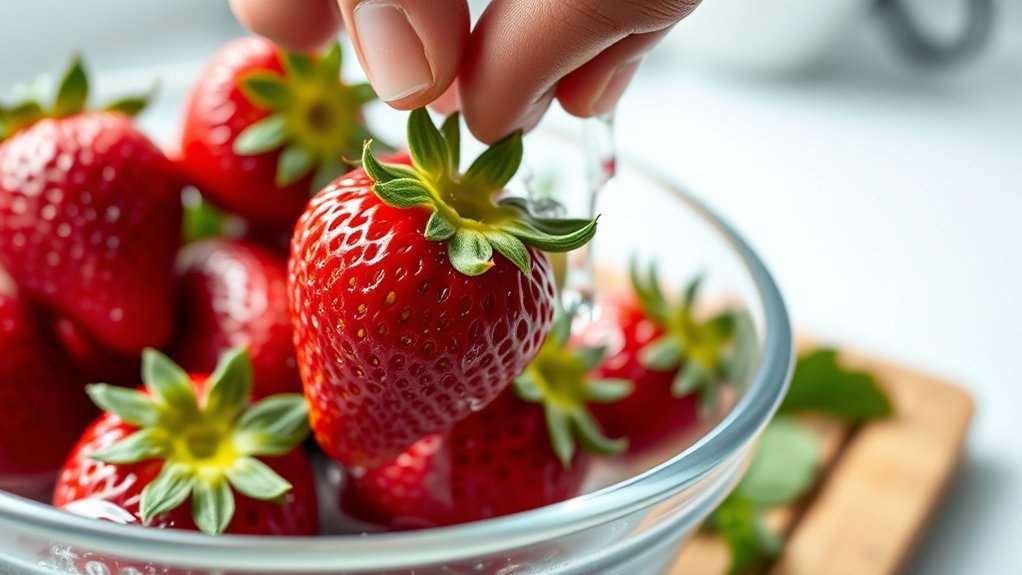
Because strawberries often carry high levels of pesticide residue, you should always wash them thoroughly before eating. Their porous skin traps pesticide residues, dirt, bacteria, and mold spores, which can lead to spoilage or health risks.
Simply rinsing with water isn’t always enough to remove these contaminants. Using a vinegar solution to wash strawberries helps break down pesticide residues and kills bacteria and mold spores, making your berries safer and fresher.
Washing also removes grit and dirt that can affect taste and texture. Keep in mind that washing just before eating or storing is best; washing too early traps moisture, accelerating spoilage.
What You Need to Clean Strawberries Right
To clean your strawberries properly, you’ll need a few key items that make the process both effective and simple.
Using the right tools guarantees thorough cleaning and helps maintain freshness.
The right tools ensure your strawberries are cleaned thoroughly while preserving their fresh, delicious quality.
Here’s what you need:
- Large bowl Use this to soak your strawberries in a baking soda solution, which removes pesticides and bacteria effectively.
- Hot water Between 110ºF to 130ºF, it aids in loosening dirt and killing mold spores during soaking.
- Colander Perfect for draining and rinsing the berries, allowing you to remove excess water quickly and prevent spoilage.
With these essentials, cleaning strawberries becomes easy and efficient.
After soaking and rinsing the berries, make sure to gently shake off excess water to keep them fresh longer.
Soaking Strawberries in Hot Water for Best Results
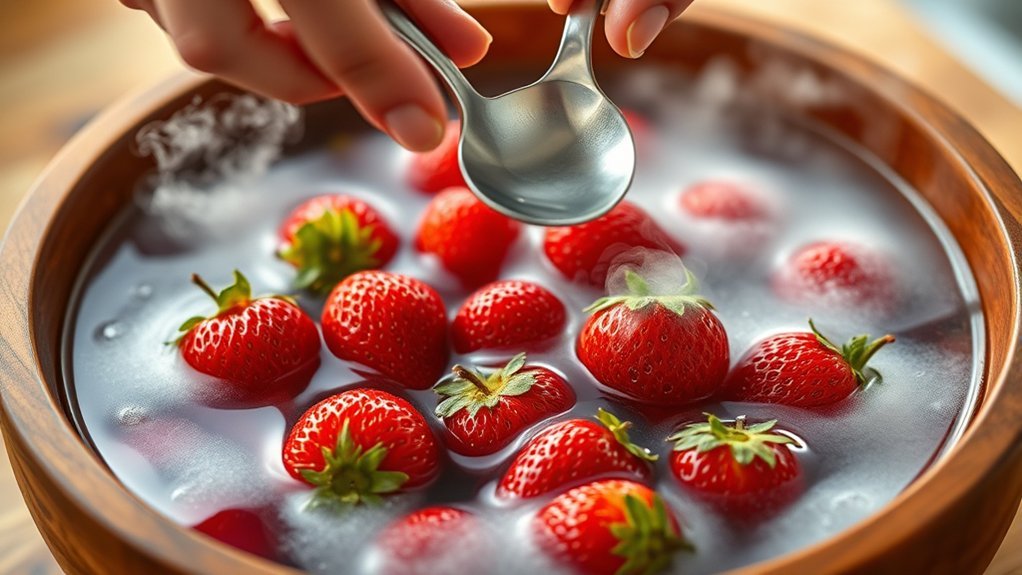
One simple way to keep your strawberries fresh longer is by soaking them in hot water heated between 110ºF and 130ºF.
Fill a bowl with hot water within this temperature range, then submerge your strawberries and gently swoosh them around for about 30 seconds.
This soaking strawberries step effectively removes dirt and mold spores that can cause mold growth. Studies show that cleaning strawberries this way considerably extends their freshness compared to unwashed berries.
After soaking, drain the strawberries and pat them dry with a towel or use a salad spinner lined with paper towels to remove excess moisture.
Using hot water for cleaning not only maintains the strawberries’ quality and flavor but also makes them safer and more enjoyable to eat.
Cleaning Strawberries With Baking Soda or Vinegar to Remove Pesticides
Although soaking strawberries in hot water helps remove dirt and mold spores, it doesn’t eliminate pesticide residues effectively.
To truly clean strawberries and remove pesticide residues, try these steps using baking soda or a vinegar solution:
Dissolve 2 teaspoons of baking soda in 1 quart of water and soak the strawberries for at least 30 seconds.
Alternatively, prepare a vinegar solution with 1 tablespoon of vinegar per 12 cups of water and soak briefly.
After soaking, rinse them thoroughly under cool running water to wash away any residue from the cleaning agents.
Washing strawberries just before eating guarantees they’re fresh and safe without increasing spoilage.
Baking soda tends to be more effective than vinegar solution at removing pesticides, so it’s your best bet for clean strawberries.
How to Rinse and Dry Strawberries Without Bruising Them
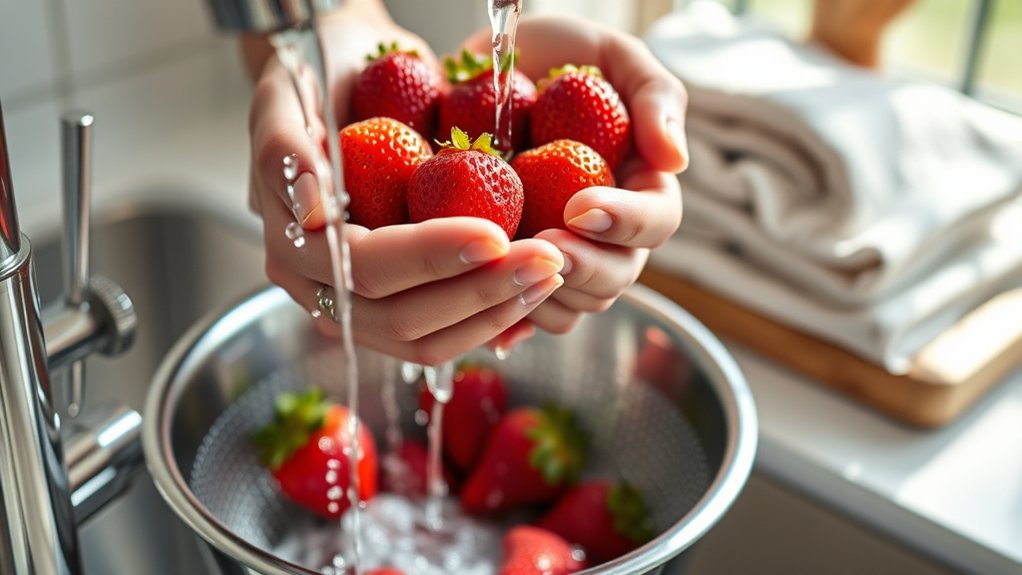
When you rinse strawberries, handle them gently under cool running water to prevent bruising their delicate skin. Wash them in a colander or swirl in lukewarm water (110ºF to 130ºF) for about 30 seconds, avoiding harsh scrubbing.
After rinsing, focus on drying strawberries carefully to keep them fresh and bruise-free. Use a salad spinner lined with paper towels or pat them gently with a soft towel. Alternatively, air-dry by spreading strawberries in a single layer on a clean tray, ensuring they don’t touch.
| Soft Touch | Gentle Care | Fresh Taste |
|---|---|---|
| No Bruising | Easy Wash | Pure Flavor |
| Vinegar Aid | Cool Rinse | Crisp Bite |
Best Ways to Store Clean Strawberries So They Last Longer
To keep your cleaned strawberries fresh for longer, store them in a sealed container without any towels inside. This method helps fresh strawberries stay fresher by preventing excess moisture and mold.
After washing and removing dirt, follow these tips:
Transfer strawberries from their original packaging to an airtight container to slow spoilage. Refrigerate the sealed container in a cold, humid environment to maintain freshness.
Move strawberries to an airtight container and refrigerate to keep them fresh longer in a cool, humid setting.
Regularly check for damaged or moldy berries and remove them promptly to protect the rest.
Avoid lined containers with paper towels, as they don’t effectively preserve your berries.
Why It’s Best to Wash Strawberries Just Before Eating
Because strawberries spoil quickly, you should wash them just before eating to keep them fresh longer. Washing strawberries too early adds moisture, which speeds up spoilage and mold growth.
A quick rinse with distilled white vinegar helps remove pesticides, especially important since strawberries rank high on the Dirty Dozen list. Properly drying your berries after washing prevents mushiness and keeps their flavor intact.
| Step | Purpose | Tip |
|---|---|---|
| Quick rinse | Remove dirt and pesticides | Use distilled white vinegar |
| Wash before eating | Maintain freshness | Avoid early washing |
| Properly drying | Prevent spoilage | Use paper towels |
| Handle gently | Preserve texture | Don’t overcrowd |
| Store chilled | Extend shelf life | Keep in a breathable container |
Follow these steps to enjoy fresh, tasty strawberries every time.
Frequently Asked Questions
Can I Clean Strawberries Using a Fruit Wash Spray?
You shouldn’t rely on fruit wash sprays for cleaning strawberries because their fruit wash effectiveness is questionable.
Instead, focus on the best washing techniques like rinsing under running water or using alternative cleaning solutions such as a vinegar or baking soda wash.
These methods improve pesticide removal without harmful residues.
Choosing organic strawberry options can reduce pesticide concerns, letting you enjoy the full health benefits of strawberries safely and naturally.
Is It Safe to Eat Strawberry Stems After Washing?
Yes, it’s safe to eat strawberry stems after washing, as proper cleaning removes dirt and pesticides, ensuring eating safety.
The stems offer stem benefits like fiber and antioxidants, boosting strawberry nutrition.
While some find them tough or bitter, they add unique texture and can be used in culinary uses like smoothies or teas.
Just watch for health concerns. Avoid stems with mold or decay, and try different preparation methods to suit your taste.
How Long Can Cleaned Strawberries Stay at Room Temperature?
You shouldn’t leave cleaned strawberries at room temperature for more than two hours to maintain strawberry freshness.
The cleaning duration impacts how quickly they spoil.
If your strawberries show ripeness indicators like softness or dark spots, they’ll spoil faster.
To extend freshness, use proper storage methods like refrigeration after cleaning.
Watch for spoilage signs such as mold or a sour smell; these mean it’s time to toss them out.
Does Freezing Strawberries Affect Pesticide Residue Removal?
Sure, freezing strawberries magically removes pesticide residue if you believe in fairy tales.
In reality, freezing effects don’t do squat for pesticide residue.
You’ll need proper washing techniques before freezing to enjoy real fruit preservation and health benefits.
Don’t rely on freezing alone; it locks in whatever pesticides are already there.
Can I Use a Salad Spinner to Dry Strawberries?
Yes, you can definitely use a salad spinner to dry strawberries. Its effectiveness in removing excess water makes it one of the best fruit drying techniques after washing fruits.
The gentle spinning prevents bruising while drying efficiently. If you don’t have a salad spinner, alternatives like patting with paper towels work but might take longer.
Conclusion
Think of washing strawberries like revealing a hidden treasure. By soaking them gently and rinsing with care, you’re not just cleaning—you’re releasing their vibrant, juicy essence.
Using baking soda or vinegar is like wiping away the dust of the world, disclosing nature’s true gift. When you wash them just before eating, you keep that freshness alive, like capturing the morning dew before it fades.
Treat your strawberries well, and they’ll reward you with every delicious bite.