
What Is a Strawberry Moon and Why Is It Named That?
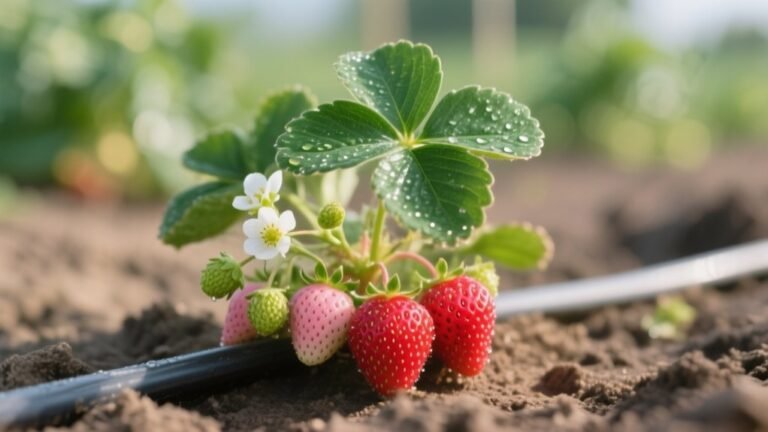
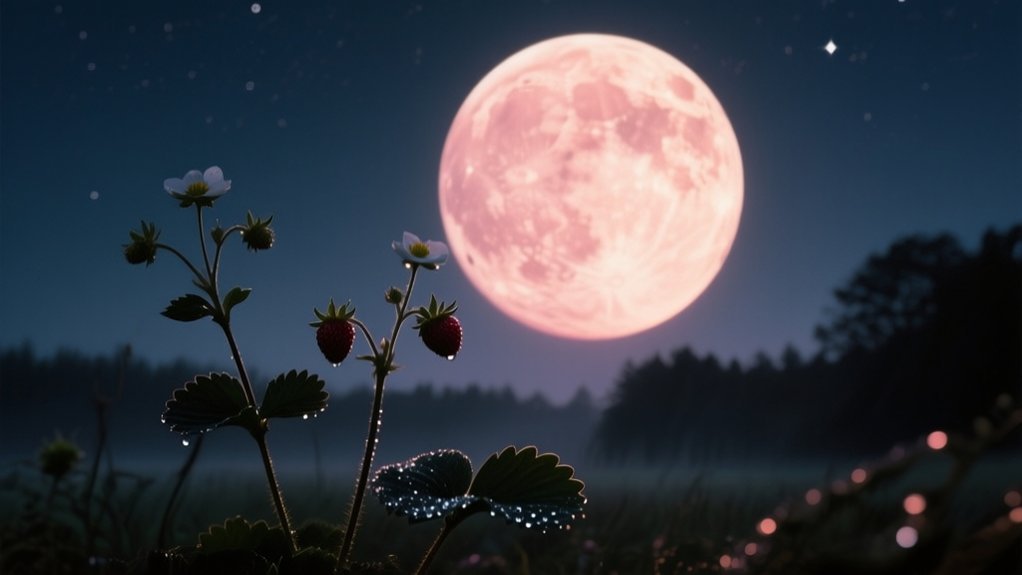
You’ll see a Strawberry Moon in June, named by Native American Algonquian tribes to mark when wild strawberries ripen, signaling summer’s arrival. It’s not actually red; the name reflects the harvest season, not the moon’s color.
This full moon also guides gardening and farming activities, highlighting nature’s cycles. The upcoming 2026 Strawberry Moon has unique viewing highlights and cultural significance you’ll find interesting as you explore further.
Definition of the Strawberry Moon
The Strawberry Moon is June’s full moon, arriving this year on June 29, 2026, at 7:56 P.M.
As the Full Moon in June, it’s named after the wild strawberries that Native American Algonquian tribes harvested around this time.
When you hear “Strawberry Moon,” think of the peak ripeness of these berries, signaling a season of abundance.
This moon marks a natural shift from spring to summer, symbolizing blooming flowers and the growth that comes with warmer days.
Sometimes, the Strawberry Moon goes by other names like Honey Moon, Mead Moon, or Blooming Moon, each reflecting different cultural traditions and seasonal events.
You’ll find it’s often the last full moon of spring or the first of summer, deeply connected to agricultural cycles.
When Does the Strawberry Moon Occur?
You’ll see the Strawberry Moon in June.
The next one will rise on June 29, 2026, at 7:56 P.M. Eastern Time.
This full moon looks brightest when it’s low on the horizon, which means you get a stunning view thanks to atmospheric effects.
Knowing when it happens helps you catch this unique seasonal event at its best.
June Full Moon Timing
On June 29, 2026, at 7:56 P.M. Eastern Time, the June full moon will reach its peak illumination, becoming the Strawberry Moon. This timing marks when you can see the moon fully lit in the night sky.
The Strawberry Moon gets its name from Native American tribes, who noticed it coincided with the ripening of June-bearing strawberries.
In 2026, this full moon follows a sequence of lunar phases: the Last Quarter on June 8, New Moon on June 14, and First Quarter on June 21.
As the last full moon of spring or the first of summer, it highlights the seasonal shift.
To catch the Strawberry Moon at its best, you’ll want to watch shortly after it rises, often low on the horizon.
Seasonal Moon Visibility
Although the Strawberry Moon officially occurs on June 29, 2026, at 7:56 P.M., its visibility is deeply tied to seasonal changes.
You’ll notice this full moon appears larger and more colorful when it’s low on the horizon, thanks to atmospheric effects.
In 2026, the Strawberry Moon will be especially striking. It’s the lowest full moon since 2006, influenced by the sun’s gravity and an 18.6-year cycle.
This timing aligns perfectly with the ripening of strawberries, which is why it earned its name.
To catch the best view, you can use a Full Moon Calculator to find the peak illumination time in your area.
Understanding these seasonal changes helps you appreciate why the Strawberry Moon is truly a June phenomenon.
The Origin of the ‘Strawberry Moon’ Name
You might be curious about where the name “Strawberry Moon” comes from.
Well, Native American Algonquian tribes gave it that name to mark the time when strawberries were ripe and ready to pick.
So, it was basically their way of signaling that it was the perfect time to gather these sweet fruits.
Pretty neat, right?
Native American Naming
Because the Algonquin tribes named the full moon in June the “Strawberry Moon,” you can trace the term back to the time when wild strawberries ripen and are ready to harvest.
This Native American naming tradition highlights how indigenous peoples closely observed lunar cycles to guide their seasonal activities.
The Strawberry Moon isn’t about the moon’s color but symbolizes the abundance of ripe fruits during this period.
Other tribes also had similar names; for example, the Haida called it the “Berries Ripen Moon,” emphasizing berry gathering.
Seasonal Harvest Significance
The Native American tradition of naming the full moon after seasonal events gives us insight into the origin of the “Strawberry Moon” name.
You’ll find that this name comes from the seasonal harvest significance tied to the ripe wild strawberries that bloom in June. For the Algonquian tribes in the northeastern U.S., the Strawberry Moon marked the perfect time to gather these early summer fruits.
It wasn’t about the moon’s color but the natural abundance it symbolized. Other tribes, like the Haida, called it the “Berries Ripen Moon,” reflecting the same theme.
You might also hear June’s full moon called the “Flowering Moon” or “Garden Moon,” emphasizing the growth and harvest activities shaping the season’s agricultural rhythms.
Native American and European Names for June’s Full Moon
June’s full moon carries rich cultural significance, reflected in the variety of names given to it by Native American tribes and European traditions. You might know it as the Strawberry Moon, named by Algonquian tribes to mark the strawberry harvest.
But this June full moon has different names, each revealing unique seasonal and cultural insights.
| Culture | June Full Moon Name |
|---|---|
| Algonquian | Strawberry Moon |
| Choctaw | Windy Moon |
| Tlingit | Moon of Birthing |
| European | Honey Moon / Mead Moon |
| Chinese | Lotus Moon |
As you can see, these names connect you with nature’s rhythms, from weather patterns to agricultural events, enriching your appreciation of June’s full moon.
Seasonal Significance of the Strawberry Moon
You’ll notice the Strawberry Moon marks the peak of wild strawberry harvesting.
It’s a key signal for many cultures. This moon is tied closely to agricultural traditions that celebrate the season’s abundance.
When you understand this, it helps you see how lunar phases guide farming and cultural practices.
Harvesting Season Marker
Although you might associate the Strawberry Moon with its name alone, it actually signals an essential time for harvesting wild strawberries, which reach their peak ripeness in June.
This full moon marks the harvesting season when these berries are abundant and ready to be picked. Native American Algonquian tribes named it to guide their gathering activities, using the moon as a natural calendar.
The Strawberry Moon also represents the shift from spring to summer, a period rich in growth and plenty. Other tribes have similar names for this time, like the Haida’s “Berries Ripen Moon,” highlighting the importance of seasonal fruit harvesting.
Cultural Agricultural Traditions
When the Strawberry Moon rises, it signals more than just a full moon. It marks a key moment in many Native American agricultural traditions. You’ll find that this Full Moon name reflects the peak ripening of wild strawberries, guiding tribes on when to harvest.
Various cultures gave this June lunar phase unique names tied to farming, like the Cherokee’s “Plants in Garden Are Sprouting Moon,” highlighting crop growth. The moon’s low, bright appearance helped you track seasonal changes, making it easier to plan gathering and planting.
| Tribe/Culture | Full Moon Name |
|---|---|
| Algonquin | Strawberry Moon |
| Cherokee | Plants in Garden Are Sprouting Moon |
| Ojibwe | Green Corn Moon |
| Lakota | Moon of the Ripe Strawberries |
| Colonial Americans | Rose Moon |
Folklore and Traditions of the Strawberry Moon
How did the Strawberry Moon get its name? The name comes from Algonquian tribes, who noticed June’s full moon marked the perfect time to harvest ripe strawberries.
The Strawberry Moon got its name from Algonquian tribes marking June’s ideal strawberry harvest time.
This connection between the moon and seasonal crops is a key part of Strawberry Moon folklore. It symbolizes abundance and the natural cycle of growth.
Across different regions, you might hear other names like the “Blooming Moon” or “Green Corn Moon,” reflecting local agricultural traditions. Folklore tells us this moon is an auspicious time for gathering, celebrating nature, and planting or harvesting crops.
When you observe the Strawberry Moon, you’re connecting with centuries-old traditions that honor the earth’s rhythms and the gifts of early summer.
When and Where to See the 2026 Strawberry Moon
You can catch the 2026 Strawberry Moon at 7:56 P.M. Eastern Time on June 29, when it reaches peak illumination.
This full moon, named for the ripening of June-bearing strawberries, offers a unique sight if you watch it near the horizon. Atmospheric conditions may give it a reddish hue, enhancing the experience.
Since moonrise and moonset times vary by location, checking your local timings will help you find the best viewing window.
Remember, this Strawberry Moon is part of a June lunar cycle that includes key phases like the Last Quarter on June 8, New Moon on June 14, and First Quarter on June 21.
Plan ahead to enjoy this beautiful lunar event in your area.
What Makes the 2026 Strawberry Moon Unique
Although full moons occur regularly, the 2026 Strawberry Moon stands out because it will appear lower in the sky than any since 2006. This offers you a rare and striking view enhanced by its unique path during a Major Lunar Standstill.
On June 29 at 7:56 P.M. Eastern Time, this full moon reaches peak illumination, glowing with a possible reddish hue near the horizon. Atmospheric conditions will amplify its color, making the Strawberry Moon especially vivid.
You’ll want to catch it soon after moonrise when brightness and color peak.
| Date | Time (ET) | Moon Height |
|---|---|---|
| June 29 | 7:56 PM | Lowest since 2006 |
| June 29 | Moonrise | Reddish hue visible |
| June 29 | Peak | Major Lunar Standstill |
| June 29 | Evening | Ideal viewing |
How the Strawberry Moon Influences Gardening and Agriculture
When the Strawberry Moon rises in June, it signals an essential time for gardeners and farmers who rely on lunar cycles to guide their work.
This full moon marks the peak ripeness of wild strawberries and serves as a natural calendar for gardening and agriculture.
Native American tribes like the Ojibwe and Cherokee recognized its significance, naming it the “Flowering Moon” and the “Plants in Garden Are Sprouting Moon,” respectively.
You can use the Strawberry Moon’s bright light and timing to plan planting and nurturing crops, as it’s believed to boost growth and yield.
Why the Strawberry Moon Is Not Actually Red
Even if the name “Strawberry Moon” might make you expect a reddish glow, the moon itself doesn’t actually turn red during this full moon. The name comes from the time when wild strawberries are ripe, not from its color.
Sometimes, the moon looks red when it’s low on the horizon due to atmospheric effects like pollution or humidity scattering light. But this isn’t unique to the Strawberry Moon.
| Aspect | Explanation |
|---|---|
| Name Origin | Linked to strawberry harvest season |
| True Color | Usually bright white or pale yellow |
| Red Appearance Cause | Atmospheric conditions, not season |
Frequently Asked Questions
Can the Strawberry Moon Affect Human Behavior or Emotions?
Yes, the Strawberry Moon can affect your behavior and emotions due to moon phases’ emotional influence.
During this full moon, you might notice heightened feelings or mood swings, as the moon’s gravitational pull can impact your body’s water levels, subtly shifting your mood.
Many people report increased creativity or introspection at this time.
Are There Any Special Rituals or Celebrations for the Strawberry Moon Today?
You might be surprised that over 60% of neo-pagan communities hold Strawberry rituals during the Strawberry Moon.
These Moon celebrations often include planting ceremonies and gatherings to honor growth and abundance.
You can join full moon circles where people meditate, share stories, or perform rituals under the moonlight.
Many also enjoy outdoor activities like moonlit hikes or picnics to connect with nature and celebrate summer’s vibrant energy.
How Does the Strawberry Moon Impact Tidal Patterns?
You’ll notice that the Strawberry Moon intensifies tide cycles because of its strong lunar effects.
When the sun, Earth, and moon align during this full moon, it causes spring tides. That means higher high tides and lower low tides.
These amplified tidal ranges impact coastal waters dramatically, making marine activities like crabbing and shrimping more productive.
Is the Strawberry Moon Visible Worldwide or Only in Specific Regions?
Ever wondered if the Strawberry Moon lights up your sky no matter where you live?
Yes, it has global visibility, but its appearance and timing shift depending on your location.
You’ll notice it’s more prominent in some regions, reflecting local traditions and regional significance.
Can the Strawberry Moon Be Photographed Easily Without Special Equipment?
Yes, you can photograph the Strawberry Moon easily without special equipment. Basic cameras and even smartphones work well, especially if you use photography techniques like shooting just after moonrise when it appears larger and more colorful.
To improve your moon photography, stabilize your camera with a tripod to avoid blur in low light.
Checking local peak illumination times guarantees you capture the moon at its brightest, making your photos stunning with minimal gear.
Conclusion
As you watch the June sky light up with the Strawberry Moon, you might notice how its timing coincides perfectly with strawberry harvests, nature’s own reminder of cycles and growth. Though it doesn’t glow red like ripe berries, its name connects you to the past, to Native American and European traditions alike.
So next time you catch this full moon, remember it’s more than just light in the sky. It’s a seasonal celebration shining right above your garden.