
What Happens If You Eat a Moldy Strawberry?
If you eat a moldy strawberry, you might experience mild digestive issues like nausea or stomach discomfort, especially if you eat a lot. Mold on strawberries can carry harmful toxins and spores that your body doesn’t handle well.
This can cause allergic reactions or more severe symptoms if you’re sensitive or immunocompromised. It’s best to avoid eating moldy berries and throw away any affected fruit.
Want to know how to spot mold and prevent it from spoiling your strawberries?
What Does Mold on Strawberries Look Like?
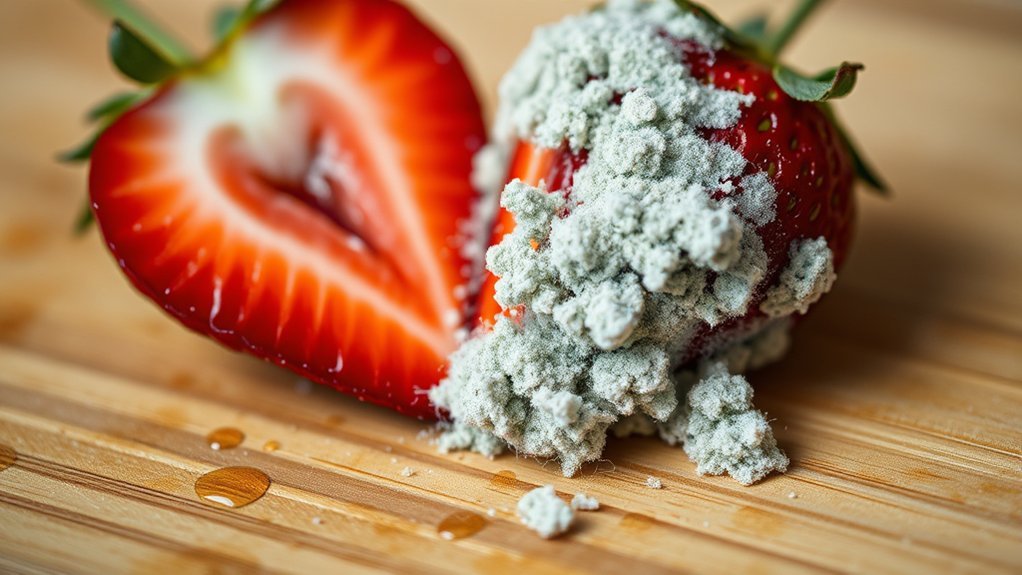
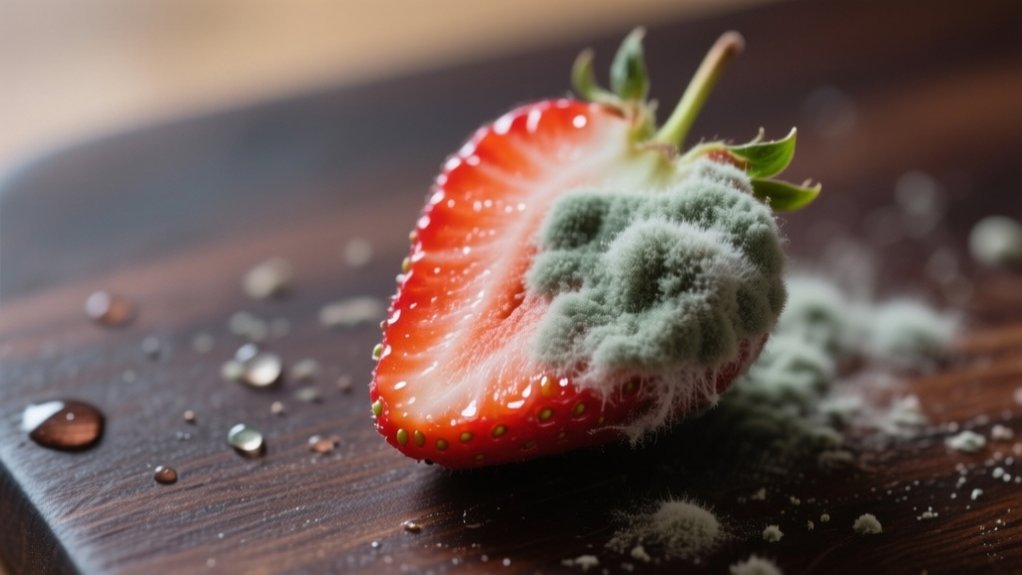
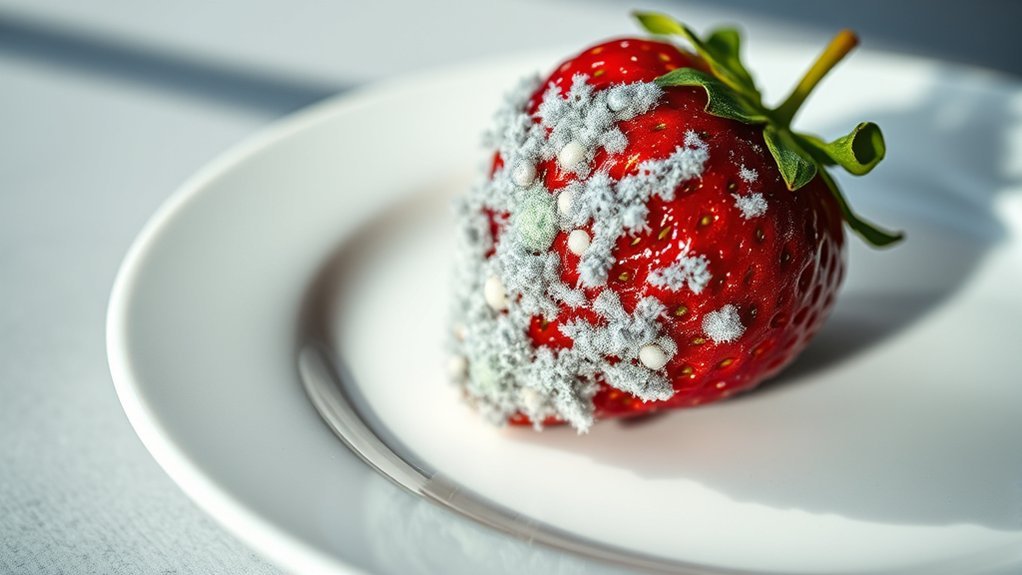
Mold on strawberries usually shows up as fuzzy patches that can be white, green, or gray. When you spot these moldy areas, it’s a clear sign the fruit is spoiling.
Fuzzy white, green, or gray patches on strawberries signal mold and indicate the fruit is spoiling.
You might also notice soft spots or shriveled skin alongside the visible mold, which are additional signs of mold growth.
Because strawberries have high moisture content, mold spores spread quickly, so inspecting the entire batch is essential.
If you see any moldy berry, it’s best to discard it immediately, along with any strawberries touching it, to prevent contamination.
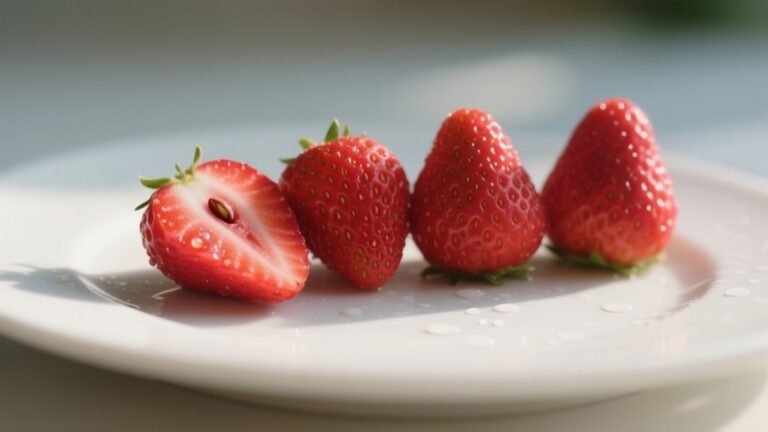
Fresh strawberries should look bright red and feel firm. Any deviation with mold or softness signals that the fruit isn’t safe to eat.
Paying attention to these signs of mold helps you avoid eating spoiled fruit.
Why Do Strawberries Develop Mold Quickly?
Because strawberries are highly porous, they absorb moisture from the air quickly, creating the perfect environment for mold to thrive. This moisture encourages mold growth, especially in warm, humid conditions common during spring and summer.
When you leave strawberries exposed, mold spores like Botrytis cinerea settle on their surface, turning them into moldy berries with a fuzzy, gray appearance. You might think cutting off visible mold solves the problem, but mold spores can penetrate deep into the flesh.
To slow down mold growth, you should store strawberries properly. Keep them refrigerated and avoid washing them before storage.
Can Eating Moldy Strawberries Harm Your Health?
If you happen to eat a moldy strawberry, you might notice some mild symptoms like nausea, vomiting, or diarrhea. This is especially true if you’re sensitive or have allergies.
Usually, a small amount isn’t harmful, but eating larger amounts could increase your chances of digestive issues. So, it’s really best to avoid moldy berries altogether to keep yourself safe.
And if you do eat some, keep an eye out for any unusual reactions just in case.
Potential Health Risks
While eating a moldy strawberry mightn’t always cause serious illness, you could experience mild gastrointestinal symptoms like nausea, vomiting, or diarrhea, especially if you consume larger amounts.
Moldy strawberries can harbor mycotoxins, harmful substances that pose health risks even if serious illness is rare.
You should be particularly careful if you have a weakened immune system, as reactions may be more severe.
Here are key points to take into account:
- Mold can spread beyond the visible surface of the fruit.
- Consuming moldy strawberries increases the risk of ingesting mycotoxins.
- Mild gastrointestinal symptoms are the most common health effects.
- Sensitive individuals may experience allergic or respiratory reactions.
To minimize risk, avoid eating strawberries with any visible mold.
Symptoms After Consumption
Though most people instinctively spit out moldy strawberries due to their unpleasant taste and texture, accidentally eating them can cause mild gastric distress such as nausea, vomiting, or diarrhea, especially if you’re sensitive or consume larger amounts.
The symptoms usually appear shortly after consumption and tend to be mild, resolving without treatment in healthy individuals.
However, if you’re pregnant, elderly, or have a weakened immune system, you should be more cautious, as adverse reactions may be more severe.
Larger quantities of mold increase the risk of digestive issues, so it’s best to avoid eating moldy fruit altogether.
If you experience persistent or worsening symptoms after eating moldy strawberries, it’s important to consult a healthcare provider to rule out any serious complications.
What Symptoms Might You Experience After Eating Moldy Strawberries?
If you happen to eat a moldy strawberry, you might start feeling a bit nauseous.
Sometimes, it can even lead to vomiting and diarrhea, especially if you’re someone who’s sensitive to mold.
And if you have a mold allergy or a weaker immune system, the reactions could be more serious.
Common Digestive Reactions
Because moldy strawberries often taste unpleasant, you’ll likely spit them out before eating much.
However, if you do consume moldy strawberries, you might experience some common digestive reactions.
These mild digestive symptoms typically include nausea, vomiting, diarrhea, and stomach discomfort.
These symptoms usually occur when larger quantities are eaten, as mold can harbor bacteria that irritate your digestive system.
While most people won’t face serious issues, those with allergic reactions or weakened immune systems should be especially careful.
If any symptoms persist or worsen, it’s important to seek medical advice.
Allergic Response Risks
While mild digestive symptoms are common after eating moldy strawberries, some individuals may face more serious allergic reactions. If you have a mold allergy or respiratory conditions like asthma, you might experience an allergic response that includes hives, itching, or respiratory problems such as wheezing and difficulty breathing.
Ingesting larger amounts of mold can also trigger nausea, vomiting, diarrhea, and gastrointestinal discomfort. The mycotoxins present in mold aren’t usually harmful in small doses, but they can worsen these symptoms if consumed in significant quantities.
Paying close attention to how your body reacts after eating moldy strawberries is important, especially if you notice any signs of an allergic response or worsening respiratory problems.
Being aware helps you manage symptoms promptly and avoid complications.
When To Seek Help
Although eating a small amount of moldy strawberries often causes only mild symptoms like nausea or an upset stomach, you should watch for more serious signs that require medical attention.
Consuming moldy fruit can affect people differently, especially individuals with mold allergies or weakened immune systems.
You should consult a healthcare professional if you experience any of the following symptoms:
- Persistent stomach pain or severe gastrointestinal distress
- Vomiting or diarrhea that lasts more than 24 hours
- Respiratory issues or allergic reactions, particularly if you have mold allergies
- Signs of infection such as fever or chills
If you fall into a high-risk group like pregnant or immunocompromised individuals, it’s best to seek medical advice promptly after ingesting moldy strawberries.
What To Do If You Accidentally Eat Moldy Strawberries?
If you accidentally eat moldy strawberries, you should watch for symptoms like nausea, vomiting, or diarrhea, especially if you’re pregnant, elderly, or have a weakened immune system.
Eating one moldy berry or a small amount of mold usually won’t cause serious harm, but it can still ruin your comfort.
To ease any mild discomfort, drink plenty of water to help flush your system. If you notice persistent or severe symptoms, don’t hesitate to consult a healthcare provider for proper advice and care.
Should You Toss the Whole Bunch If One Strawberry Is Moldy?
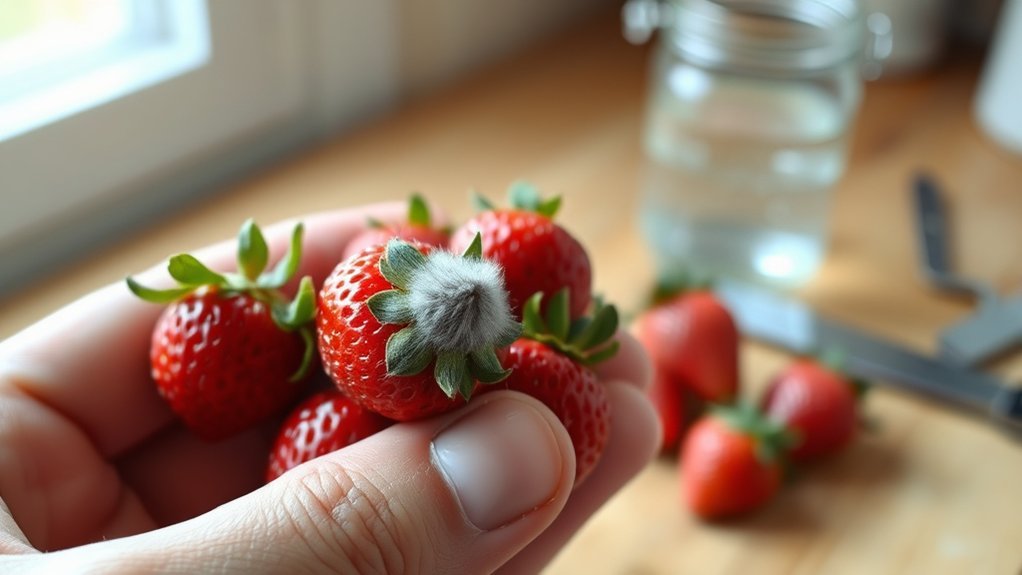
When you spot a moldy strawberry in a bunch, you should throw out that berry and any others touching it to stop the mold from spreading.
If you find a moldy strawberry, discard it along with any berries it’s touching to prevent mold spread.
You don’t always have to discard the whole bunch unless certain conditions arise.
Here’s when you should consider tossing all:
- More than 25% of the strawberries are moldy.
- You see multiple moldy berries scattered throughout.
- You or someone who’ll consume them has a mold allergy.
- The remaining berries feel soft or show signs of spoilage.
If the other strawberries look firm and free of visible mold, you can rinse and safely consume them.
Just avoid eating any visibly moldy berry to stay safe.
How Should You Handle Strawberries With Mold on Some Berries?
If you notice mold on one strawberry, it’s best to toss that berry along with any others that were touching it. This helps prevent the mold from spreading to the rest.
Then, take a good look at the remaining strawberries—check for any softness or bruising before you eat them.
Finally, rinse the good berries well under running water to wash away any leftover spores.
Inspect And Separate
Although spotting mold on a few strawberries can be unsettling, you should immediately remove the affected berries along with any nearby ones that might be contaminated. This helps prevent the mold from spreading further.
When you inspect your strawberries, keep these steps in mind:
- Carefully check each berry for visible mold.
- Discard any moldy berries you find.
- Remove adjacent berries that might be contaminated.
- Rinse fresh-looking berries thoroughly before eating.
Proper Disposal Methods
Since mold can spread rapidly among strawberries, you should discard any visibly moldy berries right away and remove any that are touching them. If more than 25% of the strawberries in your container are moldy, it’s safest to discard the entire batch.
After removal, inspect remaining strawberries for softness or bruising, as these signs indicate spoilage. Rinse unaffected strawberries thoroughly before you consume them to eliminate potential mold spores.
| Action | Reason |
|---|---|
| Discard moldy berries | Prevent mold from spreading |
| Remove touching berries | Avoid contamination |
| Inspect remaining | Detect early spoilage |
| Rinse before consuming | Remove spores and bacteria |
Proper disposal guarantees you avoid consuming harmful mold and keep your strawberries safe to eat.
How Dangerous Are Mold Toxins in Moldy Strawberries?
When you eat moldy strawberries, you risk ingesting mycotoxins produced by certain molds like Botrytis cinerea. These toxins can cause health problems if you consume them in significant amounts.
These mycotoxins pose specific health risks you should consider: allergic reactions or respiratory issues, especially if you’re sensitive; digestive disturbances such as nausea, vomiting, or diarrhea; and a greater risk for vulnerable groups like pregnant or immunocompromised individuals.
There’s also the potential for long-term effects if you’re exposed repeatedly to mycotoxins. The USDA strongly advises against eating moldy strawberries to avoid these dangers.
While many molds on strawberries may seem harmless, it’s better to be safe than sorry. Avoid consuming moldy strawberries to protect your health and minimize exposure to hazardous mycotoxins.
Simple Ways to Prevent Mold on Your Strawberries at Home
To keep your strawberries fresh and mold-free, you should store them properly and handle them carefully. Avoid washing strawberries until you’re ready to eat them, since excess moisture encourages mold growth.
When you do wash them, use a vinegar solution. Mix 1 part vinegar with 4 parts water to effectively kill mold spores and prevent mold.
Store strawberries in a breathable container in the refrigerator and place a dry paper towel inside to absorb excess moisture.
Regularly inspect your strawberries and promptly remove any moldy or damaged berries to stop mold from spreading.
When Should You See a Doctor After Eating Moldy Strawberries?
How do you know if eating moldy strawberries requires a doctor’s visit? You should seek medical attention if you experience certain symptoms or adverse reactions.
Pay close attention to your body and act promptly if you notice any of the following:
- Nausea, vomiting, or diarrhea indicating possible gastrointestinal discomfort.
- Allergic reactions such as respiratory issues, hives, or swelling.
- Persistent or unusual symptoms that don’t improve over time.
- If you’re pregnant, elderly, or have a weakened immune system and notice any adverse reactions.
Monitoring your health after eating moldy strawberries is key.
Keeping a close watch on your symptoms after consuming moldy strawberries is essential for your well-being.
Don’t hesitate to consult a healthcare provider to guarantee your safety and receive appropriate care if needed.
Frequently Asked Questions
Can Moldy Strawberries Be Used Safely in Cooking or Baking?
You can’t safely use moldy strawberries in cooking or baking, even with mold removal techniques.
Cooking safety guidelines recommend discarding them because mold spores penetrate beyond visible spots, risking toxins.
Plus, flavor impact assessment shows mold imparts sour, unpleasant tastes, ruining dishes.
Nutrition loss analysis also suggests compromised quality.
To keep your meals safe and tasty, always choose fresh, uncontaminated strawberries instead of trying to salvage moldy ones.
Does Freezing Strawberries Prevent Mold Growth?
Yes, freezing strawberries prevents mold growth by stopping mold spores’ metabolic activity.
When you use proper freezing methods, like washing and drying strawberries thoroughly and then storing them in airtight containers, you guarantee effective mold prevention and extend strawberry storage life.
This approach enhances food safety by minimizing spoilage risks.
Just remember, freezing changes texture but keeps your strawberries safe and fresh longer, making it a smart choice for preserving berries.
Are Some Strawberry Varieties More Prone to Mold Than Others?
Yes, some strawberry varieties are more prone to mold than others.
You’ll find that varieties like June-bearing and everbearing strawberries have less mold resistance due to their higher moisture content and softer texture.
Growing conditions, such as warmer climates and late-season harvests, also increase mold risk.
Plus, how you store strawberries matters. Proper storage methods can help slow mold growth, especially for sensitive varieties like Chandler and Seascape.
How Long Does Mold Take to Develop on Strawberries After Purchase?
Mold growth on strawberries can kick in lightning-fast, sometimes within just one to two days after purchase if you slack on storage!
High humidity levels and warm temperatures speed this up, drastically shortening their shelf life.
To keep your berries fresh longer, follow smart storage tips: refrigerate them promptly, use breathable containers, and avoid washing before storing.
If you do this, you’ll slow mold development and enjoy tasty strawberries for up to a week.
Can Pets Get Sick From Eating Moldy Strawberries?
Yes, pets can get sick from eating moldy strawberries. Mold toxicity poses a real threat to pet health, causing vomiting or diarrhea.
To guarantee fruit safety, you should always practice proper strawberry storage and avoid giving your pets any moldy fruit.
If your pet consumes moldy strawberries, watch for symptoms and consult your vet promptly.
Preventing access to spoiled fruit is key to keeping your furry friends safe and healthy.
Conclusion
If you eat a moldy strawberry, don’t panic. Most healthy people won’t get seriously sick. In fact, about 10% of food spoilage is caused by mold on fruits like strawberries.
Still, it’s smart to avoid eating moldy berries since some molds produce toxins that might harm you. Always inspect your strawberries carefully, rinse them well, and toss any with visible mold to keep your snacks fresh and safe.