
What Family Do Strawberries Belong To?
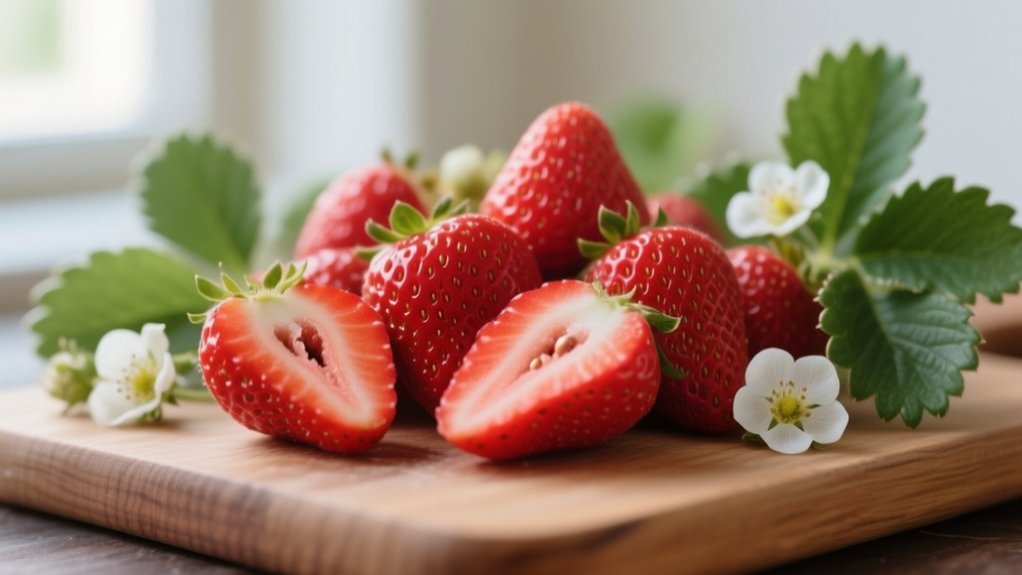
You’ll find strawberries belong to the Rosaceae family, the same family as apples, raspberries, and roses. This group features vibrant, five-petaled flowers and compound leaves that influence how strawberries grow.
Strawberries fall under the genus Fragaria, with modern types coming from hybrid species with unique genetics that boost flavor and resilience. Their family traits affect everything from cultivation to potential allergies.
Exploring these connections reveals why strawberries are so distinctive among fruits.
Strawberry Family And Why It Matters
Although you might think of strawberries as unique, they actually belong to the Rosaceae family, which includes fruits like apples and raspberries as well as roses. Knowing that the cultivated strawberry, scientifically named Fragaria ananassa, is part of this family helps you understand its botanical connections and cultivation needs.
Since members of the Rosaceae family often share similar flowering patterns and fruit structures, recognizing these traits can guide you in growing strawberries more effectively.
It also alerts you to common pests and diseases that affect related plants, helping you manage problems early.
This family connection emphasizes strawberries’ agricultural importance and offers insights into their care, making your gardening or farming efforts more informed and successful.
Key Characteristics Of The Strawberry’s Rosaceae Family
The Rosaceae family, to which strawberries belong, stands out for its distinctive flowering plants that typically feature compound leaves and vibrant, five-petaled flowers with numerous stamens.
Strawberries belong to the Rosaceae family, known for compound leaves and vibrant five-petaled flowers with many stamens.
When you explore the Rosaceae family, you’ll notice several key traits that set its members apart.
These plants not only produce beautiful flowers but also yield fleshy fruits, making them valuable both ecologically and economically.
Here’s what you should know:
- Most are flowering plants with showy blooms
- Compound leaves are common among species
- Flowers usually have five petals and many stamens
- The family includes over 3,000 species, showing great diversity
- Many produce fleshy fruits like strawberries, apples, and cherries
Understanding these traits helps you appreciate the unique place strawberries occupy in the Rosaceae family.
Strawberries Within The Genus Fragaria
You’ll find that the genus Fragaria includes several species, each with unique traits shaping the strawberry family tree.
It’s pretty fascinating how these different species come together through hybridization. This mixing is actually what helps explain how cultivated strawberries got their size and flavor.
Fragaria Genus Species
Strawberries thrive within the diverse Fragaria genus, part of the Rosaceae family that also includes apples and raspberries.
When you explore Fragaria species, you’ll discover a fascinating variety that contributes to the strawberries you enjoy. Here’s what you should know:
Fragaria × ananassa is the most common cultivated strawberry. It’s a hybrid of Fragaria virginiana and Fragaria chiloensis.
Wild strawberries come from Fragaria vesca, known for its diploid chromosome set.
The genus Fragaria contains at least 11 species with different chromosome levels like diploid, tetraploid, and octoploid.
Species diversity in Fragaria shows significant adaptation and evolution.
Breeding efforts have shaped modern strawberries to improve fruit quality and yield.
Understanding these Fragaria species helps you appreciate the complexity behind your favorite berry.
Strawberry Phylogenetic Tree
Although Fragaria species vary widely, their evolutionary relationships form a complex phylogenetic tree that reveals how different strawberries are connected. Belonging to the Rosaceae family, Fragaria includes at least 11 species, each contributing uniquely to this tree.
You’ll find that wild species like Fragaria vesca sit alongside cultivated ones such as Fragaria ananassa, the octoploid strawberry with eight chromosome sets.
Recent phylogenetic studies, especially those using chloroplast genomics, have clarified how these species evolved and diversified.
Polyploidy, having multiple chromosome sets, is common in Fragaria and plays a key role in their adaptability and traits.
Understanding this phylogenetic framework helps you appreciate the evolutionary history within the genus Fragaria and its place in the Rosaceae family.
Hybridization and Genetics
When you explore the genetics of Fragaria, you quickly see how hybridization shapes the modern garden strawberry.
Fragaria × ananassa, the common garden strawberry, is a hybrid of Virginia and Chilean strawberries.
This hybridization, combined with Fragaria’s octoploid genetics, creates diverse, robust fruit.
You’ll find that hybridization enhances key traits like disease resistance and flavor, making strawberries more productive and delicious.
Understanding Fragaria genetics also reveals complex relationships among over 20 species within the genus.
- Fragaria × ananassa is a hybrid species
- Strawberries have eight sets of chromosomes (octoploid)
- Hybridization improves fruit size and flavor
- Genetics contribute to disease resistance
- Chloroplast genomics clarifies Fragaria species relationships
Evolutionary History Of Strawberries In Rosaceae
You’ll find that strawberries trace back to ancestral species within the Rosaceae family.
Over centuries, they evolved through some key hybridization events.
It’s really interesting to understand when and how these hybrids formed because it helps explain the strawberry’s development, especially the creation of the garden strawberry.
Plus, you’ll see how polyploidy played an essential role in boosting their size and productivity.
Ancestral Species Origins
Because strawberries belong to the Rosaceae family, which includes roses, apples, and raspberries, you can trace their origins within a diverse group of flowering plants.
The modern garden strawberry (Fragaria ananassa) emerged from the natural hybridization of the Virginia strawberry (Fragaria virginiana) and the Chilean strawberry (Fragaria chiloensis) in the 18th century.
You’ll find that evolutionary roots run deeper, with Fragaria vesca playing a vital role as a wild ancestor within the genus.
Here are some key points about their ancestral species origins:
- Fragaria vesca is a foundational wild strawberry species
- Virginia strawberry contributed hardiness and flavor
- Chilean strawberry added size and robustness
- Hybridization led to octoploid Fragaria ananassa
- Cultivation began in Europe during the 1300s
This evolutionary path shapes the strawberries you enjoy today.
Hybridization Events Timeline
Although strawberries share a family with apples and raspberries, their unique hybridization events set them apart within Rosaceae. The journey began in the 18th century when Fragaria virginiana and Fragaria chiloensis met in Europe, creating Fragaria ananassa.
This hybridization event sparked the birth of the modern garden strawberry, first recorded in 1759. Antoine Nicolas Duchesne’s discovery in 1766 confirmed this essential genetic blend.
As you explore strawberry plants today, remember that these hybridization events shaped their distinct qualities, making them special members of Rosaceae.
| Year | Event | Impact |
|---|---|---|
| 1759 | Fragaria ananassa recorded | Modern strawberry born |
| 1766 | Hybrid origin identified | Genetic foundation established |
| 18th c. | Crossbreeding of species | Enhanced fruit diversity |
Polyploidy and Evolution
When you trace the evolutionary history of strawberries within the Rosaceae family, polyploidy stands out as a key factor shaping their development.
The Fragaria genus, which includes the cultivated garden strawberry Fragaria ananassa, has evolved through multiple polyploidy events. This process gave strawberries eight sets of chromosomes (octoploid), boosting their size and yield.
Polyploidy also enabled selective breeding to enhance disease resistance, cropping seasons, and fruit quality.
Thanks to chloroplast genomics, scientists have unraveled this complex evolution, deepening our understanding of strawberries’ place in Rosaceae.
- Fragaria ananassa is a hybrid of two wild species
- Polyploidy results in octoploid strawberries with 8 chromosome sets
- Polyploidy improves traits like fruit size and resistance
- Chloroplast genomics revealed Fragaria’s evolutionary history
- Rosaceae family includes roses, apples, and strawberries
How Polyploidy Shapes Strawberry Genetics And Classification
If you’ve ever wondered why strawberries come in different sizes and varieties, polyploidy plays a major role in shaping their genetics and classification.
Within the genus Fragaria, species exhibit varying chromosome counts, including diploid, tetraploid, hexaploid, and octoploid forms.
Most cultivated strawberries are octoploid (8N), a result of polyploidy that boosts fruit size and yield. This genetic complexity influences how these plants are classified and bred.
Polyploidy not only increases chromosome numbers but also enhances genetic diversity, allowing Fragaria species to adapt and evolve.
Understanding polyploidy helps you grasp why strawberries differ so much and why breeders favor octoploid varieties for commercial growth.
It’s a fascinating glimpse into strawberry genetics that underpins their classification within the wider Rosaceae family.
Botanical Features Showing Strawberry’s Rosaceae Heritage
Because strawberries belong to the Rosaceae family, you can spot several botanical traits that link them to relatives like apples, cherries, and raspberries. Their botanical classification as an accessory aggregate fruit sets them apart, developing from multiple ovaries of a single flower.
Strawberries, as Rosaceae members, share traits with apples, cherries, and raspberries, developing from multiple ovaries.
This family’s genetic diversity explains why strawberries share distinctive features with other members.
Key botanical features include:
- Seeds (achenes) on the fruit’s surface, not inside
- Multiple pistils per flower, common in Rosaceae
- Accessory aggregate fruit structure
- Shared floral morphology with apples and cherries
- Wide genetic diversity influencing breeding and traits
Understanding these traits helps you appreciate strawberries’ place within Rosaceae and how their genetic diversity shapes their unique characteristics.
How Strawberries Differ From Other Rose Family Fruits
Although strawberries share a family tree with apples, cherries, and raspberries, they stand out due to several unique traits. As members of the rose family, strawberries belong to the genus Fragaria, but unlike most rosaceous fruits, they’re aggregate accessory fruits.
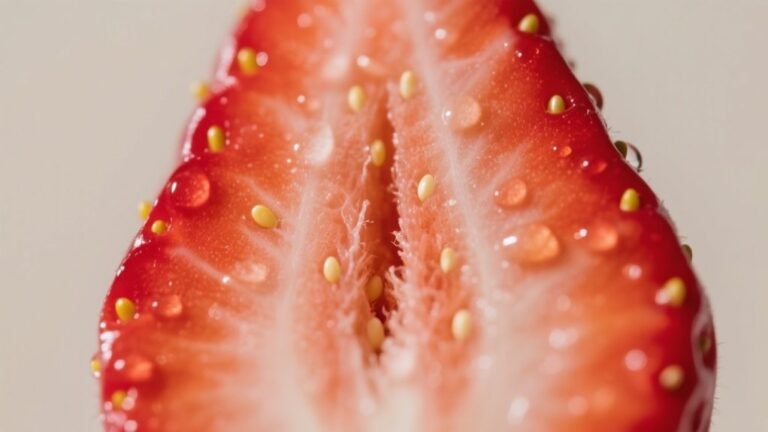
This means the fleshy part you eat isn’t derived from the ovary but from the receptacle, with tiny achenes (seeds) on the outside rather than enclosed inside. You’ll notice their bright red color comes from pelargonidin-3-glucoside, a pigment distinct from those in other rose family fruits.
Furthermore, strawberries are octoploid, carrying eight sets of chromosomes, which is more than many relatives. Their flavor also sets them apart, thanks to a unique blend of sugars, acids, and volatile compounds that you won’t find in firmer, less aromatic rose family fruits.
Implications Of Strawberry’s Family Traits For Cultivation And Breeding
You’ll find that strawberries inherit key traits from the Rosaceae family, which really shapes how they grow and respond to their environment.
These family characteristics give you some solid advantages in breeding, like improving flavor and resilience while keeping pests and diseases in check.
Knowing these traits helps you choose the right varieties and breeding strategies, making it easier to get better yields and adaptability.
Rosaceae Family Characteristics
When you consider strawberries’ membership in the Rosaceae family, you’ll see how traits like compound leaves and susceptibility to certain pests shape their cultivation.
This family, rich in genetic diversity, influences how you manage soil and pest control.
You’ll want to focus on incorporating organic matter to maintain well-drained, nutrient-rich soils that Rosaceae plants prefer.
Understanding these characteristics helps you optimize strawberry growth and health.
- Compound leaves affect plant structure and light exposure
- Susceptibility to common Rosaceae pests calls for tailored pest management
- Genetic diversity within Rosaceae offers a broad breeding pool
- Preference for nutrient-rich, well-drained soils means adding organic matter
- Similar disease vulnerabilities require integrated control strategies
Knowing these traits lets you cultivate strawberries more effectively within their Rosaceae family context.
Breeding Advantages From Rosaceae
Understanding the Rosaceae family’s characteristics sets the stage for appreciating how these traits benefit strawberry breeding. You’ll find that the Rosaceae family offers genetic diversity essential for breeding programs, enhancing disease resistance and adaptability.
Its floral structure and pollination ease hybridization, allowing you to develop cultivars with improved flavor, yield, and shelf life. Here’s a quick look at how these advantages play out:
| Advantage | Benefit in Breeding Programs |
|---|---|
| Genetic Diversity | Boosts disease resistance |
| Cross-breeding Potential | Enhances flavor and yield |
| Polyploidy Traits | Improves fruit quality and harvest |
Strawberry Family Links To Allergy And Health Concerns
Although strawberries are beloved for their sweet flavor, they can trigger allergic reactions due to proteins like Fra a1 found in the Rosaceae family, which includes apples and raspberries.
If you’re sensitive to strawberry allergens, you might experience oral allergy syndrome, where symptoms resemble hay fever or hives. Understanding these health concerns helps you make safer choices.
- Oral allergy syndrome is the most common reaction to strawberries.
- Symptoms range from dermatitis to severe breathing difficulties.
- White-fruited strawberry cultivars may cause fewer allergic responses.
- Greenhouse workers can develop occupational allergies from exposure.
- Research on colorless strawberry mutants aims to reduce allergen levels.
Being aware of these factors lets you enjoy strawberries while managing potential health risks.
Practical Takeaways For Understanding Strawberry’s Botanical Identity
Since strawberries belong to the Rosaceae family, recognizing their botanical traits can help you appreciate their unique qualities. As plants in this family, strawberries share characteristics with apples and raspberries.
Knowing that their scientific genus is Fragaria and that the most common species is Fragaria ananassa gives you insight into their classification. Unlike typical fruits, strawberries are aggregate accessory fruits. The juicy part you eat comes from the plant’s receptacle, while the tiny seeds on the surface are the actual fruits.
Understanding that there are over 20 Fragaria species with varying chromosome numbers helps explain differences in size and flavor.
Frequently Asked Questions
Are Strawberries Related to Roses as Decorative Plants?
Yes, strawberries are related to roses as decorative plants since they both share rose family characteristics.
When you practice strawberry plant care, you’ll notice they thrive in similar conditions as roses, like well-drained soil and plenty of sun.
While strawberries are mainly grown for their fruit, some varieties have decorative fruit usage and attractive flowers, making them great additions to your garden alongside roses for both beauty and harvest.
Can Strawberry Plants Grow in All Climates?
You can’t grow strawberry plants in all climates because their climate adaptability has limits. They thrive in temperate growing zones, where seasonal growth aligns with moderate temperatures.
Too cold or too hot, and their fruit and flower buds suffer.
However, if you choose everbearing or day-neutral varieties, you’ll find better adaptability across different zones.
How Long Does It Take for Strawberry Plants to Bear Fruit?
You can expect strawberry plants to bear fruit in about 8 to 12 weeks after planting.
The fruiting time depends on the variety and growth conditions like temperature, sunlight, and soil quality.
If you provide good plant care, including adequate watering, fertilization, and proper sunlight, you’ll encourage healthy growth and might even shorten the fruiting time.
Keep an eye on these factors to enjoy fresh strawberries sooner.
Are Wild Strawberries Safe to Eat?
Think of wild strawberries as nature’s tiny treasures, safe to eat when you master wild strawberry identification. Their sweet flavor and aroma embody wild strawberry benefits, offering you delicious, nutrient-rich treats.
Remember, wild strawberry varieties can look similar to toxic plants, so always double-check before you nibble.
Once you’re sure, you can enjoy them raw or cooked, adding a burst of natural goodness to your meals and desserts.
What Pests Commonly Affect Strawberry Plants?
You’ll often face pests like strawberry aphids, spider mites, thrips, birds, snails, and slugs attacking your strawberry plants.
These pests threaten plant health and fruit quality, so effective pest control is essential.
You can use organic solutions like introducing beneficial insects or applying neem oil to manage them naturally.
Combining these with cultural practices enhances plant health and reduces pest damage without relying solely on chemicals.
Conclusion
So, now you know strawberries belong to the Rosaceae family, the same family as roses, apples, and cherries. Curiously, over 90% of the strawberries you eat come from plants that are octoploid, meaning they have eight sets of chromosomes. This unique trait boosts their flavor and size.
Understanding their family helps you appreciate how these berries grow and why breeders focus on certain traits, making your strawberry experience even sweeter and more fascinating.