
How Are Strawberries Used in Cooking?
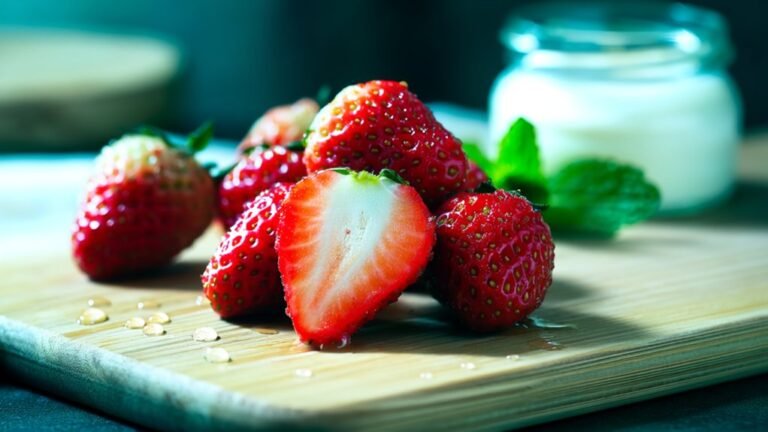
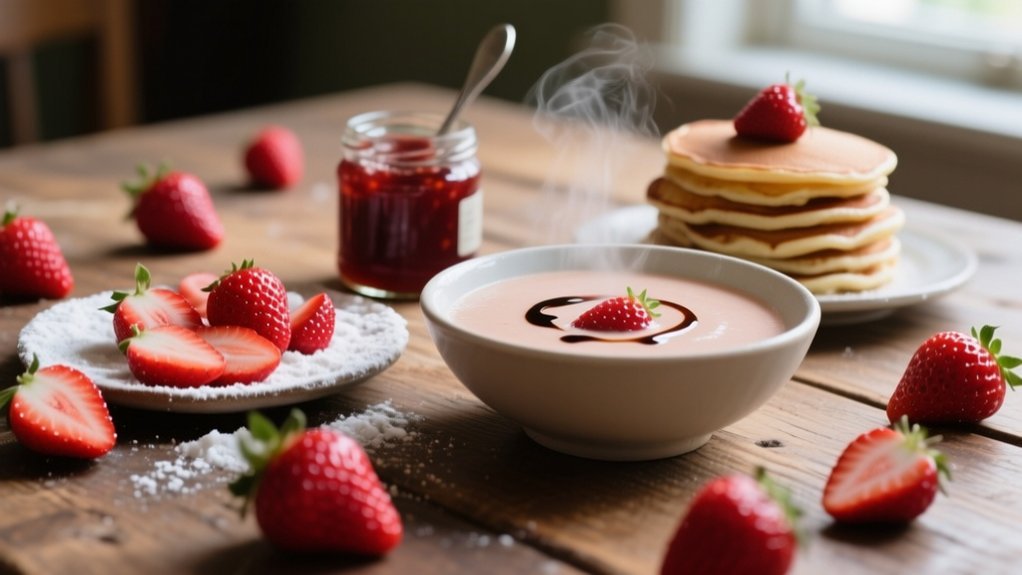
You can use strawberries to brighten both sweet and savory dishes with their natural sweetness and vibrant flavor. Add fresh or frozen strawberries to baked goods like muffins, pies, and cobblers for moisture and a fruity twist.
They also make excellent salad additions or sauces paired with grilled meats. For breakfast, toss them into smoothies, oatmeal, or toast for extra color and nutrition.
Keep exploring to discover creative ways to enjoy strawberries in all your meals.
Choosing the Best Strawberries
How do you pick the best strawberries for your recipes? When choosing the best strawberries, look for firm, plump berries that are fully red with intact green leaves.
Ripe strawberries offer the sweetest flavor, so avoid any with browning near the stem or pale, green-tipped ones. They won’t ripen after picking. A little softness is fine if you plan to use them right away.
To keep your berries fresh, store them at room temperature until you’re ready to cook or bake. Refrigerate only if you need to keep them for 2-3 days.
Preparing Strawberries for Cooking and Baking
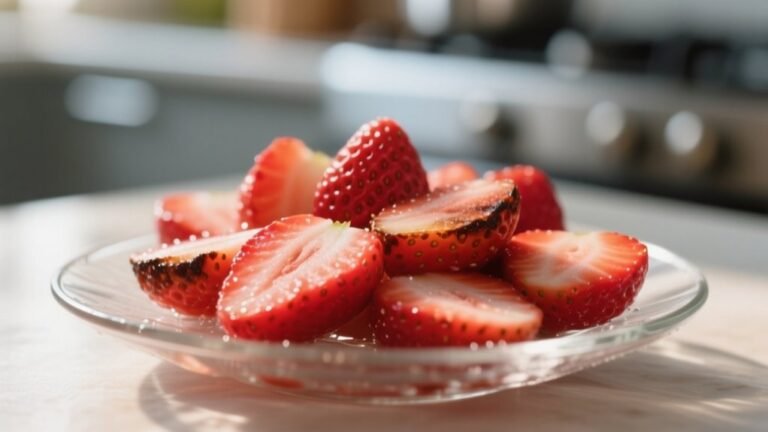
Before you start cooking or baking with strawberries, rinse them just before use to keep their texture firm and fresh. Next, hull the strawberries by slicing off the stem and white core with a paring knife or huller.
Then, prepare the strawberries according to your recipe. Slice, dice, or puree them to suit different dishes. For example, pureed strawberries work well in creamy fillings, while sliced strawberries can enhance batters for muffins or cakes, adding moisture and flavor.
| Preparation Method | Tool Needed | Common Use |
|---|---|---|
| Rinse | Water | Clean strawberries |
| Hull | Paring knife/huller | Remove stems and cores |
| Slice/Dice/Puree | Knife or blender | Baking and cooking prep |
Can You Cook and Bake With Frozen Strawberries?
You can definitely cook and bake with frozen strawberries—they often taste just as good as fresh ones because they’re frozen at their peak ripeness.
When you’re baking, a handy trick is to rinse them quickly and toss them in a little flour. This helps keep their color and texture just right.
Frozen strawberries are perfect for recipes like cobblers and syrups. Plus, you don’t even need to thaw them first; using them straight from the freezer works really well!
Frozen Strawberries Versus Fresh
Many bakers turn to frozen strawberries when fresh ones aren’t in season or readily available. You can use frozen strawberries directly from the freezer, making them a convenient option without sacrificing flavor.
While fresh strawberries provide superior texture, especially in raw or lightly cooked dishes, frozen ones excel in baked goods and sauces where moisture and flavor matter more than firmness.
| Feature | Fresh Strawberries | Frozen Strawberries |
|---|---|---|
| Texture | Firm, juicy | Softer after thawing |
| Availability | Seasonal | Year-round |
| Preparation | Rinse and slice | Rinse to reduce color bleed |
| Baking Use | Best for texture-sensitive recipes | Ideal for compotes, syrups, and cobblers |
| Handling Tips | Use as is | Toss in flour to prevent sinking |
Choosing between them depends on your recipe’s needs.
Baking Tips With Frozen
Although frozen strawberries lack the firm texture of fresh ones, they work wonderfully in baking and cooking when handled correctly. You can use frozen strawberries straight from the freezer, which saves prep time and keeps them handy year-round.
Before adding them to your recipe, rinse frozen strawberries under cold water to reduce color bleeding and keep your dish looking vibrant. To prevent them from sinking to the bottom of cakes or muffins, toss the frozen strawberries in a little flour before folding them into the batter.
Frozen strawberries shine in recipes like compotes, syrups, and Southern strawberry cobbler, where texture is less critical.
Just remember, they aren’t ideal when you need the crispness and appearance of fresh strawberries.
Uses In Recipes
Frozen strawberries offer versatile options in the kitchen, whether you’re baking, cooking, or blending. You can use them straight from the freezer in many strawberry recipes without sacrificing flavor since they’re picked at peak ripeness and frozen quickly.
If you want to prevent color bleeding, rinse them under cold water first. Tossing frozen strawberries in flour before adding them to batter keeps them from sinking during baking.
Their softer texture makes them perfect for compotes, syrups, or Southern strawberry cobbler. For purees, thaw and blend frozen strawberries to get the smooth consistency you need without losing quality.
Using Strawberries in Sweet Baked Treats
Anyone looking to add natural sweetness and moisture to their baked treats will find strawberries a perfect ingredient. You can fold fresh strawberries into cookie dough or muffin batter to boost texture and flavor.
Pureed strawberries work wonderfully in frostings and creamy fillings, giving your desserts a vibrant color and fruity taste. When baking pies or cobblers, strawberries provide a delightful balance of sweet and tart, especially paired with a buttery crust.
Even if you’re making a strawberry salad, incorporating strawberries into your baked goods adds a fresh twist.
Adding Strawberries to Savory Recipes
When you add strawberries to savory dishes, you introduce a bright, sweet-tart flavor that can transform everyday meals.
Strawberries work wonders in salads, especially when paired with pungent greens and a balsamic dressing.
You can also incorporate strawberries into savory sauces, like a strawberry balsamic reduction, which elevates grilled meats and vegetables.
Try combining strawberries with basil in recipes such as Strawberry Basil Chicken for an invigorating, aromatic twist.
Sliced strawberries add a fruity contrast to sandwiches, like a Bacon Lettuce and Strawberry sandwich.
For something different, use strawberries on a Strawberry, Basil, and Balsamic Pizza, where their sweetness balances rich cheese and balsamic vinegar.
Adding strawberries to savory dishes lets you experiment with fresh, vibrant flavors that brighten your cooking.
Making Strawberry Jam and Preserves at Home
Making strawberry jam at home requires just a handful of simple ingredients: ripe strawberries, sugar, and a splash of lemon juice. You don’t need pectin.
Simmer these together until they reach a thick, jelled consistency that highlights the strawberries’ natural sweetness.
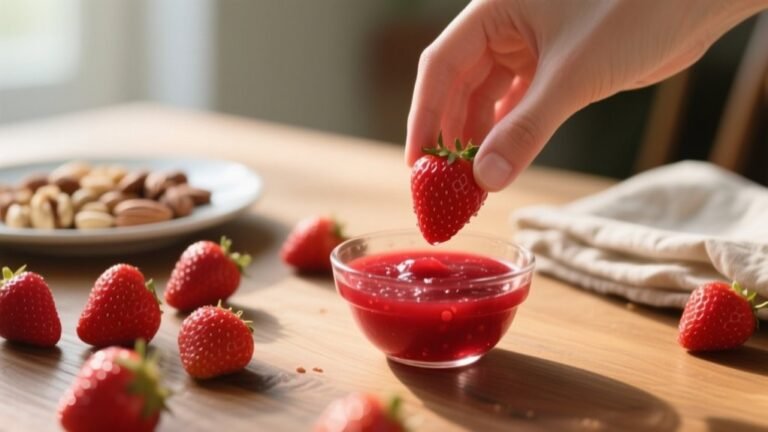
Simmer until thick and jammy, bringing out the natural sweetness of fresh strawberries.
Once your strawberry jam is ready, you can preserve it using a hot water bath. This method allows you to store it without refrigeration for months.
If you’re new to canning, try making microwave strawberry jam. It’s a quick, easy method that still delivers a perfect jammy texture. Plus, it’s great for beginners or even kids.
Fresh homemade strawberry preserves capture the vibrant taste of summer. They’re ideal for spreading on toast or adding a fruity touch to your favorite desserts year-round.
Adding Strawberries to Fresh Salads and Side Dishes
Although strawberries are often enjoyed as a sweet treat, you can easily boost your salads and side dishes by adding their juicy, vibrant flavor.
During strawberry season, slice fresh strawberries to add a burst of sweetness to greens like spinach, arugula, or mixed lettuces. Pairing them with tangy balsamic vinaigrette balances acidity and enhances flavors.
For added texture, toss in nuts or seeds, creating a delightful contrast with the soft fruit. Strawberries also brighten quinoa or grain salads, making your side dishes visually appealing and flavorful.
Beyond taste, strawberries provide vitamins, antioxidants, and fiber, giving your meals a nutritious boost.
Creative Strawberry Desserts to Try
Fresh strawberries aren’t just for salads and sides. They can also shine as the star ingredient in a variety of creative desserts.
You can elevate your dessert game with these unique strawberry recipes that highlight the fruit’s natural sweetness and versatility.
Try these delicious ideas:
- Strawberry Shortcake: Classic and perfect for summer, balancing sweet and savory flavors.
- Strawberry Cheesecake Cookies: Combine creamy cheesecake with chewy cookies for a delightful treat.
- Fresh Strawberry Pie: Showcases strawberries naturally, best enjoyed fresh for full flavor.
- Ricotta-Mascarpone Mousse with Balsamic Strawberries: A light, creamy dessert with an elegant twist.
Explore these strawberry recipes to impress your guests or satisfy your sweet tooth with something fresh and inventive.
Strawberries for Breakfast and Snacks
Start your day by adding strawberries to your cereal, pancakes, or oatmeal—they give a fresh and flavorful boost that’s hard to beat.
Or, if you’re in the mood for something quick, whip up an easy strawberry smoothie.
And when you’re just looking for a snack, try strawberries with a little sour cream and brown sugar—it’s a simple, tasty combo.
These ideas make it super easy to enjoy strawberries anytime you want a nutritious treat.
Breakfast Toppings Variety
When you add strawberries to your breakfast cereals, pancakes, or waffles, you not only enhance the flavor but also introduce natural sweetness that makes your meal more enjoyable and nutritious.
Juicy strawberries bring vibrant color and a fresh texture that transforms ordinary dishes into delightful treats.
You can mix them into yogurt or smoothies to boost antioxidants, vitamins, and fiber, improving your morning nutrition.
Consider these tasty topping ideas:
- Add sliced strawberries to oatmeal for a colorful, flavorful start to your day
- Top toast or bagels with strawberries and cream cheese or nut butter for a satisfying bite
- Sprinkle strawberries on pancakes or waffles to balance sweetness naturally
- Blend strawberries into yogurt or smoothies for added health benefits and taste
Enjoy the versatile uses of strawberries to brighten your breakfast routine!
Healthy Snack Options
Strawberries aren’t just great for breakfast; they make excellent snacks throughout the day. When you need healthy snack options, reach for a handful of fresh strawberries. They’re naturally sweet, low in calories, and packed with vitamin C, which supports your immune system.
You can enjoy them plain or add sliced strawberries to yogurt, oatmeal, or salads for a rejuvenating boost. Their juicy texture and vibrant flavor offer a satisfying treat without added sugars.
Plus, strawberries provide antioxidants and fiber, helping you stay full between meals. Whether you’re at home or on the go, these versatile berries make it easy to snack smart and keep your energy up.
Incorporating strawberries into your routine is a simple way to nourish your body deliciously.
Easy Strawberry Smoothies
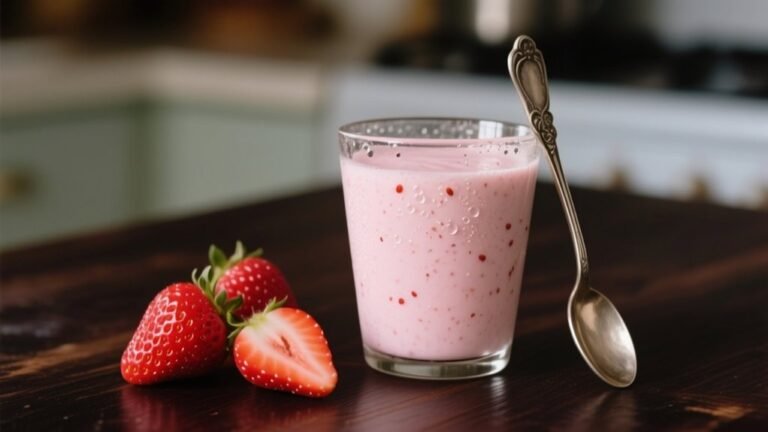
If you want a quick, nutritious boost, easy strawberry smoothies fit perfectly into your breakfast or snack routine. You can blend fresh or frozen strawberries with yogurt or milk for a creamy, satisfying drink.
Strawberry smoothies are versatile, letting you add ingredients that boost flavor and nutrition without extra effort.
Consider these tips to elevate your strawberry smoothies:
- Mix in bananas, spinach, or oats for extra nutrients and texture
- Add honey or chia seeds for natural sweetness and health benefits
- Use coconut water or almond milk for a light, invigorating twist
- Prepare your smoothie in about 5 minutes for a fast, convenient option
With these ideas, you’ll enjoy strawberry smoothies that are delicious, healthy, and simple to make anytime.
Storing Strawberries for Maximum Freshness
Although they’re delicate, you can keep strawberries fresh by storing them properly in a moisture-proof container lined with a paper towel to absorb excess moisture.
Store strawberries in a moisture-proof container with a paper towel to keep them fresh longer.
When storing strawberries for maximum freshness, avoid washing them until right before use, since excess moisture encourages mold growth.
Select firm, plump strawberries with bright green leaves and no browning around the stems to guarantee quality.
Refrigerate them for 2 to 3 days, but let them sit at room temperature briefly before eating to boost their flavor, as cold dulls taste.
Avoid freezing whole strawberries because thawing ruins their texture.
If you need to preserve them longer, use frozen strawberries in cooked dishes instead.
Frequently Asked Questions
Can Strawberries Be Used in Fermented Foods Like Kombucha?
Yes, you can definitely use strawberries in fermented foods like kombucha. During the fermentation process, the natural sugars in strawberries feed the SCOBY, helping beneficial probiotics develop.
You’ll want to mash or puree fresh or frozen strawberries to get the best flavor and avoid disrupting carbonation.
Adding them during secondary fermentation enhances taste and typically takes 3 to 7 days for flavors to meld perfectly. Just keep an eye on the fermentation process!
Are Strawberries Safe for Pets to Eat?
Strawberries symbolize sweetness and care, making them a thoughtful treat for your furry friend. Yes, they’re safe for pets to eat in moderation, supporting pet safety with fiber and antioxidants.
Just wash them well, remove stems, and introduce slowly to avoid tummy troubles.
Always check with your vet first to guarantee your pet’s health isn’t compromised. Treat them gently, and strawberries can be a delightful, healthy snack for your companion.
How Do Strawberries Affect the Texture of Baked Goods?
Strawberries affect the texture of baked goods by adding baking moisture, which keeps them tender and prevents dryness.
When you mix strawberries into your batter, their natural water content creates a softer crumb and a delicate mouthfeel.
Their acidity also reacts with leavening agents, helping your cakes or muffins rise better.
Plus, using pureed strawberries can replace fats, giving your treats a lighter, less dense texture you’ll love.
Can Strawberry Leaves Be Used in Cooking or Tea?
Did you know strawberry leaves pack vitamins C and K, boosting your Leaf Benefits?
Yes, you can definitely use strawberry leaves in cooking or tea. They make an invigorating tea with anti-inflammatory properties when steeped.
You can also toss them into salads or smoothies for added nutrition.
Just be sure to wash them thoroughly to enjoy their mild, slightly sweet flavor safely. Incorporating strawberry leaves adds a fresh twist to your dishes.
What Are Common Allergies Related to Strawberries?
Strawberry allergies often cause reactions like itching or swelling in your mouth, especially if you have oral allergy syndrome.
You might also experience hives, skin rashes, or even respiratory issues.
If you’re allergic to latex, you’re more prone to cross-reactivity with strawberries.
Gastrointestinal problems can occur, too.
Since about 1-5% of people, particularly kids, have strawberry allergies, it’s important you avoid them if you notice any symptoms.
Conclusion
When you bring strawberries into your kitchen, you’re inviting a burst of sunshine and sweetness to every dish. Whether you’re baking, tossing them in salads, or blending them into breakfast, these ruby gems add vibrant color and flavor that dance on your tongue.
Don’t hesitate to get creative. Let strawberries be the spark that brightens your meals and snacks, turning everyday moments into delicious memories you’ll savor again and again.