
How to Seed Strawberries in 7 Easy Steps for Beginners
Start by selecting fresh strawberry seeds, then dry and chill them for better germination. Gather supplies like soil, seedling pots, and tools.
Cut toilet rolls to make biodegradable pots and fill them with moist, well-drained soil. Sprinkle seeds on top without burying them and keep the soil consistently moist with bottom watering.
Give your seedlings plenty of light, thin them as they grow, and harden them off outdoors before transplanting. Follow these simple steps, and you’ll soon be growing healthy strawberry plants ready for your garden.
Select Fresh Seeds And Prepare Them For Planting
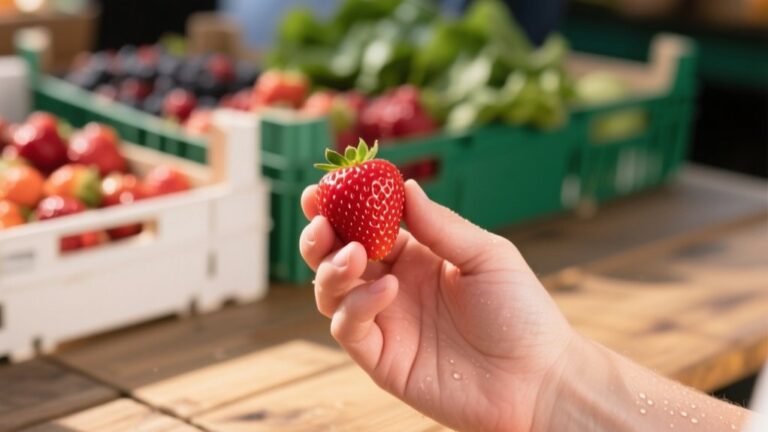
To start, pick one fresh strawberry from a trusted source since seeds from hybrids often won’t grow true to type.
Begin with a fresh strawberry from a reliable source to ensure true-to-type seeds.
You’ll want to extract seeds by gently scraping the tiny specks from the fruit’s surface using a toothpick or knife. Don’t worry if some flesh sticks to them; just dry the seeds on a paper towel for a few hours to reduce moisture.
For better germination rates, consider chilling the seeds in your fridge for about 30 days at 34-39°F.
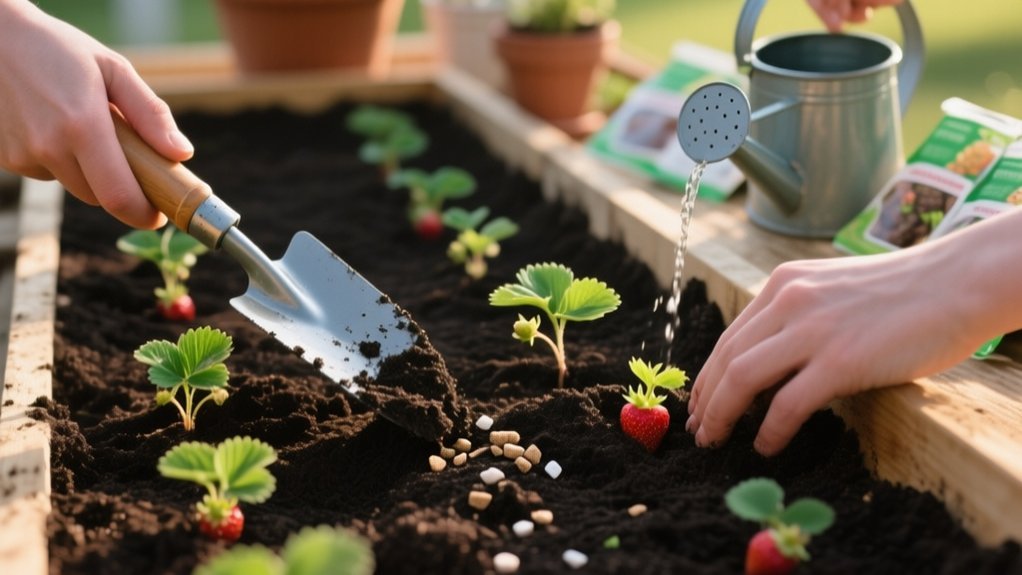
When you’re ready to plant, sprinkle the strawberry seeds on a light potting mix’s surface. Don’t bury them. Keep the soil moist and provide ample light to encourage sprouting.
Using fresh strawberries and properly preparing the seeds will give you a strong start.
Gather Your Supplies For Seeding Strawberries
You’ll need some essential gardening materials, like empty toilet rolls or small containers with drainage holes to start your seeds.
It’s handy to have these ready before you begin.
Next, pick a fresh strawberry that’s known for having viable seeds.
Then, grab a toothpick or something similar to carefully extract those tiny seeds without squashing them.
And don’t forget about the soil!
Make sure it’s well-drained and enriched with compost to give your seedlings a good start.
Oh, and scissors will come in handy for preparing your seedling pots too.
Essential Gardening Materials
Before planting your strawberry seeds, gather essential materials that will set you up for success.
You’ll need seedling pots; empty toilet rolls or small plastic containers with drainage holes work perfectly.
For seed starting, prepare a well-draining mix by blending seed starting mix, vermiculite, and organic matter like worm castings to promote healthy growth.
Obtain at least one fresh strawberry, ideally from a reliable source, since hybrid varieties often won’t produce viable seeds.
Use a toothpick or similar tool to carefully extract the tiny seeds from the strawberry’s exterior, leaving some fruit flesh if necessary.
Keep scissors or a knife handy for cutting the toilet rolls and managing seed extraction.
These essential gardening materials guarantee your strawberry plants get the best start possible.
Choosing Strawberry Sources
Although it might seem straightforward, selecting the right strawberry is crucial for successful seeding. Choosing the right strawberry varieties means picking fresh strawberries from local sources. Avoid hybrids that may not produce viable seeds. This first step guarantees you get healthy seeds for growing strawberries from seed.
| Source Type | Advantages | Considerations |
|---|---|---|
| Local Market | Fresh, diverse varieties | Check for hybrids |
| Grocery Store | Convenient, consistent | Often hybrid varieties |
| Home Garden | Known variety, fresh | Limited availability |
| Farmer’s Market | Organic options, fresh | Seasonal and variable quality |
Focus on freshness and non-hybrid types when choosing strawberry sources. This will help maximize your seeding success.
Seed Extraction Tools
Gather three essential tools to extract strawberry seeds effectively: a fresh strawberry, a toothpick or similar object to remove the seeds, and scissors or a knife to cut the fruit if needed.
The tiny seeds sit on the strawberry’s exterior, so use your toothpick to gently dislodge them. Some fruit flesh sticking to the seeds is fine.
Once extracted, let the seeds dry on a paper towel before planting. Prepare seedling pots; empty toilet rolls or small plastic containers with drainage holes work well.
Fill them with loose, well-drained, moistened soil, then sprinkle the seeds on the surface. Place your pots in a spot with full sun to encourage growth.
Using these seed extraction tools and proper planting steps, you’ll set your strawberry seeds up for success.
Make Seedling Pots From Toilet Rolls
Creating seedling pots from toilet rolls offers an eco-friendly and practical way to start your strawberry seeds. To make seedling pots from toilet rolls, cut each roll in half for manageable sizes.
Then, cut 1.5 cm slits along one edge and fold the sections to form a secure base for soil. Fill each pot with loose, well-drained soil, ensuring the environment supports healthy root development.
Moisten the soil lightly to keep it moist but not soaked, which is essential for germination. After planting your strawberry seeds, you can transplant the entire toilet roll pot directly into your garden.
This method reduces transplant shock, as the biodegradable pots break down naturally, allowing seedlings to establish quickly without disturbance.
How To Fill And Water Your Seedling Pots
Start by filling your seedling pots with a loose, well-draining soil mix.
Make sure to leave a little space at the top—this helps prevent any soil or water from spilling over.
Once the pots are filled, give the soil a light watering. You want it moist, but not soaking wet.
Getting the watering and filling just right is key because it sets the stage for healthy strawberry seedlings to grow.
Filling Seedling Containers
You’ll need several seedling pots about 5 inches tall to give your strawberry roots enough room to grow. Using cut toilet rolls is a handy option.
When filling seedling containers, follow these steps for ideal conditions:
- Cut toilet rolls in half (about 5 inches tall), then make 1.5cm slits along one edge to create drainage flaps and fold them to form a stable base.
- Fill each pot with loose, well-draining soil, leaving about half an inch at the top.
- Lightly water the soil to reach the right moisture level. It should be moist but not soggy.
- After sowing seeds, avoid overwatering. Allow the soil to absorb moisture gently for the best seedling start.
This method guarantees your seedlings thrive with proper aeration and moisture.
Proper Watering Techniques
Proper watering is essential for your strawberry seedlings to develop strong roots and healthy leaves. Use proper watering techniques by placing your seedling pots in a shallow tray filled with water. This lets the soil absorb moisture from below without wetting the leaves, which helps prevent fungal diseases.
Before sowing, lightly water the soil to reach ideal moisture levels, making germination easier. After sowing, gently mist the soil surface to maintain humidity without displacing seeds.
Keep the soil consistently moist but avoid sogginess to prevent root rot. Regularly monitor moisture levels, especially during germination, since seedlings are sensitive and can dry out quickly.
Sow Strawberry Seeds On The Soil Surface
One or two strawberry seeds per pot are ideal for sowing directly on the soil surface, where they’ll need light to germinate.
Use a moisture-retentive seed starting mix that’s also well-draining to keep the right balance of moisture and air.
Here’s how to sow your strawberry seeds for the best germination results:
- Fill pots with a well-draining potting mix designed for seedlings.
- Scatter 1-2 strawberry seeds on the surface, making sure they’re exposed to light for germination.
- Lightly mist the soil to moisten it without washing away the seeds, or water from below.
- Provide at least 12 hours of light for germination using grow lights or a sunny spot.
Following these steps helps your seeds sprout strong and healthy.
Care For Strawberry Seedlings During Germination And Early Growth
After sowing your strawberry seeds on the soil surface, the next step is to care for the seedlings as they germinate and begin growing.
Keep consistent moisture in the soil, never letting it dry out but avoiding soggy conditions that cause rot.
Water your strawberry seedlings from below using a tray to protect delicate leaves and maintain humidity.
Provide about 12 hours of light exposure daily with natural sunlight or grow lights to encourage healthy growth.
Once your seedlings develop a few true leaves, thin seedlings by removing weaker ones to let stronger plants thrive.
Though you’ll start hardening off seedlings 4 to 5 weeks before transplanting, focus now on stable indoor care.
These steps guarantee your strawberry seedlings grow strong and ready for the next stage.
Harden Off And Transplant Seedlings Outdoors
Before the final frost arrives, start hardening off your strawberry seedlings by gradually exposing them to outdoor conditions for a few hours each day. This process helps them become acclimatized and ready for transplanting your strawberry seedlings into the garden.
Follow these steps to guarantee proper growth:
- Begin 4 to 5 weeks before the last frost, placing seedlings outside in a shaded, sheltered spot to reduce stress.
- Increase outdoor exposure time daily over 7 to 10 days, guaranteeing they’re strong and acclimatized.
- Transplant seedlings 1 to 2 feet apart to allow for airflow and proper growth.
- Water thoroughly after transplanting and monitor moisture levels regularly to support establishment in their new environment.
Frequently Asked Questions
Can I Grow Strawberries From Store-Bought Fruit Seeds?
Yes, you can grow strawberries from store-bought seeds, but the germination process can be tricky.
Store-bought seeds often come from hybrid fruiting varieties, which may not produce viable plants.
To improve success, create ideal conditions like moist soil, warmth, and light.
Consider propagation methods such as starting seeds indoors.
However, for consistent results, buying seeds from reputable suppliers is usually better than relying solely on store-bought seeds from fruit.
How Long Does It Take for Strawberry Seeds to Germinate?
Strawberry seeds usually take between 1 to 6 weeks for germination time, depending on seed preparation and ideal conditions.
You’ll want to cold stratify the seeds for about 30 days to boost success.
Keep the temperature steady around 60-70°F and sow seeds on moist soil’s surface, ensuring they get plenty of light exposure, about 12 hours daily.
Consistent moisture and proper temperature requirements help your seeds sprout healthy and strong.
What Is the Best Soil pH for Growing Strawberries?
You’ll want to keep your soil pH between 5.5 and 6.8 for the best strawberry growth.
This sweet spot helps meet their nutrient requirements perfectly.
Start with soil testing to see where your soil stands, then make pH adjustments with organic amendments like sulfur or lime.
Whether you’re in container gardening or a garden bed, maintaining that gentle acidity guarantees your strawberries thrive and reward you with juicy fruit you’ll love.
How Do I Prevent Pests on Strawberry Seedlings?
To prevent pests on your strawberry seedlings, use natural repellents like neem oil and organic insecticides for safe control.
Plant companion herbs such as basil or marigold nearby to deter harmful insects naturally.
Set up pest traps to catch slugs and aphids before they damage your plants.
Combining these methods creates a healthy, pest-resistant environment, so your seedlings grow strong and yield plenty of delicious strawberries.
Can Strawberry Plants Produce Fruit in Their First Year?
Strawberry plants rarely produce a first year yield, especially with standard planting methods.
However, some strawberry varieties like everbearing or day-neutral can give you a small harvest under ideal conditions.
To boost your chances, follow care tips such as proper watering, fertilization, and light exposure.
Removing flowers in the first year helps the plant focus on root growth, ultimately improving fruit production in the following seasons.
Conclusion
Just like a gardener in a fairy tale patiently cultivates magic from tiny seeds, you’ve now got the know-how to grow your own strawberry patch from scratch. With a little care and attention, those delicate seeds will sprout into juicy, sweet rewards.
Keep nurturing your seedlings, and soon enough, you’ll be harvesting berries that taste like a summer dream come true. It’s proof that great things often start small and with a bit of faith.