
10 Steps to Plant a Strawberry Bush Successfully
Start by testing and preparing your soil, aiming for a pH between 5.5 and 6.8 with added compost for nutrients. Choose a strawberry variety suited to your climate, then select healthy crowns to plant at soil level, spacing them 12 to 18 inches apart.
Secure plants to encourage rooting, and pinch off first-season flowers to strengthen growth. Keep soil moist, mulch to protect roots, watch for pests, and plan your harvest.
You’ll find even more expert tips as you explore further.
Test and Prepare Your Soil for Planting Strawberries
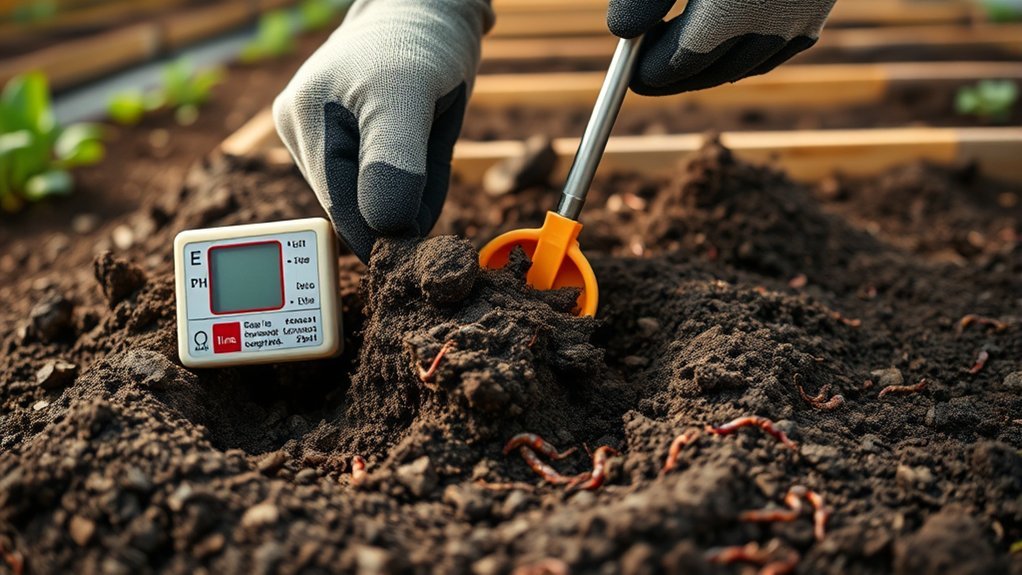
Before planting your strawberry bush, test and prepare your soil to create the best environment for growth. Start by conducting a soil test to check the pH and nutrient levels. Strawberries thrive in slightly acidic soil with a pH between 5.5 and 6.8, so adjust accordingly.
Begin with a soil test to ensure the pH is ideal—strawberries prefer slightly acidic soil between 5.5 and 6.8.
Clear the area of rocks, weeds, and debris to give your dormant strawberry transplants a clean spot to grow.
Next, incorporate well-rotted compost into the soil to boost nutrients and improve drainage.
Make sure the soil temperature is above 60°F before planting, as dormant strawberry transplants need warmth to establish.
Finally, prepare trenches about a foot apart to provide enough space for runners to spread and grow healthily.
This preparation sets your strawberry bush up for success.
Choose the Right Strawberry Variety for Your Climate and Garden
Choosing the right strawberry variety means matching your garden’s climate and your harvest goals.
So, think about when and how much fruit you want to pick. You’ll want to choose from June-bearing, ever-bearing, or day-neutral types based on that.
Also, don’t forget to consider varieties known for their flavor and disease resistance.
That way, you’ll get the best results and enjoy a tasty, healthy harvest.
Strawberry Types Overview
Three main types of strawberries, June-bearing, ever-bearing, and day neutral, offer different harvest patterns to fit your garden and climate.
June-bearing plants produce a large, concentrated crop from mid-June to early July. This is perfect if you want a big harvest all at once.
Ever-bearing strawberry varieties give you two smaller harvests, one in early summer and another in early fall. This is ideal for spreading out your picking over the season.
Day neutral strawberries keep producing fruit throughout most of the growing season, as long as conditions stay favorable. This allows you to enjoy fresh berries for longer periods.
When choosing your strawberry type, consider how each aligns with your garden’s climate and sunlight. That way, you get the best results from your planting efforts.
Climate Adaptation Tips
Since strawberry varieties thrive differently depending on your climate, picking the right type guarantees a successful harvest. For climate adaptation, match your strawberry choice to your region’s conditions.
June-bearing strawberries suit short growing seasons, yielding a big crop in mid-June to early July. Day neutral varieties perform best in warm climates, producing fruit continuously. Ever-bearing types work well in moderate zones, giving two harvests annually.
Always plant after your local frost dates to avoid damage.
| Climate Type | Recommended Strawberry Variety |
|---|---|
| Short Growing Season | June-bearing (e.g., Earliglow) |
| Moderate Climate | Ever-bearing |
| Warm Climate | Day neutral (e.g., Galletta) |
Choosing the right variety guarantees your strawberry bush thrives in your garden’s climate.
Yield and Harvest Timing
When you select the right strawberry variety for your climate, you can enjoy a bountiful harvest that matches your garden’s conditions and your preferred timing.
June-bearing strawberries yield a large crop in mid-June to early July, perfect if you want one main harvest.
Ever-bearing varieties produce two harvests, early summer and fall, while day-neutral types fruit throughout the summer, giving you a continuous supply.
To maximize yield, space plants 12 to 18 inches apart, ensuring proper sunlight and air circulation for healthy growth.
Pinching off flower buds in the first year helps strengthen your plants, leading to bigger harvests later.
Pick Healthy Strawberry Crowns or Starter Plants
Picking healthy strawberry crowns or starter plants is crucial for a successful harvest. When selecting, look for healthy strawberry crowns with green or white tissue and a firm texture. Avoid any with black roots or mold, as these indicate poor storage.
Choose plants with a strong root system and a prominent terminal bud, which is essential for leaf, flower, and fruit production. Keep in mind different varieties, like June-bearing, ever-bearing, or day-neutral, since they affect fruiting times and overall growth.
Always buy from reputable sources to guarantee quality and vigor. Also, check that potted plants don’t have discolored or dead leaves, as these can signal weak growth potential.
Plant Strawberry Crowns at the Correct Depth and Spacing
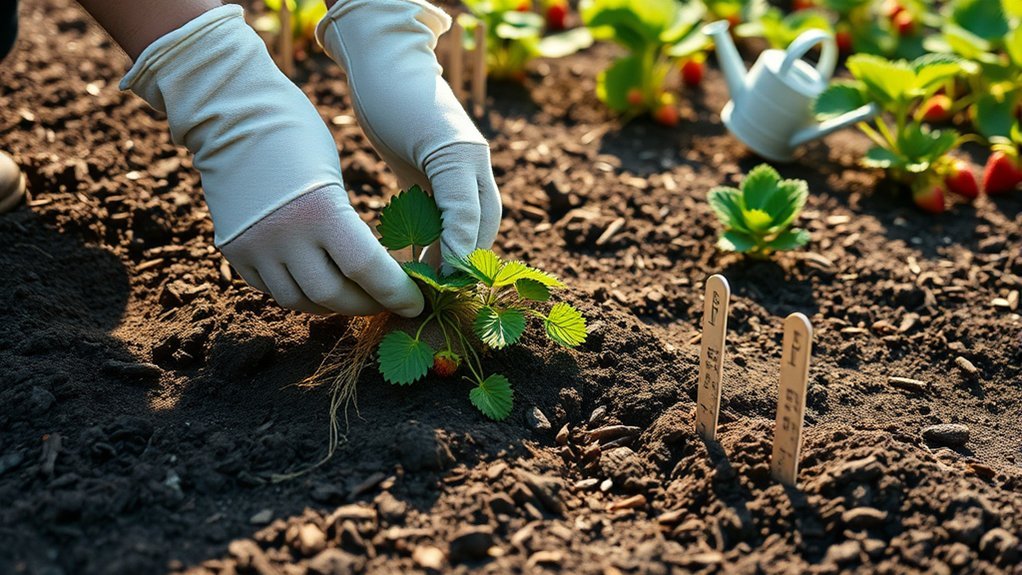
When you plant your strawberry crowns, make sure the crown sits right at soil level to avoid rot. You don’t want to bury it too deep or leave it sticking out.
Then, space each plant about 12 to 18 inches apart. This gives them plenty of room to grow and send out runners.
Proper Crown Placement
Proper crown placement is essential for healthy strawberry plants, so you’ll want to plant each crown at the right depth and spacing. Position the crown even with the soil line to prevent crown rot, which can occur if planted too deeply or too shallowly.
Make certain the roots are splayed out straight in the soil to encourage strong growth. After placing the crown at the proper depth, covering about halfway up the crown, lightly backfill and firm the soil around it. This firm contact between soil and roots helps the plant establish quickly.
Avoid bending the roots, and don’t bury the crown too deep, as that can lead to rot or poor development. Following these steps will set your strawberry plants up for success.
Optimal Plant Spacing
Although it might seem straightforward, spacing your strawberry plants correctly is key to their growth and runner production. Use ideal plant spacing by placing strawberry plants 12 to 18 inches apart, giving each plant enough room for its root system to expand and runners to develop.
If you’re planting in rows, maintain 18 inches between plants and about 4 feet between rows for easy access and maintenance.
When planting dormant crowns, set them so the crown is even with the soil line to avoid water loss or leaf growth issues.
For potted strawberries, keep the same depth as in the container, ensuring roots grow straight without bending.
Proper space between plants helps prevent overcrowding, promotes healthy growth, and reduces disease risk.
Secure Plants to Encourage Rooting and Stability
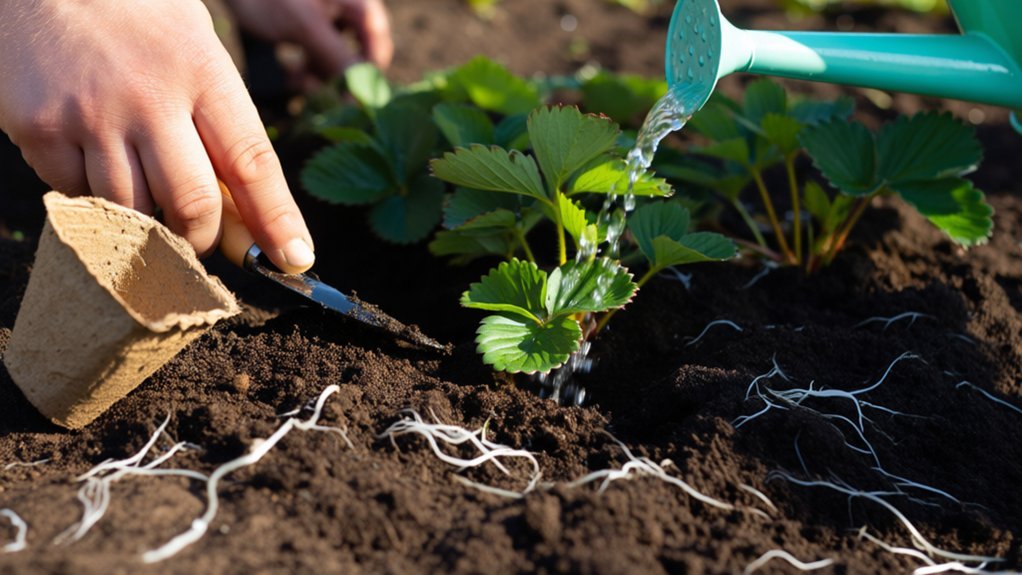
Two simple tools can make a big difference in securing your strawberry plants during their early growth: small rocks or clumps of soil and old-fashioned hairpins.
Use these to fill in the space around the base of your plants, ensuring they’re held firmly in place. This secure positioning improves soil contact, which is essential for the health of your plants and helps promote successful rooting.
Pinch runners into the soil and fasten them with hairpins to encourage them to root firmly. This establishes a stronger base for future fruit production.
Water and Mulch Your Newly Planted Strawberries Properly
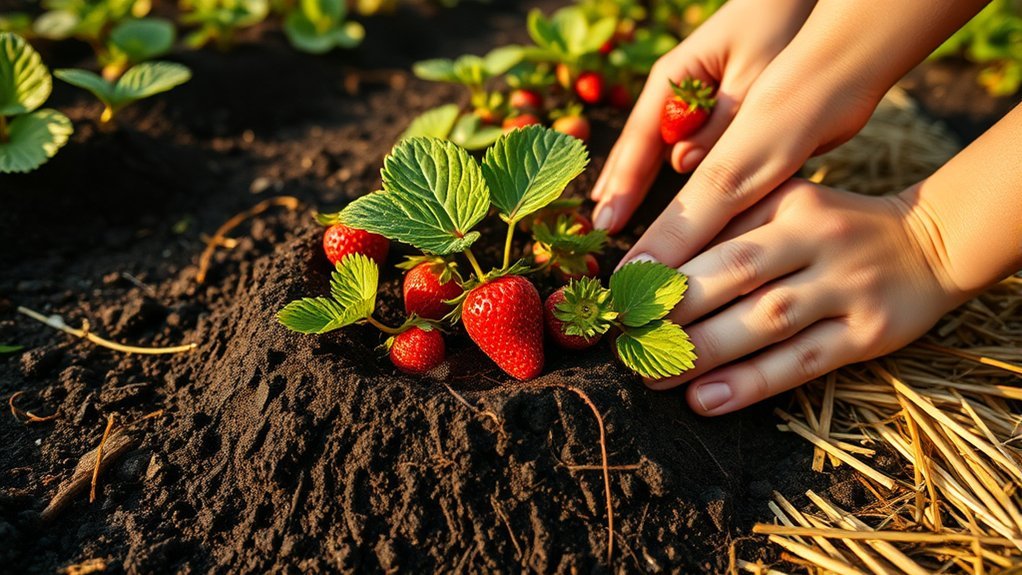
Once your strawberry plants are firmly in place, it’s important to give them the right amount of water and mulch to support their growth.
Water your plants thoroughly, ensuring the soil moisture is consistent. Aim for about 1 inch of water per week.
Provide about an inch of water weekly, keeping soil moisture steady for healthy strawberry growth.
Water early in the day to keep leaves dry and reduce the risk of diseases.
After watering, apply a 4-6 inch layer of clean straw mulch around your strawberry plants.
Mulch helps retain soil moisture, suppresses weeds, and protects the roots from temperature extremes, especially in winter.
Make sure the mulch is free from weed seeds to avoid unwanted plants competing with your strawberries.
Proper watering and mulching create an ideal environment that encourages healthy growth and a bountiful harvest.
Pinch Flowers and Manage Runners to Boost Growth
In your strawberry’s first growing season, pinch off those flower buds early. This helps the plant put its energy into growing strong leaves and roots instead of fruit.
Also, keep an eye on the runners. When you see them, press them gently into the soil. This encourages new plants to take root.
Pinching Flowers Timing
Pinching off flower buds as soon as you see them in the spring of the first year helps your strawberry plants focus energy on growing strong roots and healthy foliage.
The key to successful pinching flowers timing is to remove buds immediately once they appear, preventing the plants from diverting resources to fruit production too early.
This encourages vigorous vegetative growth, allowing your strawberries to produce runners and establish a robust root system.
By delaying flowering in the first year, you help your plants build a healthier crown and prepare for better yields in following seasons.
Remember, balancing foliage and runners without allowing flowers lets your strawberry bed develop fully, optimizing long-term productivity.
Timing your pinching right is essential for strong, fruitful plants later on.
Runner Management Techniques
Managing runners effectively is key to expanding your strawberry patch and boosting future fruit production. Use runner management techniques like pinching off flower buds in the first spring to redirect energy toward leaf and root growth. This ensures your plant becomes strong before it produces fruit throughout the season.
Keep a close eye on runners. They produce daughter plants that will root and thrive, expanding your bed. Pin these runners into the soil to encourage rooting, which helps establish a dense patch about 18 inches to two feet wide. This spacing allows good air circulation.
When plants go dormant, avoid disturbing the new daughter plants so they can develop fully.
Keep Your Strawberries Safe From Common Pests and Diseases
Although strawberry plants are hardy, you’ll need to stay vigilant against common pests and diseases to protect your crop. Maintain balanced soil pH and use organic fertilizers to promote healthy growth, which strengthens flowers and fruit against pests.
Retain straw mulch through spring frosts to protect buds, and inspect regularly for bud weevils and tarnished plant bugs. Spray fungicide during humid periods to prevent gray mold, and set traps for spotted wing Drosophila at full bloom.
| Pest/Disease | Prevention Method |
|---|---|
| Bud Weevil | Inspect and remove clipped buds |
| Tarnished Plant Bug | Monitor green/white buds |
| Gray Mold | Fungicide spray in humidity |
| Spotted Wing Drosophila | Set traps at full bloom |
| Spring Frost Damage | Retain straw mulch |
Plan for Strawberry Harvest
To get the best flavor from your strawberries, you should harvest them when they’re fully red and ripe. Different types produce fruit at varying times, so plan accordingly.
Harvest strawberries fully red and ripe for the best flavor, keeping in mind different types fruit at different times.
June-bearing varieties yield their largest crop in early summer, usually fruit in June. Ever-bearing types give you two harvests: one in early summer and another in early fall. Day-neutral plants let you harvest strawberries throughout the growing season, offering more flexibility.
Keep an eye on your plants as the fruit ripens, and check for pests to protect your harvest.
Once you harvest strawberries, refrigerate them immediately to preserve freshness and flavor. Planning your harvest this way guarantees you enjoy the sweetest, juiciest berries right from your garden.
Prepare Strawberry Plants for Winter Protection
Once the frosts have settled in, you’ll want to apply 4-6 inches of straw mulch around your strawberry plants. This protects their crowns from the harsh winter cold. The mulch layer helps insulate them against freezing temperatures.
Before winter hits, make sure your beds are well-drained to prevent water buildup and root rot.
If snow covers your plants, leave it be since it provides natural insulation.
When frost threatens after flowering, re-cover plants with mulch or fabric for extra protection. Throughout winter, check the mulch regularly and replenish it if it becomes compacted or eroded.
- Apply 4-6 inches of straw mulch around plants.
- Make certain beds are well-drained pre-winter.
- Leave snow cover intact for insulation.
- Re-cover plants if frost appears after flowering.
Frequently Asked Questions
Can Strawberries Be Grown Indoors or in Containers?
Yes, you can definitely grow strawberries indoors using container gardening.
Just make sure your indoor strawberry plants get at least 10 hours of light daily, with 6 hours of that being direct sunlight.
Use nutrient-rich potting soil with a pH between 5.5 and 6.8 to meet soil requirements.
Choose a container with good drainage to keep roots healthy.
With the right light conditions and soil, your strawberries will thrive inside.
How Long Does It Take for Strawberry Plants to Bear Fruit?
You might think strawberry plants bear fruit quickly, but the fruiting timeline varies.
Depending on the variety, June-bearing, ever-bearing, or day-neutral, you’ll see flowers 4 to 6 weeks after planting, with fruit following 6 to 8 weeks later.
Your plant care and seasonal factors like temperature influence this too.
Pinching off early flowers helps plants focus on growth, boosting fruit production in future seasons.
What Are the Nutritional Benefits of Homegrown Strawberries?
You’ll enjoy impressive health benefits from homegrown strawberries, thanks to their high vitamin content, especially vitamin C, which boosts your immune system and skin health.
They’re packed with antioxidants like anthocyanins that help reduce inflammation.
Plus, their dietary fiber supports digestion and keeps you feeling full longer.
With low calories and essential nutrients, growing your own strawberries is a tasty way to enhance your diet naturally.
Can Strawberry Plants Be Propagated From Runners Successfully?
Absolutely, you can propagate strawberry plants from runners successfully.
It’s like growing a strawberry empire overnight! By mastering runners propagation, you’ll enhance your strawberry care routine and ensure each new plant thrives.
Pay close attention to plant spacing to give them room to flourish.
Also, choose the right variety selection to match your garden’s conditions.
With these steps, you’ll expand your patch efficiently and enjoy bountiful harvests season after season.
How Do Strawberries Affect Soil Health Over Multiple Seasons?
Strawberries help with soil improvement by promoting beneficial microbes and aerating the soil through their roots.
While they don’t fix nitrogen directly, using crop rotation with nitrogen-fixing plants boosts soil fertility.
You’ll want to add organic matter like straw mulch or compost to enrich nutrients.
Over multiple seasons, decomposing strawberry foliage and mulch contribute essential organic matter, maintaining healthy soil and supporting future crops.
Conclusion
By following these 10 steps, you’ll set your strawberry plants up for a sweet and successful harvest. Did you know that a single strawberry plant can produce up to one pound of fruit each season?
That means with just a few plants, you could enjoy plenty of fresh, homegrown berries. Keep caring for your plants through each stage, and you’ll be rewarded with delicious strawberries that make all your effort worth it!