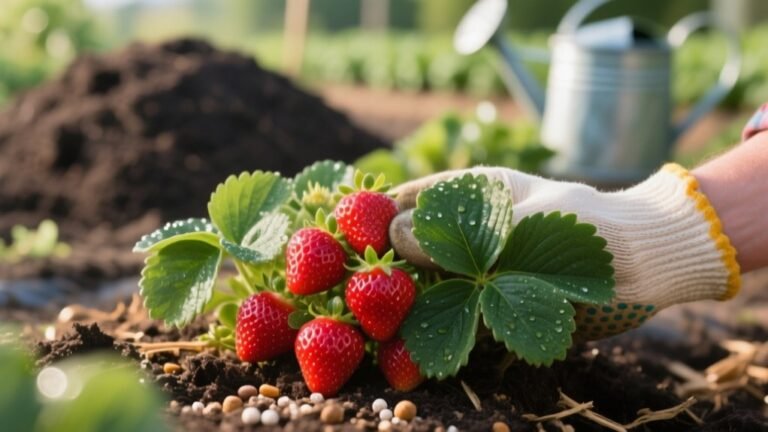

What Are the Many Kinds of Strawberries?
You’ll find strawberries come in three main types: June-bearing, everbearing, and day-neutral. June-bearing produce a big crop once a year with large, flavorful berries.
Everbearing varieties give you two harvests, typically smaller berries but longer fruiting. Day-neutral strawberries keep producing fruit throughout the season and do well in many climates.
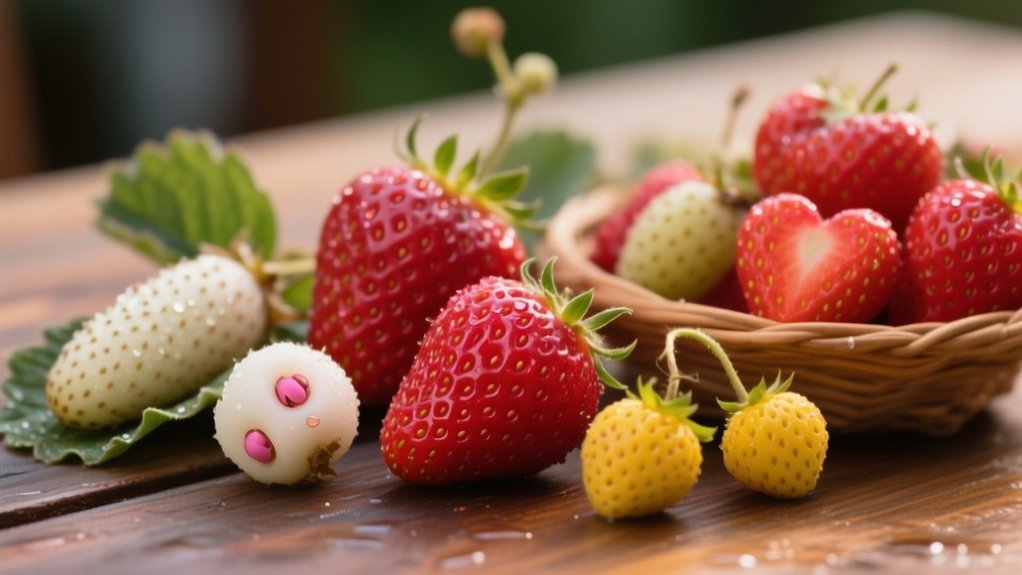
There are also unique types like white strawberries and pineberries with sweet, exotic flavors. If you want to understand which variety suits your garden best, there’s more to explore.
What Are the Three Main Types of Strawberry Varieties?
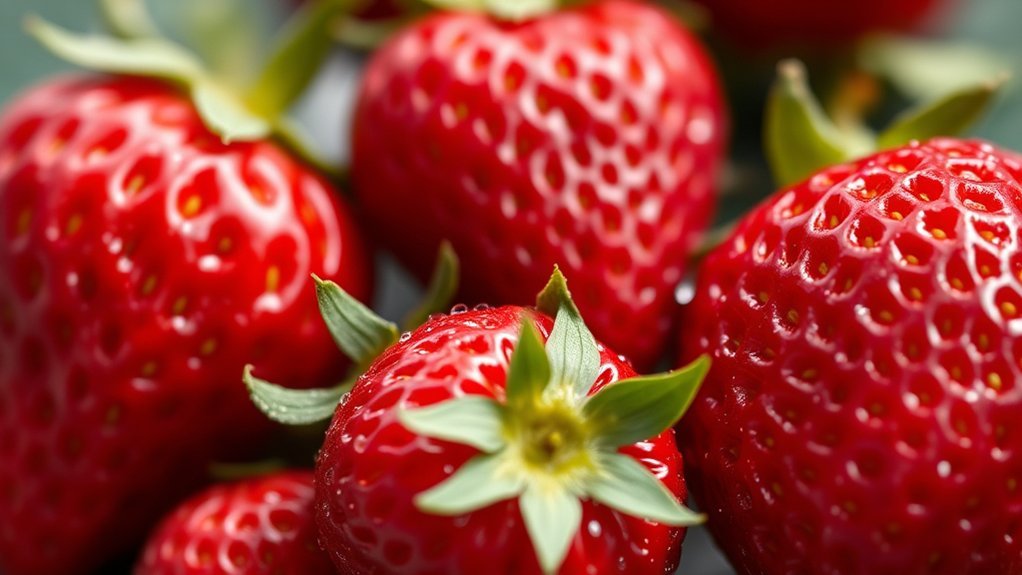
There are three main types of strawberry varieties you should know about: June-bearing, everbearing, and day-neutral.
June-bearing strawberry varieties produce a single, large crop, usually in June, making them perfect if you want a big harvest all at once.
Everbearing varieties, on the other hand, produce fruit two to three times per year, typically in late spring and again in late summer or fall. This gives you more flexibility with your harvest times.
Day-neutral strawberries continuously produce fruit throughout the growing season and handle different growing conditions well, especially cooler temperatures.
Each type suits different gardening preferences and requires specific care.
Understanding these differences helps you choose the best strawberry variety for your garden’s unique growing conditions and your desired harvest schedule.
What Makes June-Bearing Strawberry Varieties Special
If you prefer a single, abundant harvest, June-bearing strawberry varieties might be your best bet. These strawberries produce a substantial crop typically in June, making them a reliable choice for gardeners who want a concentrated yield.
June-bearing strawberries are known for their large berries and rich flavor, often surpassing everbearing and day-neutral types in size and taste. Popular varieties like Allstar, Honeoye, and Earliglow offer unique traits such as disease resistance, enhancing their appeal.
You’ll notice that June-bearing plants develop flower buds in late summer and fall, with flowering occurring the following spring, so timing your planting and care is essential.
Though they can be frost-sensitive, protective measures help secure a successful, flavorful harvest.
Key Features of Everbearing Strawberry Varieties
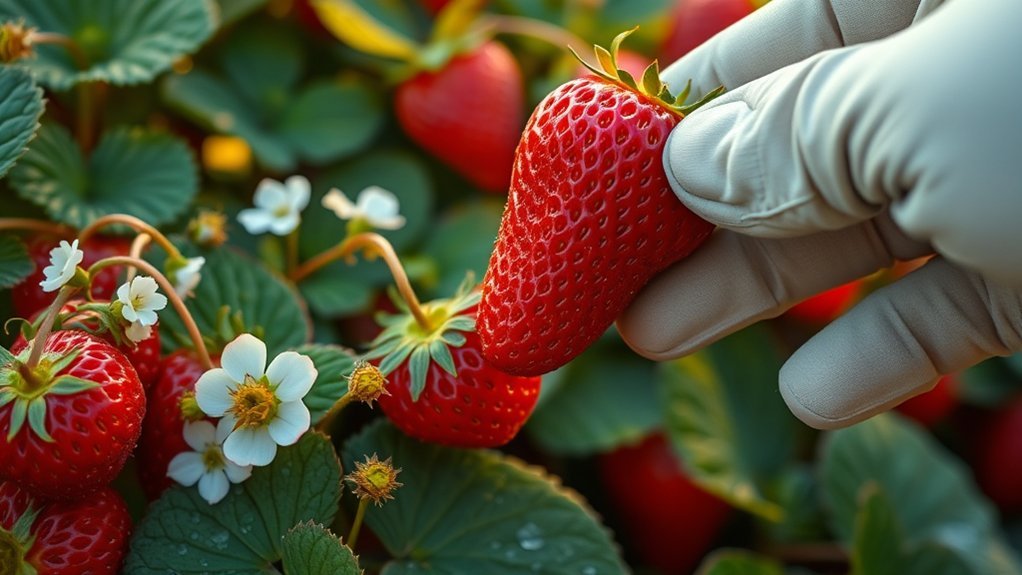
Everbearing strawberries extend your harvest by producing fruit twice a year, usually in late spring and again in late summer or early fall.
Everbearing strawberries offer two bountiful harvests annually, extending your picking season with fresh fruit.
These varieties are perfect if you want multiple harvests without replanting. Here’s what makes them stand out:
- They produce fruit in two main harvests, giving you a longer picking season.
- Popular varieties like Fort Laramie and Ozark Beauty offer consistent yields and great adaptability to different growing conditions.
- The berries tend to be smaller than June-bearing types but make up for it with multiple harvests.
- Everbearing strawberries focus less on runner production, putting more energy into fruiting, especially in cooler climates.
If you want steady fruit over the season, everbearing varieties deliver reliable performance and adaptability.
Why Day-Neutral Strawberry Varieties Are Popular
You’ll love day-neutral strawberries because they produce fruit continuously throughout the growing season, giving you fresh berries for months.
What’s really great is that these varieties can handle a wide range of temperatures. So, no matter where you live, they’ll thrive without missing a beat.
If you’re working with limited space but still want reliable yields, day-neutral types like Albion and Tristar are perfect for maximizing your harvest.
Continuous Fruit Production
Because day-neutral strawberry varieties don’t depend on day length, they can produce fruit continuously throughout the growing season. This means you get multiple harvests instead of just one, extending your production window considerably.
These varieties, including Albion, Tristar, and Seascape, are prized for their high yield and consistent quality.
Here’s what you can expect:
- Fruit production from late spring through fall
- Continuous harvests that keep fresh berries coming
- Thriving in cooler temperatures between 65°F and 75°F
- High yield that supports both home gardening and commercial growing
With day-neutral strawberry varieties, you enjoy fresh berries over an extended period, making them a smart choice if you want a steady supply rather than a single crop burst.
Climate Adaptability Benefits
When temperatures shift, day-neutral strawberry varieties keep producing fruit without missing a beat. Their climate adaptability lets you grow strawberries in a wide range of conditions, from 35°F to 85°F.
Unlike other types, these versatile plants can produce fruit continuously, giving you extended production periods throughout the growing season.
Whether you’re a home gardener or a commercial grower, you’ll appreciate their ability to yield fruit even in fluctuating temperatures and cooler periods, often resulting in high overall yields.
Plus, they start producing fruit in the first year, so you don’t have to wait long to enjoy fresh berries.
This combination of resilience and productivity makes day-neutral strawberry varieties a top choice for nearly any growing environment.
Gardeners’ Yield Preferences
The continuous fruit production of day-neutral strawberry varieties makes them especially popular among gardeners looking to extend their harvest. Unlike June-bearing strawberries, which produce one large crop, day-neutral types produce fruit steadily throughout the season.
When growing strawberries in your home garden, you’ll notice these benefits:
- They produce fruit regardless of day length, unlike other types needing specific conditions.
- You’ll enjoy a longer harvest, from spring until frost.
- Their higher yield per plant matches many gardeners’ yield preferences.
- Popular varieties like Albion and Seascape offer a sweet flavor profile and resilience.
Choosing day-neutral strawberry varieties means you get consistent fruit and a rewarding growing experience all season long.
Unique Traits of White and Pineberry Strawberry Varieties
Although they may look unusual compared to traditional red strawberries, white strawberries and pineberries offer unique traits that make them stand out.
White strawberries, known for their pale color, have lower levels of the Fragaria allergen 1 protein, which contributes to their distinctive appearance.
White strawberries stand out with their pale color due to reduced levels of Fragaria allergen 1 protein.
Pineberries, a hybrid variety, showcase a pink hue and a sweet flavor reminiscent of pineapple.
Both white strawberries and pineberries are sweeter and softer than typical red strawberries, appealing to those who crave unique flavors.
These rare varieties boast diverse flavor profiles, with some white strawberries being remarkably more aromatic and sweeter.
If you’re looking to try something different, these strawberries provide a delightful alternative with their uncommon taste and eye-catching color.
How Strawberry Varieties Differ in Flavor and Appearance
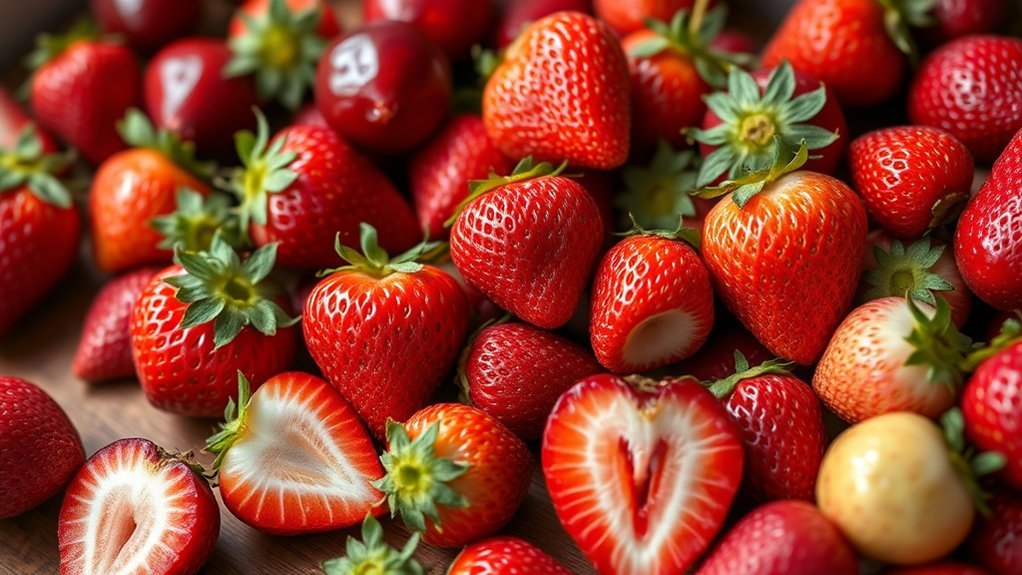
How do strawberry varieties differ in flavor and appearance? You’ll notice each type has unique traits, from color to taste. Here’s what sets them apart:
- Red strawberries like Albion showcase a bright hue and sweet flavor, especially in June-bearing types such as Allstar.
- White varieties, like Pineberry, offer a striking look and a different, often more subtle flavor profile.
- Everbearing strawberries, including Ozark Beauty, provide a steady supply of sweet berries throughout the season.
- Some strawberries, like Diamante, stand out with their large size and vivid red color, while Aroma offers exceptional flavor and pest resistance.
Understanding these differences helps you pick the best strawberry varieties for your taste and garden needs.
Top June-Bearing Strawberry Cultivars to Know
If you’re looking to grow strawberries that deliver a big, flavorful harvest once a year, June-bearing cultivars are a great choice. These June bearers produce one substantial crop, offering fresh strawberries with excellent flavor and high productivity.
Here’s a quick look at some popular varieties:
| Cultivar | Size & Color | Flavor & Notes |
|---|---|---|
| Allstar | Large, deep red | Rich, sweet flavor |
| Earliglow | Medium-large, deep red berries | Sweet, ideal for canning |
| Honeoye | Large, bright orange-red | Sweet flavor, high productivity |
| Jewel | Large, juicy | Excellent flavor, longer season |
Choose any of these for a sweet flavor and a bountiful June harvest of deep red berries.
Popular Everbearing and Day-Neutral Strawberry Cultivars
When you want strawberries that keep producing beyond a single season, everbearing and day-neutral cultivars offer excellent options.
These varieties provide a continuous harvest to enjoy fresh fruit longer.
Here are popular cultivars to evaluate:
- Fort Laramie – an everbearing strawberry variety that produces two to three crops yearly, with harvests in late spring and late summer.
- Ozark Beauty – another everbearing variety known for multiple crops and smaller, flavorful berries.
- Albion – a day-neutral variety that fruits throughout the growing season, delivering large, sweet strawberries.
- Seascape strawberry – classified as both everbearing and day-neutral, it produces delicious fruit continuously until frost.
With these options, you’ll enjoy fresh strawberries all season long.
Growing Conditions Best Suited for Different Strawberry Varieties
Since different strawberry varieties have unique needs, understanding their preferred growing conditions helps you maximize your harvest.
June-bearing strawberries thrive in well-draining soil with ample sunlight exposure, producing one large crop annually.
June-bearing strawberries need well-drained soil and full sun to yield a single, abundant harvest each year.
Everbearing types prefer cooler temperatures and mild spring and fall conditions, allowing two harvests.
Day-neutral strawberries fruit continuously but do best during cooler periods.
For all strawberry varieties, maintaining healthy strawberry plants requires consistent watering and balanced fertilization, which directly impacts fruit size and overall yield.
Moreover, soil quality and proper plant spacing play significant roles in growth and productivity.
How to Choose the Right Strawberry Variety for Your Garden
Choosing the right strawberry variety for your garden starts with understanding your growing season and climate.
When selecting strawberry varieties, consider these key points:
- Identify your growing season: June-bearing varieties produce one crop in June, everbearing varieties yield in summer and fall, and day-neutral varieties fruit continuously.
- Assess climate and local conditions: Choose heat-tolerant varieties like Albion if you’re in a warm area or select those needing frost protection if your region is colder.
- Opt for disease-resistant varieties such as Alexandria or Honeoye to reduce maintenance and boost yields.
- Match varieties to your garden’s purpose: June-bearing varieties like Allstar work well for home gardens focused on fresh eating, while day-neutral types like Tristar guarantee a steady harvest.
Frequently Asked Questions
How Do You Store Strawberries to Keep Them Fresh Longer?
To keep strawberries fresh longer, use proper strawberry storage methods like ideal refrigeration techniques.
Store them unwashed in a breathable container lined with paper towels to prevent mold growth. Check for ripeness and remove any spoiled berries promptly.
For longer storage, try freezing strawberries tips: wash, hull, freeze individually, then store in an airtight container.
You can also use a vinegar solution to clean them before drying.
The best storage duration in the fridge is about 3-7 days.
What Are Common Pests That Affect Strawberry Plants?
You’ll encounter common pests like aphids, spider mites, strawberry bud weevils, slugs, snails, and thrips when growing strawberries.
Pest identification helps you choose organic control or chemical treatments wisely.
Prevention methods, including crop rotation and attracting beneficial insects, reduce infestations.
Understanding pest life cycles and seasonal pests allows you to time controls effectively.
Watch for common diseases they carry, and stay proactive to protect your plants and boost yields.
Can Strawberries Be Grown Indoors or in Containers?
Yes, you can grow strawberries indoors using container varieties like Albion or Tristar.
Focus on soil requirements by choosing well-draining soil and pots with drainage holes.
Provide 6-8 hours of light daily and use watering techniques to keep the soil moist but not soggy.
Manage pests carefully, fertilize regularly, and monitor temperature to mimic outdoor conditions.
Harvest timing depends on fruit ripeness, ensuring the best flavor for your indoor gardening success.
How Often Should Strawberry Plants Be Watered?
Think of watering your strawberries like tuning a delicate instrument. Too much or too little throws off harmony. You should water them about 1 to 1.5 inches weekly, adjusting frequency based on weather and soil moisture.
Deep watering promotes root development, which helps your plants handle drought and absorb nutrients better.
Morning watering works best with seasonal changes. It supports healthy growth and helps prevent diseases.
Mulching helps keep moisture in the soil, so you don’t have to water as often.
What Are the Health Benefits of Eating Strawberries?
You’ll love strawberries for their impressive nutritional value. They’re packed with vitamin C and fiber.
Their antioxidant properties help reduce inflammation and support brain function. Eating them regularly boosts heart health by lowering blood pressure and cholesterol.
They also aid digestive health and help manage blood sugar levels. Plus, strawberries promote skin benefits and support weight management, making them a tasty, healthy addition to your diet.
Conclusion
Choosing the right strawberry variety is like planting a seed of joy that blossoms in your garden and heart. Whether you pick the reliable June-bearers, the steady everbearers, or the adaptable day-neutrals, each type offers its own unique flavor and rhythm.
By understanding their traits and needs, you’re not just growing fruit, you’re cultivating a living symbol of patience, care, and reward. This turns your garden into a sweet sanctuary of nature’s gifts.