
How Many Calories in Half a Cup of Strawberries?
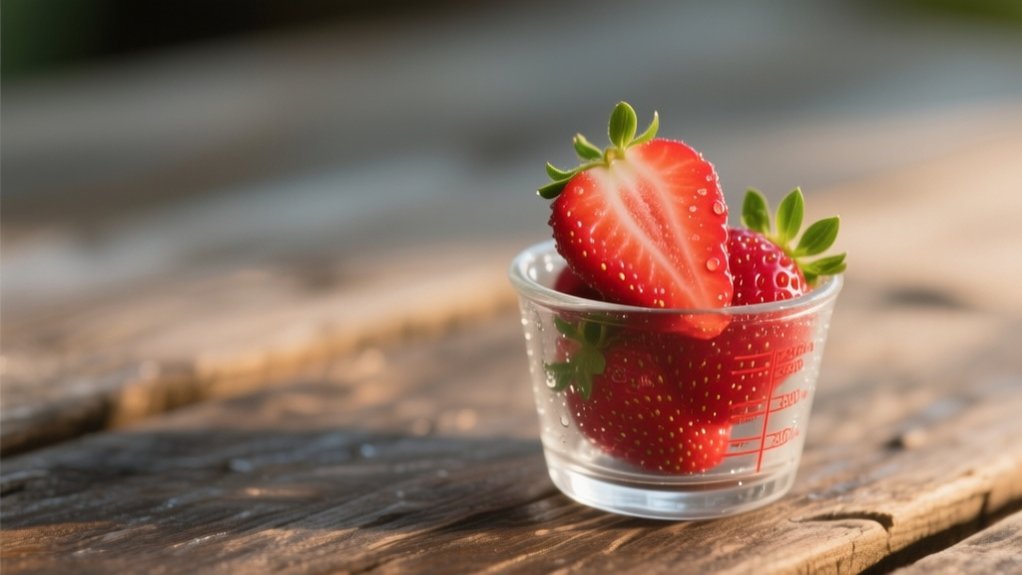
You get about 25 calories in half a cup of fresh strawberries, making them a guilt-free, tasty snack. They’re mostly water with minimal fat, so the calories stay low while still providing natural sweetness.
Along with 6 grams of carbs, you’ll get fiber that helps you feel full longer. Plus, strawberries pack a punch of vitamin C and other nutrients to boost your health.
Keep exploring to discover how these berries fit into your diet.
How Many Calories Are in Half a Cup of Strawberries?

Wondering how many calories you’ll consume with just half a cup of strawberries? That serving contains approximately 25 calories, making it a smart, low-calorie choice.
This small portion is mostly water, about 91%, which helps keep the calorie count low.
Besides calories, the Daily Value (DV) tells you that half a cup of strawberries supplies about 29% of your recommended vitamin C intake, a key nutrient that supports your immune system.
You’ll also get around 6 grams of carbohydrates and a tiny amount of fat (0.15 g), with no cholesterol.
This combination makes strawberries a heart-healthy, nutrient-dense option that fits well within a balanced diet, especially if you’re watching your calorie intake.
Why Are Strawberries Low in Calories?
You might wonder why strawberries pack so few calories despite their sweetness.
Well, it’s mainly because they’re mostly water. Plus, they contain very little fat and have minimal protein.
All these factors work together to keep their calorie count low, so you can enjoy a tasty snack without worrying about too many calories.
High Water Content
The high water content in strawberries plays a key role in keeping their calorie count low. With about 91% water, strawberries deliver just 25 calories per half-cup serving, making them an ideal snack if you’re watching your calorie intake.
This high water content means you get more volume and hydration without adding many calories. Plus, strawberries contain low fat, which further helps maintain their low calorie density.
When you’re managing your weight, choosing foods like strawberries can keep you full and satisfied without excess calories. Their natural sweetness comes from a small amount of sugars, but it doesn’t greatly affect the calorie count.
Low Fat Levels
Only 0.3 grams of total fat per 100 grams keep strawberries incredibly low in calories.
Because fat is calorie-dense, the low fat levels in strawberries mean they add very little to your daily calorie intake.
When you choose strawberries, you benefit from their impressive nutritional values without worrying about excess calories from fat.
This makes them a smart choice for anyone aiming to maintain or lose weight while still enjoying flavorful fruit.
Their low fat content pairs well with their high water and carbohydrate content, keeping calories down.
Including strawberries in your daily diet helps you enjoy a sweet treat without compromising your calorie goals or nutritional needs.
They’re a delicious way to stay healthy and energized.
Minimal Protein Presence
Minimal protein content plays a key role in why strawberries stay low in calories. With only 0.67 grams of protein per 100 grams, strawberries contribute very little to your daily protein intake.
Since protein has more calories per gram than carbs or fat, this minimal presence helps keep strawberries low in calories. This makes them ideal if you’re watching your weight but still want a nutritious snack.
| Nutrient | Amount per 100g |
|---|---|
| Protein | 0.67 grams |
| Calories | 32 calories |
| Fat | 0.3 grams |
Because protein content is low, strawberries don’t add much to your calorie count. You can enjoy them guilt-free while supporting your weight management goals.
How Do Carbohydrates in Strawberries Affect Calories?
Anyone watching their calorie intake will appreciate how carbohydrates in strawberries influence their energy content. Half a cup of strawberries contains about 25 calories, with roughly 6 grams of carbohydrates making up 86% of those calories. This means the fruit is a low-calorie option, perfect if you’re aiming to manage weight without sacrificing flavor.
Furthermore, strawberries have a low glycemic index of around 40, so the carbohydrates they provide won’t cause sharp spikes in your blood sugar. This makes them a smart choice for maintaining steady energy levels.
How Do Sugars and Fiber Influence Strawberry Calories?
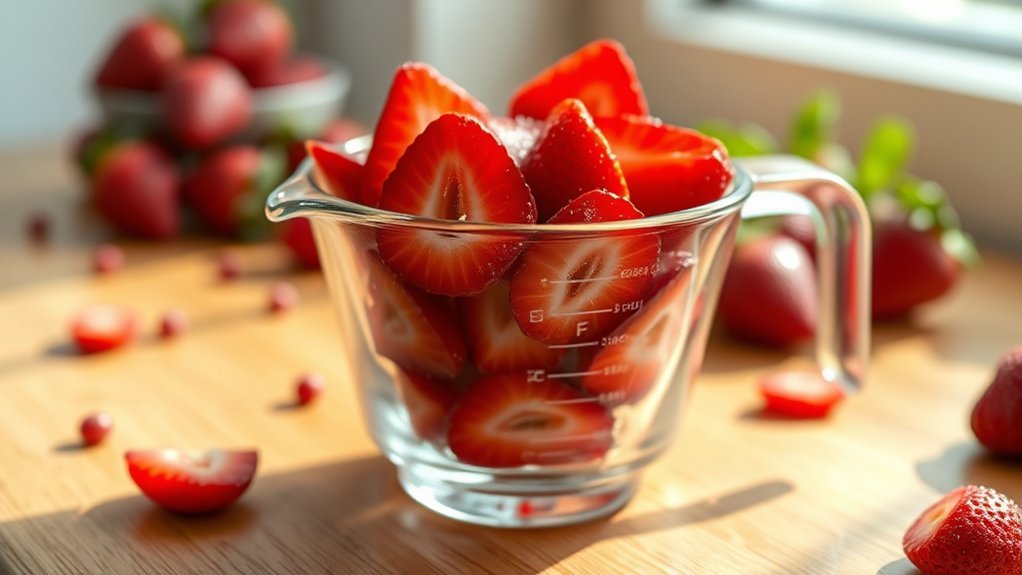
Because half a cup of strawberries contains about 4.66 grams of natural sugars, these sugars contribute considerably to their 25-calorie count. Sugars are a type of carbohydrate, and since carbohydrates make up around 86% of the calories in strawberries, sugars play a big role in the energy you get from them.
However, strawberries also contain fiber, which doesn’t add calories but influences how your body processes the sugars and other carbohydrates. Fiber slows digestion, helping to keep blood sugar levels steady and promoting feelings of fullness.
This means the calories from sugars in strawberries are absorbed more gradually, making them a healthier choice compared to high-sugar foods with little fiber.
What Vitamins and Minerals Are in Half a Cup of Strawberries?
When you eat half a cup of strawberries, you get a powerful boost of essential vitamins and minerals that support your overall health. This serving provides about 29.4 mg of vitamin C, which strengthens your immune system and keeps your skin vibrant.
You also get around 13 mg of calcium, helping maintain strong bones. The iron content, roughly 0.35 mg, plays a significant role in transporting oxygen through your blood.
Plus, with about 127 mg of potassium, strawberries help regulate your blood pressure and promote heart health. These nutrients come in a low-calorie, delicious package, making half a cup of strawberries a smart choice to enhance your daily nutrient intake without adding many calories.
How Do Strawberries Affect Blood Sugar and Insulin Levels?

You might be surprised to learn that strawberries have a low glycemic index. That means they won’t cause major spikes in your blood sugar.
Plus, their fiber content helps slow down sugar absorption. So, they can help you keep your insulin levels steady.
Including strawberries in your diet can actually support better blood sugar regulation and improve your insulin response over time. It’s a tasty way to help manage your health!
Glycemic Index Impact
Although managing blood sugar can be challenging, including strawberries in your diet can make a positive difference. With a low glycemic index of 40, strawberries release glucose slowly, preventing sudden blood sugar spikes.
Half a cup of strawberries contains only about 25 calories, making it a light, healthy choice. The simple sugars and high fiber content work together to slow glucose absorption, helping you maintain steady blood sugar levels.
Plus, the antioxidants in strawberries, especially anthocyanins, may improve insulin sensitivity and support better metabolic health.
Insulin Response Mechanism
Strawberries don’t just have a low glycemic index; they also influence how your body manages blood sugar and insulin levels. When you eat strawberries, their fiber slows sugar absorption, preventing sharp insulin spikes. This supports better insulin sensitivity, which is essential for maintaining metabolic health.
The vitamin C and antioxidants like anthocyanins in strawberries further enhance your glucose metabolism, helping your body use sugar more efficiently. Including strawberries as part of your daily intake can aid in managing insulin response, especially if you aim to control calories a day for weight or blood sugar goals.
By improving insulin sensitivity, strawberries contribute to reducing the risk of metabolic disorders and support overall energy regulation.
Blood Sugar Regulation
Because they’ve a low glycemic index and high fiber content, half a cup of strawberries won’t cause significant spikes in your blood sugar levels.
With just about 25 calories and 6 grams of carbohydrates, this serving size fits well into a balanced diet without overloading your system.
The fiber in strawberries slows sugar absorption, helping maintain steady blood sugar throughout the day.
Furthermore, antioxidants like anthocyanins may enhance your insulin sensitivity, supporting better blood sugar regulation.
By including strawberries in your meals, you can promote improved metabolic health and potentially reduce your risk of type 2 diabetes.
How Does Eating Half a Cup of Strawberries Support Weight Management?
When you choose to eat half a cup of strawberries, you’re opting for a low-calorie snack that supports weight management effectively. With just about 25 calories, strawberries let you enjoy a sweet treat without overloading your diet.
Here’s how they help:
- Their high dietary fiber content promotes fullness, reducing overall calorie intake.
- The low glycemic index prevents blood sugar spikes, helping control hunger and cravings.
- Water content keeps you hydrated and feeling satisfied longer.
- Adding strawberries to meals enhances flavor without adding many calories, encouraging healthier eating habits.
How Do Calories in Strawberries Compare to Other Fruits?
You’ll find that half a cup of strawberries has fewer calories than many other fruits like blueberries, bananas, and grapes.
Plus, strawberries don’t just have fewer calories—they’re also packed with vitamin C and antioxidants.
When you compare their nutrient density, it’s clear why they’re a smart choice for healthy snacking and weight management.
Caloric Comparison With Fruits
Although strawberries pack a sweet punch, they contain only about 25 calories per half cup, making them one of the lowest-calorie fruits you can enjoy.
If you’re curious about how strawberries stack up in a calories comparison with other fruits, here’s a quick look:
- Blueberries: Around 42 calories per half cup, higher than strawberries.
- Raspberries: About 32 calories per half cup, still more than strawberries.
- Bananas: Roughly 53 calories per half cup, more than double strawberries.
- Grapes: Approximately 52 calories per half cup, again, much higher.
Strawberries’ low calorie count comes from their 91% water content, making them a revitalizing, guilt-free fruit choice compared to many other options.
Nutrient Density Differences
Since strawberries contain only about 25 calories per half cup, they offer a high nutrient density compared to many other fruits. Their composition of 91% water and just 7.7% carbohydrates means you get fewer calories without sacrificing essential nutrients.
In contrast, fruits like blueberries and bananas pack 42 and 53 calories respectively in the same serving size, partly due to higher carbohydrate content. Strawberries’ carbohydrates mainly come from natural sugars but remain lower than fruits like grapes.
Plus, strawberries have a low glycemic index of 40, making them a smart choice if you’re watching blood sugar levels.
When you choose strawberries, you’re getting fewer calories with valuable nutrients and a gentle impact on your blood sugar compared to many other fruits.
Tips for Eating Half a Cup of Strawberries Daily
When you add half a cup of strawberries to your daily routine, you boost your vitamin C intake while enjoying a low-calorie treat. These berries contain only about 25 calories, making them a perfect addition to any diet focused on health and weight management.
To easily include them in your daily diet, try these simple tips:
Simple ways to add strawberries daily include mixing, blending, snacking, or tossing them into your meals.
- Mix strawberries into your morning cereal or yogurt for a revitalizing start.
- Blend them into smoothies to enhance flavor and nutrition without adding many calories.
- Pack a small container of strawberries as a convenient, healthy snack at work or school.
- Toss them into salads to add natural sweetness and fiber, promoting digestive health.
Incorporating strawberries this way supports your overall health goals efficiently.
Common Questions About Eating Strawberries for Calories and Nutrition
Adding half a cup of strawberries to your diet offers more than just a tasty, low-calorie snack. With only about 25 calories per serving, they fit easily into calorie-conscious plans.
You might wonder about their nutritional value. This small portion provides nearly 30% of your daily values for vitamin C, a key nutrient for immune support and skin health.
Strawberries also contain around 6 grams of natural carbohydrates and minimal fat, making them a balanced choice.
Concerned about blood sugar? Their low glycemic index of 40 means they won’t cause sharp spikes.
Frequently Asked Questions
Can Half a Cup of Strawberries Be Frozen Without Losing Calories?
Yes, you can freeze half a cup of strawberries without losing calories. Using proper freezing methods helps guarantee calorie retention and preserves their nutritional value.
To keep them fresh, wash and dry strawberries thoroughly, then spread them on a tray before transferring to airtight containers for storage. This prevents clumping and maintains quality.
Do Organic Strawberries Have Different Calorie Counts?
You might think organic strawberries pack a calorie punch worthy of a feast, but they actually don’t differ much in calories from conventional ones.
Thanks to organic farming, you enjoy similar nutritional benefits with possibly better taste differences and a smaller environmental impact.
So, when choosing organic, you’re mostly paying for cleaner practices and eco-friendliness, not a calorie change.
Your body gets nearly the same energy either way.
How Does Ripeness Affect Strawberry Calorie Content?
Ripeness indicators like color and softness show you how the sugar levels in strawberries change. As strawberries ripen, their sugar levels increase, boosting calories slightly.
You’ll notice taste variations too. Riper berries taste sweeter due to higher sugars.
Nutritional differences also occur; ripe strawberries pack more antioxidants but maintain a low glycemic index.
Are There Calorie Differences Between Strawberry Varieties?
You won’t find significant calorie differences between strawberry varieties.
Whether you choose June-bearing, ever-bearing, or day-neutral, the calorie comparison shows minimal variation, usually between 25 to 32 calories per half cup.
While their nutritional differences are slight, flavor profiles can vary more noticeably due to growing conditions.
Can Strawberries Cause Allergic Reactions Despite Low Calories?
Yes, strawberries can cause allergic reactions despite their low calories.
If you experience symptoms like itching, hives, or swelling, you might’ve strawberry allergies.
You should know about cross-reactivity foods like apples or birch pollen, which increase your risk.
It’s important to get allergy testing to confirm your sensitivity and avoid severe reactions.
Conclusion
Now that you know half a cup of strawberries packs just about 25 calories, you can easily add this sweet, juicy burst of goodness to your day without worry. Like a gentle breeze, their low calories and rich nutrients support your weight goals while satisfying your sweet tooth.
So go ahead, enjoy strawberries often. They’re a delicious, guilt-free way to nourish your body and brighten your meals with nature’s candy.