
How Long Does Homemade Strawberry Jam Last?
You can keep unopened homemade strawberry jam for up to a year if you store it in a cool, dark place away from sunlight. Once opened, you should refrigerate it and use it within a month to guarantee freshness.
Using clean jars and utensils helps prevent spoilage, and proper sugar levels extend its shelf life. Want to know how to store your jam best and spot signs of spoilage? There’s more to discover about keeping your jam fresh longer.
How Long Does Homemade Strawberry Jam Last Unopened and Opened?
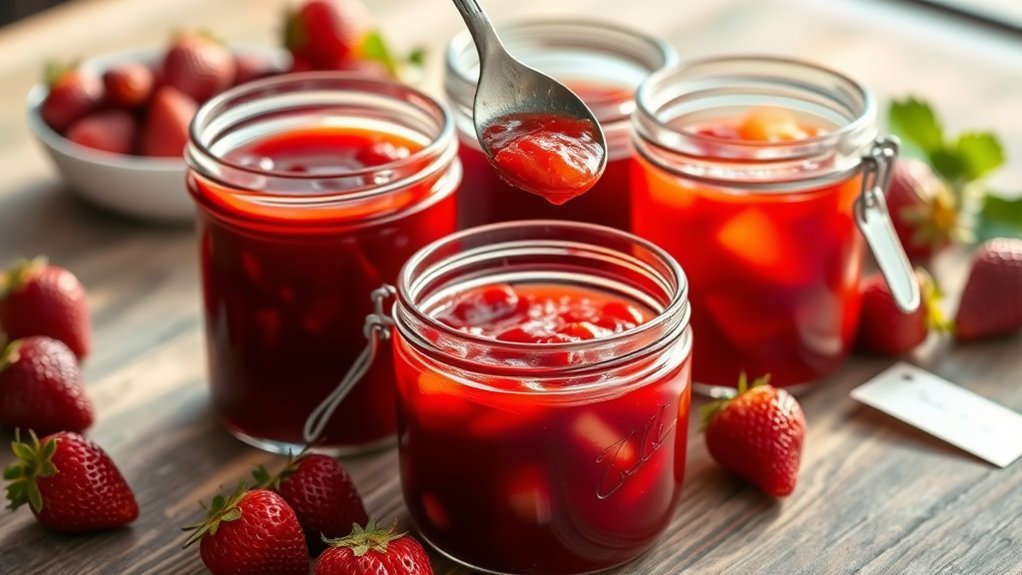
How long your homemade strawberry jam lasts depends largely on whether it’s opened or unopened.
Unopened jars of homemade strawberry jam can maintain their quality for up to one year when stored in a cool, dark place away from sunlight. The shelf life might extend beyond that if the jar remains sealed and properly stored, but you should check regularly for any signs of spoilage.
Unopened homemade strawberry jam lasts up to a year in a cool, dark place, but always check for spoilage.
Once opened, you should refrigerate the jam and aim to consume it within one month to enjoy the best taste and safety.
Keep an eye out for mold, off smells, or changes in appearance. These signs mean the jam has spoiled and should be discarded.
How to Store Homemade Strawberry Jam for Longest Freshness
To keep your homemade strawberry jam fresh for as long as possible, make sure you use clean, airtight glass jars. This helps prevent any contamination that might spoil your jam.
Before opening, store the jars in a cool, dark place where the temperature stays between 50-70°F. This way, your jam can last for up to a year without losing its quality.
Once you’ve opened a jar, pop it into the fridge right away.
And don’t forget to check it regularly for any signs that it might be going bad. That way, you can enjoy your delicious jam safely for longer!
Ideal Storage Conditions
Although homemade strawberry jam can be a delicious treat, storing it properly is key to keeping it fresh for as long as possible. To maintain the jam’s quality, keep it in a cool, dark place away from sunlight, ideally between 50-70°F.
These ideal storage conditions help extend the jam’s shelf life and prevent spoilage. Make certain jars are fully cooled before sealing to avoid condensation, which can encourage mold growth. Use airtight containers to block bacteria and yeast from spoiling your jam.
Once opened, refrigerate the jam and plan to consume it within about one month. Always check regularly for signs of spoilage like mold, off odors, or unusual textures.
Proper storing guarantees your homemade jam stays delicious and safe to enjoy.
Container Hygiene Tips
Proper storage goes beyond just choosing the right temperature and location. It starts with clean, well-maintained containers. To guarantee your homemade strawberry jam stays fresh, follow essential container hygiene tips.
Always wash glass jars thoroughly with soapy water and dry them completely before filling. Using only clean, airtight containers is vital because proper sealing prevents bacteria and yeast growth, safeguarding food safety.
Before use, inspect glass jars for cracks or defects. Damaged containers can compromise your jam’s quality.
After sealing, store jars in a cool, dark place to extend shelf life.
Regularly check your stored jam for signs of spoilage like mold or off odors. Discard any jars showing these to keep your preserves safe and delicious.
What Signs Show Homemade Strawberry Jam Has Gone Bad?
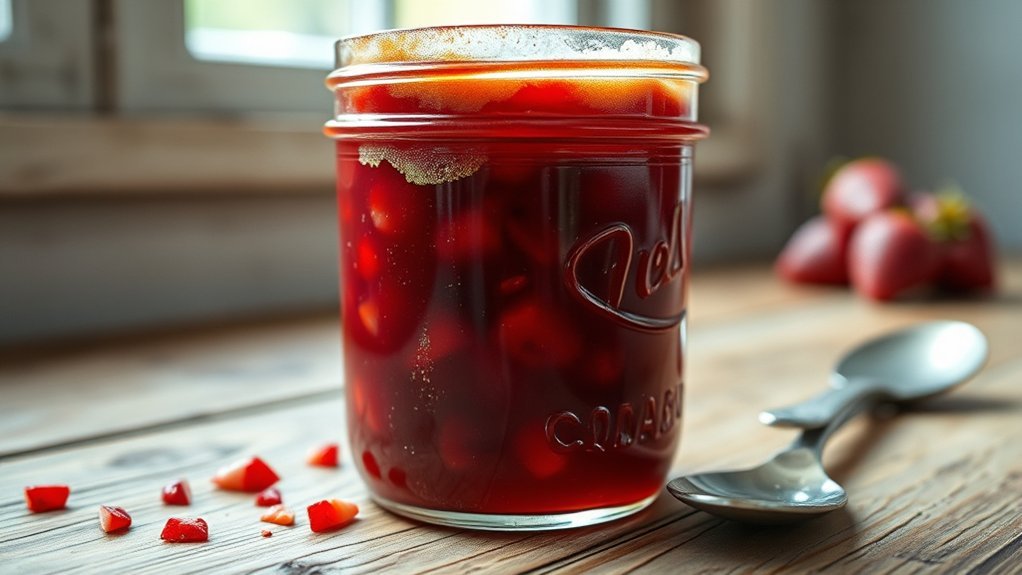
You’ll want to watch for mold and discoloration on your homemade strawberry jam because these are clear signs it’s time to toss it.
If you see any fuzzy spots or unusual colors, that’s a red flag. Also, if you notice off odors or a strange taste, it’s best not to take the risk and eat it.
Another thing to keep an eye on is the texture. If your jam starts to separate or becomes watery, that can mean it’s spoiled.
Mold And Discoloration
When you spot mold growing on the surface of your homemade strawberry jam, it’s a sure sign that the jam has gone bad and you should toss the entire jar.
Mold indicates spoilage and can spread toxins, making the jam unsafe to eat.
Discoloration is another warning sign; if the jam darkens or changes color intensity, it suggests deterioration.
Always watch for these signs to keep your homemade jam safe.
Look for:
- Fuzzy, white, green, or blue mold patches
- Dark or dull spots replacing the vibrant red
- Uneven color changes across the jar
- Any signs of sliminess or unusual texture
Recognizing mold and discoloration helps you avoid consuming spoiled homemade strawberry jam.
Off Odors And Taste
Even if your homemade strawberry jam looks fine, off odors can reveal that it’s spoiled. If you notice any sour or fermented smell, that’s a clear sign of spoilage, and you shouldn’t consume the jam.
Off odors often develop before visible mold appears, so trusting your nose helps avoid health risks. Along with smell, pay attention to the taste. If it’s off or markedly different from the original sweet flavor, it signals degradation and that the jam is no longer safe.
Never try to salvage jam with visible mold; discard it immediately.
Texture Changes And Separation
Although homemade strawberry jam can look fine on the surface, texture changes like watery layers or separation often signal spoilage. When you notice these signs, it’s best to inspect the jam closely to verify it’s safe to eat.
Texture changes may accompany mold growth or an unusual odor, both clear indicators the jam has gone bad. To protect your health, avoid tasting jam that shows these warning signs.
Watch for:
- A watery layer floating on top
- Clear separation of liquid and fruit pulp
- Mold spots forming on the surface
- A sour or off smell different from fresh jam
If you spot any of these, discard the jam immediately to prevent consuming spoiled product.
Tips to Prevent Contamination in Homemade Jam
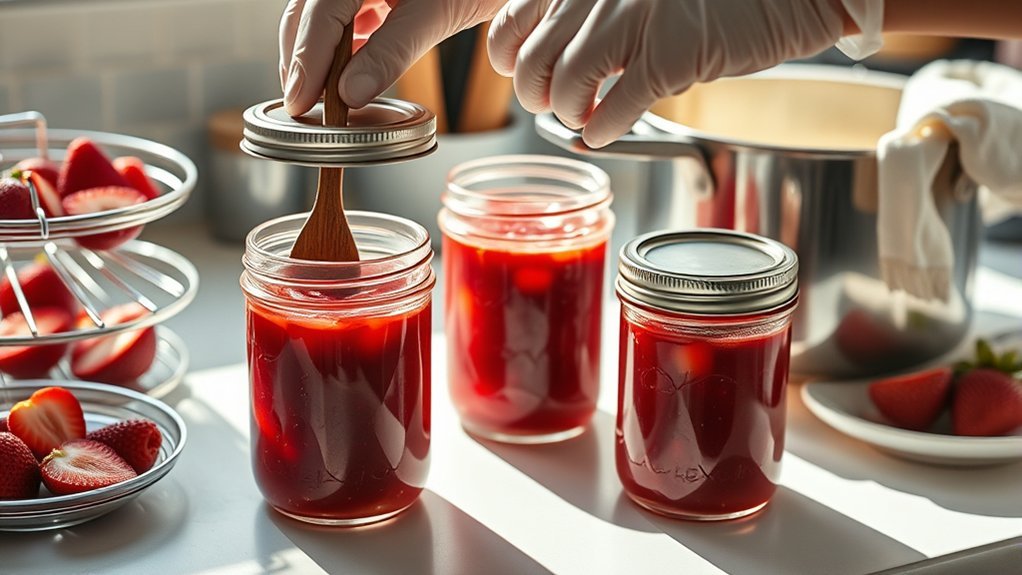
To keep your homemade strawberry jam safe and fresh, you need to take steps that prevent contamination from the start. Always use clean jars that have been thoroughly washed and dried before filling.
Use clean utensils each time you scoop jam to avoid introducing bacteria or other contaminants. After filling, seal jars tightly to minimize air exposure, which can cause spoilage.
Store your jam in a cool, dark place away from heat and sunlight, as these conditions encourage bacterial and yeast growth.
Regularly check your jars for signs of spoilage like mold or off odors, and discard any that show these indicators.
How Sugar Content Affects Homemade Strawberry Jam Shelf Life
You’ll find that sugar plays a key role in preserving your homemade strawberry jam because it helps prevent bacteria and yeast from growing.
So, if you decide to use less sugar or switch to alternatives, your jam might spoil faster and won’t keep its quality as long.
It’s really about balancing the sweetness with the shelf life to make sure your jam stays tasty and safe for a longer time.
Sugar’s Role In Preservation
Since sugar inhibits microbial growth, it plays an essential role in preserving homemade strawberry jam and extending its shelf life. When you use the right amount of sugar, you create an environment where spoilage bacteria struggle to thrive.
This not only helps maintain the jam’s flavor and texture but also supports the pectin’s gelling power, which is critical for jams. Using pectin designed for low-sugar recipes often results in a shorter shelf life, as these jams are more prone to spoilage.
To visualize sugar’s preserving role, imagine:
- A thick, glossy jam sealing in freshness
- Sugar crystals locking moisture away from microbes
- Pectin forming a stable gel network
- Jars lined up, safely stored for months
Low Sugar Jam Risks
Although low-sugar strawberry jams appeal to those seeking healthier options, they come with a shorter shelf life than full-sugar versions. When you make homemade jams with low sugar, the reduced preservation properties mean they spoil faster.
Low-sugar pectins, like Pomona’s, don’t preserve as long as traditional pectins such as Sure-Jell. The acidity in low-sugar jams may not be enough to prevent mold growth and off-flavors, so you need to be extra cautious.
To keep your jam fresh and safe, store it in the refrigerator and plan to consume it within 2 to 3 months.
Regularly check for signs of spoilage like color changes, off smells, or mold growth, since low-sugar jams deteriorate more quickly than their full-sugar counterparts.
Balancing Sweetness And Shelf Life
When you adjust the sugar content in your homemade strawberry jam, you directly impact its shelf life and preservation quality. Higher sugar levels enhance preservation by reducing water activity, extending shelf life up to a year.
Lower-sugar jams spoil faster due to less effective acidity and sugar balance, making them more prone to spoilage. Using traditional pectins like Sure-Jell with higher sugar content also helps extend shelf life compared to low-sugar alternatives.
Consider these factors when balancing sweetness and shelf life:
- Vivid red color fading with spoilage
- Thick, spreadable texture turning runny
- Sweet aroma turning sour or off
- Crystals or mold appearing on the surface
Can Freezing Keep Homemade Strawberry Jam Fresh Longer?
If you want to keep your homemade strawberry jam fresh much longer, freezing is a great option. Freezer jam can extend the shelf life up to a year and a half when stored in freezer-safe containers.
To maintain the fresh flavor, let the jam cool to room temperature before freezing, and leave some space in the containers for expansion.
Unlike canned jam, freezer jam isn’t exposed to heat, so it retains more of its natural color and taste.
When you’re ready to enjoy it, thawed jam should be consumed within 3 to 4 weeks for the best quality.
Which Canning Method Keeps Homemade Strawberry Jam Fresh Longest?
How do you guarantee your homemade strawberry jam stays fresh the longest? The answer lies in water bath canning, the best method for preserving high-acid foods like strawberry jam.
Water bath canning is key to keeping your homemade strawberry jam fresh and shelf-stable the longest.
This technique maintains the jam’s natural acidity, which is essential for extending its shelf life.
When you use water bath canning properly, your homemade strawberry jam can last up to a year in a cool, dark place.
To visualize the process, imagine:
- Sterilized jars lined up neatly on the counter
- Bubbles rising as jars simmer in boiling water
- Sealed lids popping, signaling freshness
- A cool, dark pantry storing jars safely
What Equipment and Containers Best Preserve Homemade Strawberry Jam?
Choosing the right equipment and containers plays an essential role in keeping your homemade strawberry jam fresh and safe. Use clean glass jars with airtight seals to prevent bacteria growth and maintain quality. Dry jars thoroughly to avoid moisture that leads to spoilage.
Water bath canning is ideal for preserving homemade jam, ensuring safety for up to a year. Store sealed jars on a cool pantry shelf away from light, or opt for freezer storage in freezer-safe containers, leaving room for expansion. Here’s a quick guide:
| Container Type | Best Use | Storage Location |
|---|---|---|
| Glass jars w/ seals | Water bath canning | Pantry shelf |
| Freezer-safe bags | Freezer storage | Freezer |
| Airtight plastic jars | Short-term storage | Refrigerator |
This setup maximizes shelf life and jam safety.
How to Extend Homemade Strawberry Jam Shelf Life Safely
Properly preparing and storing your homemade strawberry jam sets the foundation for extending its shelf life safely.
Start by using proper canning techniques like water bath canning to keep unopened jars safe for up to a year in a cool, dark place.
Proper water bath canning preserves unopened jars of homemade strawberry jam for up to a year in a cool, dark spot.
Once opened, always store your jam in the refrigerator and consume it within a month to maintain quality.
For even longer preservation, freeze your jam in freezer-safe containers, which can keep it fresh for about a year without losing flavor.
Don’t forget to monitor visual and olfactory cues regularly to spot any spoilage early.
- Use airtight, sanitized jars
- Process jars in boiling water bath
- Keep opened jars stored in the refrigerator
- Freeze jam in labeled, freezer-safe containers
Common Mistakes That Cause Homemade Strawberry Jam to Spoil
Mistakes during preparation and storage can quickly ruin your homemade strawberry jam. Not using enough lemon juice lowers the acidity level, which increases the risk of spoilage. Skipping sterilizing jars invites bacteria, leading to mold growth.
Storing jam in warm, humid places speeds up spoilage. Using non-airtight containers or poor seals lets air in, contaminating your jam. Finally, neglecting to check for mold or off odors can result in consuming spoiled jam.
| Common Mistakes | Effects on Jam |
|---|---|
| Low lemon juice | Insufficient acidity; spoilage |
| Not sterilizing jars | Bacterial contamination; mold |
| Warm/humid storage | Faster spoilage |
| Poor sealing | Air exposure; contamination |
| Ignoring spoilage signs | Consuming unsafe jam |
Frequently Asked Questions
Can Homemade Strawberry Jam Be Used in Baking Recipes?
Yes, you can definitely use homemade strawberry jam in baking recipes! It works great as a cake filling, adding moisture and sweetness between layers.
You can also spread it as a pastry topping to give your treats a fruity burst.
Plus, it’s perfect as a breakfast spread on toast or even as a dessert sauce drizzled over ice cream or pancakes.
Just remember to adjust sugar levels since jam adds extra sweetness.
Is Homemade Strawberry Jam Safe for Babies or Toddlers?
Yes, homemade strawberry jam can be safe for babies or toddlers once they’re over one year old.
You’ll want to watch the sugar content carefully to keep it suitable as baby food and consider any dietary restrictions.
Always check for fruit allergies before introducing jam.
For serving suggestions, spread it thinly or mix it with yogurt to reduce choking risks.
Consulting your pediatrician first is a smart move to guarantee safety.
How Does Homemade Strawberry Jam Compare Nutritionally to Store-Bought Jam?
Think of homemade strawberry jam as a garden bursting with natural goodness compared to a factory-made bottle.
You’ll find its nutritional content richer, with lower sugar levels and more fiber benefits thanks to fresh fruit.
Without preservatives, it offers a purer flavor intensity that’s closer to strawberries’ true taste.
Store-bought jam often hides behind added pectins and stabilizers, but your homemade batch keeps it real and wholesome for you.
Can Homemade Strawberry Jam Cause Allergic Reactions?
Yes, homemade strawberry jam can cause allergic reactions if you’re sensitive to strawberries or other ingredients.
Watch for allergy symptoms like hives, swelling, or difficulty breathing.
Cross-reactivity foods, such as certain pollens, might trigger reactions too.
You should practice ingredient awareness and check food labeling carefully, especially if you have fruit allergies.
Proper jam storage helps prevent contamination, reducing risks linked to allergic reactions caused by spoiled jam.
What Are Creative Ways to Use Leftover Homemade Strawberry Jam?
You can get creative with leftover homemade strawberry jam by using it as breakfast toppings on pancakes or waffles.
Try it in dessert fillings for cakes or pastries to add a fruity punch.
Mix it into savory sauces for a surprising twist on grilled meats.
You can even package small jars as thoughtful gift ideas.
These creative pairings turn your jam into versatile treats that brighten meals and impress friends.
Conclusion
You might think homemade strawberry jam won’t last as long as store-bought, but with proper storage, it can stay fresh for months unopened and weeks once opened. Just keep it in sterilized jars and refrigerate after opening.
Avoid contamination by always using clean utensils. By following these simple steps, you’ll enjoy your homemade jam’s delicious flavor and quality without worrying about it spoiling too quickly.