

How Long Do Strawberry Plants Live?
Strawberry plants typically live around 3 to 5 years before their fruit production starts to decline. After about three years, you’ll notice they lose vigor, produce smaller berries, and struggle with overcrowding and diseases.
Managing runners and removing older plants helps keep your patch productive longer. Soil health and pest control also play a big role in how long your strawberries thrive.
Keep going, and you’ll learn how to maintain a healthy, fruitful strawberry patch for years to come.
How Long Do Strawberry Plants Typically Live?
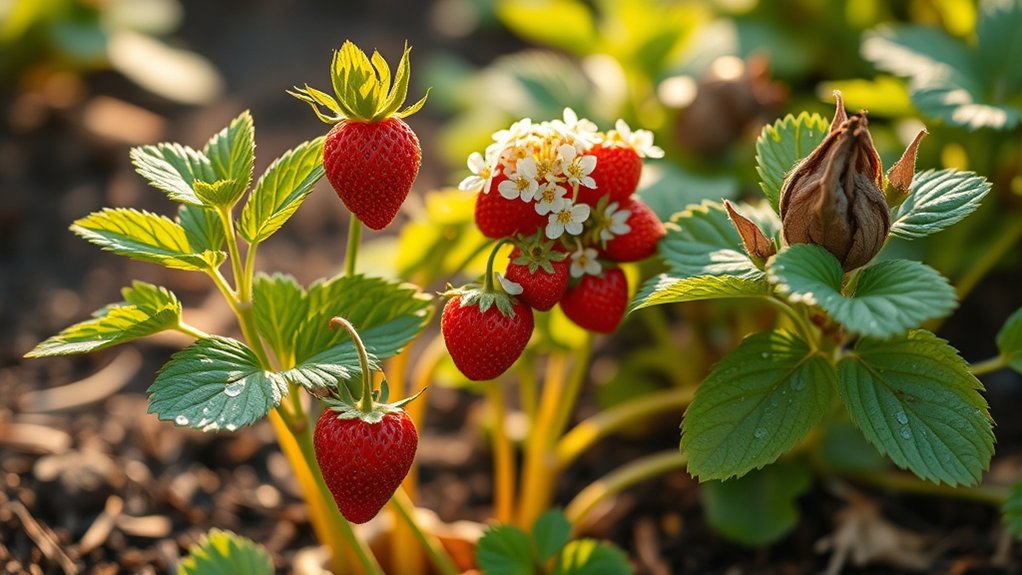
Although strawberry plants can live for several years, you’ll find their productivity usually starts to drop after about 3 to 5 years.
Strawberry plants thrive for years but typically begin to lose productivity after 3 to 5 years.
Around the three-year mark, individual strawberry plants begin losing vigor, much like humans reaching middle age.
While some plants might survive up to six years, most don’t last that long.
Older plants can even harm the overall health of your strawberry patch, so managing and replacing them is essential.
Fortunately, propagating strawberries through runners offers a great solution.
By encouraging new plants to grow from runners, you can effectively extend your strawberry patch’s lifespan indefinitely.
This way, you keep fresh, vigorous plants producing fruit without needing to rely on the original, aging strawberry plants.
How Can You Tell the Age of Your Strawberry Plants?
How can you tell the age of your strawberry plants? One reliable way is by examining the size and number of crowns. Older plants typically have larger or even multiple crowns, while new runner plants usually show a single, smaller crown.
Since the age can be tricky to pinpoint until plants reach 3–5 years and start dying off, watching crown development helps. Runner plants in their first year often have their blossoms pinched off to focus on root growth, so their crowns remain small.
By regularly removing older plants with large crowns, you prevent overcrowding and keep your patch vigorous.
Paying attention to crown size and structure gives you a clear indication of your strawberry plants’ age and overall health.
Why Do Strawberry Plants Lose Productivity After 3–4 Years?
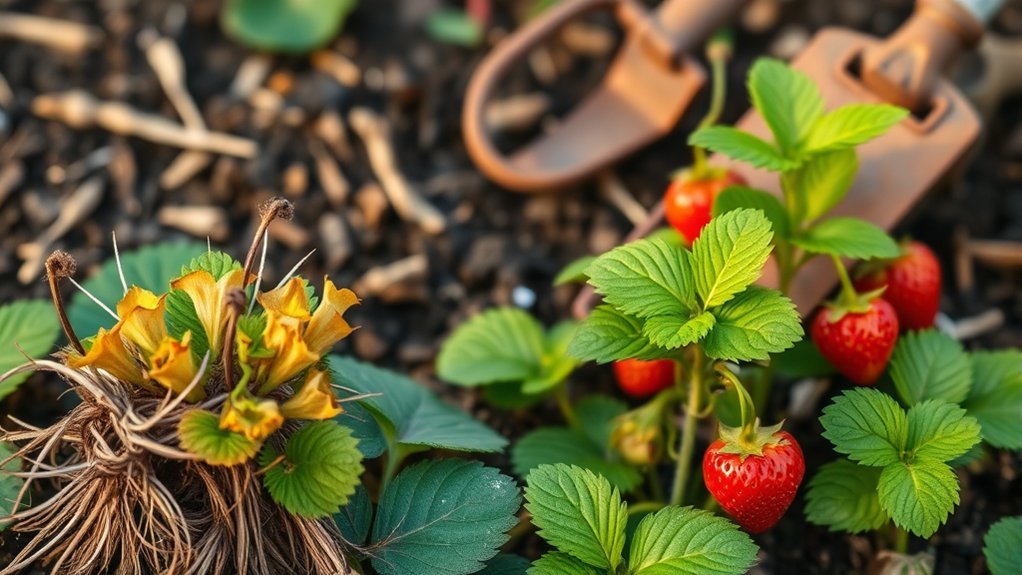
As your strawberry plants grow older and their crowns expand, you might notice a drop in their fruit production after about 3 to 4 years.
This decline in productivity happens because older plants lose vigor and energy, similar to how humans slow down around age 50.
After this period, the strawberries they produce become smaller and less plentiful, leading to lower yields.
Furthermore, older plants can crowd the patch, making it harder for new plants to thrive.
Soil pathogens that accumulate over time also contribute to the reduced health and productivity of aging strawberry plants.
To keep your patch productive, you’ll need to manage older plants by removing them and encouraging new growth through runners, maintaining the health of your strawberries.
Common Diseases and Pests That Shorten Strawberry Plant Life
Several common diseases and pests can drastically shorten the life of your strawberry plants if you don’t manage them carefully.
Common diseases like gray mold (Botrytis cinerea) and powdery mildew thrive in humid conditions, damaging your plants quickly.
Soil pathogens such as red stele also reduce plant vigor over time.
Pest infestations from aphids and spider mites weaken leaves and spread disease, cutting your plants’ lifespan short.
To protect your strawberry patch, keep an eye out for:
- Gray mold and powdery mildew infections
- Red stele soil pathogen buildup
- Aphid and spider mite infestations
Regularly remove infected leaves, apply fungicides when needed, and maintain good air circulation to minimize common diseases and pest infestations.
This will help your plants live longer and stay productive.
How Do Runners Extend the Life of Your Strawberry Patch?
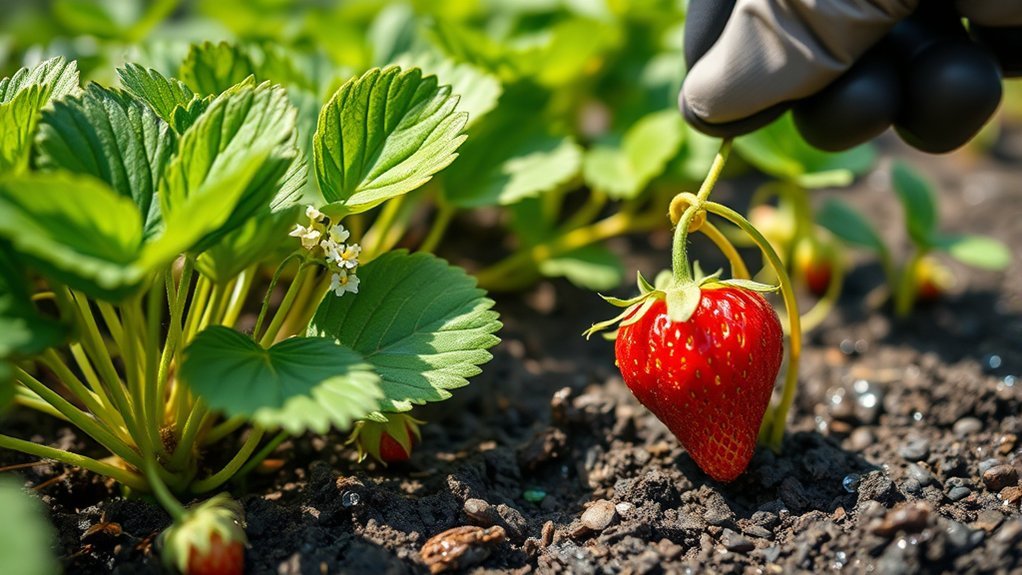
You can extend your strawberry patch’s life by letting runners propagate new plants. This basically resets the patch’s productive lifespan.
When you manage these runners and remove older plants, it keeps your patch healthy and vigorous. With proper care, your strawberry patch can thrive for years beyond the typical 3-5 year span.
Runner Plant Propagation
When strawberry plants send out runners, they give you a natural way to renew your patch and keep it productive. These runners grow from the parent plant’s base, rooting into the soil to form new plants from runners.
By letting these new plants establish, you replace older, less vigorous plants, extending your patch’s life. Proper runner plant propagation keeps your strawberry garden thriving season after season.
To succeed with runner propagation, focus on allowing runners to root before cutting them from the parent plant. Also, remove older plants after 3 to 5 years to prevent crowding.
Regularly managing runners helps maintain healthy, productive plants. Using runners effectively guarantees your strawberry patch remains fruitful year after year.
Lifespan Reset Mechanism
Although strawberry plants naturally age and decline, runners act as a built-in reset mechanism that extends your patch’s productive life.
These runners are new plants growing from the original plant’s stolons, rooting nearby to create younger, vigorous plants.
By allowing runners to proliferate in your strawberry patch, you effectively replace older, less productive plants with fresh ones, resetting the lifespan timer.
This natural renewal means your strawberry patch can remain productive indefinitely.
Observing wild strawberry patches shows that minimal intervention lets runners self-replace plants continuously.
You can further encourage this lifespan reset by removing older plants regularly, making space for healthier runners to thrive.
Embracing runners helps you maintain a vibrant, long-lasting strawberry patch with ongoing fruit production year after year.
Patch Health Management
Runners don’t just replace aging plants. They play a key role in managing your patch’s overall health. By allowing runners to root and grow, you keep your strawberry beds productive and your plants healthy.
Overcrowding older plants can reduce yields, so balancing old and new growth is essential. Proper patch health management helps prevent soil pathogens from building up, which can weaken your plants over time.
To extend your patch’s life, focus on encouraging new runners to establish, revitalizing plant populations.
Also, thin overcrowded areas to improve air circulation and light. Finally, rotate or rejuvenate soil to reduce disease risk.
When and Why Should You Remove Old Strawberry Plants?
Since strawberry plants typically lose vigor after 3 to 5 years, you should remove older plants to keep your patch productive.
Removing the old ones prevents soil pathogens from accumulating, which can harm both existing and new plants.
When you remove these aged plants, you encourage the growth of new runners, giving younger plants room to thrive and reset the patch’s productive lifespan.
Managing your plants actively by removing old ones also stops overcrowding and competition for nutrients, ensuring healthier growth.
While strawberries can self-replace if left wild, intentionally removing outdated plants optimizes fruit production and patch health.
How Soil Health Affects Strawberry Plant Longevity
You need to watch out for soil pathogens like red stele—they can really harm your strawberry plants over time.
Plus, if the nutrients in your soil get depleted, it weakens your plants and shortens how long they can produce fruit.
Soil Pathogens Impact
Although soil pathogens like red stele can severely shorten the lifespan of your strawberry plants, managing soil health effectively can help you protect them.
Soil pathogens infect both old and new plants, reducing vigor and forcing you to move your patch eventually.
To keep your strawberry plants healthy and productive, you need to focus on soil management strategies.
Rotate crops regularly to prevent pathogen buildup.
Test soil to monitor pathogen levels and overall health.
Encourage beneficial soil microorganisms to boost plant resilience.
Nutrient Depletion Effects
When nutrient levels in the soil drop, your strawberry plants lose vigor and produce fewer berries, especially after their third year. Nutrient depletion directly affects soil health, causing your plants to struggle with growth and berry production.
Monitoring soil nutrient levels regularly helps you catch imbalances early, preventing a decline in plant health. Poor soil health can also encourage soil pathogens like red stele, which further reduce your plants’ longevity.
To combat nutrient depletion, consider transplanting your strawberries to fresh, nutrient-rich soil to rejuvenate them. Implementing crop rotation and adding organic matter improves soil health over time, supporting stronger, longer-lasting plants.
Best Practices to Maintain a Healthy Strawberry Patch
Maintaining a healthy strawberry patch requires regular care and attention to prevent overcrowding and guarantee vigorous growth. You should monitor soil health closely, ensuring it stays rich and nutrient-balanced, and keep the soil moist without overwatering.
Regular care and balanced soil moisture are key to preventing overcrowding and ensuring healthy strawberry growth.
Removing older, less productive plants helps open space for new runners, rejuvenating the patch. Proper pruning in late summer redirects energy into fruit production, boosting yield and health.
To maintain your patch effectively:
- Regularly thin out older plants to avoid overcrowding
- Use mulch to retain soil moisture and protect roots in winter
- Employ pest management techniques like netting and natural fungicides
How Growing Conditions Affect Strawberry Plant Lifespan and Yield
Because strawberry plants typically remain productive for only 3 to 5 years, you need to pay close attention to growing conditions to maximize their lifespan and yield.
When growing strawberries, soil health plays a vital role. Avoiding soil pathogens and minimizing grass competition helps keep your plants vigorous.
Regularly monitor your strawberry plants for diseases, water them adequately, and apply proper fertilization to extend their productive years, sometimes up to 7 years.
If you grow strawberries in pots, you can reduce pest issues and better control moisture and sunlight, which are essential for plant longevity.
How to Propagate Strawberry Plants for a Productive Patch
One of the easiest and most effective ways to expand your strawberry patch is by propagating plants through runners. These runners extend from the mother plant, develop strawberry plants root systems, and grow into new plants.
To propagate strawberry plants successfully, wait until the runners have established roots, usually by fall. Then cut and transplant them into organic, loamy soil. This keeps your patch productive year after year.
For successful propagation, transplant rooted runners in fall into rich, loamy soil to maintain a thriving strawberry patch.
Keep these tips in mind:
- Remove excess runners to focus energy on fruit production.
- Pinch off blossoms on first-year runners to strengthen root growth.
- Regularly assess and transplant runners to balance old and new plants.
Frequently Asked Questions
Can Strawberry Plants Survive Winter Outdoors?
Yes, you can help strawberry plants survive winter outdoors by providing proper winter protection.
Since their cold hardiness varies, especially in zones 5-9, you’ll want to mulch around the plants to insulate roots from freezing temperatures.
If you’re growing strawberries in containers, bring them inside a garage or shed when it gets below 28ºF.
Positioning pots near your home’s interior walls adds extra warmth.
Regular care during dormancy keeps them healthy through cold months.
What Are the Best Fertilizers for Strawberry Plants?
You’ll want to choose organic fertilizers like compost, well-rotted manure, or fish emulsion to boost your strawberry plants naturally.
These improve soil health and provide balanced nutrients.
If you opt for chemical fertilizers, pick ones with a balanced N-P-K ratio around 5-10-10 to encourage fruiting without too much leafy growth.
Apply fertilizers in early spring and after the first harvest for the best results.
Avoid high-nitrogen options to keep fruit production strong.
How Often Should I Water Strawberry Plants?
You know what they say: “A stitch in time saves nine.” For strawberry plants, your watering frequency depends on the season.
Keep the soil slightly moist by watering deeply once a week during dry spells.
In fruiting season, water every 2-3 days, especially in hot weather.
Mulching helps with moisture retention, reducing how often you need to water.
Always water early in the morning to give your plants the best chance to thrive.
Can You Grow Strawberries Indoors Successfully?
Yes, you can grow strawberries indoors successfully! Choose day-neutral strawberry varieties like Ozark Beauty or Quinault, which thrive in indoor gardening setups.
Make sure your plants get at least eight hours of direct sunlight daily or use grow lights.
Use high-quality potting mix with good drainage, water regularly without overwatering, and prune often to encourage healthy growth and fruit production.
With proper care, you’ll enjoy fresh strawberries right inside your home!
Do Strawberry Plants Need Full Sun or Partial Shade?
You need to give your strawberry plants full sun exposure for the best results.
They thrive with at least eight hours of sunlight daily, which boosts plant health and encourages bigger, sweeter berries.
If you only provide partial shade, your plants might still grow, but the fruit will be fewer and smaller.
Conclusion
Strawberry plants may not live forever, but with the right care, you can keep your patch fruitful for years. Think of your garden as a living story. Each runner and healthy root adds a new chapter.
By staying on top of soil health, pests, and proper propagation, you’ll extend your plants’ productivity beyond the typical 3–4 years. Nurture them well, and your strawberry patch will keep giving sweet rewards season after season.