
10 Tips to Keep Strawberries Fresh Longer
To keep your strawberries fresh longer, pick bright, firm berries without blemishes. Don’t wash them until you’re ready to eat, as moisture speeds spoilage.
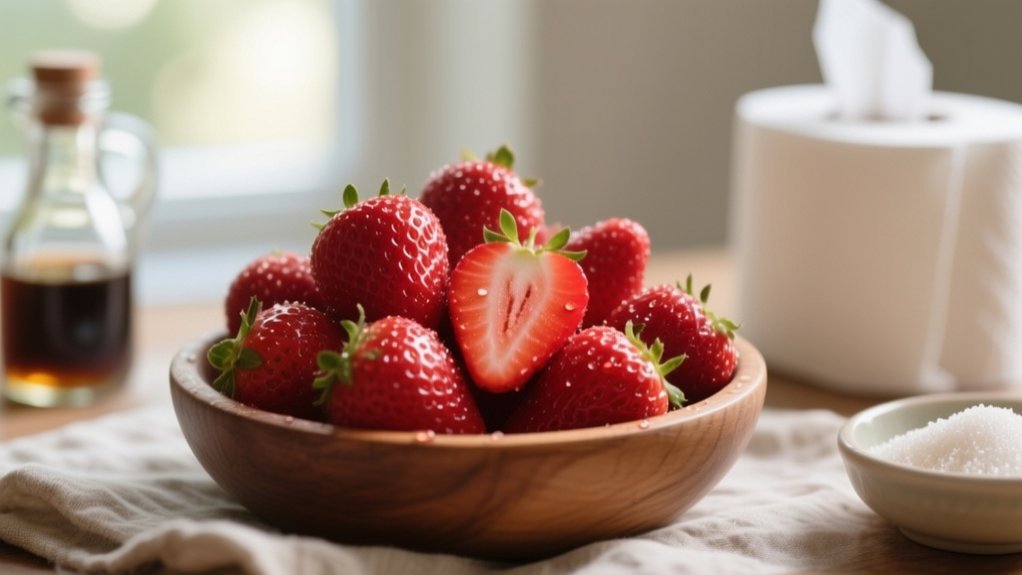
If you want, soak them in a vinegar-water solution to prevent mold, then dry thoroughly. Store them in a single layer on paper towels inside an airtight container.
Check daily, remove any moldy ones fast, and freeze extras for later use. Following these tips will help you enjoy your berries at their best, and there’s plenty more useful advice to explore.
Choose the Freshest Strawberries at Purchase

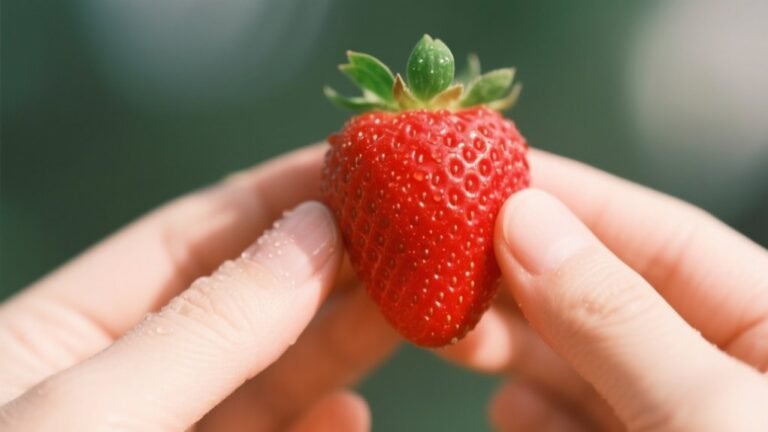
When picking strawberries, look for bright, shiny red berries that signal ripeness and peak flavor. To choose the freshest strawberries at purchase, inspect the entire carton carefully.
Avoid berries with signs of spoilage like bruises, blemishes, or mold, as these can cause nearby strawberries to deteriorate faster. Check the bottom of the container too, since decay often starts there unnoticed.
Firm strawberries are your best bet because they’re less likely to be damaged inside and will stay fresh longer.
By taking a moment to examine each berry before you buy, you guarantee you bring home only the freshest strawberries, maximizing their flavor and shelf life.
This careful selection helps you enjoy your purchase at its best.
Avoid Washing Fresh Strawberries Until Just Before Eating
Washing strawberries before storing them adds moisture that speeds up spoilage and mold growth.
To keep them fresh longer, you should handle unwashed strawberries carefully and choose the right storage methods.
Handle unwashed strawberries gently and store them properly to extend their freshness.
Here’s how to store fresh strawberries without washing them first:
Store unwashed strawberries in their original packaging or an airtight container. Keep them dry and avoid sealing them in plastic bags with no ventilation.
Refrigerate promptly to slow down mold growth. Wash strawberries only right before eating to prevent added moisture.
Check stored berries regularly and remove any spoiled ones immediately.
Soak Strawberries in Vinegar Solution to Prevent Mold
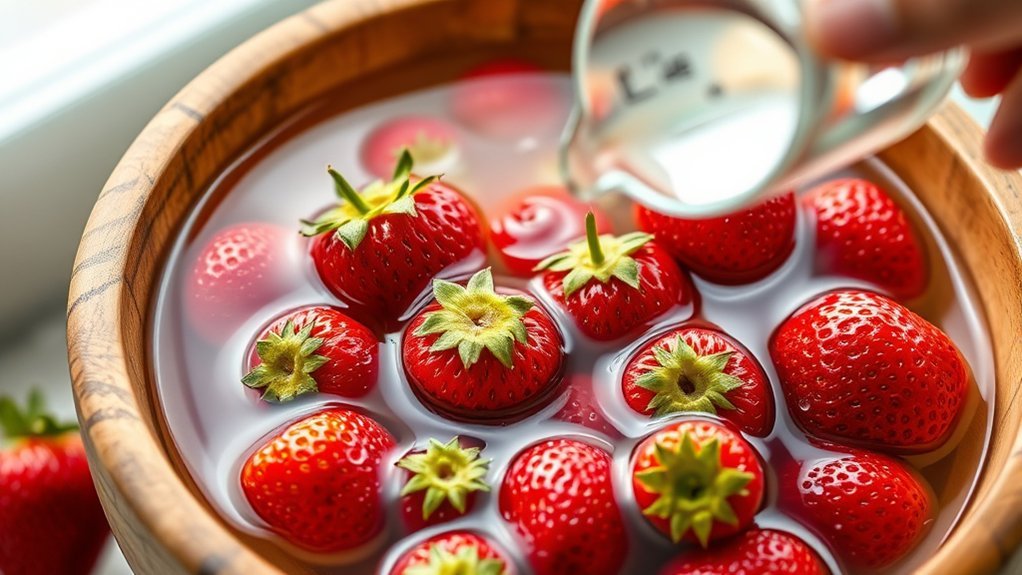
To further extend the freshness of your strawberries, try soaking them in a vinegar-water solution.
Mix three parts water with one part vinegar and soak the strawberries for 15 minutes.
This method effectively kills mold spores and bacteria, greatly reducing spoilage to about 5% over a week.
After soaking, make sure to dry the strawberries thoroughly to prevent moisture buildup, which can cause faster spoilage.
Once dry, store the strawberries in an airtight container to keep them fresh and firm longer.
Even with this vinegar method, regularly inspect your strawberries for any signs of mold or deterioration to maintain peak freshness.
Using this simple soak method, you’ll enjoy your strawberries with less waste and longer shelf life.
Dry Strawberries Thoroughly Before Storing
You’ll want to make sure your strawberries are completely dry before storing them.
Any moisture can speed up spoilage, so it’s important to get rid of it. You can use a salad spinner or just gently pat them with paper towels to soak up the excess water.
Keeping moisture from building up inside the container really helps your berries stay fresh much longer.
Importance Of Complete Drying
Since moisture accelerates spoilage, drying your strawberries thoroughly before storing them is essential to keep them fresh longer. Excess moisture promotes mold spores and bacterial growth, quickly ruining your berries.
To maintain freshness, make sure to avoid washing strawberries until just before eating. Use effective drying methods like air drying or a salad spinner. Remove as much surface moisture as possible to prevent mold.
Store dried strawberries in airtight containers lined with paper towels. Choose a storage method that limits humidity and moisture buildup.
Best Drying Techniques
Often, the best way to keep your strawberries fresh longer is by drying them thoroughly right after washing. Moisture is the main cause of spoilage, so you need to dry them completely before storing.
One effective drying technique is using a salad spinner, which quickly removes excess water without bruising the fruit. Alternatively, you can air dry strawberries by spreading them in a single layer on a clean towel, allowing even drying.
If you’re short on time, gently blow drying on a low setting works too. Just avoid overheating and damaging the berries.
Whichever drying technique you choose, make certain no moisture remains, as damp strawberries spoil faster.
Taking these simple steps will help you enjoy fresh, flavorful strawberries for longer periods.
Avoid Moisture Build-Up
Once you’ve thoroughly dried your strawberries using methods like a salad spinner or paper towels, the next step is to prevent moisture buildup during storage.
Moisture encourages mold spores and bacteria, which speeds up spoilage.
To effectively store strawberries, follow these tips:
Use an airtight container lined with paper towels to absorb excess moisture.
Avoid washing strawberries until just before eating to minimize moisture exposure.
Regularly inspect stored berries and remove any showing spoilage immediately.
Store strawberries in a single layer to prevent trapped moisture between them.
Keep the container in the refrigerator to slow bacterial growth.
Store Strawberries in Containers With Paper Towels to Stay Dry
When you store strawberries in their original packaging lined with paper towels, you help absorb excess moisture that causes spoilage. This simple method keeps your berries bright and firm by creating a dry environment inside the container.
Place paper towels along the bottom and sides to soak up humidity, which is key in preventing mold and decay. While airtight containers lined with paper towels can also keep strawberries fresh, the original packaging tends to perform better by minimizing moisture buildup.
To maintain freshness, check the paper towels regularly and replace them if they become damp. Among various storing methods, using paper towels is highly effective and easy, reducing spoilage rates to about 15%.
This approach is one of the best ways to keep your strawberries fresh longer.
Store Strawberries in the Coldest Part of the Fridge
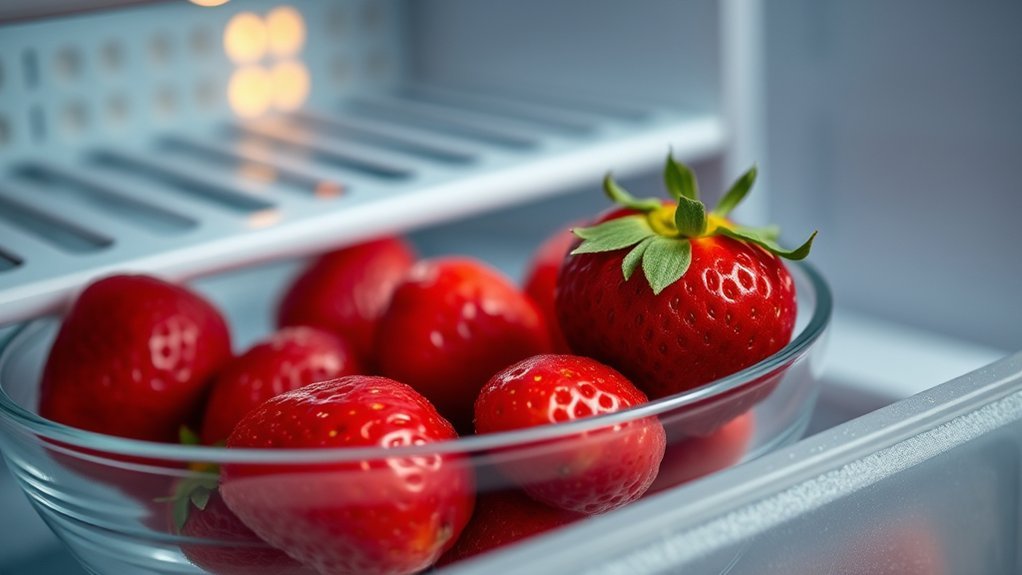
You’ll want to store your strawberries in the coldest part of your fridge.
That’s usually the back of the bottom shelf, where temperatures hover around 32°F to 36°F.
This spot is great because it keeps them fresh longer by slowing down spoilage and stopping mold from growing.
Plus, keeping them consistently cold helps cut down on bacteria and moisture, which means your strawberries will last even longer.
Optimal Fridge Temperature
Although strawberries are delicate, storing them at the right temperature can greatly extend their freshness. The ideal temperature to keep strawberries fresh is around 38°F (3°C).
To maintain this perfect condition, follow these tips:
Store strawberries in the coldest part of your fridge, like the back of the bottom shelf, to avoid temperature fluctuations. Use an air-tight container lined with paper towels to absorb moisture and prevent spoilage.
Avoid storing strawberries in their original packaging, which can trap humidity and speed up decay. Regularly inspect your strawberries and remove moldy berries to stop mold from spreading.
Practice proper food storage by minimizing fridge door openings to maintain a consistent cold environment.
Ideal Storage Location
Keeping strawberries at the right temperature is only part of the equation for maintaining their freshness. Choosing the ideal storage location is just as essential. When storing fresh strawberries, place them in the coldest part of your fridge, usually the crisper drawer.
This spot regulates humidity well and helps prevent spoilage caused by excess moisture. Keep strawberries in their original container or transfer them to an airtight container lined with paper towels. This absorbs moisture while allowing air circulation.
Avoid storing strawberries near ethylene-producing fruits like bananas, which speed up ripening and spoilage. Regularly check your strawberries for any damaged pieces and remove them promptly to stop mold from spreading.
Following these steps guarantees your strawberries stay fresh longer and delicious.
Store Strawberries in a Single Layer to Prevent Bruising
Since stacking strawberries causes bruising and speeds up spoilage, store them in a single layer whenever possible. This simple storage technique helps prevent bruising by avoiding pressure from other berries.
When you store strawberries in a single layer, you also improve air circulation, which reduces moisture buildup and slows down spoilage.
To keep your strawberries fresh longer, consider these tips:
Use a flat dish or tray to spread out the berries evenly.
Line the container with paper towels to absorb excess moisture.
Avoid overcrowding to prevent crushing delicate fruit.
Store in a cool, dry place or refrigerator for ideal freshness.
Check regularly to make sure no moisture accumulates.
Remove Moldy Strawberries Immediately to Prevent Spread
You want to check your strawberries every day for early signs of mold.
Look out for soft spots or any discoloration—that way, you can catch spoilage before it spreads.
If you spot any moldy berries, take them out right away.
This helps stop the mold from spreading to the rest of your strawberries.
By keeping up with these daily checks, you’ll keep your strawberries fresh for longer and cut down on waste.
It really makes a difference!
Identify Early Signs
Regularly checking your strawberries for early signs like soft spots, color changes, or darkening helps you catch spoilage before it spreads. Spotting these warning signs quickly lets you remove affected berries, preventing mold and decay from ruining the rest.
Keep an eye on moisture buildup inside storage containers, which encourages mold growth. Also watch for soft or mushy spots indicating early spoilage.
Darkened areas or discoloration can signal decay. The presence of water droplets is another warning, as excess water accelerates deterioration.
Using paper towels to line containers helps absorb moisture and reveal spoiled berries early.
Prevent Cross Contamination
Although a single moldy strawberry might seem harmless, it can quickly contaminate the entire batch if not removed immediately. To prevent cross contamination, you should always inspect your stored strawberries and remove any bad berries right away.
Moisture encourages mold growth, so keep your strawberries dry by using breathable containers lined with paper towels to absorb excess dampness. Avoid washing strawberries before storing them, as added moisture speeds up decay; instead, wash and store fresh just before eating.
Regularly checking for signs of spoilage like softening or dark spots helps you catch and remove problematic berries early. By acting promptly, you’ll protect the rest of your strawberries from mold and extend their freshness.
Regular Inspection Routine
Keeping a close eye on your strawberries every couple of days helps catch any mold or spoilage early.
Establish a regular inspection routine to inspect stored strawberries thoroughly. Here’s how to maintain freshness:
Check for signs of mold and spoilage like soft spots, darkening, or color changes. Remove any moldy or spoiled berries immediately to prevent spreading.
Discard spoiled strawberries carefully, so mold spores don’t infect the rest.
Keep strawberries dry by drying any removed berries before storing the rest.
Repeat inspections regularly to prolong the freshness and maintain taste.
Freeze Surplus Strawberries for Long-Term Use
When you have more strawberries than you can eat quickly, freezing them is a smart way to preserve their freshness and flavor for months. Start by washing your strawberries in a solution of one part white vinegar to three parts water to kill bacteria. Rinse well and dry thoroughly.
Arrange the strawberries in a single layer on a baking sheet and freeze for at least 4 hours. Once frozen, transfer them to freezer-safe bags or containers, making sure they’re stored in an airtight environment to avoid freezer burn. Don’t forget to label freezer containers with the date.
Properly stored frozen strawberries can last up to 12 months without losing quality.
| Step | Tip |
|---|---|
| Wash & Dry | Use vinegar-water solution |
| Freeze Individually | Arrange strawberries flat |
| Storage & Labeling | Airtight containers, label date |
Regularly Check Strawberries and Refresh Paper Towels as Needed
You should frequently check your strawberries for any signs of spoilage, such as soft spots or discoloration, to stop decay from spreading to the rest.
To maintain freshness and extend shelf life, follow these steps:
Regularly check strawberries every few days to catch and remove spoiled ones promptly.
Refresh paper towels lining your storage container whenever they become damp.
Replace towels immediately to absorb excess moisture and prevent mold growth.
Keep the storage container dry to minimize humidity that accelerates spoilage.
Monitor both the berries and paper towels to sustain an ideal environment for freshness.
Frequently Asked Questions
Can I Store Strawberries With Other Fruits Without Affecting Freshness?
You shouldn’t store strawberries with other fruits because of their strawberry ethylene sensitivity.
Fruits like apples and bananas release ethylene, speeding up ripening and spoilage. The best fruit combinations avoid ethylene producers.
Pay attention to storage temperature effects; cooler temps help maintain freshness.
Store strawberries based on ripeness before storage, and don’t wash them until ready to eat.
Seasonal strawberry availability also affects how long they last.
Does the Type of Container Affect How Long Strawberries Last?
Yes, the type of container definitely affects how long your strawberries last.
Containers with good air circulation prevent moisture buildup, reducing spoilage. Materials that absorb excess moisture, like paper towels, help too.
Avoid airtight containers without ventilation as they trap moisture, causing faster rot.
Also, control light exposure and temperature by storing strawberries in a cool, dark place.
Finally, use proper stacking methods to avoid bruising and extend freshness.
Are There Natural Preservatives to Extend Strawberry Shelf Life?
Yes, you can use natural solutions to extend your strawberries’ shelf life.
Try a vinegar wash with a 3:1 water-to-vinegar ratio to kill mold spores effectively.
Dipping strawberries in lemon juice or citric acid helps prevent browning and spoilage thanks to their acidity.
You might also experiment with a light honey coating or a gentle salt water soak to reduce bacteria.
These natural methods keep your berries fresher longer without chemicals.
How Does Humidity in the Fridge Impact Strawberry Freshness?
Humidity effects in your fridge play a big role in strawberry freshness. Too much moisture causes condensation issues, leading to mold and spoilage.
You want to maintain ideal humidity by controlling moisture. Store strawberries in containers lined with paper towels to absorb excess water. Keep fridge temperature steady and avoid the crisper drawer if humidity’s too high.
Regularly check your berries.
These storage tips will help keep them fresh longer.
Can Strawberries Be Kept Fresh at Room Temperature for a Short Time?
Yes, you can keep strawberries fresh at room temperature for short term freshness, usually up to two days.
To maximize ideal ripeness duration, avoid exposure to sunlight and guarantee good air circulation by placing them in a single layer.
Watch out for potential spoilage indicators like soft spots or discoloration and don’t wash them until you’re ready to eat.
This way, you’ll enjoy fresher strawberries without rushing to consume them.
Conclusion
By following these tips, you’ll keep your strawberries fresh and juicy longer, like savoring summer’s sweetest secret. Imagine reaching into your fridge to find vibrant, plump berries instead of mushy, moldy ones. That’s the power of proper care.
Don’t wash them too soon, keep them dry, and store them carefully. With just a little attention, your strawberries will stay fresh, ready to brighten every snack or dessert you crave.