
What Seeds Does a Strawberry Have?
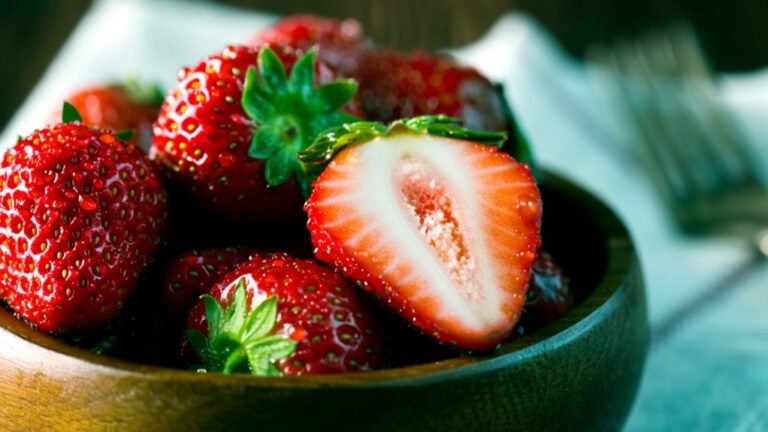
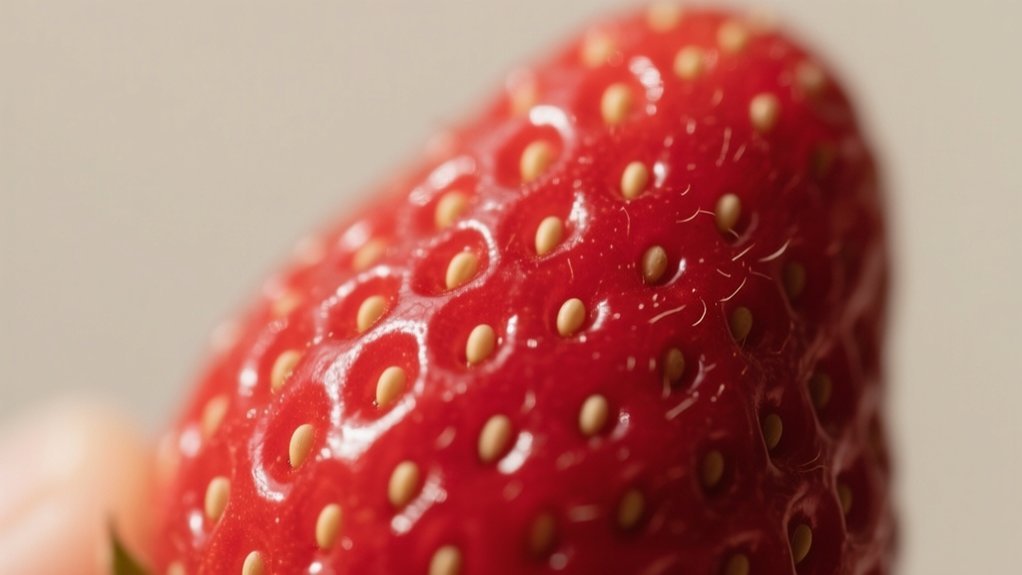
You’ll find that a strawberry doesn’t have seeds inside like many fruits. Instead, it carries about 200 tiny dry fruits called achenes scattered across its surface.
Each achene contains a single seed and is loosely attached to help spread new plants. The red part you eat is actually swollen flower tissue, not the fruit itself.
If you want to understand why strawberries are built this way and how these seeds develop, you’re in for some interesting details.
What Are Strawberry Seeds and Where Are They?
Strawberry seeds, called achenes, aren’t hidden inside the fruit like you might expect. They’re scattered across its surface instead. You’ll find about 200 tiny achenes on an average strawberry, each holding a single seed inside.
What’s interesting is that the red, juicy part you enjoy isn’t the true fruit but a swollen receptacle. This is a specialized tissue that supports the seeds on the outside.
These achenes are loosely attached to the swollen receptacle, making it easy for animals to pick them up and help spread the seeds.
Why Do Strawberries Have Seeds on the Outside?
Why do these tiny seeds sit on the outside rather than being hidden within the fruit?
In strawberries, each seed you see on the surface is actually inside an achene, a small dry fruit.
Unlike many fruits, the fleshy part you enjoy isn’t a true fruit but a swollen receptacle that supports these achenes.
This unique design evolved as part of the strawberry’s strategy within the rose family to attract animals, encouraging them to eat the strawberry and disperse its seeds.
By placing seeds outside, the strawberry increases the chances that animals will carry the seeds away, helping new plants grow.
Why Strawberry Seeds Are on the Outside, Not Inside the Fruit
You might wonder what makes strawberry seeds stand out compared to other fruits. Unlike most fruits, strawberry seeds, called achenes, grow on the outside. The fleshy part you eat isn’t the true fruit but a swollen tissue from the strawberry flower that supports these achenes.
This unique structure likely evolved to attract animals, encouraging them to eat the fruit and disperse seeds easily. Wild strawberries share this trait, making seed spread more efficient since achenes detach easily.
| Feature | Strawberry Seeds (Achenes) | Typical Fruit Seeds |
|---|---|---|
| Location | Outside on fleshy part | Inside the fruit |
| Fruit Type | Swollen receptacle tissue | True fruit |
| Seed Number | ~200 per strawberry | Varies |
| Seed Dispersal Method | Animal consumption | Often internal release |
| Evolution Advantage | Better seed dispersal | Protection of seeds |
How Strawberry Seeds Develop After Flower Pollination
Once the strawberry flower gets pollinated, you’ll start to notice tiny achenes forming on its surface. Each of these little achenes holds a seed inside.
At the same time, the flower’s receptacle tissue begins to swell, turning into the juicy part of the strawberry that we love to eat.
Meanwhile, those achenes develop as separate fruits all on their own. Knowing how this process works makes it easier to appreciate why strawberries have their seeds on the outside, which is pretty unique!
Pollination And Seed Formation
Although pollination seems like a simple step, it triggers a complex process where each strawberry flower forms numerous tiny fruits called achenes, each housing a seed.
When a strawberry plant was first cultivated years ago, people didn’t realize how intricate this process was.
After pollination, the ovules inside each achene get fertilized and mature into seeds. You’ll find around 200 achenes on a typical strawberry, each one a potential new plant.
These achenes attach to the swollen, red fleshy part you eat, which develops from the flower’s receptacle.
Animals play an essential role by eating the fruit and dispersing the seeds, helping the strawberry plant spread.
Achene Development Process
Pollination sparks the formation of achenes, the tiny dry fruits that develop on the strawberry’s surface. Each achene houses a seed, and you’ll find about 200 on a medium strawberry. Understanding the achene development process helps you appreciate the intricate biology behind these seeds.
Achene growth begins right after pollination, with each achene forming independently. Despite the strawberry ripening, achenes maintain seed stability, showing little change in size.
Genetic influence plays a key role in ensuring each achene develops properly, safeguarding seed viability. The achenes’ development happens separately from the fleshy part, which swells but doesn’t affect achene size.
Role Of Receptacle Tissue
The fleshy part you enjoy eating is actually swollen receptacle tissue, not a true fruit. Its primary role is to support seed development after flower pollination.
When pollination occurs, the receptacle tissue swells, creating the juicy, edible mass. Meanwhile, the actual fruits, called achenes, develop individually on this swollen surface.
This unique fruit anatomy means the receptacle function is essential for both protecting and nourishing the achenes. Each achene contains a seed and forms from the flower’s ovary after fertilization.
| Aspect | Role in Strawberry Development |
|---|---|
| Receptacle Function | Supports and nourishes seed growth |
| Tissue Swelling | Creates edible, fleshy mass |
| Achene Formation | Individual fruits containing seeds |
| Fruit Anatomy | Combination of swollen tissue and achenes |
You see, this structure aids effective seed dispersal too.
What Role Do Achenes Play in Strawberry Reproduction?
When you look closely at a strawberry, you’ll notice tiny achenes dotting its surface. These aren’t just seeds but the true fruits that carry the potential to grow new plants.
Achenes play an essential role in strawberry reproduction by enabling sexual propagation and influencing strawberry genetics.
Here’s how their achene functions and reproductive strategies matter: Each achene contains a seed that can germinate into a new plant, ensuring genetic diversity. Pollination triggers achene development, connecting reproduction with environmental factors.
Achenes are loosely attached, aiding natural dispersal when animals eat the fruit. Alongside asexual runners, achenes offer flexible reproductive strategies to adapt to changing conditions.
How External Seeds Help Strawberries Disperse
You might’ve noticed that strawberries have tiny seeds, called achenes, all over their surface.
This setup actually gives them a clever way to spread around. Animals are attracted to the fruit and, without even realizing it, they carry these external seeds to new spots as they eat and move about.
Because of this smart seed placement, strawberries get a better chance to grow in all sorts of environments across the globe.
External Seeds Advantage
Because strawberry seeds, called achenes, sit on the fruit’s outside, animals can easily access and disperse them. This unique external placement plays a crucial role in the plant’s seed dispersal strategies.
When animals eat the sweet, fleshy strawberry, they interact directly with the seeds, helping spread them far and wide. The loose attachment of achenes means they can fall off easily, increasing dispersal chances.
This interaction offers several ecological benefits:
- Animals are attracted to the fruit, enhancing seed dispersal opportunities.
- Seeds pass through digestive systems unharmed, ready to sprout elsewhere.
- Dispersed seeds promote genetic diversity by colonizing new areas.
- The external positioning encourages frequent animal interactions, boosting survival rates.
You see, these external seeds give strawberries an edge in thriving across different environments.
Animal Seed Dispersal
Although strawberries’ seeds sit on the outside, they’re perfectly positioned to hitch a ride with animals. Their seed dispersal mechanisms rely heavily on animal attraction strategies like bright red color and sweet flavor that lure birds and mammals to eat the fruit.
When animals consume strawberries, the loosely attached achenes easily detach and travel within their digestive tracts. This process not only spreads seeds over wide areas but also enhances germination chances once excreted in nutrient-rich droppings.
By using animals as carriers, strawberries boost genetic diversity benefits, enabling new plants to colonize varied environments.
So, the external placement of seeds cleverly rewards animals, ensuring the strawberry’s reproductive success through effective seed dispersal and wider plant propagation.
You can see how nature’s design supports strawberry survival and growth.
Evolutionary Seed Placement
When you look closely at strawberries, you’ll notice their seeds, called achenes, sit on the outside. This is a rare trait among fruits.
This unique evolutionary seed placement offers several advantages for seed dispersal shaped by natural selection.
By having seeds externally, animals are more likely to notice and eat the fruit, carrying the seeds away. Achenes detach easily from the flesh, spreading seeds efficiently.
External seeds avoid being trapped inside the fruit, increasing germination chances.
The strawberry’s reproductive success improves through both sexual and asexual means.
These evolutionary advantages help strawberries colonize new areas and adapt globally. It shows how natural selection favors external seed placement for effective seed dispersal.
You can see how this strategy guarantees strawberry survival and expansion in diverse environments.
Variations in Strawberry Seed Numbers Across Different Varieties
Many strawberry varieties carry a different number of achenes, the tiny seeds on their surface, with counts typically ranging from 150 to 400 in garden strawberries.
You’ll notice seed variety differences influenced by factors like strawberry size and growing conditions.
Larger cultivars often have more seeds, showing clear seed quantity effects.
When breeders develop strawberry cultivars, they select for traits such as size and sweetness, which indirectly shape cultivar seed traits, including seed count.
Wild strawberries, like Fragaria vesca, show even more variability in seed numbers.
So, when you examine different strawberries, you’re seeing the result of complex interactions between genetics and environment, all affecting how many seeds a strawberry carries on its surface.
Understanding these variations helps you appreciate the diversity within strawberry types.
How to Grow New Plants From Strawberry Seeds
If you want to grow new strawberry plants, start by collecting the tiny achenes from a ripe strawberry, since each one holds a seed ready to sprout.
Use these seed germination techniques to boost success:
Follow these seed germination techniques to increase your chances of growing healthy strawberry plants.
Soak the achenes in water for 24 hours to soften their coating.
Plant them on well-draining seed starting mix, spacing about 1 inch apart, pressing lightly without covering.
Keep soil moist and place in a warm, bright spot (65°F to 75°F) for ideal sprouting.
Thin seedlings after 2–4 weeks and follow seedling transplanting tips by moving strong plants to larger pots or your garden.
Debunking Common Myths About Strawberry Seeds and Fruit
Although strawberries may look like simple fruits, their structure often confuses people who don’t realize that the red, fleshy part you enjoy isn’t the actual fruit.
Those tiny seeds on the outside, called achenes, are the true fruits containing the seeds.
Many fruit misconceptions arise because strawberry varieties don’t follow typical fruit patterns. The swollen receptacle is just a tasty platform for achenes.
Understanding seed biology helps clear up myths like the idea that the seeds are inside the fruit or that strawberries have one large seed.
Each achene holds a single seed, loosely attached to aid dispersal.
Knowing this, you’ll appreciate how unique strawberries are compared to common fruits and why their seeds aren’t where you’d expect them to be.
How Strawberry Seeds Differ From Seeds Inside Other Fruits
You might be surprised to learn that the tiny seeds you see on a strawberry’s surface aren’t like the seeds inside most fruits. Unlike peaches or apples, strawberry seeds, called achenes, sit on the outside, each a separate fruit containing one seed.
This unique setup highlights several key differences rooted in reproductive adaptations and seed dispersal strategies:
- Strawberries showcase aggregate fruit characteristics, with many achenes clustered on a swollen receptacle, not inside fleshy tissue.
- Each achene acts as an individual fruit, enhancing seed dispersal opportunities by attracting animals to the exposed seeds.
- True fruits like blueberries enclose seeds internally, relying on different dispersal methods.
- This external seed display helps strawberries spread their progeny effectively, a clever twist in fruit evolution you’ll rarely see elsewhere.
Frequently Asked Questions
Can Strawberry Seeds Cause Allergic Reactions in Some People?
Yes, strawberry seeds can trigger allergy symptoms in some people, especially if you’re sensitive to fruit allergies.
While the primary allergen, Fra a1, is in the fruit’s flesh, seeds might still cause reactions due to cross-contact or irritation during seed extraction.
If you notice itching or swelling after eating strawberries, it’s wise to consult an allergist.
Avoiding whole strawberries or trying seedless alternatives can help manage your symptoms effectively.
Are Strawberry Seeds Edible and Nutritious?
You’ll enjoy eating strawberry seeds; they’re edible and packed with nutritional benefits. They aid seed digestion and add fiber, healthy fats, and antioxidants to your diet.
You can eat them raw with the fruit or use them in culinary uses like smoothies and baked goods, enhancing flavor and nutrition.
How Long Do Strawberry Seeds Remain Viable for Planting?
Strawberry seeds remain viable for planting about 1 to 2 years if you use proper seed storage methods, like keeping them cool and dry.
To maximize success, you should create ideal germination conditions, such as maintaining consistent moisture and warmth.
Don’t forget seed viability testing. Place a few seeds on a damp paper towel and check for sprouts after a couple of weeks.
This helps you know if your seeds are still good to plant.
Do Strawberry Seeds Need Special Treatment Before Germination?
You don’t necessarily need special treatment before germination, but seed stratification methods can boost your success rate.
In fact, cold-stratifying strawberry seeds for 2-4 weeks improves germination considerably.
Keep the germination temperature requirements between 65°F to 75°F to encourage sprouting.
Once seedlings emerge, follow seedling care tips like providing ample light and moisture without overwatering.
Soaking seeds for 24 hours before planting also helps soften the seed coat and promotes growth.
Can You Eat Strawberries Without Seeds?
Yes, you can eat strawberries without seeds, especially if you choose seedless strawberry varieties developed for that purpose.
Understanding strawberry seed anatomy helps you appreciate that what you see on the surface are achenes, not true seeds.
If you prefer, you can remove them for texture reasons.
Seed dispersal methods naturally rely on animals eating seeded strawberries, but seedless types let you enjoy sweetness without worrying about seeds at all.
Conclusion
Now that you know strawberry seeds, or achenes, sit on the fruit’s outside, you can appreciate how unique they are. Imagine planting those tiny seeds from a fresh strawberry you picked. Watching them sprout and grow into new plants is pretty amazing.
This hands-on experience shows how strawberry reproduction works differently from other fruits. So next time you enjoy strawberries, remember those little seeds aren’t just tasty. They’re the start of new life.