

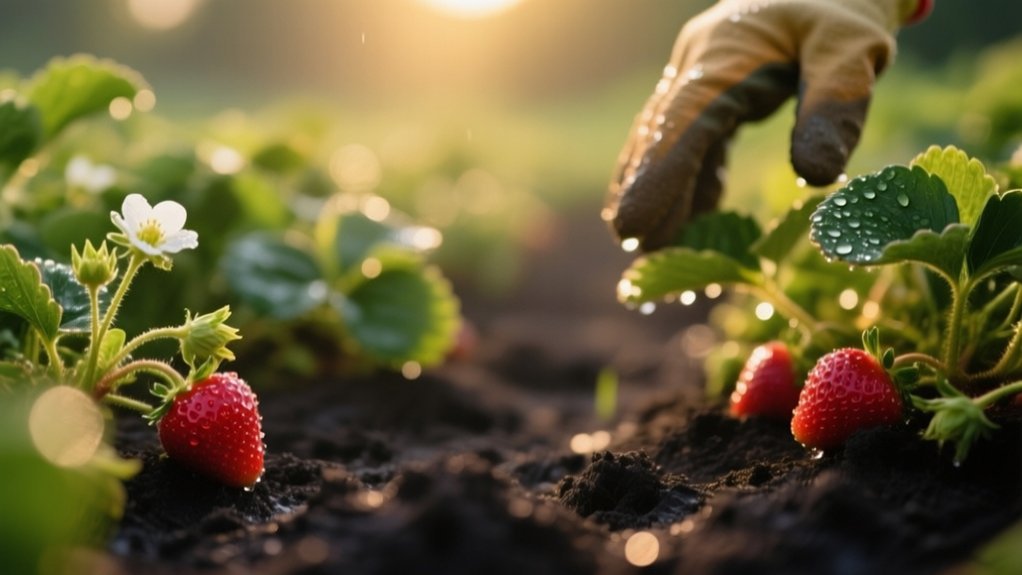
Do Strawberries Need a Lot of Water
Strawberries need consistent watering, about 1 to 2 inches per week, to stay healthy and produce well. You’ll want to water more frequently when plants are new or during hot weather but avoid overwatering to prevent leaf and fruit problems.
Morning watering is best to reduce disease risks. Using mulch helps keep soil moist and reduces watering needs. If you keep these basics in mind, you can guarantee your strawberries thrive and avoid common pitfalls as you care for them.
How Much Water Do Strawberries Need?

Although strawberries need consistent moisture, they typically require about 1 to 2 inches of water per week during the growing season to thrive.
Strawberries thrive with consistent moisture, needing about 1 to 2 inches of water weekly.
You’ll want to keep the soil consistently moist, especially in the top 2-3 inches where strawberry roots mainly grow. Your strawberries need this regular watering to avoid stress and encourage healthy growth.
If you’re planting new strawberries, providing around 1 inch of water four times a month helps establish strong roots.
Keep in mind, during extreme heat, your water needs increase to about 2.5 inches weekly.
Also, soil type affects how often you water. Sandy soils dry out faster, so you’ll need to water more frequently than with clay soils that hold moisture better.
When Is the Best Time to Water Strawberries?
When should you water your strawberries to keep them healthy and productive? The best time to water strawberries is early in the morning. This timing lets the foliage and fruit dry during the day, reducing disease risks.
You should also check the soil before watering; only water when the top 2 inches feel dry to avoid overwatering.
Keep these tips in mind when you water strawberries:
- Water early to help prevent fungal diseases linked to wet leaves.
- Use drip irrigation or soaker hoses to deliver water directly to roots without wetting leaves.
- Aim for consistent watering, providing about 1-2 inches weekly during the growing season.
How Often Should You Water Established vs. New Plants?

Since new strawberry plants are still establishing their roots, you’ll need to water them more frequently, about every three days during the first month. This helps keep the soil consistently moist.
Established plants, on the other hand, require less frequent watering, about 1 to 2 inches weekly, as they are more drought-tolerant. Always monitor soil moisture levels by checking the top 2 inches before watering to avoid over or underwatering.
| Plant Type | Water Frequency | Amount per Week |
|---|---|---|
| Newly Planted | Every 3 days | ~1 inch 4 times a month |
| Established Plants | 1-2 inches weekly | 1-2 inches total |
| Soil Moisture Check | Before watering | Top 2 inches moist |
This approach supports healthy growth for both newly planted strawberries and established plants.
Why Consistent Watering Matters for Strawberry Health
You want to keep the soil consistently moist because strawberries really depend on regular watering to stay healthy and produce good fruit.
If you water them on and off, your plants might start to wilt, lose leaves, or not produce much.
Importance Of Regular Moisture
Because strawberries have shallow roots that dry out quickly, you need to water them consistently to keep the soil evenly moist.
Regular moisture plays a crucial role in the health and productivity of your strawberries.
Without a steady water supply, the plants can suffer stress, which reduces nutrient uptake and fruit quality.
To maintain ideal moisture:
- Provide 1 to 2 inches of water weekly during the growing season.
- Use mulch around plants to help retain soil moisture and reduce watering frequency.
- Avoid letting the soil dry out or become waterlogged to prevent root issues.
Effects Of Inconsistent Watering
Although strawberries need consistent watering to thrive, many growers struggle with keeping their moisture levels steady. Inconsistent watering can cause shallow root development, leaving your plants vulnerable to drought stress and heat.
Strawberries require a specific amount of water, 1 to 2 inches per week, to maintain healthy growth. When moisture levels fluctuate, you might notice wilting, leaf drop, or stunted growth, which directly impacts fruit yield and quality.
Overwatering or underwatering, both results of inconsistent watering, can lead to root rot or dehydration, harming or even killing your plants.
Maintaining consistent moisture also preserves soil structure, ensuring ideal air pockets and drainage.
To keep your strawberries healthy, you need to provide them with the right amount of water regularly, avoiding the pitfalls of inconsistent watering.
Optimal Watering Schedule
When you stick to a consistent watering schedule, your strawberry plants stay healthier and produce better fruit.
To water a strawberry plant effectively, aim for an ideal watering schedule that provides 1 to 2 inches of water per week. This keeps the soil at consistent moisture levels, which is essential for growth and fruit development.
Remember:
- Newly planted strawberries need about 1 inch of water four times a month to establish roots.
- Water early in the morning to allow foliage to dry, reducing disease risk.
- Avoid erratic watering to prevent stress, wilting, and poor fruit quality.
How Strawberry Roots Affect Their Water Needs
Since strawberry roots stay shallow in the top few inches of soil, you need to keep the moisture consistent to support them.
Because their root system is so close to the surface, the soil tends to dry out quickly. So, you’ll have to water more often, especially when the weather is warm.
One great tip is to use mulch.
Mulching helps retain moisture and also protects those delicate roots from sudden temperature changes.
It’s a simple way to keep your strawberry plants happy and healthy!
Shallow Root System
Strawberry plants rely on a shallow root system that extends just about 3 inches into the soil, which means you need to watch their water closely.
Since strawberries have shallow roots, they need to be watered regularly to keep the soil consistently moist but not soggy. Their roots absorb moisture quickly and also heat up faster, increasing water demands during warm days.
To care for them effectively, you should:
- Monitor soil moisture daily, ensuring the top 2 inches dry out slightly before watering
- Water deeply yet gently to encourage healthy growth without causing root rot
- Mulch around the plants to help keep the soil cool and minimize evaporation
Moisture Retention Importance
Their shallow roots don’t just demand frequent watering. They also make moisture retention a top priority. Since strawberry roots stay within the top 3 inches of soil, you need to keep the soil consistently moist but not soggy.
Strawberries typically require about 1 to 2 inches of water per week. Using mulch can dramatically improve moisture retention by reducing evaporation. It also protects those shallow roots from heat stress.
| Factor | Effect on Strawberries |
|---|---|
| Shallow roots | Quick soil drying |
| Water per week | 1-2 inches needed |
| Mulch | Retains moisture |
| Heat absorption | Increases water demand |
| Soil moisture check | Prevents overwatering |
Impact On Watering Frequency
Because shallow roots occupy just the top few inches of soil, you’ll need to water strawberry plants more frequently to keep moisture levels consistent.
Strawberry plants need water regularly since their roots only reach about 3 inches deep, making them prone to drying out quickly.
How often you water depends on several factors, so performing a soil test or regularly checking the top 2 inches can help guide you.
Keep in mind:
- Sandy soils drain fast, so your strawberries need water more often.
- Hot weather increases water demand, sometimes up to 2.5 inches weekly.
- Cooler or clay soils retain moisture longer, reducing watering frequency.
Water Needs for Different Strawberry Varieties
Although water needs vary among strawberry varieties, understanding these differences helps you provide the right amount to support healthy growth and fruit production. June-bearing strawberries require 1 to 2 inches of water weekly during their single large crop in late spring.
Day-neutral strawberries produce fruit continuously and may need more water during peak months to maintain steady yields. Everbearing types also need similar watering to June-bearing varieties.
| Strawberry Variety | Water Needs (inches/week) |
|---|---|
| June-bearing | 1 to 2 |
| Day-neutral | 1 to 2 (more in peak months) |
| Everbearing | 1 to 2 |
How Soil Type Affects Strawberry Watering

Since soil type directly influences water retention and drainage, you’ll need to adjust your strawberry watering routine accordingly.
Strawberries thrive best in well-drained soil with a slightly acidic pH between 6.0 and 7.0. Depending on your soil type, your plants may need more water or less.
Strawberries flourish in well-drained, slightly acidic soil with pH levels from 6.0 to 7.0.
Sandy soils drain quickly, so strawberries in these conditions need more frequent watering to stay hydrated.
Heavy, clay-based soils hold moisture longer, meaning you should water less often to avoid root rot.
Because strawberry roots are shallow, moisture availability in the top 3 inches of soil is essential for healthy growth.
Signs You’re Overwatering or Underwatering Strawberries
How can you tell if you’re overwatering or underwatering your strawberries? Both cause leaf drop and wilting, so watch closely for these signs to avoid damage.
| Signs | Overwatering | Underwatering |
|---|---|---|
| Leaf appearance | Brown circling, droopy leaves | Crispy, dry leaves |
| Fruit condition | Moldy fruit | Reduced fruit size |
| Soil moisture | Constantly wet | Dry top 2 inches of soil |
| Growth rate | Slow growth | Stunted growth |
| Additional signs | Brown leaf tips, nutrient issues | Wilting, leaf curl |
Check the soil moisture regularly. Strawberries absorb water mainly from the shallow root zone. Overwatering suffocates roots, while underwatering deprives them of moisture.
Recognizing these signs helps you adjust watering before your plants suffer.
Best Watering Methods to Keep Strawberries Healthy
When you water your strawberries, using drip irrigation or soaker hoses delivers moisture directly to the roots, keeping the leaves dry and reducing disease risk.
A drip irrigation system guarantees you provide consistent water without over-saturating the soil.
You need to water strawberries about 1 to 2 inches per week, adjusting for heat or dryness. To maintain healthy plants, monitor soil moisture regularly by checking the top 2 inches of soil and only water when it feels dry.
Water strawberries 1-2 inches weekly, adjusting for heat; check top 2 inches of soil and water only when dry.
Keep these tips in mind:
- Water early in the morning to let foliage dry during the day
- Avoid wetting leaves to prevent rot and disease
- Adjust watering frequency based on weather conditions
Following these methods helps strawberries thrive while minimizing disease risks.
How Mulching Helps Retain Soil Moisture
Although watering is essential, mulching plays a key role in keeping your soil moist by reducing evaporation, especially during hot weather.
Adding about 2 inches of mulch, like straw or chopped leaves, helps maintain consistent soil moisture and regulate temperature.
Mulch reduces water loss by up to 25%, so your strawberries get the moisture they need longer between watering. It also suppresses weeds that compete with your plants for water and nutrients.
Plus, mulch prevents water from splashing on leaves, lowering fungal disease risks.
Damp mulch fosters beneficial microorganisms in the soil, which further improve moisture retention and nutrient availability.
Simple Ways to Tell When Strawberries Need Water
Mulching helps keep your strawberry soil moist, but you still need to know the best way to tell when your plants actually need water.
To keep your strawberries healthy, regularly check the soil moisture and observe the plant’s condition.
Here are simple ways to tell when they need water:
Check the top 2 inches of soil. If it feels dry to the touch, it’s time to water.
Perform a finger test by inserting your finger into the soil. Moist soil means no watering is needed.
Look for signs like wilting leaves or browning tips. These indicate your strawberries need more water.
Adjusting Watering Based on Weather and Season
Since weather and seasonal changes directly affect your strawberry plants’ water needs, you’ll need to adjust your watering accordingly.
During hot, dry weather, increase watering to about 2.5 inches per week to prevent stress and support fruit growth. When rain provides 1 to 1.5 inches weekly, you can skip supplemental watering.
In drought conditions, water more frequently to keep soil moist.
As the season shifts to fall, gradually reduce watering, stopping entirely in winter unless your plants are in containers or the weather stays warm and dry.
Always check the soil moisture before watering; ensure the top 2 inches are dry.
Frequently Asked Questions
Can Overwatering Strawberries Affect Fruit Taste or Quality?
Yes, overwatering strawberries can definitely affect fruit quality.
When you give them too much water, it disrupts the water balance in the soil, leading to poor soil drainage. This causes root rot and reduces the plant’s nutrient uptake, resulting in bland, watery fruits with lower sweetness.
To keep your berries tasty and firm, you need to maintain consistent moisture without saturating the soil.
Make sure there’s good drainage and healthy growth. That way, your strawberries will stay flavorful and fresh.
How Does Watering Strawberries Differ in Containers Versus Garden Beds?
Imagine the container soil drying quickly under a hot sun, urging you to water strawberries more often.
In containers, you’ll check moisture daily because the limited soil volume demands frequent watering. You’ll also watch drainage needs closely to avoid soggy roots.
In garden beds, watering is less frequent, about once or twice a week, since the soil holds moisture better and drains naturally.
Adjust your routine depending on where your strawberries grow.
Is Rainwater Better for Strawberries Than Tap Water?
Yes, rainwater is better for your strawberries because of its benefits like balanced pH and natural softness, which suit strawberries well.
Tap water drawbacks, such as chlorine and chemicals, can harm your plants over time.
You’ll notice improved water quality with rainwater, providing essential nutrients and preventing issues like root rot.
Using rainwater helps your strawberries thrive, making it a smarter choice than relying solely on tap water.
Can Underwatering Strawberries Make Them More Susceptible to Pests?
Think of your strawberries like a fortress. If you don’t keep the moat filled, enemies sneak in easily.
Yes, underwatering lowers soil moisture levels, weakening strawberry health indicators like vibrant leaves and sturdy stems. This makes your plants less able to use natural pest resistance strategies, inviting pests like aphids and spider mites.
To keep your strawberries strong, maintain consistent watering and monitor soil moisture closely.
How Does Watering Impact Strawberry Plant Flowering and Fruiting Cycles?
Watering directly impacts your strawberry plant’s flowering triggers and fruit development by maintaining the right moisture balance.
When you keep soil consistently moist, you support strong flower formation and prevent premature drop.
This moisture balance helps your plants absorb nutrients efficiently, enhancing fruit quality and yield.
Without proper watering, flowering can be weak, and fruit development suffers.
Conclusion
Now that you know strawberries need consistent but not excessive watering, will you give them the care they deserve? Keeping soil moist, especially during hot weather, and using mulch can make a big difference in your plants’ health and fruit quality.
Remember, new plants need more frequent watering, while established ones do better with deep, less frequent drinks. With these tips, you’ll enjoy juicy, vibrant strawberries all season long!