


Do Organic Strawberries Have Pesticides
You might assume organic strawberries are pesticide-free, but they often contain some pesticide residues, mainly from allowed natural substances. Organic farming prohibits synthetic pesticides, yet certain natural pesticides are approved and used. This results in lower residue levels than conventional berries.
Washing them helps reduce some residues, though not all. Choosing organic still offers environmental and health benefits. If you want to understand more about pesticide differences and safety tips, there’s plenty to explore ahead.
What Does “Organic” Mean for Strawberries?

Although organic strawberries are marketed as free from synthetic pesticides, they can still contain pesticide residues because organic farming allows certain natural or non-synthetic substances under strict USDA rules.
When you buy organic strawberries, you’re choosing fruit grown without synthetic pesticides or fertilizers, but some natural pesticides are still permitted.
This means organic strawberries generally contain fewer pesticide residues than conventional ones, but they aren’t completely pesticide-free.
Furthermore, organic strawberry plants often start in nurseries that may use fumigants, which can introduce pesticide residues.
The USDA also allows non-organic starts if no organic alternatives exist, so even organic farming can involve limited pesticide use.
Understanding these regulations helps you see what “organic” truly means for strawberries.
Why Do Organic Strawberries Still Have Pesticides?
You might be surprised to learn that organic certification actually allows certain pesticides that are labeled as safe.
So, even organic strawberries can still have some pesticide residues.
On top of that, a lot of organic plants begin their life in nurseries where non-organic treatments are used.
This makes it pretty tough to avoid pesticides completely.
When you understand these certification gaps and the challenges in nurseries, it becomes clear why organic doesn’t always mean pesticide-free.
Organic Certification Loopholes
Even though organic strawberries carry the organic label, they can still contain pesticides due to gaps in certification rules. Organic certification loopholes allow farmers to use conventional seedlings when organic ones aren’t available.
Plus, fumigants used in nurseries can introduce pesticides before plants even reach organic farms. This means organic strawberries might have pesticide residues despite their label.
| What You Expect | What You Get |
|---|---|
| Pure, pesticide-free fruit | Possible pesticide residues |
| Fully organic plants | Nonorganic starts allowed |
| Strict chemical bans | Fumigants in nurseries |
| Transparent standards | Loopholes persist |
These loopholes keep pesticides in the mix, even in your organic strawberries.
Use Of Allowed Pesticides
Because organic farming permits certain natural and synthetic pesticides approved by the USDA, organic strawberries can still carry pesticide residues. You might expect organic strawberries to be pesticide-free, but allowed pesticides are part of organic practices to manage pests effectively.
Here’s why you’ll still find pesticide residues on organic strawberries:
Organic standards allow specific natural and synthetic pesticides that are less harmful but still detectable.
Organic strawberries may come from plants treated with fumigants during nursery stages, which can leave residues.
The USDA permits non-organic starter plants if organic ones aren’t available, introducing potential pesticide traces.
Challenges In Organic Nurseries
While organic farming restricts many harmful pesticides, challenges in the nursery stage still lead to pesticide residues on organic strawberries.
You might be surprised to learn that organic strawberry plants often start in nurseries using fumigants linked to cancer and environmental harm.
Since no organic strawberry nurseries exist in California, organic farmers rely on these fumigated starts.
The USDA’s “equivalent varieties” clause lets organic farming bypass strict cultivation for strawberry starts, allowing non-organic plants to enter the organic supply chain.
Although organic strawberries require fewer fumigants after planting, the initial nursery use leaves lingering pesticide residues.
Without updated USDA standards mandating organic starts, this practice continues, making it hard for you to find truly pesticide-free organic strawberries.
Types of Pesticides Allowed on Organic Strawberries
You might be surprised to learn that organic strawberries can still be treated with certain pesticides.
But don’t worry—these are only the ones approved under strict USDA standards.
Most of these pesticides are natural, like insecticidal soaps and plant oils, rather than synthetic chemicals.
So, when you see “organic” on strawberries, it doesn’t mean they’re completely pesticide-free.
Instead, it means safer, more natural options are used to protect the fruit.
Approved Organic Pesticides
Although organic strawberries avoid synthetic chemicals, they can still be treated with approved pesticides derived from natural sources like plant extracts, minerals, and microorganisms.
These approved organic pesticides help control pests and diseases while keeping pesticide residues low compared to conventional berries.
When you buy organic strawberries, you might encounter some of these commonly used treatments:
- Neem oil: a natural insect repellent extracted from neem tree seeds
- Insecticidal soap: disrupts and eliminates soft-bodied pests without harsh chemicals
- Potassium bicarbonate: combats fungal diseases using a mineral-based approach
These substances are regulated to guarantee safety and maintain organic standards.
Natural Versus Synthetic Chemicals
Organic strawberries rely on pesticides derived from natural sources rather than synthetic chemicals, reflecting strict regulations set by the USDA’s National Organic Program.
When you choose organic strawberries, you’re opting for fruit treated with natural versus synthetic pesticides like neem oil or potassium bicarbonate, approved specifically for organic farming.
These natural substances help control pests and diseases while minimizing environmental impact.
However, it’s important to know that organic strawberries can still carry pesticide residues, though usually at much lower levels than conventionally grown fruit.
This difference stems from the restricted use of synthetic chemicals in organic farming, replaced by plant- or mineral-based alternatives.
Regulatory Standards Overview
While synthetic chemicals are largely restricted, the USDA’s National Organic Program lets farmers use certain natural and approved synthetic pesticides on strawberries.
These regulatory standards guarantee that pesticides applied to organic strawberries are safer and more environmentally friendly than conventional options.
You should know that organic growers rely on naturally derived substances like neem oil and pyrethrin, approved synthetic pesticides that meet organic certification criteria, and integrated pest management along with pest-resistant cultivars to reduce pesticide reliance.
Even though organic strawberries can have pesticide residues, these regulatory standards keep levels much lower than in conventional farming.
How Organic Pesticides Differ From Conventional Ones
When you choose strawberries labeled as organic, you should know they can still be treated with pesticides. These pesticides just meet stricter USDA regulations.
Organic pesticides come from natural sources and generally have lower toxicity compared to synthetic conventional pesticides. However, both types can leave pesticide residues on strawberries.
| Feature | Organic Pesticides | Conventional Pesticides |
|---|---|---|
| Source | Natural (e.g., neem oil) | Synthetic chemicals |
| Toxicity | Lower, less harmful | Often higher toxicity |
| Environmental Impact | Usually less damaging | Potentially more harmful |
Understanding these differences helps you realize that organic strawberries aren’t pesticide-free. But they typically involve substances safer for the environment and beneficial insects.
How Pesticide Residues in Organic and Conventional Strawberries Compare

You might be surprised to learn that organic strawberries can still have pesticide residues.
But the good news is, they generally have much lower levels than conventional ones. That’s because organic farmers have stricter rules about what they’re allowed to use.
When you wash strawberries, it helps reduce residues on both organic and conventional berries.
However, washing won’t get rid of everything. So, it’s still a good idea to be mindful about where your fruit comes from.
Knowing these differences can really help you make smarter choices when you’re picking out your strawberries.
It’s all about being informed and choosing what feels right for you.
Residue Levels Comparison
Although organic strawberries must follow stricter regulations, they can still contain pesticide residues that you mightn’t expect. Studies reveal that about 30% of organic strawberries show detectable pesticide residues, mostly from approved organic pesticides.
Conventional strawberries, on the other hand, have pesticide residues in 99% of samples, often with multiple types present.
When comparing residue levels, you should consider:
- Organic strawberries generally have fewer and less diverse pesticide residues.
- Conventional strawberries frequently contain higher amounts and multiple pesticide types.
Washing can reduce residues but doesn’t eliminate them completely in either type.
Understanding these differences helps you make informed choices based on your health concerns and preferences regarding pesticide exposure in strawberries.
Organic Pesticide Regulations
Because organic farming permits only certain approved pesticides, the residues you find on organic strawberries come from substances that meet strict USDA standards.
Organic pesticides used in organic farming must be derived from natural sources and pass rigorous safety evaluations.
While conventional strawberries often show multiple pesticide residues, organic strawberries generally have fewer and lower-level residues due to these tighter regulations.
Still, about 99% of organic strawberry samples test positive for some pesticide residue, but these are typically below safety thresholds.
Although organic pesticides are considered less harmful than synthetic ones, they can still affect health and the environment if misapplied.
Understanding these regulations helps you appreciate why organic strawberries aren’t completely pesticide-free but are managed to minimize risks.
Washing Impact Differences
Understanding the regulations around organic pesticides sets the stage for exploring how washing affects pesticide residues on strawberries.
While organic strawberries generally have fewer pesticide residues than conventional ones, washing techniques play a key role in reducing these residues but don’t guarantee complete removal.
Both types of strawberries can retain some pesticides due to absorption and waxy coatings.
When washing strawberries, keep these points in mind:
- Waxy coatings on both organic strawberries and conventional ones can limit how well pesticide residues wash away.
- Some pesticide residues penetrate the fruit, making surface washing less effective.
- Proper washing techniques, like rinsing under running water and gently scrubbing, help minimize residues but won’t eliminate them entirely.
Are Organic Strawberry Pesticide Levels Safe to Eat?
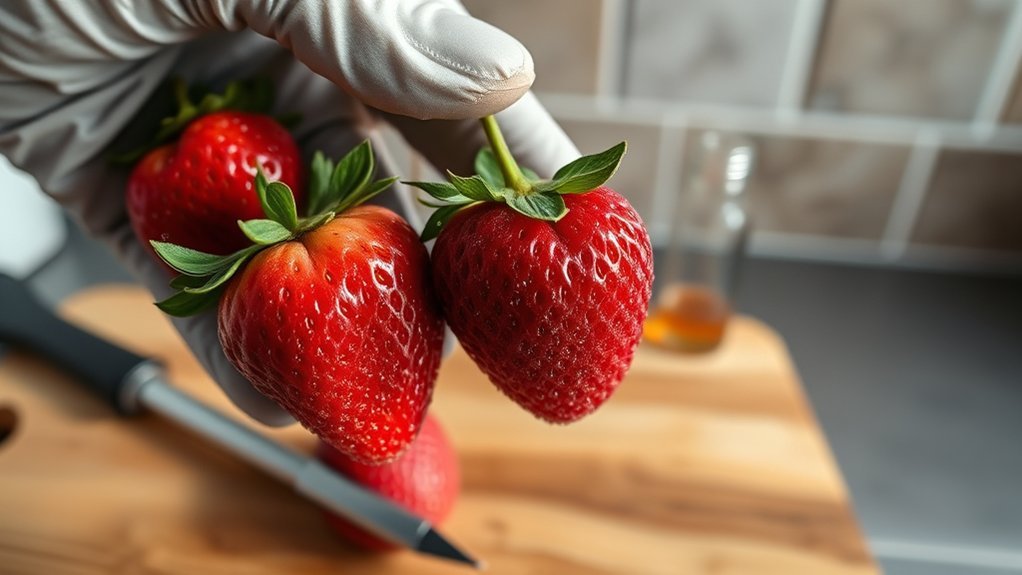
How safe are organic strawberries regarding pesticide levels? While organic strawberries generally have lower pesticide residues than conventional ones, they can still contain detectable pesticides.
Organic farming uses stricter regulations and natural pest resistance, which reduces reliance on synthetic chemicals. This means you’re likely consuming fewer harmful substances when choosing organic strawberries, contributing to notable health benefits.
However, the organic label doesn’t guarantee zero pesticide presence. The Environmental Working Group highlights that although pesticide residues in organic strawberries are lower, they’re not completely absent.
How Washing Affects Pesticide Residues on Strawberries
While washing strawberries can reduce some pesticide residues, it won’t remove them all because the fruit has a waxy coating that traps chemicals.
When you’re washing strawberries, remember that even organic ones might still carry pesticide residues, though usually fewer than conventional ones.
Studies show washing strawberries under running water cuts pesticide residues by about 20-50%, but some chemicals stick around.
To get them as clean as possible when washing, you should rinse them thoroughly under cool running water without scrubbing too hard.
Avoid using soap or detergents since they can leave harmful residues.
After rinsing, pat them dry with a clean cloth or paper towel to remove loosened residues.
Washing helps, but it’s not a perfect solution for getting rid of all pesticide residues.
Why Organic Strawberries Sometimes Come From Fumigated Starts
Washing your strawberries can cut down on pesticide residues, but it doesn’t address all sources of contamination.
Organic strawberries sometimes come from fumigated starts. These are plants grown in nurseries treated with chemical fumigants to kill pests and diseases in the soil.
Although these fumigants are linked to cancer and ozone depletion, the USDA allows their use in organic certification if no organic alternatives exist.
In California, where most U.S. strawberries are grown, no organic strawberry nurseries currently operate. So organic farmers rely on these fumigated starts.
This means even organic strawberries may have some pesticide exposure originating from the nursery phase.
While organic farming uses fewer fumigants later on, the initial use creates a loophole that can introduce pesticide residues before the plants even reach the field.
Environmental and Worker Safety Concerns Related to Strawberry Pesticides
Because strawberry growers often rely on toxic fumigants for soil sterilization, you should be aware of the significant risks these chemicals pose to farmworkers and nearby communities.
Pesticides like methyl bromide, still used despite its ozone-depleting effects, raise serious environmental and worker safety concerns.
The Environmental Protection Agency monitors some risks, but regulatory gaps let harmful substances persist in farming.
You should know that farmworkers face exposure to pesticide residues causing respiratory issues and skin irritations. Nearby residents risk air quality impacts from fumigant use.
Both conventional and organic farms may contribute to cumulative pesticide exposure.
Understanding these factors helps you recognize the broader implications of strawberry pesticide use beyond just fruit contamination.
Should You Always Choose Organic Strawberries to Avoid Pesticides?
How much safer are organic strawberries when it comes to pesticide exposure?
While organic strawberries often have fewer pesticide residues than conventional ones, they’re not completely pesticide-free.
Organic strawberries usually have less pesticide residue but are not entirely free of pesticides.
The EWG’s Dirty Dozen list highlights strawberries as the most contaminated produce with pesticides, making organic options appealing.
However, organic strawberries can still contain pesticides, though these are usually natural and strictly regulated to reduce health risks.
Choosing organic strawberries can lower your exposure to synthetic pesticides, but it doesn’t guarantee zero pesticides.
If you want to minimize pesticide intake, organic strawberries are generally a better choice, but it’s important to remember that the organic label doesn’t mean complete absence of pesticides, just stricter limits and safer types.
How to Minimize Pesticide Exposure When Buying Strawberries
If you want to reduce pesticide exposure from strawberries, choosing organic varieties is a good start, but it’s not enough on its own.
Even organic strawberries can carry pesticide residues, so you need to take extra steps when buying and handling them.
To minimize pesticide exposure, consider these tips: buy local organic strawberries, which often use fewer pesticides and tend to be fresher.
Always wash strawberries under running water to remove surface residues, though it won’t eliminate all pesticides.
Choose organic strawberries from trusted sources or those listed on the EWG’s Dirty Dozen for higher pesticide contamination to reduce risk.
Balancing Pesticide Concerns and Strawberry Health Benefits
Choosing organic strawberries and washing them carefully can help lower your pesticide exposure. But it’s also important to weigh these concerns against the health benefits strawberries offer.
Organic strawberries may still contain pesticide residues. However, their rich antioxidants and nutrients provide significant health benefits that often outweigh the risks.
Understanding this balance helps you make informed choices without fear.
| Concern | Impact |
|---|---|
| Pesticide Residues | Possible, but reduced |
| Organic Strawberries | Lower pesticide levels |
| Washing Strawberries | Reduces residues, not all |
| Health Benefits | High antioxidants, vitamins |
| Overall Balance | Benefits generally outweigh risks |
Frequently Asked Questions
How Do Pesticide Residues Affect the Taste of Organic Strawberries?
Pesticide residues usually don’t greatly affect the taste of organic strawberries.
When you do a taste comparison, you’ll find organic berries often boast richer flavor profiles, thanks to natural growing methods.
Many consumers prefer these strawberries for their fresher, more authentic taste. Washing them helps too, removing any surface residues that might dull flavor.
Can Children Safely Consume Organic Strawberries With Natural Pesticide Residues?
Think of organic strawberries as little shields protecting your child’s health.
You can safely let kids enjoy organic fruit consumption because natural pesticide safety is carefully managed in organic farming.
These natural pesticides are far gentler, and research shows eating organic fruits lowers pesticide residues in children’s bodies.
Are There Certifications That Guarantee Pesticide-Free Organic Strawberries?
You won’t find certification standards guaranteeing completely pesticide-free organic strawberries because organic labeling follows specific pesticide regulations allowing certain approved substances.
While USDA organic certification limits pesticide use, it doesn’t ban it entirely.
If you want stricter assurance, look for certifications like biodynamic or “beyond organic,” which enforce tighter standards and may reduce pesticide residues further.
Always check labels carefully to understand what pesticide regulations each certification adheres to.
How Long Do Pesticide Residues Remain on Organic Strawberries After Harvest?
Pesticide residues on organic strawberries usually degrade within a few days after harvest, thanks to pesticide degradation rates influenced by organic farming practices.
These practices often use less harmful substances that break down faster, addressing consumer safety concerns.
While washing helps reduce residues further, it won’t remove everything.
Do Organic Strawberry Farms Use Integrated Pest Management Practices?
Yes, about 80% of organic strawberry farms use integrated pest management.
You’ll find that integrated pest management is a key part of organic farming practices, helping you control pests naturally while reducing chemical use.
By adopting sustainable agriculture techniques like beneficial insects and crop rotation, these farms keep their strawberries healthy and eco-friendly.
Conclusion
Choosing organic strawberries doesn’t mean you’re biting into a pesticide-free berry; instead, it means the pesticides used are natural and regulated. Like choosing between a whisper and a shout, organic pesticides tend to be gentler on you and the environment.
So, while you can’t completely escape pesticides, you can pick wisely and wash thoroughly to enjoy strawberries that balance safety and sweetness. After all, isn’t it better to savor nature’s best with informed choices?