

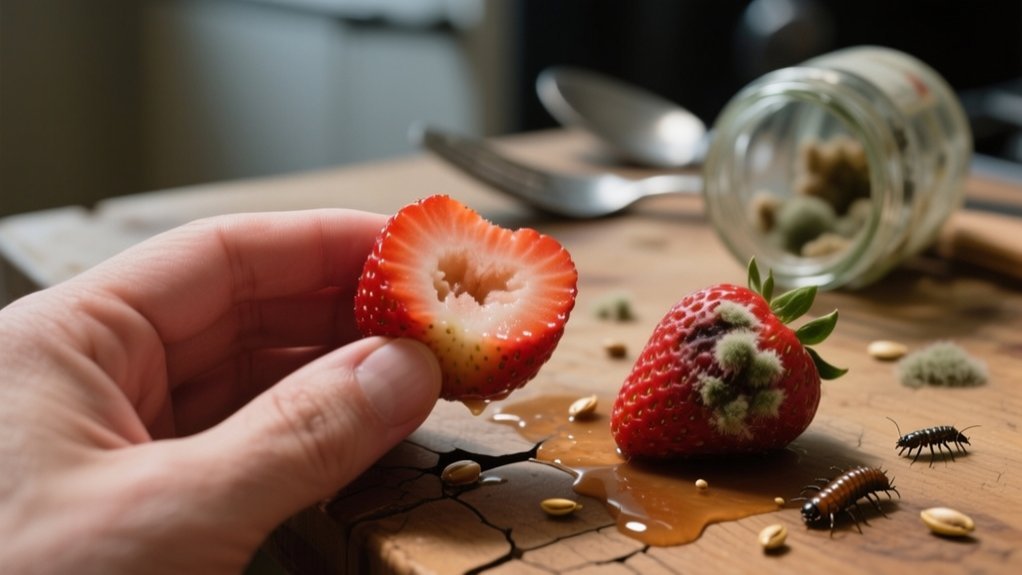
What Risks Do You Get From Food Poisoning With Strawberries?
If you eat contaminated strawberries, you risk getting food poisoning with symptoms like nausea, vomiting, stomach cramps, and diarrhea. Harmful bacteria such as Salmonella, E. coli, and Listeria can cause serious infections, especially if your immune system is weak.
Some cases may lead to fever, dehydration, or even hospitalization. Frozen and organic berries aren’t immune to contamination either. Keep safe by properly washing and storing strawberries.
You’ll find out how to protect yourself and what to do if symptoms appear.
What Causes Strawberry Food Poisoning?

While strawberries might seem harmless, they can carry harmful bacteria like Salmonella, E. coli, and Listeria that contaminate them during growth, harvesting, or processing.
If you eat contaminated strawberries, you risk developing foodborne illness, which can cause nausea, vomiting, diarrhea, and stomach cramps.
These bacteria often get onto strawberries through contact with contaminated water, soil, or handling by workers with unclean hands.
Even organic strawberries aren’t immune if the farming or packaging process isn’t hygienic.
Salmonella, in particular, is a common culprit that can lead to serious illness, especially for children, the elderly, or those with weak immune systems.
To protect yourself, you need to be aware that contamination can happen at multiple stages before the strawberries reach your table.
Common Bacteria and Viruses on Strawberries
Because strawberries can harbor various harmful microorganisms, it’s important to understand the common bacteria and viruses that pose risks.
Bacteria like Salmonella, E. coli, and Listeria often cause foodborne illnesses through contamination during growing or handling. These bacteria can lead to symptoms such as nausea, vomiting, and severe stomach cramps.
Viruses like Norovirus also contaminate strawberries, often spreading through infected hands or contaminated water sources. Recently, a Hepatitis A outbreak was linked to frozen organic strawberries, showing that even frozen or organic options can carry risks.
To protect yourself from foodborne contamination, you should always wash strawberries thoroughly before eating.
Being aware of these bacteria and viruses helps you reduce the chance of food poisoning and stay safe while enjoying strawberries.
Can Frozen and Organic Strawberries Cause Food Poisoning?

Strawberries can carry harmful bacteria and viruses whether they’re fresh, frozen, organic, or conventional.
Both frozen strawberries and organic strawberries pose risks of foodborne illness because contamination can happen during harvesting, processing, or handling.
In fact, frozen organic strawberries have been linked to a Hepatitis A outbreak, showing that organic doesn’t always mean safer.
Bacteria like Salmonella and E. coli can contaminate any type of strawberry.
To protect yourself, always wash strawberries thoroughly even frozen ones that will be thawed.
Also, stay updated on recalls, especially for frozen strawberries from brands tied to outbreaks.
What Are the Symptoms of Strawberry Food Poisoning?
If you eat contaminated strawberries, you might first feel nauseous and start vomiting.
Then, stomach cramps and diarrhea often follow. As the illness continues, you could develop a fever and chills, especially if your immune system isn’t very strong.
Early Symptoms Overview
When you consume contaminated strawberries, you’ll often experience nausea and vomiting within a few hours.
These early symptoms of food poisoning are typically followed by stomach cramps and diarrhea, which can cause significant fluid loss.
Fever and chills might develop if the infection worsens, signaling a more severe response.
High-risk groups, such as young children, older adults, and people with weakened immune systems, are more vulnerable to intense symptoms and complications.
It’s important to recognize these early symptoms quickly to manage the illness effectively.
Staying hydrated is essential because excessive vomiting and diarrhea can lead to dehydration, making your recovery more difficult.
Being aware of these signs helps you take prompt action and seek medical advice if necessary.
Progression of Illness
After noticing early signs like nausea and vomiting, you might wonder how the illness will develop. The symptoms of strawberry food poisoning usually progress quickly and can vary depending on the pathogen involved.
Within hours, you may experience stomach cramps and diarrhea, fever and chills if the infection spreads, and an increasing risk of dehydration due to fluid loss. Symptom onset can range from hours to several days.
Persistent symptoms beyond two days require medical attention. Dehydration is a serious concern since diarrhea drains your body of fluids rapidly.
The progression depends largely on the specific pathogen and your immune response. If you notice worsening symptoms or blood in your stool, don’t hesitate to seek help.
Understanding these stages helps you respond appropriately and avoid complications from contaminated strawberries.
High-Risk Group Signs
Certain groups face a higher risk of severe symptoms from strawberry food poisoning, including those with weakened immune systems, young children, and older adults. If you belong to a high-risk group, watch for intense nausea, vomiting, stomach cramps, diarrhea, fever, and chills.
These symptoms can escalate quickly, leading to dehydration or more serious complications. Early treatment and hydration are essential. Here’s a quick guide to typical symptoms you might experience:
| Symptom | Onset Time | Severity in High Risk |
|---|---|---|
| Nausea | Within hours | Often severe |
| Vomiting | Within hours | Frequent and persistent |
| Stomach cramps | Within hours | Intense |
| Diarrhea | Within hours | Can cause dehydration |
| Fever & Chills | After initial symptoms | Indicates spreading infection |
If you notice high fever or blood in stool, seek medical help immediately.
How Serious Is Strawberry Food Poisoning?
You might feel pretty uncomfortable if you get food poisoning from strawberries—things like nausea, vomiting, and stomach cramps are common.
Sometimes, it can get worse and you might even develop a fever and chills.
For little kids, older adults, or anyone with a weaker immune system, these complications can become quite serious.
Common Symptoms Overview
While most cases of strawberry food poisoning cause symptoms like nausea, vomiting, stomach cramps, and diarrhea within hours, the severity can vary depending on your health and the contamination level.
You should watch for these common symptoms of food poisoning:
- Nausea and vomiting soon after eating contaminated strawberries
- Stomach cramps and diarrhea, which may lead to dehydration
- Fever and chills if the infection spreads beyond the digestive tract
- Persistent symptoms lasting more than two days
- Blood in stool or high fever, especially in high-risk groups like young children, older adults, or those with weakened immune systems
If you belong to a high-risk group, these symptoms may hit harder.
Always seek medical help if symptoms worsen or don’t improve quickly.
Severity and Complications
Although many cases of strawberry food poisoning resolve quickly, the illness can become serious, especially if you belong to a high-risk group like young children, older adults, or those with weakened immune systems.
The severity of symptoms can range from nausea and stomach cramps to vomiting and diarrhea, often starting within hours of eating contaminated strawberries.
Complications may include dehydration from excessive fluid loss, high fever, and chills if the infection spreads.
A recent hepatitis A outbreak linked to frozen organic strawberries showed how dangerous foodborne illness can be, with multiple hospitalizations reported.
While most people recover without lasting effects, you should seek medical attention if your symptoms worsen or last beyond two days, as complications can escalate quickly.
High-Risk Groups Impact
Because certain groups have weakened defenses against infections, strawberry food poisoning can hit you much harder if you’re young, elderly, or have a compromised immune system.
Contaminated strawberries pose a high risk of causing severe foodborne illnesses in these populations.
You should be aware that symptoms like nausea, vomiting, and diarrhea can lead to dangerous dehydration.
Hospitalization rates can reach up to 72% during outbreaks. Prolonged and more severe symptoms are common among high-risk individuals.
The 2022 hepatitis A outbreak linked to strawberries caused 13 hospitalizations.
Prompt medical attention is essential to prevent complications.
If you belong to these groups, avoid consuming questionable strawberries and seek help quickly if symptoms appear.
Who Is Most at Risk From Contaminated Strawberries?
If you have a weakened immune system, you’re more likely to suffer severe food poisoning from contaminated strawberries. High-risk groups include vulnerable populations such as young children, older adults, and pregnant women. These groups face increased risks from foodborne illness due to reduced immune defenses or special health considerations.
Understanding who is most at risk helps you take precautions.
| Group | Reason for High Risk |
|---|---|
| Weakened immune | Chronic illness, chemotherapy |
| Young children | Developing immune systems |
| Older adults | Age-related immune decline |
| Pregnant women | Health risk to mother and unborn child |
If you belong to these groups, you should be especially cautious with strawberries to avoid serious complications.
How to Wash and Store Strawberries Safely

Two simple steps can greatly reduce your risk of food poisoning from strawberries: washing them thoroughly and storing them properly.
To keep your strawberries safe and fresh, follow these tips:
Wash strawberries under cold running water for at least 30 seconds to remove bacteria and pesticides. You can also use a vinegar-water soak (1 part vinegar to 3 parts water) to clean your berries even more.
Choose firm, bright red strawberries that don’t have mold or bruises before you store them.
Then, keep them in the refrigerator at or below 40°F (4°C) to slow bacterial growth.
Make sure to keep strawberries dry until you’re ready to eat them. This helps prevent mold and cross-contamination.
How to Prevent Strawberry Food Poisoning
You can prevent strawberry food poisoning by washing them thoroughly under cold running water.
Another good trick is to use a vinegar-water rinse, which helps kill bacteria.
Once you’ve washed them, make sure to store your strawberries in the fridge at or below 40°F.
This keeps them fresh and safe to eat.
Also, try to keep them dry until you’re ready to enjoy them—that really helps stop mold from growing.
Proper Washing Techniques
Although strawberries are delicious and nutritious, improper washing can leave harmful bacteria and pesticides on their surface. To reduce the risk of food poisoning, treat strawberries like you’d wash salad leaves, ensuring thorough cleaning.
Here’s how to properly wash your strawberries:
Rinse under cold running water for at least 30 seconds to remove dirt and residues. Use a vinegar-water mixture (1:3 ratio) to help eliminate pesticides and bacteria. Gently rub each strawberry to dislodge contaminants.
Avoid soaking strawberries to prevent them from becoming contaminated with harmful bacteria. Drain and dry strawberries completely before eating or storing.
Safe Storage Practices
Once strawberries are properly cleaned, storing them correctly helps keep them safe and fresh longer. To follow safe storage practices, place strawberries in the refrigerator at or below 40°F (4°C). This temperature slows bacterial growth and reduces the risk of foodborne illness.
Keep strawberries dry until you’re ready to eat them because moisture encourages mold, which can spoil the fruit and increase contamination risk. Avoid storing bruised or moldy strawberries since they may already be contaminated with bacteria.
Use a breathable container or the original packaging with ventilation to maintain freshness.
What to Do If You Suspect Strawberry Food Poisoning
If you suspect strawberry food poisoning, start by drinking plenty of water to stay hydrated and help flush toxins from your system.
You should also:
- Eat light, bland foods like bananas, rice, and toast to ease digestion.
- Sip ginger tea to reduce nausea and soothe stomach discomfort.
- Monitor your symptoms carefully.
- Seek medical attention if symptoms worsen, persist beyond two days, or you have a high fever or blood in your stool.
- If you’re unvaccinated and consumed contaminated strawberries recently, consult a healthcare professional about post-exposure prophylaxis (PEP) for hepatitis A.
Taking these steps can support your recovery and prevent complications.
Following these guidelines aids your recovery and helps avoid further health issues.
Don’t ignore worsening symptoms. Getting timely medical help is key.
How Long Do Symptoms Last and When to See a Doctor?
Because symptoms of strawberry food poisoning usually start within hours after eating contaminated fruit, you should watch for nausea, vomiting, stomach cramps, and diarrhea. Symptoms last about 1 to 3 days but can last longer in severe cases.
Dehydration is a major risk, especially for children and older adults. You should see a doctor if symptoms worsen, last more than two days, or if you experience high fever or blood in your stool.
| Symptom Duration | Severity | When to See a Doctor |
|---|---|---|
| 1-3 days | Mild to moderate | Symptoms worsen or persist >2 days |
| >3 days | Severe | High fever or bloody stool |
| Immediate | Dehydration signs | Dizziness, dry mouth, low urine |
Frequently Asked Questions
Can Strawberry Food Poisoning Be Treated at Home Without Medication?
Yes, you can often treat strawberry food poisoning at home using simple home remedies.
Focus on the importance of staying hydrated by drinking plenty of fluids to avoid dehydration.
Manage symptoms by eating light, bland foods like bananas, rice, or toast. You can also try ginger tea to help ease nausea.
However, if your symptoms worsen or last more than two days, don’t hesitate to seek medical help, especially if you have a weakened immune system or are older.
Are There Specific Strawberry Varieties More Prone to Contamination?
No, you won’t find specific strawberry varieties that are more prone to contamination. Contamination sources like soil, water, and handling practices affect all types equally.
Instead of focusing on high risk varieties, you should prioritize safety practices. Always wash your strawberries thoroughly and avoid any with mold or damage.
Proper storage and prompt refrigeration also help prevent bacterial growth, keeping your strawberries safer to eat regardless of the variety.
Does Washing Strawberries With Vinegar Reduce Bacteria Effectively?
You know what they say, “An ounce of prevention is worth a pound of cure.”
When it comes to strawberry washing, vinegar efficacy is impressive. It can reduce bacteria by about 90%.
Soaking strawberries in a vinegar-water mix helps with bacteria removal far better than just rinsing with water.
Just remember to rinse them afterward to get rid of any vinegar taste. This method boosts your food safety without much hassle.
Can Strawberry Allergies Be Mistaken for Food Poisoning Symptoms?
Yes, strawberry allergies can be mistaken for food poisoning symptoms because both share common signs like nausea and vomiting.
However, allergy symptoms often include hives, itching, and breathing difficulties, which aren’t typical of food poisoning.
These strawberry reactions create diagnosis challenges, so you should pay close attention to timing and specific symptoms.
If you suspect an allergy, seek medical advice promptly to avoid severe reactions like anaphylaxis.
Is Strawberry Food Poisoning Contagious Between People?
No, strawberry food poisoning isn’t contagious between people. You get it from strawberry contamination sources like bacteria or viruses on the fruit itself.
To protect yourself, focus on food safety practices. Wash strawberries thoroughly and avoid cross-contamination.
Also, follow preventive measures like proper handwashing and sanitizing surfaces.
These steps reduce the risk of getting sick and stop pathogens from spreading through contaminated food, not from person-to-person contact.
Conclusion
Eating strawberries without proper care can put you at risk of food poisoning, like walking a tightrope without a safety net. Contaminants like bacteria and viruses can cause symptoms ranging from mild stomach upset to severe illness.
But by washing and storing strawberries correctly, you can enjoy their sweetness safely. If you suspect food poisoning, don’t hesitate to seek medical help.
Staying cautious keeps you healthy and your cravings satisfied.