


Can You Eat Frozen Strawberries?
You can eat frozen strawberries safely if you handle and thaw them properly. Always check for recalls, especially those linked to hepatitis A outbreaks.
Thaw them in the fridge or microwave and rinse with warm water to reduce contaminants. Frozen strawberries keep most of their nutrients and are great for smoothies.
Store them airtight in the freezer and consume within months to maintain quality. Keep following for more tips on choosing, using, and storing frozen strawberries.
Are Frozen Strawberries Safe to Eat?
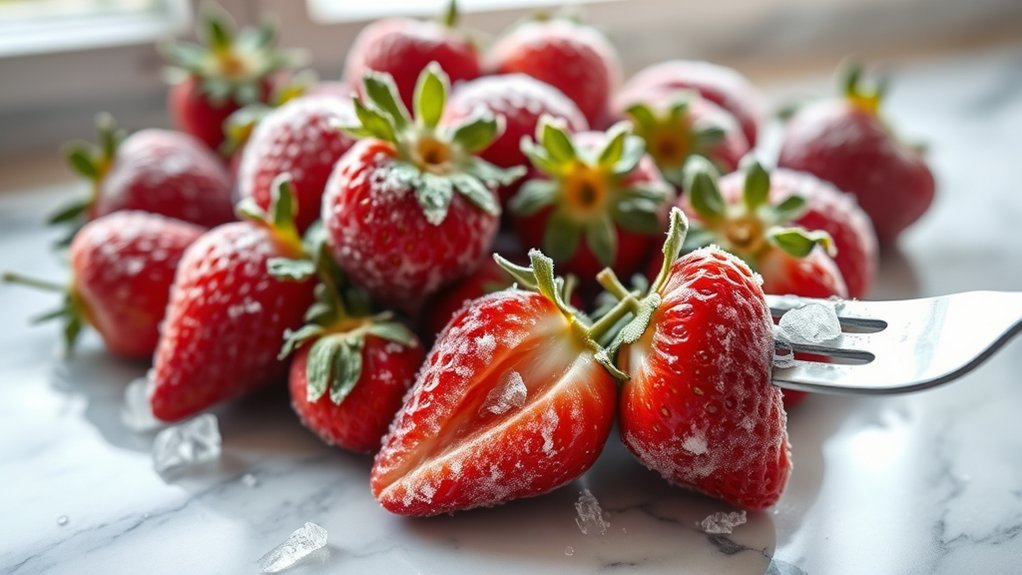
Three key precautions can help you determine if frozen strawberries are safe to eat.
First, always check for recalls before using frozen strawberries, since contaminated batches have been linked to hepatitis A outbreaks. If you find any affected products, dispose of them immediately to avoid illness.
Second, thaw frozen strawberries properly and rinse them in warm water to reduce potential contaminants. While freezing stops bacteria from growing, it doesn’t kill viruses, so safe handling is essential.
Finally, if you’re at risk and have eaten potentially contaminated frozen strawberries, consider getting vaccinated against hepatitis A as a preventive step.
What Health Risks Are Associated With Frozen Strawberries?
Although frozen strawberries are usually safe to eat, they can carry health risks if contaminated, such as outbreaks of hepatitis A linked to certain batches. In early 2023, frozen strawberries from Baja California, Mexico, were tied to a hepatitis A outbreak.
Frozen strawberries are generally safe but can pose hepatitis A risks if contaminated, as seen in 2023 outbreaks.
This virus isn’t killed by freezing, so if frozen strawberries aren’t handled properly, they can harbor pathogens. After exposure, symptoms like fatigue, nausea, and jaundice may appear within 15 to 50 days, sometimes requiring hospitalization.
If you’ve eaten recalled frozen strawberries and aren’t vaccinated, it’s important to see a healthcare professional within 14 days.
To protect yourself, regularly check your freezer for any recalled frozen strawberries and dispose of them properly to avoid these serious health risks.
How Can You Tell If Your Frozen Strawberries Have Been Recalled?
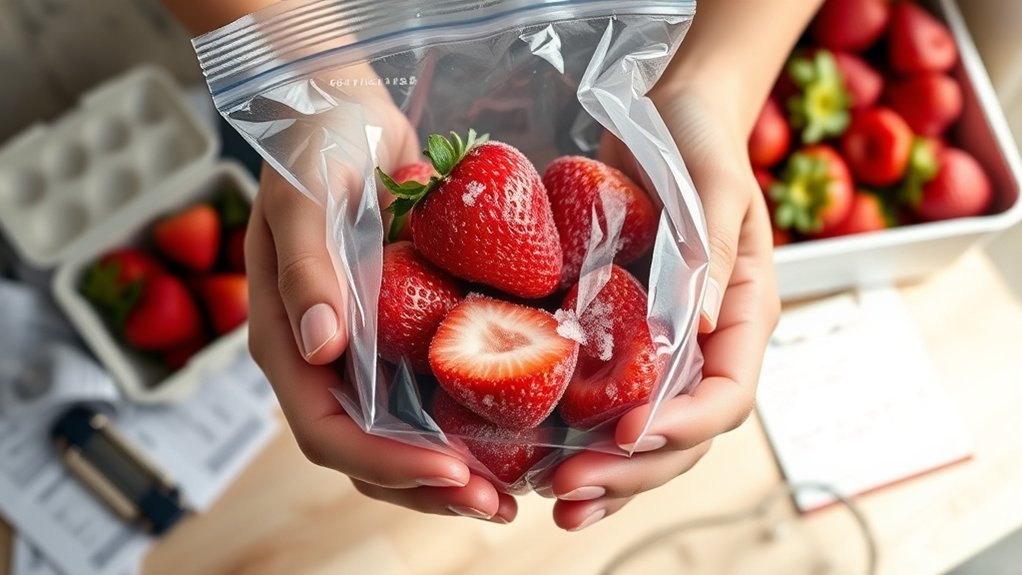
To find out if your frozen strawberries have been recalled, a good first step is to check the FDA or CDC websites for the latest alerts.
They keep updated lists of recalls that can help you spot any issues.
Make sure to pay close attention to the brand names and lot numbers mentioned in the recall notices.
If you see a match with your package, that’s a clear sign your strawberries might be affected.
Also, don’t forget to look at the purchase dates.
This is especially important if your strawberries came from Baja California, Mexico, during the outbreak period.
That way, you can be extra sure whether your batch is safe or not.
Identifying Recalled Packages
If you want to know whether your frozen strawberries have been recalled, start by checking the brand names and lot numbers against official recall notices from health authorities and retailers.
Here’s how to identify recalled packages:
- Inspect your freezer for frozen strawberries sourced from Baja California, Mexico, linked to past hepatitis A outbreaks.
- Compare the brand and lot numbers on your package with those listed in FDA or CDC recall announcements.
- Review recall notices for detailed instructions on safe disposal of affected products.
- Visit the manufacturer’s website or contact your local health department for updated recall information.
If your frozen strawberries match recalled items, don’t eat them.
Follow disposal guidelines carefully to protect your health.
Where To Check
Knowing how to identify recalled frozen strawberries is just the first step; you also need to know where to look for the most reliable recall information.
Start by regularly checking the FDA and CDC websites, which post updates on recalled frozen strawberries linked to outbreaks.
Retailers can be helpful too. Visit their websites, check the freezer section, or contact customer service for recall details.
Pay close attention to specific brand names and lot numbers listed in recall notices to see if your product is affected.
If you’ve recently bought frozen strawberries, compare your package’s details with these notices and dispose of any recalled items.
If you’ve consumed potentially recalled strawberries and show symptoms, especially if unvaccinated, contact a healthcare professional promptly.
How Should You Thaw Frozen Strawberries Safely?
Although thawing frozen strawberries might seem straightforward, doing it safely is key to preserving their quality and preventing bacterial growth.
Thaw frozen strawberries safely to maintain quality and avoid harmful bacterial growth.
When handling frozen fruits like strawberries, follow these tips to thaw them properly:
- Thaw in the refrigerator to keep them at a safe, controlled temperature.
- Use the microwave for quick thawing, but watch closely to avoid cooking the berries.
- Never thaw strawberries at room temperature, as this encourages harmful bacteria growth.
- Eat thawed strawberries within 1-2 days to enjoy peak freshness and safety.
Should You Rinse Frozen Strawberries Before Eating?
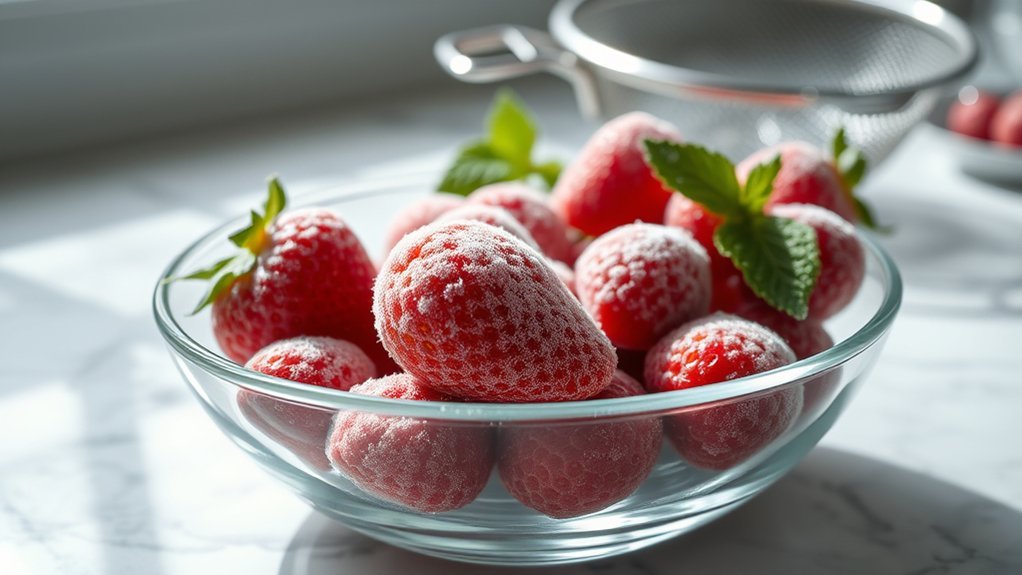
After thawing your frozen strawberries safely, you might wonder whether rinsing them before eating is necessary. It’s a good idea to rinse frozen berries after thawing to remove any potential contaminants like bacteria or viruses that could be present.
Eating frozen berries straight from the bag isn’t recommended due to food safety concerns. Thawing first helps you clean the fruit more effectively and also improves its taste and texture.
Many experts and community members agree that rinsing thawed frozen berries is a simple but important step to reduce the risk of foodborne illnesses.
How Does Freezing Affect Frozen Strawberry Texture and Flavor?
When you freeze strawberries soon after harvest, you lock in much of their natural flavor and juiciness.
But the freezing process also creates ice crystals that can soften their texture once thawed. Here’s what happens with frozen fruit like strawberries:
- Ice crystals form inside, breaking cell walls and making thawed strawberries softer.
- Their juicy, sweet flavor stays mostly intact due to quick freezing.
- Texture changes mean thawed strawberries work best in smoothies, sauces, or cooked dishes.
- Heating frozen strawberries boosts flavor but makes them mushier.
To enjoy the best taste and texture, thaw them in the fridge or use frozen fruit directly in blended recipes.
This way, you keep flavor while managing texture changes caused by freezing.
What Nutritional Benefits Do Frozen Strawberries Offer?
Because frozen strawberries keep most of their nutrients intact, they offer you many of the same health benefits as fresh ones. As a type of frozen fruits, they’re packed with vitamin C, dietary fiber, and antioxidants that support your immune system, digestion, and skin health.
Plus, they’re low in calories, making them a smart snack choice.
| Nutrient | Benefit |
|---|---|
| Vitamin C | Boosts immunity, promotes skin |
| Dietary Fiber | Aids digestion, controls weight |
| Antioxidants | Fights oxidative stress |
| Manganese | Supports bone health, metabolism |
Including frozen strawberries in your diet is an easy way to enjoy tasty, nutritious frozen fruits year-round.
How Should You Store Frozen Strawberries After Opening?
Once you open frozen strawberries, it’s best to transfer them to an airtight container. This helps keep them fresh and prevents freezer burn.
Then, pop the container back into the freezer.
Try to use the strawberries within 1 to 2 months for the best quality. If you happen to thaw them, make sure to store them in the fridge and eat them within a day or two to keep them safe.
That way, you get the most out of your strawberries without any waste!
Proper Refrigeration Techniques
If you want to keep your frozen strawberries fresh after opening, store them in an airtight container or a resealable bag to prevent freezer burn. Proper refrigeration is key for maintaining the quality of your frozen fruits.
Here’s how you should handle your strawberries:
- Keep the container tightly sealed and place it back in the freezer immediately.
- Maintain your freezer temperature at or below 0°F (-18°C) for ideal preservation.
- Label the container with the date you opened it to track freshness.
- Avoid leaving thawed strawberries out at room temperature for more than two hours to prevent spoilage.
Following these simple steps guarantees your frozen strawberries stay tasty and safe to eat longer.
Optimal Storage Duration
To keep your opened frozen strawberries at their best, store them in airtight containers or resealable bags and place them back in the freezer promptly.
The ideal storage duration for opened frozen strawberries is between 6 to 12 months. Keeping them at 0°F (-18°C) guarantees food safety and maintains their nutritional value.
Avoid leaving strawberries at room temperature, as this increases the risk of spoilage and bacterial growth.
Regularly check for freezer burn or off smells, which signal quality deterioration.
Can You Use Frozen Strawberries Directly in Smoothies?
Although you might wonder whether frozen strawberries need thawing, you can add them directly to your smoothies for a quick and tasty boost. Eating frozen strawberries this way is convenient, nutritious, and enhances texture without losing vitamins.
Frozen strawberries can be added straight to smoothies for convenience, nutrition, and enhanced texture without thawing.
Before blending, rinse them in warm water to remove any contaminants.
Here’s why you’ll love using frozen strawberries directly in smoothies:
- They create a thicker, creamier texture.
- Your smoothie stays delightfully cold.
- Nutritional value is preserved, so you get all the vitamins.
- No thawing means less prep time and less mess.
What Are the Best Tips for Choosing High-Quality Frozen Strawberries?
Using frozen strawberries directly in your smoothies works best when you start with high-quality berries. When choosing frozen foods, look for strawberries labeled “flash frozen” to confirm they were quickly frozen after harvest, locking in nutrients and flavor.
Check the packaging carefully. High-quality frozen strawberries contain only strawberries, with no added sugars or preservatives. You should also pick products with clear labeling of their source, preferably from reputable suppliers known for safe, sustainable farming.
Avoid packages showing signs of freezer burn or clumping. The berries should be free of ice crystals and remain loose.
Finally, verify the packaging is intact and properly sealed to maintain freshness and prevent contamination.
Following these tips helps you enjoy the best taste and nutrition from frozen strawberries.
Frequently Asked Questions
Can Frozen Strawberries Be Used in Baking Recipes?
Yes, you can definitely use frozen strawberries in baking recipes. They offer great baking benefits, like adding natural sweetness and vibrant color to your treats.
Just thaw and drain them to avoid soggy results, and fold them gently into your batter.
Keep in mind, frozen strawberries might make your baked goods a bit softer, so adjust baking times slightly.
Using frozen berries is a convenient way to enjoy strawberry flavor year-round in your desserts.
Do Frozen Strawberries Contain Added Sugars or Preservatives?
Frozen strawberries usually don’t hide added sugars or preservatives under their icy cloak.
Most frozen ingredients, especially pure strawberries, are flash frozen soon after picking, locking in natural flavor and nutrients without extra additives.
However, you should always check the label because some brands sprinkle in sugar or preservatives to boost taste or shelf life.
To keep it clean, pick products labeled “100% strawberries” or “no added sugar” for pure fruit goodness.
How Long Do Frozen Strawberries Last in the Freezer Unopened?
You can keep unopened frozen strawberries in freezer storage for up to 8 to 12 months while they maintain their best quality.
If your freezer stays at 0°F (-18°C) or lower and the packaging is intact without ice crystals, they’ll stay safe to eat even longer.
For the best flavor and texture, though, try to use them within six months.
Regularly check your freezer’s temperature and seal to extend their shelf life.
Can Frozen Strawberries Cause Allergies or Cross-Reactivity?
Yes, frozen strawberries can cause allergy concerns if you’re sensitive to them or related fruits. You might experience symptoms like hives, swelling, or gastrointestinal issues shortly after eating.
If you have a birch pollen allergy, cross-reactivity could trigger a reaction due to similar proteins.
Since strawberry allergies affect a small percentage of people, you should consult your healthcare provider before eating frozen strawberries to stay safe and avoid complications.
Are Organic Frozen Strawberries Better Than Conventional Ones?
Choosing organic frozen strawberries is like biting into a supernova of Organic Benefits. They often have fewer synthetic chemicals and more antioxidants than conventional ones.
You’ll support better soil health and biodiversity by picking organic, which helps the planet.
While they might cost you a bit more, you’re investing in sustainability and potentially greater nutritional perks.
That said, both options still offer similar vitamins and fiber, so you can’t really go wrong.
Conclusion
You can enjoy frozen strawberries safely, but don’t overlook the risks. They’re convenient and nutritious, yet sometimes recalled or mishandled.
While you might rush to toss them straight into a smoothie, taking a moment to thaw or rinse can make all the difference. Frozen strawberries blend ease with caution, offering both health benefits and the need for mindfulness.
Balancing convenience with care lets you savor their sweetness without compromise.