
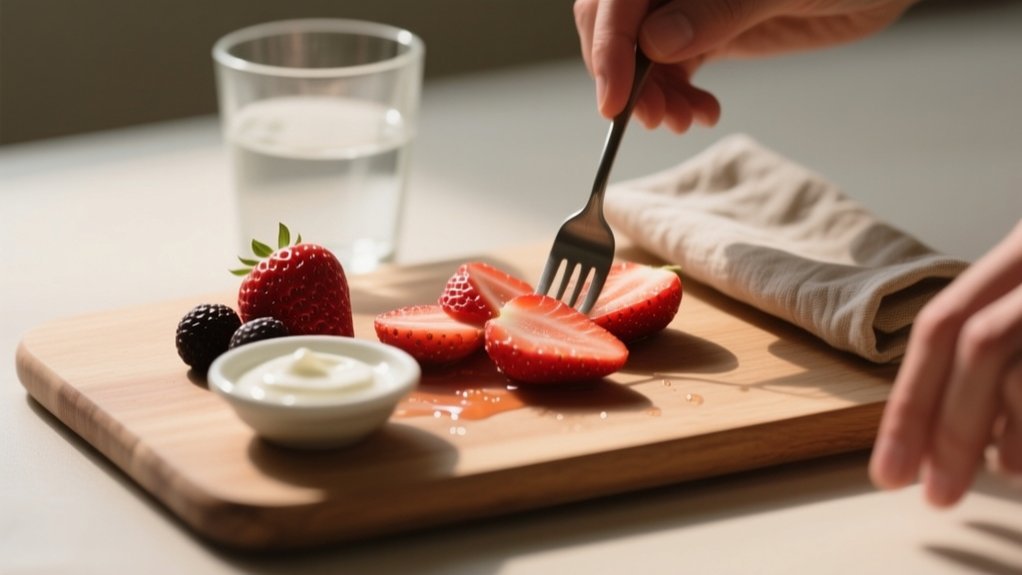
Can Strawberries Cause Diverticulitis and How to Eat Them Safely?
You can usually enjoy strawberries safely with diverticulitis since their seeds rarely cause flare-ups. However, during a flare-up, it’s best to avoid them and focus on low-fiber foods until symptoms ease.
Always wash strawberries well and start with small portions to see how your body reacts. Pairing them with other fiber-rich foods can aid digestion, but listen to your body.
Keep going to find out how to include strawberries safely in your diet.
Do Strawberries Affect Diverticulitis Risk?
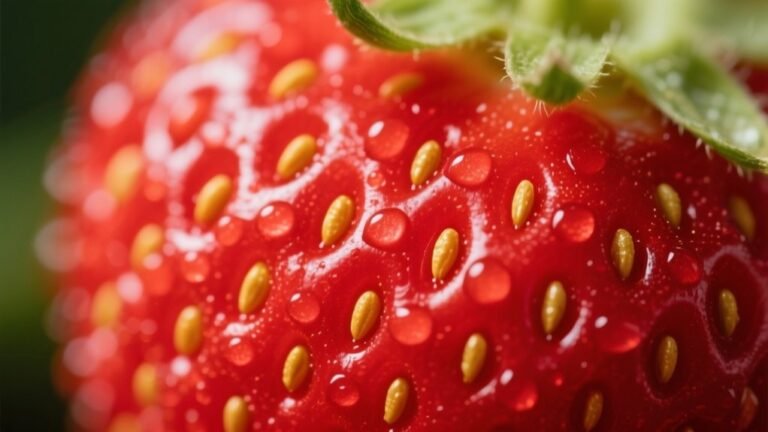
Although some people worry about the tiny seeds in strawberries, you don’t need to avoid them if you have diverticulosis. Strawberries are high in fiber, which supports healthy digestion and regular bowel movements, making them safe to consume for most individuals with diverticulosis.
Strawberries’ tiny seeds are safe to eat and support digestion for those with diverticulosis.
Including strawberries as part of a balanced high-fiber diet, aiming for 25-35 grams daily, can help reduce your risk of developing diverticulitis. Recent studies show the seeds don’t increase diverticulitis flare-ups, so you can enjoy this fruit without fear.
However, it’s important to monitor your personal tolerance, especially after a flare-up.
Also, remember to stay well-hydrated when eating fiber-rich foods like strawberries since adequate hydration is essential for fiber to work effectively and prevent digestive complications.
Can Strawberries Trigger a Diverticulitis Flare-Up?
You might worry that strawberry seeds could irritate your diverticula and cause a flare-up, but most people tolerate them well.
That said, everyone’s different, so it’s important to pay attention to how your body responds.
If you find that seeds bother you, you might want to try enjoying strawberries in seed-free forms like smoothies instead.
Strawberry Seeds Safety
While some might worry that the small seeds on strawberries could trigger a diverticulitis flare-up, current research shows they’re safe for most people with diverticular disease. The strawberry seeds don’t increase flare-up risks and fit well within a high-fiber diet.
In fact, strawberries provide valuable dietary fiber, supporting digestion and diverticulitis prevention. Here’s a quick look at strawberry seeds’ safety for diverticular disease:
| Aspect | Impact on Diverticulitis | Notes |
|---|---|---|
| Strawberry Seeds | Safe | Well-tolerated by most |
| Dietary Fiber | Beneficial | Supports healthy digestion |
| Diverticular Disease | No increased risk | Seeds don’t worsen condition |
| High-Fiber Diet | Recommended | Includes strawberries |
| Safety | Confirmed | Individual reactions may vary |
Enjoy strawberries confidently as part of your diet unless you notice specific symptoms.
Individual Sensitivity Variations
Even though strawberries generally support digestive health, some people may find that these fruits trigger diverticulitis flare-ups due to individual sensitivities.
Individual sensitivity variations mean you might react differently to strawberries, especially if you’re prone to digestive issues or sensitive to high FODMAP foods.
To avoid problems, it’s important to introduce strawberries gradually and monitor symptoms closely. Keeping track helps you identify if strawberries cause discomfort or flare-ups.
Since diverticulitis can vary widely, consulting a healthcare provider is essential. They can offer personalized advice tailored to your condition and guide you on safely including strawberries in your diet.
When to Avoid Strawberries During Diverticulitis Flare-Ups
Because the small seeds in strawberries can irritate inflamed diverticula, you should avoid eating them during diverticulitis flare-ups. To protect your gastrointestinal tract, it’s best to steer clear of strawberries and other high-fiber foods until symptoms subside.
During severe flare-ups, you might need to follow a clear liquid diet, which excludes all solid foods. Always consult your healthcare provider before reintroducing strawberries to guarantee it’s safe.
Here’s a quick guide:
| Situation | Recommendation |
|---|---|
| Diverticulitis flare-ups | Avoid strawberries |
| Severe symptoms | Follow clear liquid diet |
| Gastrointestinal irritation | Limit high-fiber foods |
| Symptom improvement | Gradual reintroduction |
| Unsure about diet | Consult healthcare provider |
Are the Seeds in Strawberries Bad for Diverticulitis?
You might be wondering if those tiny seeds in strawberries could make your diverticulitis symptoms worse.
The good news is that research generally shows these seeds are safe and don’t usually cause flare-ups.
That said, it’s always a good idea to notice how your body feels after eating them—everyone’s different, after all.
Strawberry Seeds Safety
Though many people with diverticulitis once avoided strawberries due to concerns about their seeds, recent studies show these tiny seeds don’t cause flare-ups or irritate the diverticula.
Strawberries can be safely enjoyed as part of a fiber-rich diet supporting gut health. To guarantee safety while eating strawberries, you should:
- Wash strawberries thoroughly to remove pesticides and contaminants.
- Monitor your body’s response, as individual tolerance varies.
- Include strawberries as a source of fiber to promote digestive wellness.
The seeds in strawberries are small and unlikely to harm your digestive tract, so you don’t need to avoid them solely because of diverticulitis.
Incorporating strawberries safely can enrich your diet without compromising gut health or causing irritation.
Seed Impact On Symptoms
Understanding how strawberry seeds affect diverticulitis symptoms can help you make informed dietary choices. For most people, the tiny seeds in strawberries don’t worsen diverticulitis symptoms or trigger flare-ups.
Recent research shows that consuming small seeds like those in strawberries is generally safe and doesn’t harm your digestive health. Strawberries also provide soluble fiber, beneficial for maintaining regular bowel movements and supporting a high-fiber diet, which is vital for diverticulitis management.
However, individual reactions can vary, so it’s important to pay attention to how your body responds after eating strawberries or other seeded fruits. If you notice discomfort, consider limiting seed intake.
Preparing Strawberries to Reduce Digestive Issues
Since strawberries can sometimes irritate sensitive digestive systems, it’s important to prepare them carefully to reduce discomfort.
You want to enjoy strawberries while minimizing digestive discomfort by following these steps:
- Wash strawberries thoroughly to remove pesticide residues and dirt that could irritate your digestive system.
- Remove the seeds if you find they cause irritation, as this can lessen potential digestive issues.
- Incorporate strawberries into smoothies or pair them with low-fiber foods like yogurt. This breaks down the fiber content, making digestion easier while preserving the fruit’s nutritional benefits.
Serving Sizes of Strawberries for Diverticulosis
You can safely enjoy about one cup of strawberries, or roughly 150 grams, as part of your daily diet if you have diverticulosis.
This amount gives you around 3 grams of fiber, which helps you work towards the recommended 25-35 grams of fiber each day without overloading your system.
It’s a good idea to start with smaller portions to see how your body responds.
Just remember to balance your overall fiber intake carefully to keep things comfortable.
Recommended Strawberry Portions
One cup of strawberries provides about 3 grams of dietary fiber, making it a suitable serving size for those managing diverticulosis.
To enjoy strawberries safely and support your digestive health, follow these recommended portions:
Start with a half-cup serving to see how your digestive system reacts before increasing the amount. Gradually increase to one cup, which offers a balanced fiber boost without overwhelming your gut.
Eat strawberries with their skin on, as it adds extra fiber and nutrients that promote digestive health.
Balancing Fiber Intake
After starting with smaller portions of strawberries, it’s important to find a serving size that balances fiber intake without causing digestive discomfort.
For those with diverticulosis, consuming 1 to 2 cups of strawberries provides about 3 to 6 grams of fiber. This fits well into a healthy diet targeting 25-35 grams of daily fiber.
Introducing fiber intake gradually helps your gastrointestinal (GI) tract adjust, reducing the risk of bloating or cramping.
Remember to eat strawberries and other fruits in moderation and stay well-hydrated to support digestion.
How to Reintroduce Strawberries After a Flare-Up
Although it’s important to wait until your symptoms have fully subsided, you can start reintroducing strawberries by eating small portions to see how your body reacts.
Strawberries are rich in fiber, which supports gut health and may help prevent future flare-ups if tolerated well.
Strawberries provide fiber that promotes gut health and may reduce the risk of future flare-ups when well tolerated.
To safely reintroduce strawberries after a flare-up, follow these steps:
- Begin with a small amount, like a few mashed or blended strawberries, to ease digestion.
- Thoroughly wash strawberries to eliminate potential irritants.
- Keep a food journal to track your tolerance and any digestive responses.
Combining Strawberries With a High-Fiber Diet
When you combine strawberries with other high-fiber foods, you boost your overall fiber intake. This supports digestive health and may reduce the risk of diverticulitis flare-ups. Strawberries are rich in soluble fiber, which helps soften stools and promote regularity.
That makes them a great addition to your fiber diet if you have diverticulosis. Just be sure to wash strawberries thoroughly to avoid contaminants. Pairing strawberries with oats, whole grains, or nuts creates tasty, nutritious meals that meet your daily fiber needs.
| Food Item | Fiber Content (grams) |
|---|---|
| Strawberries | 3 per cup |
| Oats | 4 per 1/2 cup cooked |
| Whole Grain Bread | 2 per slice |
| Almonds | 3.5 per ounce |
| Lentils | 8 per 1/2 cup cooked |
Symptoms That Show Strawberries May Worsen Your Diverticulitis
If you notice increased abdominal pain, bloating, or changes in your bowel habits after eating strawberries, these symptoms may indicate that the fruit is worsening your diverticulitis.
Strawberries contain small seeds that can be hard to digest, potentially triggering digestive issues in sensitive individuals.
Watch for these key symptoms:
- Abdominal pain and bloating that intensify after consuming strawberries.
- Gas buildup and discomfort linked to the fruit’s seeds.
- Significant changes in bowel habits, such as diarrhea or constipation.
Since diverticulitis flare-ups can worsen with high-fiber foods like strawberries, it’s important to monitor your body’s response closely.
If these symptoms persist, consider limiting strawberries and consult a healthcare professional for tailored advice to manage your condition effectively.
Tips for Eating Strawberries Safely With Diverticulosis
Experiencing discomfort after eating strawberries doesn’t mean you have to avoid them completely. To eat strawberries safely with diverticulosis, start by washing them thoroughly to remove any irritants.
Keep the skin on to maximize fiber intake, which supports your digestive health. Introduce strawberries gradually into your diet, especially if you’re recovering from a flare-up, so you can monitor how your body reacts.
Pay close attention to any symptoms that arise and record them in a food journal. This helps you track whether strawberries trigger discomfort or if they’re well tolerated.
Since strawberries are generally safe and rich in fiber, they can be a beneficial addition to your diet when managed carefully. Listening to your body and tracking symptoms will guide you to enjoy strawberries without worsening diverticulosis.
Frequently Asked Questions
Can Strawberry Allergies Mimic Diverticulitis Symptoms?
Yes, strawberry allergy symptoms can mimic diverticulitis symptoms, causing gastrointestinal distress like abdominal pain and nausea.
If you experience these signs, it’s important to get a food allergy diagnosis to rule out allergic reactions versus inflammatory bowel issues like diverticulitis.
Managing dietary restriction challenges is key since both conditions affect your digestive system.
Consulting a healthcare professional helps you identify the cause and safely adjust your diet to avoid flare-ups.
Do Frozen Strawberries Affect Diverticulitis Differently Than Fresh Ones?
Frozen strawberries don’t affect diverticulitis differently than fresh strawberries since their fiber content and nutritional differences are minimal.
You’ll get similar digestive effects from both, as freezing preserves most nutrients and fiber.
Whether you eat them fresh, frozen, or use cooking methods like blending or baking, just wash them well first.
Pay attention to how your body responds, but generally, both options support gut health without worsening diverticulitis.
Are Strawberry Supplements Safe for Diverticulitis Patients?
Strawberry supplements can offer benefits like antioxidant properties and inflammation reduction, which might help improve gut health.
However, they lack the dietary fiber found in whole strawberries.
Because of this, you should follow safe consumption guidelines carefully.
It’s best to consult your healthcare provider before adding these supplements to your diet, especially during diverticulitis flare-ups, to make sure they’re safe and won’t aggravate your condition.
How Does Strawberry Consumption Impact Gut Microbiota in Diverticulosis?
Eating strawberries can boost your gut health by increasing microbiome diversity thanks to their fiber content and prebiotic effects. The fiber feeds beneficial bacteria, supporting a balanced microbiome and enhancing digestive enzymes’ efficiency.
Strawberries’ antioxidants help reduce the inflammatory response in your gut, which is essential for managing diverticulosis.
Can Strawberry Juice Be Consumed During Diverticulitis Flare-Ups?
Think of strawberry juice as a gentle rain on dry soil. It can soothe your digestive system during diverticulitis flare-ups.
You can consume pulp-free strawberry juice since it offers hydration and the benefits of strawberries without the fiber that might irritate your gut.
Including it in your diverticulitis diet can support digestive health and reduce inflammation.
Just make sure it’s seedless and consult your healthcare provider before adding it to your routine.
Conclusion
Strawberries can sometimes stir up symptoms if your diverticulitis is acting up, so it’s smart to steer clear during flare-ups. When you’re feeling stable, savor strawberries safely by softening seeds and starting small.
Combining these sweet, succulent snacks with a high-fiber habit helps harmony in your gut. Stay sharp for signs of soreness, and step slowly back into strawberry season to keep your digestive dynamics delightful and drama-free.