
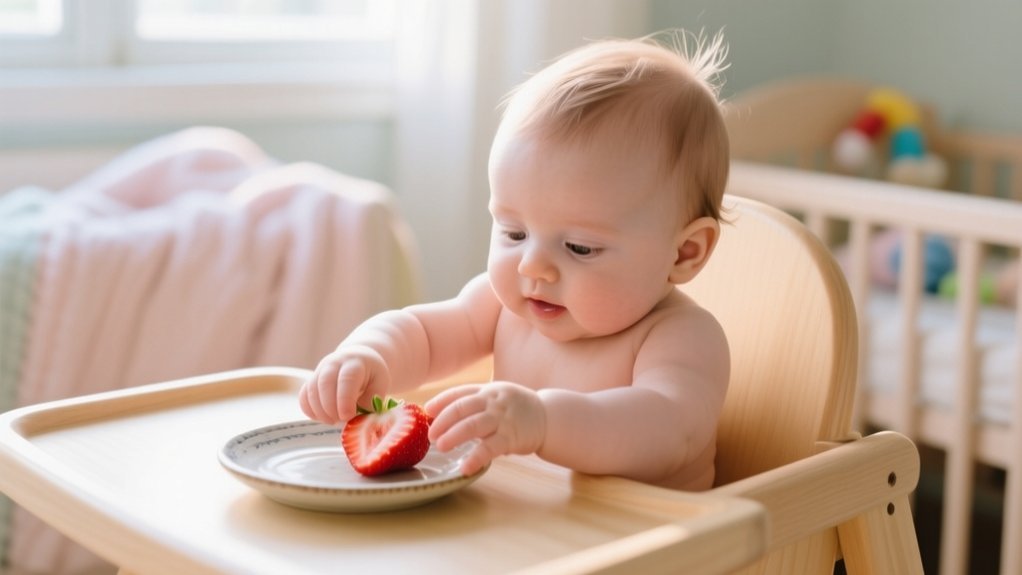
Can Your 6-Month-Old Have Strawberries?
You can introduce ripe, soft strawberries to your 6-month-old once they start solids, as they’re packed with vitamin C and fiber. Be sure to remove the stems and cut the fruit into small, manageable pieces to avoid choking.
Watch closely for any allergic reactions like rashes or digestive upset. Strawberries also offer hydration and support growth.
If you’re curious about preparation tips, safety measures, and combining strawberries with other foods, there’s plenty more helpful info ahead.
When Can Your 6-Month-Old Safely Start Eating Strawberries?
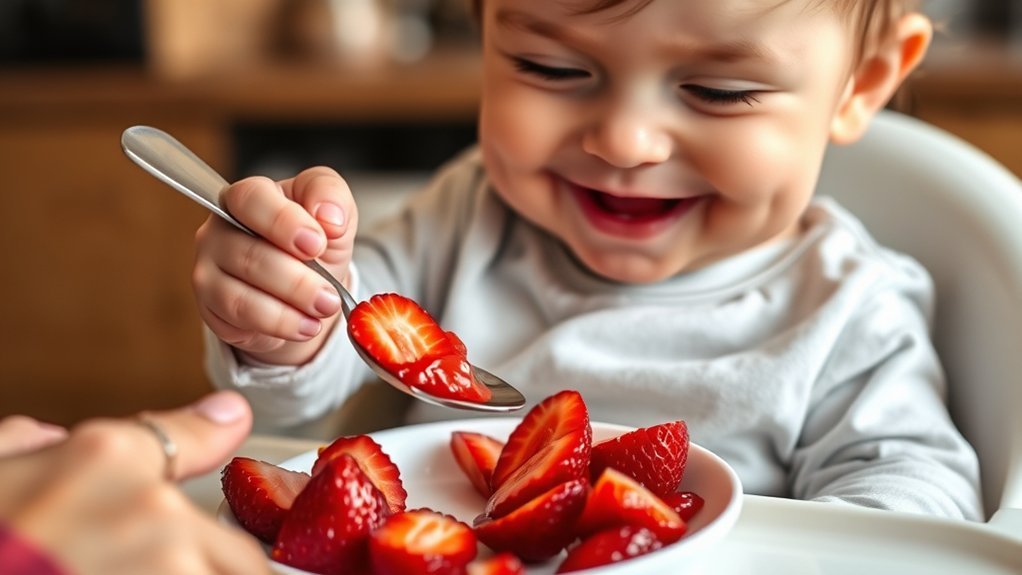
You can start offering strawberries to your 6-month-old once they begin eating solids, as these nutrient-rich fruits are great for early eaters.
At 6 months, it’s essential to serve strawberries that are ripe and soft to reduce any choking hazard.
If you’re following baby-led weaning, you can offer large, ripe strawberries whole, but smaller berries should be sliced or mashed strawberries to make them safer.
Always rinse strawberries thoroughly to remove pesticides before serving.
Keep a close eye on your baby while they eat, watching for any allergic reactions or signs of choking.
Introducing strawberries carefully at this stage helps your little one enjoy new tastes safely while supporting their growing nutritional needs.
How to Prepare Strawberries Safely for 6-Month-Olds
Preparing strawberries safely for your 6-month-old starts with selecting large, ripe berries that are soft enough to gum easily. You should remove the green stems and check the softness by pressing the strawberries gently between your fingers. They should yield to slight pressure.
To prepare strawberries, cut them into thin slices or quarters, ensuring the pieces are soft yet large enough for your baby to hold securely. Avoid underripe strawberries, as they’re too firm and increase choking risks.
Always supervise your baby while eating strawberries to spot any signs of choking or gagging quickly.
Are Strawberries Safe for 6-Month-Olds to Eat? (Choking Hazard Concerns)
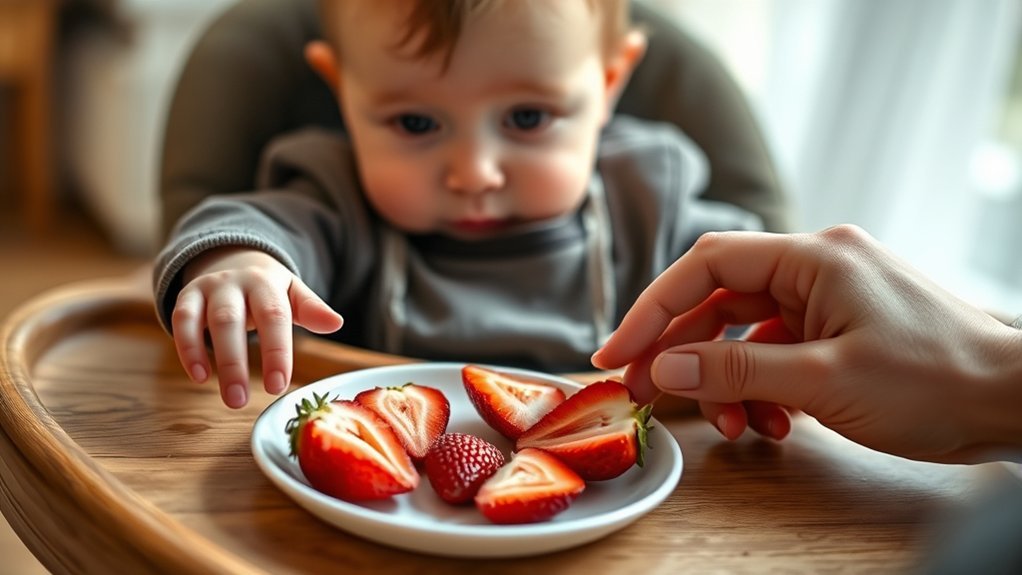
You can safely introduce strawberries to your 6-month-old, but it’s important to prepare them properly to reduce any choking risks.
Make sure to serve only small, soft pieces—things like thin slices or mashed fruit work best.
And don’t forget to always keep a close eye on your baby while they’re eating.
Plus, it’s a good idea to have them sitting upright to make sure they swallow safely.
Choking Risks And Safety
Three key precautions can help reduce choking risks when offering strawberries to your 6-month-old. First, always choose soft and ripe strawberries. Avoid firm ones that pose a choking hazard.
Second, cut whole strawberries appropriately, such as removing the tip to reduce risk. Third, supervise your baby closely during feeding and learn the signs of choking and first aid techniques.
| Precaution | Why It Matters | Action Step |
|---|---|---|
| Soft and ripe | Easier to chew and swallow | Press strawberries to check |
| Whole strawberries | Can block airway if large | Cut tip or into small pieces |
| Supervision | Immediate response possible | Stay attentive while feeding |
| Know signs & first aid | Prepare for emergencies | Learn choking signs & first aid |
Following these steps helps keep your 6-month-old safe while enjoying strawberries.
Preparing Strawberries Properly
Introducing strawberries to your 6-month-old requires careful preparation to confirm safety. You need to make certain the strawberries are soft enough and cut properly to reduce any choking hazard.
When you prepare strawberries, consider these tips:
Offer whole berries only if they’re large, ripe, and soft enough for your baby to gum safely. Cut strawberries into thin slices to make them easier to handle and swallow. Mash or cook smaller strawberries to create a gentler texture for your baby.
Always supervise your 6 months old closely during feeding and keep them seated upright. This helps you quickly respond if a choking hazard arises.
Proper preparation and attentive supervision confirm strawberries can be a safe, enjoyable new food for your baby.
How to Watch for and Handle Allergic Reactions to Strawberries in Babies
How can you tell if your baby is having an allergic reaction to strawberries? You should closely monitor for allergic reactions such as skin rashes, itching, or swelling around the mouth and face.
Unusual digestive responses like vomiting or diarrhea may also signal a problem. Some babies with oral allergy syndrome might show mild symptoms like throat tightness or tingling, especially if they’ve pollen allergies.
Watch for vomiting, diarrhea, or throat tingling, especially in babies with pollen allergies, as signs of a reaction.
To stay safe, introduce strawberries gradually, offering them one at a time, and watch for any signs over several days before adding new foods.
If you notice any concerning symptoms, consult a pediatrician promptly. They can guide you through managing food allergies and may suggest allergy testing, especially if your family has a history of such conditions.
Nutritional Benefits of Strawberries for 6-Month-Old Babies
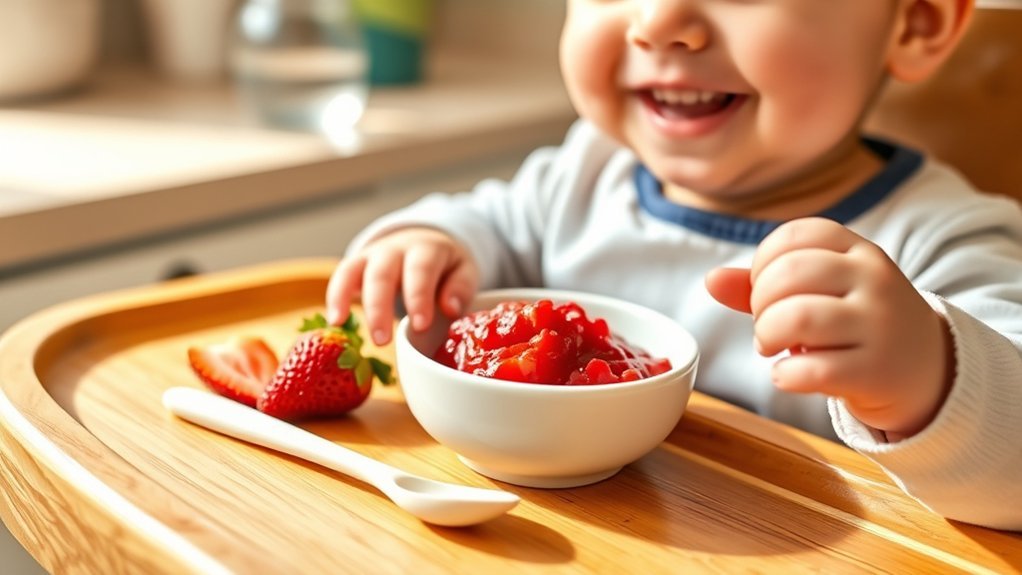
You’ll find that strawberries pack essential vitamins and minerals like vitamin C and folate.
These nutrients support your baby’s growth and help boost their immune system.
They also provide fiber, which is great for keeping digestion smooth and preventing constipation.
Plus, because strawberries have a high water content, they help keep your little one hydrated as they start adjusting to solid foods.
Essential Vitamins And Minerals
Strawberries pack a powerful nutritional punch that can benefit your 6-month-old’s developing body. These little fruits are loaded with essential vitamins and minerals that support growth and overall health.
Rich in vitamin C, strawberries boost your baby’s immune system and enhance iron absorption, which is fundamental at this stage. They also provide antioxidants that help protect cells from damage.
Plus, strawberries contain folate and potassium, which are critical for brain development and heart health.
Here’s why strawberries make a great addition to your baby’s diet:
- Vitamin C promotes a strong immune system and aids iron absorption.
- Folate supports healthy cell division and brain growth.
- Potassium helps maintain healthy blood pressure and heart function.
Introducing strawberries introduces essential nutrients that support your baby’s thriving health.
Fiber And Hydration Benefits
Because your baby is just starting on solids, including foods rich in fiber and water can make a big difference in their digestion and hydration.
Strawberries are an excellent choice, as they provide dietary fiber that supports healthy digestion and helps prevent constipation in your 6-month-old.
The fiber also encourages a healthy gut microbiome, which is vital during this early stage of starting solids.
Moreover, strawberries have high water content, which aids in keeping your baby well-hydrated, promoting overall health.
Along with fiber and hydration, strawberries supply vitamin C, boosting your baby’s immune system as they adjust to new foods.
Introducing strawberries now can set the foundation for healthy eating habits, ensuring your little one enjoys smooth digestion and stays properly hydrated.
How to Introduce Strawberries Using Baby-Led Weaning Techniques
When introducing strawberries to your 6-month-old through baby-led weaning, choose large, ripe berries that are soft enough to gum easily.
To introduce strawberries to babies safely, focus on manageable sizes that encourage self-feeding while minimizing choking hazard risks.
You can cut the strawberries lengthwise or mash or puree them for younger infants still adjusting to textures.
Always supervise your baby closely during feeding to monitor their ability to handle the food.
Keep these tips in mind:
- Select large ripe strawberries that are soft and easy to gum.
- Cut into manageable sizes to promote safe self-feeding.
- Mash or puree for smoother textures if needed.
Tips to Safely Supervise and Encourage Strawberry Eating at 6 Months
When your baby tries strawberries, always keep a close eye on them so you can spot any signs of choking or discomfort right away.
It’s important to make sure they’re seated upright. Also, offer strawberries in small, soft pieces to help them chew safely.
Encouraging gentle eating habits early on really sets the stage for positive mealtime experiences.
Supervision During Feeding
Although introducing strawberries to your 6-month-old can be exciting, you should always supervise feeding closely to prevent choking. Proper supervision helps you quickly spot any signs of discomfort or choking hazards.
Make certain strawberries are ripe and soft before offering them, and cut strawberries into manageable pieces to support safe self-feeding. Creating a calm mealtime environment allows your baby to focus on eating without distractions, reducing risks.
Keep these tips in mind:
- Always watch your baby closely during feeding to catch any choking hazards early.
- Serve only ripe, soft strawberries cut into appropriate sizes to ease swallowing.
- Look for signs of discomfort or gagging and be ready to intervene if needed.
Your attentive supervision guarantees a safe and positive strawberry introduction.
Encouraging Safe Eating
Since your baby is just starting to explore strawberries, you can encourage safe eating by offering whole, ripe, and soft pieces that are easy to gum and handle.
Always remove the stem and cut larger strawberries into thin, sheet-like slices to reduce any choking hazard.
Because of your baby’s age, it’s essential to supervise closely during feeding to quickly respond if any difficulties arise.
Let your baby touch and taste the strawberries to explore their texture, which helps build interest in new foods.
While strawberries are safe for most babies, monitor reactions carefully, as some may develop skin rashes or sensitivity due to the fruit’s acidity.
Using Frozen Strawberries Safely for Teething Relief
Frozen strawberries offer a natural and soothing option to ease your baby’s teething discomfort. When using frozen strawberries as a teething aid, safety is key. Always cut ripe strawberries into appropriate sizes before freezing to reduce choking hazards.
Using a silicone feeder helps contain the fruit while your baby gums it. Remember to supervise your baby closely during use to catch any signs of discomfort.
To safely use frozen strawberries for teething relief:
Choose ripe strawberries for softness and better nutrition.
Cut strawberries into small, manageable pieces before freezing.
Use a silicone feeder and never leave your baby unattended.
Once your baby is ready for complex textures, you can also mix frozen strawberries into smoothies or yogurt for added nutrition.
How to Combine Strawberries With Other Foods for Balanced Baby Meals
Combining strawberries with other nutritious foods can create balanced meals that support your baby’s growth and development. You can mix mashed strawberries with yogurt to make a creamy snack rich in probiotics and calcium, which helps digestion.
Adding pureed strawberries to oatmeal boosts fiber and hydration while introducing new flavors. For a nutrient-packed option, blend strawberries into smoothies with spinach or avocado, providing vitamins A, E, and antioxidants.
Serve soft strawberry pieces alongside mashed sweet potatoes or butternut squash for a colorful, vitamin-rich meal that supports immunity.
You can also incorporate strawberries into whole-grain pancakes or waffles, offering a balanced combination of carbohydrates, fiber, and natural sweetness.
These combinations guarantee your baby enjoys varied textures and essential nutrients in every meal.
Common Questions and Expert Advice on Feeding Strawberries to 6-Month-Olds
How can you safely introduce strawberries to your 6-month-old? Start by offering ripe, soft strawberries to reduce choking hazard risks. You can introduce whole, soft berries after removing the stem, but smaller ones should be mashed or cooked. Always watch your baby closely while they eat.
Here’s expert advice to keep in mind:
Cut strawberries into larger, manageable pieces that yield to gentle pressure, ensuring softness.
Introduce strawberries as one of the first foods, but monitor carefully for any allergic reactions.
Never leave your baby unattended while eating to prevent choking hazards.
Frequently Asked Questions
Can Strawberries Cause Diaper Rash in Babies?
Yes, strawberries can cause diaper rash because their acidity may lead to skin irritation in babies.
While it’s usually not an allergic reaction, you should watch for any signs of food sensitivity or digestive issues.
Pay close attention during introduction timing and keep the serving size small. Monitoring signs like redness or discomfort helps you manage any diaper rash effectively.
Using barrier creams can also protect your baby’s sensitive skin if irritation occurs.
Do Strawberries Interfere With Common Baby Medications?
You might be surprised; strawberries usually don’t cause medication interactions for your baby, but you should still stay cautious.
With allergy considerations and digestive effects in mind, always follow pediatric advice before introducing them.
Their nutritional benefits, like vitamin C, can help iron absorption, but proper preparation methods and dosage recommendations are key.
Serve small, well-mashed portions to avoid any issues, and watch for mild skin reactions if your baby’s on allergy meds.
Are Organic Strawberries Better for Babies Than Conventional Ones?
You’ll find organic strawberries better than conventional ones for your baby, mainly due to lower pesticide concerns and a positive environmental impact.
Organic versus conventional options offer similar nutritional benefits, but organic may reduce chemical exposure.
Keep allergen potential in mind, regardless of type. Flavor preferences vary, so try both.
Explore local sourcing options and include organic strawberries in baby food recipes to introduce natural sweetness and nutrients safely.
How Long Should Strawberries Be Introduced Before Trying Other Berries?
You should wait 3 to 5 days after introducing strawberries before trying other berries. This feeding guideline helps you watch for potential reactions like baby allergies and supports safe berry digestion.
Offering strawberries as a first food lets you assess taste preferences and nutritional benefits while gradually expanding fruit variety.
Can Strawberry Juice Be Given to a 6-Month-Old Baby?
Yes, you can give strawberry juice to your 6-month-old, but prioritize strawberry juice safety by diluting it with water to reduce acidity and sugar.
Watch for baby allergies concerns and signs of intolerance like rashes or digestive upset.
Use homemade juice recipes without added sugars for better nutritional benefits. Serve small amounts, following serving size guidelines, and consult your pediatrician.
Generally, the best age recommendations suggest introducing juice gradually while monitoring your baby’s response.
Conclusion
Wondering if your 6-month-old can enjoy strawberries? With proper preparation and careful supervision, you can introduce this tasty, nutritious fruit safely. Just remember to watch for any allergic reactions and avoid choking hazards by mashing or pureeing the berries.
Isn’t it amazing how something so simple can add so much flavor and nutrients to your baby’s diet? Give strawberries a try, and watch your little one explore new tastes confidently and happily!