
How to Safely Eat Edible Strawberry Leaves
You can safely eat strawberry leaves by choosing young, vibrant green ones free from browning or holes. Wash them thoroughly under running water, or soak briefly in a water-vinegar mix to remove dirt and pesticides.
You can enjoy them raw in salads or smoothies, or cook them lightly to bring out their flavor. Proper storage in the fridge keeps them fresh longer. Discover how to prepare and use these antioxidant-rich leaves in tasty ways further on.
Are Strawberry Leaves Safe and Edible?
Although you mightn’t have considered them before, strawberry leaves are safe to eat and offer impressive health benefits. These edible leaves are packed with antioxidants, especially polyphenols, which support your overall well-being.
Strawberry leaves are edible, rich in antioxidants, and great for boosting overall health.
Before you consume strawberry leaves, make sure to wash them thoroughly to remove any dirt and pesticides.
Young leaves are ideal if you want to eat them raw, such as in salads or smoothies, because they’re tender and mild. Older leaves work well in cooked dishes or brewed as tea.
Incorporating strawberry leaves into your culinary applications not only adds nutrition but also helps reduce waste.
Why You Should Eat Strawberry Leaves
Since strawberry leaves contain higher antioxidant levels than the fruit itself, you should consider adding them to your diet to boost your health.
These edible leaves offer impressive nutrition, including Vitamin C, calcium, iron, and magnesium.
By incorporating strawberry leaves, you not only tap into their anti-inflammatory and antibacterial properties but also support your digestive health thanks to their fiber content.
Consuming strawberry leaves helps reduce the risk of chronic diseases while promoting overall well-being.
Plus, choosing to eat the whole strawberry plant helps reduce food waste, making your meals more sustainable.
With all these health benefits, strawberry leaves are a smart, natural addition to your diet that many overlook but shouldn’t.
How to Choose Healthy Strawberry Leaves
When picking strawberry leaves, you want to look for vibrant green ones that show no signs of browning or wilting to guarantee they’re fresh and flavorful.
Choose young strawberry leaves whenever possible, as they tend to be more tender and enjoyable, especially if you plan to eat them raw.
Always inspect the leaves carefully for any damage or holes caused by pests, ensuring they’re free from imperfections.
To minimize pesticide exposure, opt for organic strawberry leaves, which come from plants grown without harmful chemicals.
Harvest leaves only from healthy plants with robust growth, as these produce nutrient-rich foliage.
How to Wash Strawberry Leaves Properly
Start by removing any brown or damaged strawberry leaves before you wash them to guarantee only fresh, healthy parts stay.
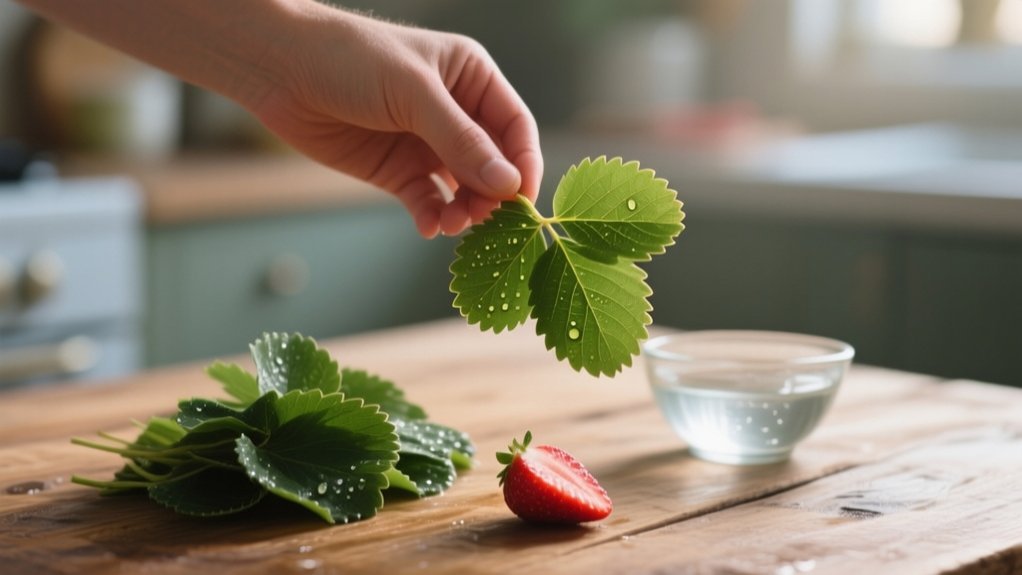
Next, rinse the strawberry leaves thoroughly under cool running water to wash away dirt and pesticides.
Rinse strawberry leaves under cool running water to remove dirt and pesticides effectively.
If you want an extra level of cleaning, soak the leaves in a mixture of three parts water to one part vinegar for about 20 minutes.
After soaking, rinse them again under cool running water to remove any vinegar residue.
Once clean, gently pat dry the strawberry leaves with paper towels to avoid moisture buildup, which can reduce freshness and promote spoilage.
How to Check Strawberry Leaves for Safety
Before you eat or use strawberry leaves, you’ll want to check them carefully for safety. Start by inspecting strawberry leaves for any signs of spoilage, such as browning, wilting, or unusual odors. Fresh leaves have a mild earthy scent. Healthy leaves are vibrant green and firm, indicating they’re safe to eat and offer the best nutritional benefits.
Also, look closely for visible pests or dirt.
Follow these steps to verify safety:
- Inspect strawberry leaves for signs of spoilage and unusual odors.
- Check for visible pests or dirt that could contaminate your leaves.
- Wash strawberry leaves thoroughly under cool running water to remove pesticide residue and any remaining contaminants.
Doing this guarantees your strawberry leaves are clean, fresh, and safe to enjoy.
How to Eat Strawberry Leaves Raw and Cooked
Although strawberry leaves might not be your first choice for a snack, you can enjoy them both raw and cooked by preparing them properly. First, always wash the strawberry leaves thoroughly under cool running water, discarding any damaged ones.
Raw, younger leaves add a mild flavor and nutritional boost to salads or smoothies. They are rich in vitamins A and C. Cooking, like sautéing or steaming, enhances flavor and texture, making them a tasty side or soup ingredient.
| Form | Preparation | Flavor Profile | Health Benefits |
|---|---|---|---|
| Raw | Washed, fresh | Mild, grassy | Vitamins, fiber |
| Cooked | Sautéed/steamed | Enhanced, soft | Improved digestibility |
| Dried | For herbal tea | Earthy | Antioxidants, calming |
| Both forms | Proper washing | Versatile | Nutritional, healthful |
Making Strawberry Leaf Tea and Infusions
To make strawberry leaf tea, start by rinsing fresh leaves thoroughly.
Then, steep about 1-2 tablespoons in boiling water for 5 to 10 minutes. You can enjoy it hot or let it cool down and have it cold—whatever you prefer.
If you want to jazz up the flavor, try adding some fresh mint or a little honey for sweetness.
If you’re using dried leaves instead, that works just fine too.
Just make sure they’re completely dry before brewing to get the best taste.
Preparing Strawberry Leaf Tea
When you want to enjoy the health benefits of strawberry leaves, steep fresh or dried leaves in hot water for 5 to 10 minutes to make a flavorful tea.
To prepare your infusion properly, follow these steps:
- Use 1 to 2 tablespoons of clean strawberry leaves per cup of boiling water.
- Steep the leaves for 5 to 10 minutes to extract antioxidants and develop the earthy flavor.
- Strain the leaves before you drink the tea, which you can enjoy hot or chilled.
This tea offers anti-inflammatory and antibacterial benefits thanks to the antioxidants in strawberry leaves.
While honey or lemon can enhance flavor, you’ll find the natural infusion both invigorating and healthful on its own.
Preparing your tea this way lets you safely enjoy strawberry leaves and their many health benefits.
Infusion Flavor Enhancements
While steeping strawberry leaves alone creates a pleasantly earthy tea, you can easily enhance the flavor by adding complementary herbs like mint or lemon balm.
These flavor enhancements not only brighten the infusion but also boost the tea’s nutritional value.
To make your herbal infusions, steep clean, dried strawberry leaves with your chosen herbs in hot water for 5-10 minutes.
This process extracts antioxidants and vitamin C, contributing to health benefits such as anti-inflammatory support and improved immune function.
For a revitalizing twist, try infusing fresh strawberry leaves in cold water, adding a subtle earthy taste that’s perfect for hydration on warm days.
Experimenting with blends allows you to enjoy both the unique flavors and the nutritional perks of strawberry leaf infusions.
Adding Strawberry Leaves to Smoothies and Salads
Anyone looking to boost their nutrition can easily add strawberry leaves to smoothies and salads. These leaves pack more antioxidants than the berries themselves and are rich in vitamins A, C, and K, supporting your immune system.
Before incorporating clean strawberry leaves, wash thoroughly under cool running water to remove dirt and pesticide residue. Use younger, tender leaves in salads for a milder taste.
Here’s how to get started:
- Add to smoothies: Blend strawberry leaves with fruits to enhance fiber and add an earthy flavor.
- Incorporate clean strawberry leaves into salads: Toss with fresh greens for extra nutrition and a subtle herbal note.
- Always wash thoroughly: Rinse leaves well to guarantee safety and cleanliness before eating.
Easy Recipes Featuring Strawberry Leaves
Because strawberry leaves offer a unique blend of antioxidants and vitamins, you can easily incorporate them into various recipes to boost both flavor and nutrition.
To eat strawberry leaves, try steeping them in hot water to make a soothing herbal tea packed with health benefits.
You can also quick pickle strawberry tops by marinating them in vinegar and spices, creating a tangy condiment perfect for meats and cheeses.
Add cleaned strawberry tops to salads to introduce an earthy taste and add fiber, enhancing both texture and nutrition.
For a revitalizing beverage, infuse flavor into water or cocktails like Strawberry Mint Lemonade using strawberry tops.
These simple recipes let you enjoy the versatility and nutritional perks of strawberry leaves in your daily meals.
How to Store Strawberry Leaves to Keep Them Fresh
To keep your strawberry leaves fresh, start by placing them in a container lined with a paper towel. This helps absorb any extra moisture.
Then, pop the container into the crisper drawer of your fridge—this spot keeps humidity just right for freshness.
Oh, and one more tip: try not to wash the leaves until you’re ready to use them. Washing too early can make them spoil faster.
Optimal Refrigeration Methods
When storing strawberry leaves, you’ll want to keep them fresh by controlling moisture and airflow. To guarantee ideal refrigeration methods for your edible strawberry leaves, follow these tips:
- Line a container with a paper towel to absorb excess moisture. This helps prevent spoilage and preserves flavor.
- Keep the container loosely covered or use a breathable produce bag in the refrigerator. This maintains airflow while avoiding drying out the leaves.
- Avoid washing strawberry leaves until just before you consume them. This minimizes moisture buildup and retains their nutritional benefits.
Proper Storage Containers
Choosing the right storage container plays an essential role in keeping your strawberry leaves fresh and flavorful.
To prevent spoilage, line proper storage containers with a paper towel to absorb excess moisture. Make certain to keep the container loosely covered to allow airflow, which helps reduce mold growth.
You should refrigerate the container at 32°F to 36°F (0°C to 2°C) to maintain freshness for up to a week. Avoid washing strawberry leaves until just before consumption to preserve their texture and prevent wilting.
If you want to keep strawberry leaves longer, consider freezing them in airtight containers. This method extends their shelf life for several months while maintaining quality.
Following these tips guarantees your strawberry leaves stay fresh and safe to enjoy.
Frequently Asked Questions
Can Children Safely Consume Strawberry Leaves?
Yes, children can safely consume strawberry leaves with proper parental guidance. For children’s health, guarantee safe consumption by thoroughly washing leaves and considering cooking methods to suit taste preferences.
Edible plants like strawberry leaves offer nutritional benefits, including fiber and antioxidants. Age recommendations suggest introducing them gradually, blended into smoothies if needed.
Teach food education to help kids appreciate new tastes, while watching for potential risks like allergies or digestive issues.
Do Strawberry Leaves Have Any Side Effects?
Strawberry leaf toxicity is extremely rare, with over 95% of people experiencing no side effects.
You might face mild digestive issues if you eat too many due to their fiber content.
Allergic reactions are possible, especially if you’re sensitive to related plants.
While their chemical compounds offer herbal benefits and a unique flavor profile, stick to dosage recommendations to avoid affecting nutrient absorption or long-term effects.
Enjoy them cautiously in culinary uses.
How Do Strawberry Leaves Compare Nutritionally to the Fruit?
You’ll find strawberry leaf benefits surpass the fruit in antioxidant properties and fiber content, making them a powerful nutritional comparison.
Their vitamin profile, especially vitamin C, and mineral content like calcium and iron, often exceed the berries’.
You can enjoy these health effects by adding leaves to herbal tea or as a smoothie ingredient.
Culinary uses expand your diet’s nutrient variety, supporting digestion and overall wellness effortlessly.
Can Strawberry Leaves Be Used in Skincare Products?
Yes, you can definitely use strawberry leaves in skincare products. Their antioxidant properties and plant compounds make them ideal for herbal infusions and botanical extracts.
You’ll find strawberry leaf benefits in DIY treatments like natural exfoliants and skin hydration formulas. Incorporating them into skincare formulations offers natural remedies that soothe and nourish your skin while enhancing texture and tone.
Using strawberry leaves connects you to effective, gentle, plant-based skincare options.
Are There Any Allergies Associated With Strawberry Leaves?
About 3% of people allergic to strawberries might also experience strawberry leaf allergies due to cross-reactivity concerns.
If you have dietary restrictions or suspect allergic reactions, watch for symptoms like itching or swelling.
Understanding immune response mechanisms helps manage allergies effectively.
Consider allergy testing methods before trying strawberry leaves.
For safe consumption, start small or choose alternative leafy greens to avoid adverse effects while managing allergies comfortably.
Conclusion
Just like the strawberry plant’s leaves cradle its sweet fruit, you can safely embrace these verdant greens to nourish your body and soul. By choosing fresh, clean leaves and preparing them with care, you reveal nature’s quiet gift: subtle flavors and healthful benefits wrapped in every tender leaf.
So, let each leaf you eat be a small step toward harmony, a gentle reminder that sometimes the simplest things hold the richest rewards.