

Why Are Strawberries Low in Fiber?
You’ll find strawberries low in fiber mainly because they have high water content and a soft structure. This means less fibrous material compared to other fruits like raspberries or apples.
Their fibers are mostly soluble and present in smaller amounts. Plus, ripeness or processing can reduce fiber even more.
Strawberries focus on sweetness over fiber, making them easier to digest. If you want to discover how this impacts your diet and their other benefits, keep exploring.
Understanding “Low Fiber” in Strawberries

Although strawberries contain less fiber than some other fruits, they still offer about 3 grams of dietary fiber per cup. This lower fiber content happens because strawberries have a high water content, making them less dense in fiber compared to fruits like raspberries.
The fiber in strawberries is mostly soluble, which helps support digestion, but it’s not as abundant as the insoluble fiber found in other fruits.
Even though strawberries aren’t a top fiber source, they pack a punch with vitamin C and antioxidants that boost your overall health.
How Much Fiber Do Strawberries Contain?
You’ll find about 3 grams of fiber in a cup of strawberries, which covers roughly 12% of your daily fiber needs. That’s pretty good!
But if you compare that to raspberries, which pack around 8 grams per cup, strawberries have less fiber. Still, they offer plenty of other valuable nutrients.
Knowing this can help you balance your fiber intake by mixing strawberries with other high-fiber foods. It’s all about variety, really!
Fiber Content Overview
When you include a cup of strawberries in your diet, you get about 3 grams of dietary fiber. This covers roughly 12% of the daily fiber recommendation based on a 2,000-calorie intake. This fiber content is mostly soluble fiber, which supports digestion but doesn’t add much bulk to stool.
While strawberries are lower in fiber compared to some fruits, they remain a nutritious, low-calorie option.
| Nutrient | Amount per Cup |
|---|---|
| Dietary Fiber | 3 grams |
| Calories | 45 |
| Fiber Type | Mostly soluble |
| Daily Fiber % (DV) | 12% |
| Other Benefits | Vitamins, antioxidants |
Understanding these details helps you balance your diet with strawberries and other fiber sources.
Comparison With Other Berries
While strawberries offer a modest 3 grams of fiber per cup, other berries like raspberries and blackberries pack a much bigger fiber punch.
Comparing their fiber content helps you understand why strawberries are considered low-fiber fruits.
- Strawberries: 3 grams of fiber per cup
- Raspberries: 8 grams of fiber per cup, over double strawberries
- Blackberries: About 7.6 grams of fiber per cup
- Fiber from strawberries covers roughly 12% of your daily value
- Raspberries provide around 33% of daily fiber, a significant boost
Although strawberries contain less fiber, they still contribute valuable nutrients like vitamin C and antioxidants.
Daily Fiber Contribution
Strawberries may not top the list in fiber content compared to other berries, but they still provide a solid contribution to your daily fiber needs. One cup of strawberries contains about 3 grams of dietary fiber, which covers roughly 12% of the recommended daily intake for adults.
This fiber is mainly soluble, helping with digestion, though it’s less than the insoluble fiber found in fruits like raspberries. While strawberries are lower in fiber, they’re packed with vitamins and antioxidants that boost overall health.
To meet higher fiber goals, you’ll want to add other fiber-rich foods to your diet, but including strawberries can still support a balanced, nutritious intake. So, don’t overlook their role in your daily fiber consumption.
Reasons Strawberries Have Less Fiber Than Other Berries
Because they prioritize sweetness and flavor, strawberries naturally contain less fiber than many other berries.
When you compare strawberries to other fiber-rich berries, you’ll notice several key reasons for their lower fiber content:
- Strawberries offer about 3 grams of fiber per cup, less than raspberries’ 8 grams.
- Their fiber is mostly soluble, which is less abundant than the insoluble fiber in other berries.
- High water content dilutes the fiber density in strawberries.
- Genetic traits shape their fiber composition differently than other berries.
- Cultivators focus on enhancing sweetness and flavor instead of fiber content.
Understanding these points helps you see why strawberries don’t pack as much fiber as some other berries you might enjoy.
How Strawberry Water Content and Structure Affect Fiber
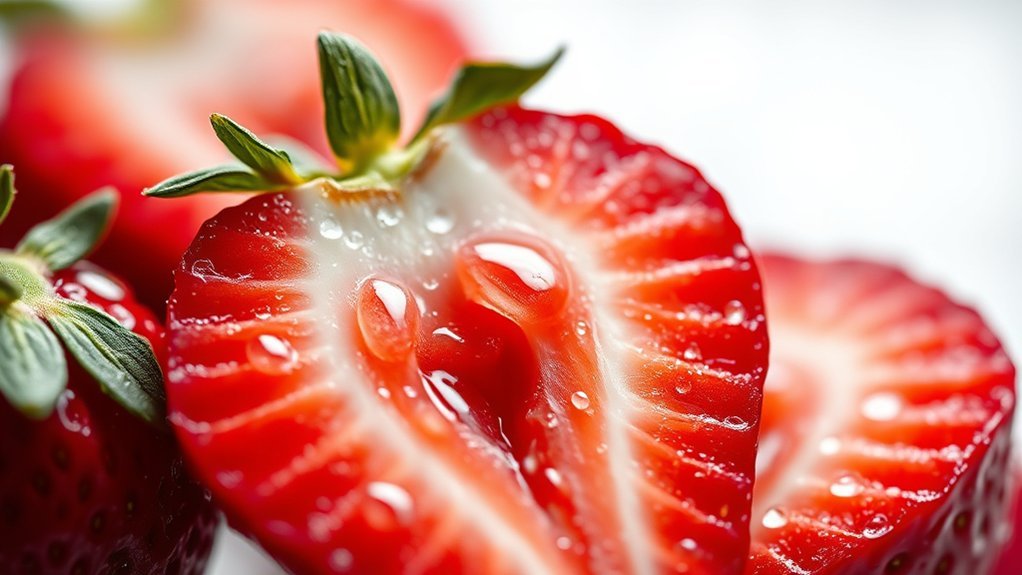
You’ll notice strawberries have a high water content. This makes their fiber less dense compared to other fruits.
Their cell walls are softer and mostly contain soluble fiber. This is different from the tougher, insoluble fiber you find in many other fruits.
Knowing this helps explain why strawberries feel juicy but don’t pack as much fiber per serving.
High Water Content
With about 91% water content, these juicy fruits offer a revitalizing snack but contain less dietary fiber than you might expect.
Their high water content dilutes the concentration of fiber, making strawberries less fibrous than other berries.
For example, a 1-cup serving of strawberries has about 3 grams of fiber, compared to 8 grams in raspberries.
Here’s why their fiber content stays low:
- Mainly soft tissue with fewer fibrous parts
- High water content reduces fiber density
- Largely soluble fiber, which is less abundant
- Hydrating but not a significant fiber source
- Best paired with higher-fiber foods for balance
Cell Wall Composition
Strawberries’ high water content doesn’t just influence their juiciness. It directly impacts their cell wall structure and fiber levels. Because their cell wall composition has less pectin and cellulose than other fruits, strawberries contain fewer grams of fiber per serving.
This makes their texture soft and easy to eat but lowers their fiber bulk. Here’s a quick comparison:
| Fruit | Fiber (grams per cup) | Cell Wall Composition |
|---|---|---|
| Strawberry | 3 | Lower pectin and cellulose |
| Raspberry | 8 | Higher pectin and cellulose |
| Apple | 4 | Moderate pectin and cellulose |
Understanding this helps you see why strawberries, despite being tasty and hydrating, don’t pack as much fiber as denser fruits.
Soluble Versus Insoluble Fiber
Although strawberries contain less fiber than some fruits, their soluble fiber plays a unique role in digestion and heart health. Strawberries are about 91% water, which dilutes their fiber compared to drier fruits. Their soft, porous flesh mainly contains soluble fiber, with less insoluble fiber than fruits with tougher skins.
Here’s how strawberry fiber breaks down:
Mostly soluble fiber, aiding digestion and cholesterol control
Lower insoluble fiber, so less bulk for digestive transit
About 3 grams of fiber per cup, less than raspberries’ 8 grams
Soft texture means fewer fibrous cell walls
Water content reduces overall fiber concentration
Understanding the balance between soluble fiber and insoluble fiber helps explain why strawberries are lower in total fiber but still beneficial.
How Processing and Ripeness Affect Strawberry Fiber
Because you often enjoy strawberries in various forms, it’s important to know that both their ripeness and processing methods can change their fiber content.
As strawberries ripen fully, their plant cell walls begin to break down, which can slightly reduce their fiber levels. So, the riper the strawberry, the less fiber it may contain.
Moreover, processing methods like juicing or making purees remove much of the pulp, which holds most of the fiber. This greatly lowers the fiber you get from processed strawberries compared to fresh ones.
Since strawberries also have a high water content, their fiber is already diluted, and processing only decreases it further.
Keeping these factors in mind helps you understand why strawberries aren’t a top choice for dietary fiber.
Comparing Strawberries to Raspberries and Other High-Fiber Fruits
When you compare strawberries to raspberries and other high-fiber fruits, you’ll notice that strawberries offer considerably less dietary fiber.
For example, raspberries pack about 8 grams of fiber per cup, while strawberries provide only around 3 grams.
Other high-fiber fruits like pears and apples contain 5-6 grams per cup. This difference comes from strawberries’ higher water and sugar content, which reduces their fibrous structure.
Keep these points in mind:
Keep these points in mind to choose fruits that best meet your fiber and nutrition needs.
- Strawberries have about 3 grams of fiber per cup
- Raspberries contain roughly 8 grams per cup
- Pears and apples offer 5-6 grams of fiber per cup
- Strawberries provide important vitamins but less fiber
- Combining strawberries with high-fiber fruits balances nutrition
Understanding these comparisons helps you choose fruits that fit your fiber needs.
Including Strawberries in a Low-Fiber Diet
You can definitely enjoy strawberries on a low-fiber diet because they’ve less fiber compared to many other fruits.
Plus, their soft texture makes them easy to digest.
Try eating them fresh or blend them into smoothies—both ways help keep your fiber intake manageable.
Just be mindful of your portion sizes so you stay within your daily fiber limits while still getting all the nutritional benefits strawberries offer.
Suitable For Low-Fiber
Strawberries offer about 3 grams of fiber per cup, making them a gentle choice for anyone following a low-fiber diet. Their relatively low fiber content means strawberries are less likely to irritate your digestive system compared to higher-fiber fruits.
You can enjoy strawberries safely if you need to manage bowel sensitivity or recover from surgery. Plus, they provide essential nutrients like vitamin C and antioxidants without adding excessive fiber.
Here’s why strawberries fit well in a low-fiber diet:
- Low fiber reduces digestive irritation
- Soft texture eases digestion
- Rich in vitamin C for immune support
- Antioxidants promote overall health
- Suitable for sensitive or healing digestive tracts
Including strawberries lets you nourish your body while keeping fiber intake manageable.
Preparation Tips
Including up to one cup of strawberries in your low-fiber diet can provide a tasty, gentle option that won’t overwhelm your digestive system.
To keep stomach pain at bay, follow simple preparation tips: wash strawberries thoroughly and cut them into smaller pieces. This reduces the chance of irritation and makes them easier to digest.
If fresh fruit feels too harsh, try cooking strawberries into sauces or compotes, which softens the fruit and eases digestion.
Another smart approach is blending strawberries into smoothies with low-fiber ingredients, maintaining flavor without increasing fiber content too much.
Remember, moderation is key. Eating too many strawberries at once might cause digestive discomfort.
Strawberries’ Health Benefits Beyond Fiber
Although fiber plays a vital role in nutrition, the health benefits of strawberries extend far beyond it. When you include strawberries in your diet, you’re boosting more than just fiber intake. You’re enhancing your overall wellness.
Here’s what strawberries offer you:
- Rich source of essential vitamins, especially vitamin C, supporting immune and skin health
- Antioxidants like anthocyanins that reduce oxidative stress and inflammation
- Improved heart health by lowering cardiovascular disease risk and enhancing insulin sensitivity
- Natural prebiotic properties that promote beneficial gut bacteria and aid digestion
- Anti-inflammatory effects that may relieve osteoarthritis symptoms and reduce pain
Tips for Adding Strawberries Without Exceeding Fiber Limits
When managing your fiber intake, you can still enjoy the sweet taste of strawberries by controlling portion sizes and pairing them wisely. Stick to about ½ cup, which is four medium strawberries, to keep fiber levels in check.
Strawberries are naturally low in sugar, making them a great option for satisfying your sweet tooth without overloading on fiber or sugar. To help reduce your overall fiber intake, combine strawberries with low-fiber foods like yogurt or cottage cheese.
Using fresh strawberries instead of dried ones also keeps fiber lower since drying concentrates fiber content. You can blend strawberries into smoothies to enjoy their flavor and nutrients without adding too much fiber.
These simple tips let you savor strawberries without exceeding your daily fiber limits.
Choosing and Preparing Strawberries for Your Diet
To enjoy the best flavor and nutrition from strawberries, you should pick firm, shiny berries with bright-red color and fresh green caps.
Choose firm, shiny strawberries with bright red color and fresh green caps for optimal flavor and nutrition.
When choosing and preparing strawberries for your diet, keep these tips in mind:
Select strawberries that are firm and vibrant for peak taste. Rinse them in cold water just before eating to prevent mold and spoilage.
Store strawberries in the refrigerator and consume within a few days. Discard any mushy or damaged berries to maintain quality.
Enjoy strawberries fresh, in salads, smoothies, or as toppings to add variety.
Frequently Asked Questions
Can Strawberries Cause Allergies Despite Their Fiber Content?
Yes, strawberries can cause allergies despite their fiber content.
While fiber benefits your digestion, strawberry allergies stem from proteins that trigger immune responses, not fiber.
If you have sensitivities or cross-reactive allergies to related fruits, you might experience itching, swelling, or worse.
Do Strawberries Interact With Any Medications?
Strawberry interactions with medications are generally minimal, so you don’t need to worry much.
However, if you’re on blood thinners, you should watch your vitamin K intake since strawberries contain small amounts.
Also, if you take medications affecting blood sugar, strawberries’ low glycemic index might help, but keep portion sizes in check.
Always talk to your healthcare provider to understand any potential medication effects related to your diet.
Are Strawberries Genetically Modified?
You won’t find genetically modified strawberries invading your grocery store anytime soon!
Most strawberry varieties you see are products of traditional breeding, not genetic modifications.
While scientists have tinkered with genetic tweaks to improve traits like shelf life, these aren’t widely sold.
So, when you bite into a strawberry, you’re mostly enjoying nature’s original recipe, untouched by genetic engineering.
If you want extra assurance, look for organic labels. They guarantee no GMOs.
How Long Do Strawberries Stay Fresh After Picking?
Strawberries typically stay fresh for about 3 to 7 days after picking if you practice proper strawberry storage.
To maximize freshness duration, keep them dry and unwashed until you’re ready to eat.
Store them in a breathable container like a vented plastic clamshell or cover them with a paper towel to absorb moisture.
What Vitamins Are Most Abundant in Strawberries?
When you eat strawberries, you’re getting a boost of strawberry nutrients, especially vitamin C, which tops the list as the most abundant vitamin.
You’ll also find folate, essential for cell growth and DNA synthesis.
These vitamin benefits support your immune system, skin health, and overall wellness.
Plus, strawberries provide important minerals and antioxidants that help reduce inflammation and promote heart health, making them a nutritious choice for your diet.
Conclusion
You might think strawberries aren’t worth it because of their low fiber, but don’t let that stop you. Their juicy sweetness and rich vitamins make them a delicious, healthy choice—even if you’re watching fiber intake.
Plus, their lower fiber means they’re gentle on your digestion, perfect if you need to avoid rough foods. So go ahead, enjoy strawberries without worry and savor their benefits every day!