
Are Strawberries High in Histamine?
Strawberries aren’t very high in histamine themselves, but they can trigger your body to release histamine, especially if you’re sensitive or have histamine intolerance. Ripe strawberries tend to cause more reactions than unripe ones, and freshness matters too. Overripe or processed forms may worsen symptoms.
If you notice headaches, itching, or digestion issues after eating them, it’s likely linked. Keep going to explore how to manage your tolerance and safer fruit options.
What Is Histamine and Why Does It Matter?
Histamine is a chemical your body produces that plays key roles in immune responses, digestion, and brain function. It also appears in certain foods, which means you can ingest histamine through your diet.
When your body struggles to break down histamine, often due to low diamine oxidase (DAO) enzyme activity, you might experience food intolerance symptoms like headaches, digestive discomfort, or skin reactions.
Many aged, fermented, or processed foods contain high histamine levels, so they may trigger these symptoms more easily. Fresh, non-processed foods generally have lower histamine, making them safer choices if you’re sensitive.
Understanding histamine’s role helps you manage food intolerance effectively. This knowledge enables you to select foods that minimize unpleasant reactions and support your overall well-being.
Why Strawberries Can Trigger Histamine Release in Sensitive People
Although strawberries don’t contain high levels of histamine themselves, they can prompt your body to release histamine if you’re sensitive. This happens because strawberries contain compounds like salicylates and amines that can stimulate mast cells to release histamine.
If you have histamine intolerance, eating strawberries, especially ripe ones, might cause symptoms such as headaches, skin reactions, or digestive discomfort.
Since certain foods trigger histamine release rather than contain it, you might want to be cautious about including strawberries in a low histamine diet.
Monitoring your body’s response to strawberries is important, as they can act as moderate histamine liberators. Understanding this can help you manage your symptoms and choose foods that fit better with your dietary needs.
How Do Strawberries Rank in Histamine Content?
Understanding how strawberries rank in histamine content can help you better manage your symptoms if you’re sensitive. Strawberries are generally considered moderate in histamine, meaning they can trigger reactions in some people but aren’t always high histamine. They also contain natural histamine liberators, which may increase histamine release in your body.
Strawberries contain moderate histamine and natural liberators, potentially triggering reactions in sensitive individuals.
Keep these points in mind about strawberries and histamine:
- Strawberries have moderate histamine levels, not the highest but enough to cause issues for sensitive individuals.
- Fresh strawberries are usually better tolerated than processed forms like jams or syrups.
- The ripeness of strawberries affects histamine content, with overripe ones potentially higher in histamine.
- Your personal reaction varies, so monitoring your intake is key.
Are Unripe Strawberries Lower in Histamine Than Ripe Ones?
How does the ripeness of strawberries affect their histamine levels? Ripe strawberries tend to be high in histamine because the maturation process boosts histamine production.
In contrast, unripe strawberries usually have lower histamine levels since they haven’t fully developed the compounds responsible for histamine. If you’re sensitive to histamine, unripe strawberries might be easier to tolerate, but you still need to be cautious.
Keep in mind that individual reactions vary, and factors like storage and freshness also influence histamine content.
How Histamine Intolerance Affects Eating Strawberries
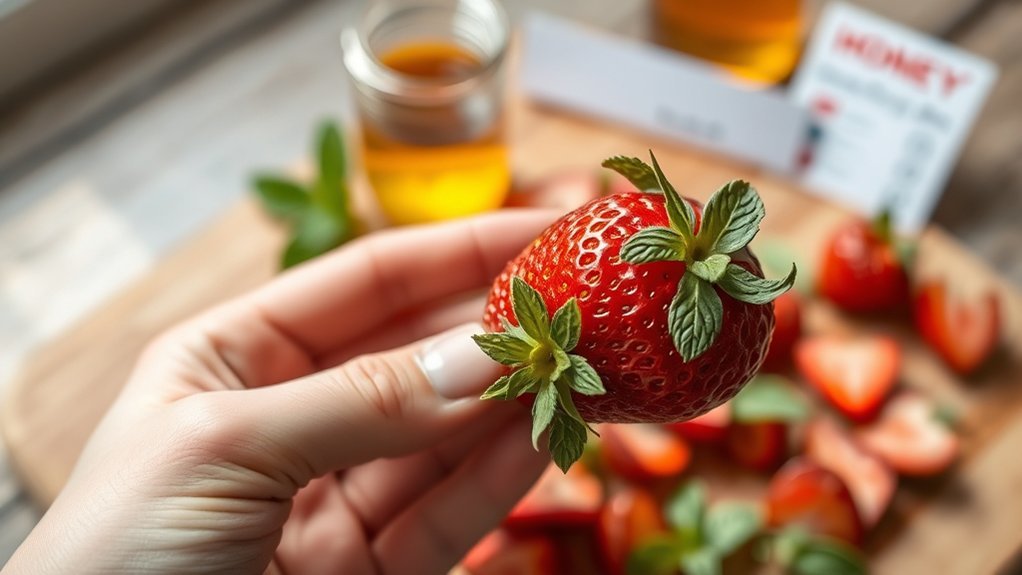
If you have histamine intolerance, eating strawberries can trigger symptoms because they act as histamine liberators.
That means they can cause your body to release more histamine, which mightn’t sit well if you’re sensitive. Your reactions can vary quite a bit depending on how ripe the berries are and your own individual sensitivity.
Strawberries As Histamine Liberators
Although strawberries contain low levels of histamine, they can trigger your body to release histamine from mast cells, making symptoms worse if you’re sensitive.
Strawberries act as histamine liberators, which means they can provoke histamine release even without containing much themselves.
This effect is particularly significant for people with histamine intolerance, as it may cause reactions similar to allergies.
If you have histamine intolerance, consider these points when eating strawberries:
- They may cause itching, hives, or gastrointestinal issues
- Symptoms can mimic allergic reactions
- Individual responses vary widely
- Keeping a food diary helps track your reactions
Being cautious with strawberries is essential if you notice histamine intolerance symptoms after eating them.
Individual Responses To Strawberries
Since strawberries can prompt your body to release histamine, your reaction to them may vary widely depending on your sensitivity.
If you have histamine intolerance, you might notice individual responses ranging from mild skin irritation and headaches to more severe gastrointestinal distress.
These symptoms don’t stem from the strawberries’ histamine content but from their ability to trigger histamine release. Overripe strawberries could worsen your reactions, so paying attention to the fruit’s ripeness matters.
You won’t react the same way as everyone else, which makes tracking your experiences essential. Keeping a food diary helps you identify patterns in how strawberries affect you specifically, allowing you to better understand your histamine intolerance and manage your diet accordingly.
Managing Strawberry Consumption
When managing histamine intolerance, you’ll need to approach strawberry consumption with care because these fruits can trigger histamine release even though they aren’t high in histamine themselves.
Your intolerance level plays a big role in how strawberries affect you.
To keep symptoms low, consider these tips:
- Choose fresher, less ripe strawberries to reduce histamine impact.
- Avoid cooked strawberry products, as cooking doesn’t lower their histamine-liberating effects.
- Keep a food diary to track your reactions and identify personal tolerance thresholds.
- Start with small amounts and gradually increase if no symptoms occur.
Can Individual Sensitivity Affect Reactions to Strawberries?
You might notice that strawberries affect you differently than they do other people.
That’s because your personal sensitivity really influences how your body deals with histamine.
Even though strawberries are generally low in histamine, some folks might still have a reaction because of their unique response levels.
Role Of Personal Sensitivity
Although strawberries are generally low in histamine, your personal sensitivity can still cause unexpected reactions. If you’re histamine intolerant, you might find that strawberries trigger symptoms due to individual variations in how your body handles histamine.
Personal sensitivities depend on factors like genetics and gut health, which affect histamine breakdown. Moreover, strawberries contain natural compounds that can release histamine in sensitive individuals.
To manage this, pay attention to your own tolerance levels and symptoms, the ripeness and freshness of strawberries, how other foods affect your histamine intolerance, and keeping a food diary to track reactions.
Understanding your personal sensitivities helps you make informed choices, even with foods generally considered low in histamine like strawberries.
Variability In Histamine Response
Understanding your personal sensitivity lays the groundwork for exploring how reactions to strawberries can vary widely. The variability in histamine response means that your individual sensitivity to histamine plays a significant role in whether strawberries trigger symptoms.
Factors like your gut health, enzyme activity, especially diamine oxidase (DAO), and genetic background affect how your body processes histamine from foods. Some people may tolerate strawberries well, while others experience reactions because strawberries can act as histamine liberators. This means they prompt your mast cells to release histamine regardless of the fruit’s histamine content.
Even the ripeness of strawberries influences their histamine levels, with less ripe ones often better tolerated.
Keeping a food diary can help you pinpoint your unique responses, enabling a personalized approach to managing histamine intolerance effectively.
What Symptoms Can Strawberries Cause in Sensitive People?
Strawberries can cause a range of symptoms in sensitive people, especially those with histamine intolerance. Because strawberries have moderate histamine levels, eating too many can trigger symptoms linked to high histamine levels in your body.
Strawberries contain moderate histamine and may trigger symptoms in sensitive individuals or those with histamine intolerance.
You might notice headaches or migraines, skin reactions like hives or itching, and gastrointestinal issues such as bloating or diarrhea. Some symptoms may mimic allergic reactions due to histamine release.
Your reaction can vary based on the ripeness and amount you consume. Even if you’re not allergic, the histamine in strawberries can prompt these responses.
It’s important to recognize these symptoms early to manage your intake effectively and avoid discomfort related to histamine overload.
Do Preparation and Storage Affect Histamine in Strawberries?
You’ll find that fresh strawberries generally have low histamine levels.
But how you store them really matters. Keeping them refrigerated helps prevent histamine buildup.
On the other hand, freezing can lock in their freshness.
As for preparation, washing or slicing doesn’t change histamine levels much.
Impact Of Freshness
Although fresh strawberries are typically low in histamine, how you prepare and store them plays a big role in keeping their levels safe. The fresher your strawberries, the less chance histamine will build up.
Overripe or improperly handled berries tend to have higher histamine due to bacterial growth.
To keep strawberries low in histamine, focus on these key steps:
- Buy fresh strawberries and consume them quickly
- Store them in airtight containers in the fridge
- Wash and prepare strawberries right before eating
- Avoid leaving cut strawberries exposed for long periods
Storage Temperature Effects
When you store strawberries at room temperature for too long, histamine-producing bacteria can multiply and raise their histamine levels. This highlights the importance of storage temperature effects on strawberries, which are generally low in histamine but can become problematic if left out.
To keep histamine levels low, you should refrigerate strawberries immediately after purchase. Proper cold storage slows bacterial growth, preventing strawberries from becoming one of the foods high in histamine due to spoilage.
Also, consume them soon after washing to avoid histamine buildup. While cooking doesn’t greatly reduce histamine, keeping strawberries chilled is key.
Preparation Techniques Influence
Since strawberries are generally low in histamine, how you prepare and store them plays a key role in keeping their histamine levels low.
While preparation techniques like washing and cutting don’t greatly raise histamine, improper handling and storage can lead to high histamine levels as the fruit spoils.
To keep strawberries fresh and minimize histamine buildup, consider these tips:
Store strawberries in airtight containers in the refrigerator.
Avoid leaving cut strawberries exposed to air for long periods.
Freeze strawberries soon after purchase to preserve their low histamine status.
Refrain from cooking strawberries, as heat won’t reduce histamine but may affect freshness.
Alternatives to Strawberries for a Low-Histamine Diet
Looking for tasty fruits that won’t upset your histamine intolerance? You’ll find great alternatives to strawberries that fit perfectly into a low-histamine diet. Fresh, non-processed fruits like mangoes, pears, kiwis, and apples are excellent choices. Blueberries even offer natural anti-histamine benefits, making them a smart substitute.
Incorporate these fruits into salads or snacks for safe, flavorful options.
| Fruit | Benefit |
|---|---|
| Mango | Low histamine, sweet flavor |
| Pear | Gentle on histamine levels |
| Blueberries | Natural anti-histamine |
Choosing these fruits helps you enjoy variety without triggering symptoms, keeping your low-histamine diet both enjoyable and safe.
How to Test Your Tolerance to Strawberries Safely
Trying out different fruits can help you find what suits your low-histamine diet best, but you might still want to enjoy strawberries occasionally. Since strawberries are moderate histamine liberators and not high in histamine levels themselves, testing your tolerance carefully is key.
Start with a small portion of fresh, ripe strawberries and observe your body’s reaction over 24 hours. Keep a detailed food journal to track symptoms. If you notice any adverse effects, it’s wise to stop eating them and consult a healthcare professional.
Remember these tips:
- Consume only fresh strawberries in moderation
- Begin with a minimal amount to test tolerance
- Monitor symptoms for at least 24 hours
- Record reactions to identify patterns related to histamine levels
This approach helps you avoid unexpected histamine reactions safely.
What Other Fruits Have Similar Histamine Risks?
Although strawberries carry moderate histamine risks, you should also watch out for other fruits like citrus fruits, bananas, and avocados that can trigger similar reactions. Certain berries, such as raspberries and blackberries, have varying histamine levels, so personal bearings on tolerance matter.
Ripeness plays a key role; ripe fruits usually have higher histamine content. Here’s a quick look at fruits with histamine risks:
| Fruit | Histamine Risk Level |
|---|---|
| Citrus (oranges, lemons) | Moderate to High |
| Bananas | Moderate |
| Avocados | Moderate |
| Berries (raspberries, blackberries) | Variable, certain individuals react |
Monitoring your reactions to these fruits helps manage your histamine intake effectively.
When to Consult a Professional About Histamine Intolerance and Diet
If you notice symptoms like bloating, headaches, or skin reactions after eating foods high in histamine, you should consult a healthcare professional to get proper guidance on managing histamine intolerance.
Seeking medical advice guarantees you address underlying issues and avoid worsening symptoms.
A registered dietician can create a personalized low-histamine diet tailored to your needs, helping you identify safe foods and avoid triggers.
Consider consulting a professional if:
- You have gastrointestinal disorders that may worsen intolerance
- You want to safely reintroduce high-histamine foods after elimination
- You experience persistent or severe symptoms
- You have a family history of allergies or intolerances
Early consultation helps manage histamine intolerance effectively and improves your overall well-being.
Frequently Asked Questions
Can Strawberries Cause Histamine Intolerance in Children?
Yes, strawberries can cause histamine intolerance in children.
If you notice strawberry reactions like hives, stomach pain, or breathing issues, these are common children’s symptoms linked to histamine sensitivity.
Since reactions vary, you’ll want to introduce strawberries cautiously and watch for signs.
If your child shows any adverse effects, consult a healthcare provider to manage their diet and avoid triggering foods effectively.
Do Frozen Strawberries Have Different Histamine Levels Than Fresh Ones?
Coincidentally, frozen strawberries usually don’t have much different histamine levels than fresh ones.
When you use frozen storage at peak freshness, the histamine stays low, similar to fresh berries.
However, if strawberries aren’t frozen properly or are overripe before freezing, histamine levels might rise.
How Does Cooking Strawberries Affect Their Histamine Content?
Cooking strawberries doesn’t greatly affect their histamine content because histamine degradation through cooking methods is minimal.
Since histamine is a stable compound, heating strawberries won’t break it down much.
So, if you’re sensitive, relying on cooking to reduce histamine won’t help.
It’s better to focus on eating fresh strawberries and avoiding overripe or spoiled fruit instead, as those factors influence histamine levels more than cooking does.
Are There Specific Strawberry Varieties Lower in Histamine?
About 10% of people with histamine intolerance find wild strawberry varieties easier to tolerate due to their slightly lower histamine levels.
While research on strawberry varieties and their histamine content is limited, you can try wild strawberries if you want to reduce your histamine intake.
Keep in mind that freshness and ripeness also affect histamine levels, so pick and eat them soon after harvesting to minimize your risk.
Can Strawberry Allergies Be Mistaken for Histamine Intolerance?
Yes, strawberry allergies can be mistaken for histamine intolerance because strawberry symptoms like itching, swelling, and digestive issues overlap with those of histamine intolerance.
If you experience these symptoms, you should consider allergy testing to identify whether your body reacts to strawberry proteins or struggles with histamine breakdown.
Getting a proper diagnosis helps you manage your condition effectively and avoid unnecessary dietary restrictions.
Conclusion
If you’re sensitive to histamine, strawberries might feel like a hidden storm in your diet, triggering unwanted reactions. While they’re not the highest in histamine, they can still release it and cause discomfort.
You don’t have to give them up entirely. Testing your tolerance carefully can help you find your sweet spot. Remember, when in doubt, reaching out to a professional can guide you safely through the maze of histamine intolerance.