
How to Identify If Raspberries and Strawberries Are True Berries
You can tell raspberries and strawberries aren’t true berries by looking at how they develop. True berries come from a single ovary and have seeds inside the fleshy fruit.
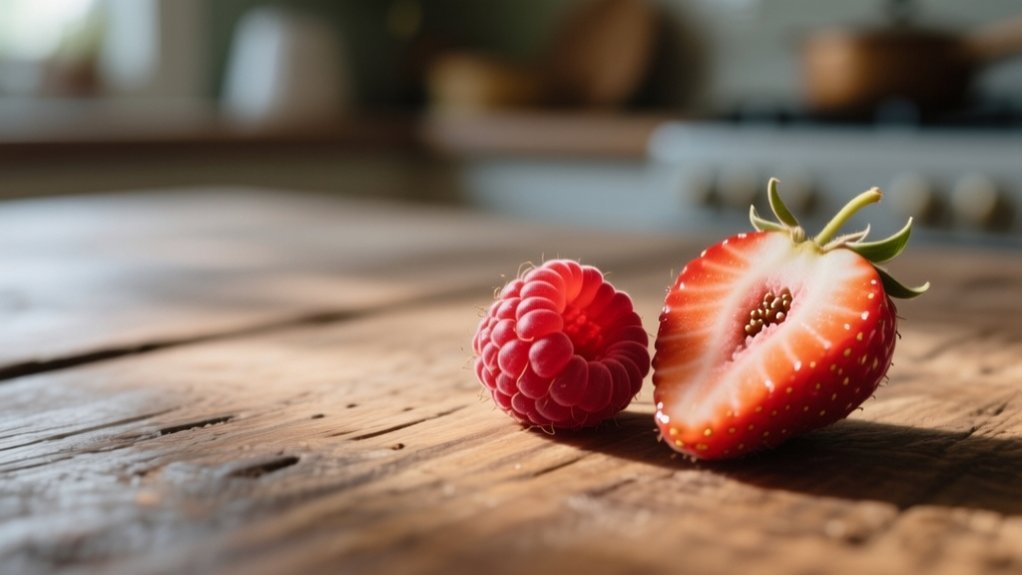
Raspberries and strawberries, however, form from multiple ovaries, making them aggregate fruits. Raspberries have tiny drupelets clustered together, and strawberries’ fleshy part isn’t from the ovary at all but from the flower’s base.
If you’re curious, you’ll find it fascinating how these differences affect taste and cooking.
What Is a True Berry in Botany?
A true berry in botany is a fleshy fruit that grows from a single ovary of one flower and contains multiple seeds. When you understand the botanical definition, you’ll see that true berries have three layers: exocarp, mesocarp, and endocarp.
This single ovary origin distinguishes true berries from aggregate fruits, which develop from multiple ovaries of a single flower. For example, blueberries and tomatoes fit the true berry criteria, while raspberries, though often called berries, are actually aggregate fruits due to their multiple ovaries.
Knowing this helps you clear up common misconceptions about fruits like strawberries and raspberries. By focusing on the botanical definition, you can correctly identify which fruits qualify as true berries and which don’t, despite culinary labeling.
How Fruit Ovary Structure Determines True Berry Classification
Understanding the structure of a fruit’s ovary helps you determine whether it qualifies as a true berry. True berries develop from a single ovary and have three fleshy layers surrounding the seeds. This ovary structure is key to their classification.
A true berry forms from one ovary with three fleshy layers around its seeds.
Raspberries and strawberries, however, don’t fit this pattern. They grow from multiple ovaries of one flower, making them aggregate fruits instead of true berries.
Strawberries are unique because their seeds sit on the outside, classifying them as pseudocarps or false fruits.
In contrast, true berries like blueberries enclose their seeds within fleshy tissue.
Why Are Raspberries Not True Berries?
Although raspberries are commonly called berries, they don’t fit the botanical definition because they develop from multiple ovaries in a single flower. This makes them aggregate fruits, not true berries.
Here’s why raspberries differ:
They form clusters of small drupelets, each with its own seed. True berries develop from one ovary, raspberries from many.
Raspberries have a hollow core once picked, unlike true berries. They also lack the three fleshy layers required in the botanical definition of true berries.
The common term “berry” can mislead you about their true classification.
Why Are Strawberries Not True Berries?
Even though strawberries are commonly called berries, they don’t qualify as true berries in botanical terms. True berries develop from a single ovary and have three fleshy layers: exocarp, mesocarp, and endocarp.
Strawberries, however, form from multiple ovaries of one flower, making them aggregate fruits rather than true berries. Each tiny seed on a strawberry’s surface is actually an achene, originating from a separate ovary.
The fleshy part you eat isn’t derived from the ovary but from the flower’s receptacle, which swells and holds these achenes externally.
Because strawberries lack the defining characteristics of true berries, namely development from a single ovary and internal seeds, they don’t fit the botanical definition of berries, despite their name and appearance.
How Do Aggregate Fruits Differ From True Berries?
When you compare aggregate fruits to true berries, you’ll notice that aggregate fruits form from a single flower with multiple ovaries. This results in many small fruitlets clustered together.
On the other hand, true berries develop from just one ovary and have three fleshy layers that surround the seeds inside the pulp.
So, understanding these differences in seeds and ovaries really helps explain why fruits like raspberries and strawberries aren’t actually true berries.
It’s a neat way to spot what makes these fruits unique!
Definition Of Aggregate Fruits
Since aggregate fruits develop from a single flower with multiple ovaries, they differ substantially from true berries, which arise from a single ovary. Understanding the definition of berries helps clarify this distinction between fruits.
Aggregate fruits like raspberries and strawberries come from one flower but contain numerous small sections, unlike true berries.
Here’s what sets aggregate fruits apart:
- Formed from one flower with multiple ovaries
- Each ovary develops into a small fruitlet (drupelets in raspberries, achenes in strawberries)
- Seeds are separate within these distinct fruitlets
- The entire fruit is a cluster of these small units
- This structure contrasts with true berries that have seeds embedded inside a single fleshy ovary
Recognizing these traits helps you identify why raspberries and strawberries aren’t true berries.
True Berry Characteristics
Although raspberries and strawberries often get called berries, they don’t fit the botanical definition of true berries.
True berries develop from a single ovary of a flower and have three fleshy layers: the exocarp, mesocarp, and endocarp. They contain multiple seeds embedded within the fleshy fruit.
In contrast, a raspberry is an aggregate fruit formed from multiple ovaries, each producing a small drupelet with its own seed.
Strawberries are even more unique; they’ve seeds on the outside and a fleshy receptacle, making them pseudocarps, or false fruits.
So, when you consider the botanical definition, true berries differ considerably from raspberries and strawberries in structure and development.
Understanding these true berry characteristics helps you recognize what makes a fruit a genuine berry.
Seed And Ovary Differences
Because aggregate fruits develop from multiple ovaries within a single flower, they differ considerably from true berries, which grow from just one ovary.
When you compare seed and ovary structures, the differences are clear:
Aggregate fruits like raspberries consist of many drupelets, each with its own seed from separate ovaries.
Strawberries have seeds (achenes) on the surface, each representing a different ovary.
True berries, such as blueberries, develop from a single ovary with multiple seeds inside a fleshy pericarp.
True berries have three fleshy layers, unlike aggregate fruits.
These differences affect how the fruits form and classify botanically.
Understanding these seed and ovary distinctions helps you identify why raspberries and strawberries aren’t true berries.
What Are Accessory Fruits and How Do Strawberries Fit In?
You might think strawberries are typical berries, but they’re actually accessory fruits.
That means their fleshy part grows from the flower’s stem, not the ovary like true berries.
So, when you bite into a strawberry, you’re not eating the fruit in the usual way you might expect.
Understanding this helps you see why strawberries don’t fit the botanical berry definition.
It’s pretty interesting how something so common can actually be quite unique in the plant world!
Accessory Fruit Definition
When you look closely at accessory fruits, you’ll see they form from more than just the ovary of a flower, which sets them apart from true fruits.
Accessory fruits develop with extra parts of the flower contributing to the fleshy fruits you enjoy.
Strawberries are a perfect example. They grow primarily from the flower’s receptacle, not just the ovary.
Here’s what you should know about accessory fruits:
- They include tissues beyond the ovary in fruit formation
- Strawberries’ fleshy part is from the flower’s receptacle
- The tiny seeds on strawberries are individual fruits called achenes
- True berries develop solely from the ovary of flowering plants
- Accessory fruits differ from true berries in botanical structure
Understanding this helps you see why strawberries aren’t true berries botanically.
Strawberry Structure Explained
Strawberries stand out in the fruit world due to their unique structure as accessory fruits. Unlike true berries, strawberries develop from the thickened receptacle of a flower containing multiple ovaries, not just a single ovary.
This makes them an aggregate fruit, formed from one flower with many ovaries. The small seeds on the strawberry’s surface, called achenes, are actually individual fruits, each housing a seed.
In botanical terms, the fleshy part you eat isn’t ovary tissue but accessory tissue from the flower’s receptacle. Knowing this helps you understand why strawberries don’t fit the classic botanical definition of true berries, which require development solely from the ovary and have three fleshy layers.
Surprising Examples of True Berries
Although many fruits commonly called berries don’t meet botanical criteria, several surprising examples do qualify as true berries.
Unlike raspberries and strawberries, which don’t fit the botanical definition, true berries develop from a single ovary and contain multiple seeds enclosed in fleshy layers.
True berries develop from one ovary and have multiple seeds surrounded by fleshy layers.
Here are some surprising examples of true berries you mightn’t expect:
- Bananas
- Blueberries
- Tomatoes
- Cucumbers (a type of pepo)
- Oranges (classified as hesperidia)
These fruits meet the strict botanical definition of true berries, highlighting how complex fruit classification can be.
Why Seed Count and Placement Matter for Berries
Because seed count and placement reveal how fruits develop, they play a key role in distinguishing true berries from other fruit types.
When you look at raspberries and strawberries, you’ll notice their seeds aren’t embedded inside the fruit. Instead, raspberries’ seeds are on the surface of multiple small drupelets, and strawberries have their seeds, called achenes, scattered on the outside.
True berries, by contrast, have two or more seeds embedded within the fleshy pericarp, all developing from a single ovary.
This internal seed placement and consistent seed count help botanists classify fruits accurately.
Common Misconceptions About True Berries
You probably think strawberries and raspberries are true berries, right? But botanically speaking, they’re not. They’re actually aggregate fruits, which means they develop from multiple ovaries. It’s kind of surprising!
The thing is, the word “berry” gets used a lot in cooking and everyday talk, and that mixes up the real definitions. So yeah, it can be pretty confusing.
Let’s break it down and clear up how these names and fruit structures really work. It’s not as straightforward as it seems!
Botanical Vs Culinary Berries
When you hear the word “berry,” you probably picture strawberries or raspberries, but botanists classify these fruits very differently.
In botanical terms, a true berry develops from a single ovary and has seeds inside the fleshy fruit. Strawberries and raspberries don’t fit this definition. They’re aggregate fruits made of multiple ovaries.
Here’s a quick look at botanical vs culinary berries:
- Strawberries have seeds on the outside, not inside.
- Raspberries form from many small drupelets, not one ovary.
- True berries include blueberries and tomatoes.
- Botanical berries have three fleshy layers.
- Culinary berries refer to any small, sweet fruit.
Understanding this difference helps clear up common misconceptions about what makes a berry “true.”
Aggregate Fruit Characteristics
Aggregate fruits like raspberries and strawberries often confuse people because they look like typical berries but develop differently. Unlike true berries, which form from a single ovary, these fruits come from a single flower with multiple ovaries.
Each tiny segment you see on a raspberry or strawberry is actually a separate fruitlet. It contains its own seed and contributes to the aggregate fruit’s structure. This difference is key to understanding why raspberries and strawberries aren’t true berries botanically, despite common culinary assumptions.
True berries have three fleshy layers and develop from just one ovary, which these aggregate fruits lack. Knowing these aggregate fruit characteristics helps you distinguish between true berries and other fruit types more accurately.
Common Naming Confusions
Although their names suggest otherwise, raspberries and strawberries aren’t true berries from a botanical standpoint. This common naming confusion trips up many people because these fruits don’t meet the botanical criteria of true berries.
Here’s what you need to know:
Raspberries are aggregate fruits made of multiple drupelets, not single-ovary berries. Strawberries are pseudocarps with seeds on the outside, unlike true berries. True berries, like blueberries and grapes, develop from one ovary and have fleshy layers.
Culinary terms often label raspberries and strawberries as berries, adding to the confusion. Seeds inside the fruit distinguish true berries from fruits like strawberries, where seeds are external.
Understanding these differences clears up why raspberries and strawberries don’t fit the true berries category.
How Knowing True Berry Classifications Enhances Your Recipes
Understanding the difference between true berries and aggregate fruits lets you select ingredients that perfectly suit your recipe’s texture and flavor needs.
True berries, like blueberries, have a juicy interior that adds moisture and sweetness to baked goods, enhancing muffins and cakes.
Aggregate fruits such as raspberries and strawberries offer a unique texture and visual appeal thanks to their external achenes, contrasting with the smooth seeds inside true berries.
Knowing botanical classifications helps you mix and match fruits effectively.
True berries often blend well for creamy smoothies, while aggregate fruits contribute vibrant color and tartness.
Frequently Asked Questions
Can Raspberries and Strawberries Be Genetically Modified to Become True Berries?
You can’t easily use genetic modification techniques to turn raspberries and strawberries into true berries because berry classification criteria depend on their reproductive structures, not just genetics.
Even if you tried, agricultural impact analysis shows it’d be complex and costly, with uncertain benefits.
Plus, consumer perception shifts might resist such changes since people associate these fruits with their traditional forms.
Do True Berries Have Different Nutritional Benefits Than Aggregate or Accessory Fruits?
You’ll find nutritional profiles vary between true berries and aggregate fruits, yet their health benefits often coincide.
True berries generally pack higher concentrations of certain phytochemicals, which can boost your dietary uses.
However, fruit classifications don’t drastically change the overall value. They both offer vitamins and nutrients that support your health.
How Do Pollination Methods Affect the Development of True Berries Versus Other Fruits?
You’ll notice pollination impact plays an essential role in fruit classification by influencing berry development.
When pollination successfully fertilizes a single ovary, you get true berries.
But with multiple ovaries fertilized, like in raspberries and strawberries, the fruit’s classification shifts.
Are There Any Cultural or Historical Reasons for Calling Raspberries and Strawberries Berries?
You mightn’t know that over 70% of English speakers commonly call raspberries and strawberries “berries” despite botanical differences. This shows the strong cultural significance and historical usage of the term.
Linguistic origins trace “berry” back to Latin *bacca*, meaning small round fruit, which shaped its broad use.
Regional variations reinforced this, as many cultures labeled juicy, flavorful fruits as berries, emphasizing popular tradition over strict science.
Can You Use Raspberries or Strawberries as Substitutes for True Berries in Preserves?
You can definitely use raspberries or strawberries as substitutes in preserve recipes, but keep their flavor profiles and texture differences in mind.
They bring a vibrant taste, though they’re less smooth than true berries, which might affect your preserve’s consistency.
Also, their natural sweetness may require you to tweak sugar levels.
While shelf life might be slightly shorter due to higher moisture content, they still make delicious preserves you’ll enjoy.
Conclusion
Now that you know the surprising truth about raspberries and strawberries not being true berries, you might wonder what really makes a berry a berry? It’s all about the fruit’s structure and seeds hidden inside.
Next time you bite into these juicy fruits, you’ll see them in a whole new light. Ready to impress your friends with this juicy secret? Keep exploring, because the world of berries is far more fascinating than it seems!