
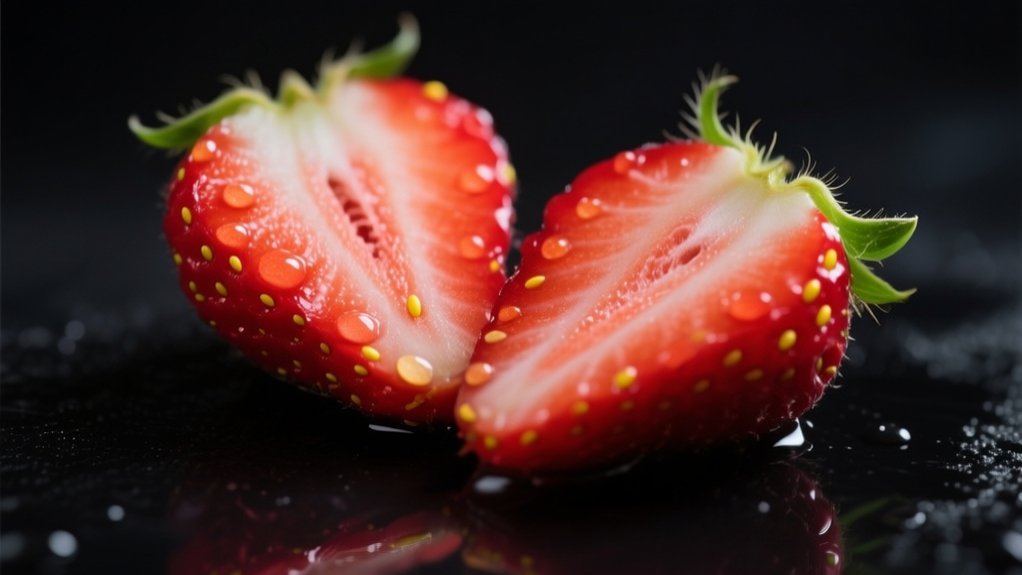
Why Is a Strawberry Not a Berry?
You might think a strawberry is a berry, but it isn’t one botanically. That’s because true berries develop from a single ovary and have seeds inside.
Strawberries grow from multiple ovaries in one flower, making them aggregate fruits. Their seeds, called achenes, sit on the outside, unlike true berries like tomatoes or bananas.
This common naming mix-up hides how fruits actually form. Keep exploring, and you’ll uncover more interesting facts about fruits and their surprising classifications.
What Makes a Fruit a True Berry?
Although many fruits are called berries in everyday language, a true berry has a specific botanical definition. You’ll recognize a true berry by its development from a single ovary of a flower and its fleshy interior that holds multiple seeds.
When you look closer, a true berry has three fleshy layers: the exocarp, which is the outer skin; the mesocarp, the juicy middle; and the endocarp, the innermost layer surrounding the seeds.
Examples you mightn’t expect include grapes, bananas, and tomatoes. They’re all true berries because they come from one ovary and contain seeds inside.
How Ovaries Decide If a Fruit Is a Berry
Understanding what makes a fruit a true berry starts with looking at its ovaries. The ovary’s structure and development determine whether a fruit qualifies as a berry or not.
Here’s how ovaries decide:
True berries develop from a single ovary within one flower. Multiple ovaries in one flower lead to aggregate fruits, like strawberries.
Berries embed seeds inside the fleshy fruit; seeds outside mean it’s not a true berry. The ovary’s layers—exocarp, mesocarp, and endocarp—must all be fleshy in berries.
The number and fusion of ovaries influence the fruit’s classification in botanical taxonomy.
Why Strawberries Are Classified as Aggregate Fruits
Because strawberries develop from a single flower containing multiple ovaries, they’re classified as aggregate fruits. Each ovary produces a tiny fruit called an achene, which you see as the seeds on the strawberry’s surface.
Unlike true berries, where seeds are inside the fleshy part, strawberries’ fleshy part is actually a pseudocarp formed from the flower’s receptacle. This unique structure makes strawberries an aggregate fruit, meaning multiple small fruits cluster together into one.
| Feature | Strawberries (Aggregate Fruit) |
|---|---|
| Origin | Multiple ovaries in one flower |
| Fruit Type | Cluster of small fruits (achenes) |
| Flesh | Pseudocarp (flower receptacle) |
This classification highlights why strawberries don’t fit the true berry category.
What Are Aggregate Fruits?
When you look closely at fruits like strawberries, raspberries, or blackberries, you’ll notice they don’t develop from just one ovary but from several within a single flower. This unique formation defines what an aggregate fruit is.
Each ovary matures into a small fruit unit, combining to form the entire aggregate fruit you recognize.
Each ovary ripens into a tiny fruit unit, together creating the full aggregate fruit you enjoy.
Here’s what you should know about aggregate fruits:
- They develop from multiple ovaries in one flower
- Each small unit can be a drupelet or achene
- Strawberries feature tiny fruits on their surface
- Raspberries and blackberries consist of multiple small drupes
- Their structure influences texture and flavor distinctly
Understanding aggregate fruits helps you see why strawberries aren’t true berries but a complex cluster of tiny fruits.
Why Strawberry Seeds Are Tiny Fruits Called Achenes
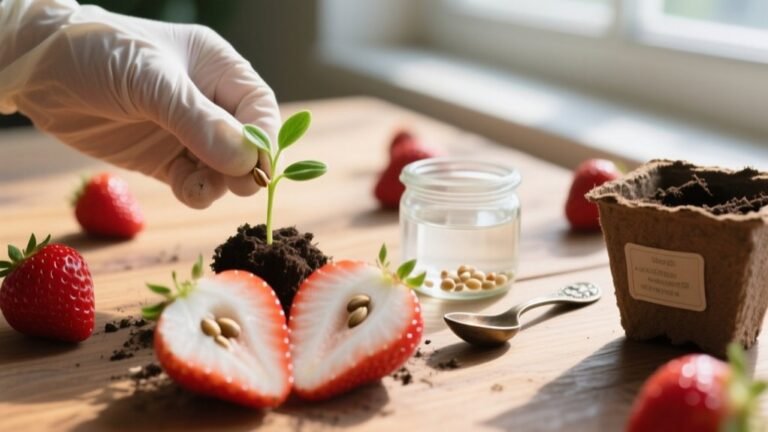
Each tiny seed you see on a strawberry’s surface is actually a small fruit called an achene, containing a seed inside. These achenes come from individual ovaries of the flower, making the strawberry an aggregate fruit.
You’ll find about 200 achenes on a typical strawberry, each separate from the fleshy part you eat, which is a pseudocarp formed from the flower’s receptacle. Unlike true berries, where seeds are inside the fruit, achenes sit on the surface. This highlights why strawberries aren’t classified as berries.
| Feature | Description |
|---|---|
| Achene | Tiny fruit containing a seed |
| Number per fruit | Around 200 per strawberry |
| Origin | Derived from individual flower ovaries |
| Seed location | External, on the surface |
| Strawberry flesh | Pseudocarp, not from a single ovary |
Comparing Strawberries to Other Aggregate Fruits
Although strawberries might seem unique, they share their classification as aggregate fruits with raspberries and blackberries. Understanding how these fruits compare helps you appreciate their botanical complexity.
Aggregate fruits develop from a single flower with multiple ovaries, unlike true berries. Here’s how strawberries stack up against other aggregate fruits:
Aggregate fruits arise from one flower housing several ovaries, setting them apart from true berries.
Strawberries have tiny achenes on their surface, each a small fruit with a seed. Raspberries and blackberries consist of numerous small drupes clustered together.
Aggregate fruits form by combining several smaller fruit units, not a single ovary. True berries have seeds embedded within fleshy layers, unlike aggregate fruits.
The term “berry” often misleads consumers due to common naming rather than scientific classification.
Examples of True Berries Beyond Strawberries
You might be surprised to learn that fruits like blueberries, grapes, and tomatoes actually fit the botanical definition of true berries. That’s because they develop from a single ovary and have seeds inside.
Even bananas and cucumbers qualify! Each of these shows unique characteristics, like smooth skins or tough rinds.
Botanical Definition Examples
When you think of berries, fruits like grapes, blueberries, and tomatoes mightn’t immediately come to mind, yet they all fit the botanical definition perfectly.
Unlike strawberry plants, which produce accessory fruits, true berries develop from a single ovary and contain multiple seeds.
Here are some clear examples:
- Grapes: Multiple seeds inside a fleshy fruit.
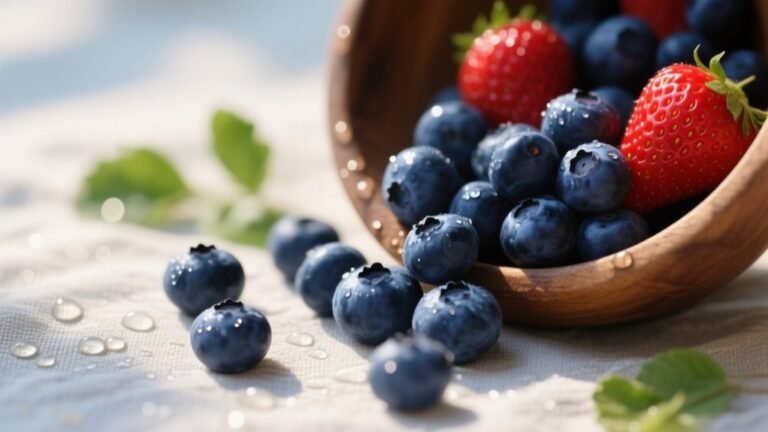
- Blueberries: Small, fleshy, and seed-filled.
- Tomatoes: Often mistaken for vegetables, they’re true berries.
- Bananas: Surprisingly, they’re berries with three layers.
- Citrus fruits (e.g., oranges): Classified as hesperidium, a berry subtype with juicy segments.
Understanding these examples helps you see why strawberries, despite their name, don’t qualify botanically as berries.
Common True Berries
True berries include a surprising variety of fruits you mightn’t expect, such as grapes, blueberries, and bananas.
These fruits develop from a single ovary and contain multiple seeds embedded within their fleshy layers, which is a key characteristic of a true berry.
When you look at grapes, you’ll notice their smooth skin, fleshy middle, and seed-containing core, all typical berry features.
Blueberries also fit this category perfectly, growing from a single ovary and showcasing the three-layered berry structure.
Surprisingly, bananas are true berries too, with their tough outer skin protecting the soft interior and tiny seeds.
Other common berries you mightn’t realize include tomatoes and cucumbers, both of which satisfy the botanical criteria for true berries.
Unique Berry Characteristics
Many fruits that qualify as berries might surprise you once you examine their unique structures. Unlike the strawberry, true berries develop from one flower with one ovary and contain multiple seeds enclosed within three fleshy layers.
Here are some examples to contemplate:
- Blueberries and grapes have soft exocarp, mesocarp, and endocarp layers surrounding numerous seeds.
- Bananas feature a tough peel protecting their fleshy interior with tiny seeds.
- Tomatoes, formed from one flower with one ovary, hold many seeds embedded inside.
- Cucumbers are pepos, with a hard rind and juicy flesh, like pumpkins and zucchini.
- Citrus fruits such as oranges and lemons are hesperidia, true berries with segmented juicy interiors.
Understanding these characteristics helps you see why a strawberry isn’t classified as a true berry.
Why Common Names Mislead About Berries
You might think strawberries are berries because of their name, but actually, common naming often doesn’t match scientific terms.
You see, popular fruit names usually come from tradition and cooking habits, not from how plants actually develop.
Common Naming Confusion
Why do we call strawberries and raspberries berries when they don’t fit the botanical definition? It’s because common naming often confuses us. People lump many fleshy fruits under “berry” simply based on appearance or taste, not structure. This leads to widespread misunderstanding about what true berries are.
Consider these points about naming confusion:
- Strawberries and raspberries are aggregate fruits, not true berries.
- True berries have seeds embedded within their fleshy fruit.
- Common names ignore botanical terms, favoring familiarity.
- Aggregate fruits display multiple small fruits (achenes) on their surface.
- Misleading names persist because they’re easier to say and remember.
Knowing this helps you see why everyday language doesn’t always match scientific classification.
Scientific Versus Popular Terms
Although strawberries are commonly called berries, their botanical classification tells a different story. You might think of strawberries and raspberries as simple berries, but scientifically, they’re not.
A true berry develops from a single ovary and contains seeds inside its fleshy part. Strawberries, on the other hand, are aggregate fruits because they grow from a flower with multiple ovaries, with seeds, the achenes, on the outside. The raspberry shares this trait.
Popular terms lump together many fruits as “berries,” which confuses people about their actual structure. When you understand these scientific distinctions, it helps clear up why the strawberry and the raspberry don’t fit the botanical definition of a berry, despite what common names suggest.
This clarity also affects how you view their nutrition and growth.
Origins Of Fruit Names
Since common names for fruits often developed long before botanical science formalized classifications, they tend to reflect culinary use and appearance rather than scientific accuracy. This is why you might consider a strawberry a berry, even though it isn’t one botanically.
The origins of fruit names often stem from traditions, not from one strict scientific system. Here’s why common names can mislead you:
- Strawberries, raspberries, and blackberries are aggregate fruits, not true berries.
- True berries, like blueberries and bananas, come from one ovary.
- Strawberries have seeds on the outside, unlike true berries.
- Historical naming focused on taste and look, ignoring botanical details.
Understanding this helps you see why common names don’t always match fruit classifications. Knowing this clears up why strawberries aren’t one of the real berries.
Why Cucumbers Qualify as Berries but Strawberries Don’t
When you look closely at cucumbers and strawberries, you’ll see that cucumbers qualify as true berries because they develop from a single ovary and contain seeds embedded within their fleshy layers, while strawberries don’t meet these botanical criteria.
Cucumbers have three fleshy layers: exocarp, mesocarp, and endocarp, and their seeds are inside the fruit.
Strawberries, on the other hand, are aggregate fruits formed from multiple ovaries, producing tiny fruits called achenes on the surface.
This means strawberries have a seed on the outside, which disqualifies them from being true berries. Instead, the fleshy part you eat is a pseudocarp, coming from the flower’s receptacle, not an ovary.
What Strawberry Classification Means for Nutrition and Cooking
You might be surprised to learn that strawberries are actually an aggregate accessory fruit, not a true berry.
But hey, that doesn’t change the fact that they’re packed with vitamin C and antioxidants, which is pretty impressive!
Knowing how strawberries are classified can help you appreciate their unique texture and flavor even more.
This is why they shine in fresh dishes, jams, and desserts.
Plus, understanding their classification can guide you in picking the best ways to use strawberries in your cooking.
Cool, right?
Nutritional Profile Insights
Three key nutritional benefits make strawberries a smart addition to your diet despite their unusual classification. Their fleshy, aggregate fruit nature doesn’t lessen their impressive health profile.
You get low-calorie nutrition packed with powerful antioxidants, essential vitamins, and minerals. Including strawberries can boost your well-being without extra calories.
Consider these nutritional highlights:
- Only 33 kcal per 100g, supporting calorie-conscious diets
- Provides 65% of your daily vitamin C, surpassing oranges
- Rich in antioxidants like polyphenols that protect cells
- Contains 17% of daily manganese, aiding bone health and metabolism
- Maintains all the flavor and health benefits typical of berry-like fruits
Culinary Uses Explained
Strawberries pack a nutritional punch, but their unique classification as aggregate fruits also shapes how they’re used in the kitchen. Knowing they’re not true berries helps you appreciate their texture and flavor, which works best in raw preparations.
You can enjoy strawberries and cream as a classic dessert that highlights their juicy sweetness and tender seeds. Their bright color and aroma make them perfect for fresh salads, smoothies, or topping pavlovas and shortcakes.
Because they’re rich in vitamin C and antioxidants, incorporating strawberries into preserves or jams boosts both taste and nutrition. Understanding this classification encourages you to pair strawberries with other aggregate fruits or use them fresh, enhancing dishes without overpowering their delicate qualities.
Frequently Asked Questions
How Do Strawberries Grow and Develop on the Plant?
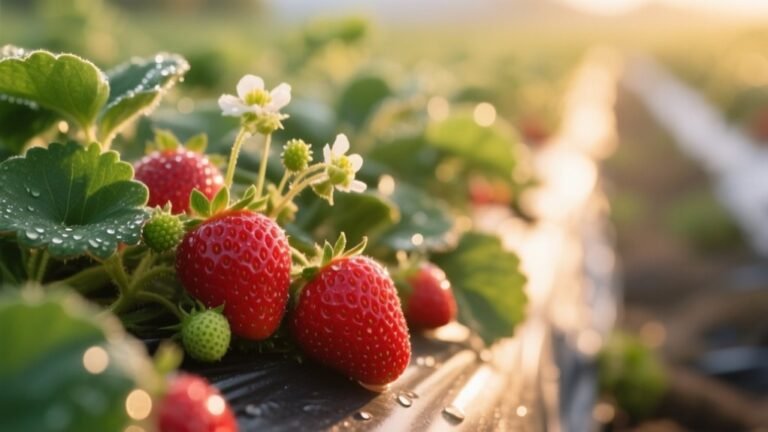
You’ll see strawberries grow from white flowers on the plant, where the center holds the future fruit.
As the petals turn into green caps, the fruit starts developing, changing color and shape.
The stem tilts downward when the berry’s ripe, signaling it’s ready to pick.
You’ll notice flowering, fruit development, and ripening happening at once, all key stages in the plant anatomy that guide your harvest timing.
What Is the History of Strawberry Cultivation?
You’d be amazed to know global strawberry production hit 10.5 million tonnes by 2023.
Strawberry cultivation started in ancient Rome, where they valued them for medicinal uses.
Over time, especially in 18th-century France, growers developed sweeter, bigger berries.
Today, you’ll find strawberries everywhere thanks to advanced methods like plasticulture.
Their versatility shines in culinary uses, from jams to desserts, making strawberries a beloved fruit worldwide.
Are There Different Varieties of Strawberries?
Yes, you’ll find many strawberry varieties, each with unique traits.
Strawberry varieties like June-bearing, ever-bearing, and day-neutral differ in fruiting patterns and harvest times.
You’ll love the ‘Albion’ for its high yield and flavor, while ‘Chandler’ offers large, sweet berries.
Don’t miss wild types like Fragaria vesca, smaller but intensely flavored.
Plus, exotic cultivars like ‘White Soul’ and ‘Pineberry’ give you white fruit with a pineapple twist.
How Do Strawberries Reproduce and Pollinate?
Funny enough, just like you might pass notes in class, strawberries rely on the pollination process to reproduce.
You’ll find they mainly reproduce through runners, those horizontal stems that create new plants.
Meanwhile, their flowers have both male and female parts, so insects like bees help transfer pollen, ensuring cross-pollination.
What Pests and Diseases Commonly Affect Strawberry Plants?
You’ll face challenges like strawberry aphids, nematodes, and over 200 other pests targeting your plants.
Diseases such as powdery mildew, leaf spot, root rot, gray mold, rhizopus rot, and leather rot commonly affect strawberries.
To protect your crop, pest management is essential.
You should monitor regularly, rotate crops, and choose resistant varieties.
Staying vigilant helps you minimize losses and keep your strawberry plants healthy and productive throughout the season.
Conclusion
Now that you know strawberries aren’t true berries, you can see how nature’s classifications aren’t always what they seem. Like a puzzle with unexpected pieces, fruits like cucumbers fit the berry definition, while strawberries don’t.
Understanding these botanical details helps you appreciate your food more deeply and even impacts how you cook and enjoy them. So next time you bite into a strawberry, remember it’s a sweet, complex fruit, not just a simple berry.